
 Italiano

SKU:
UNI2403
Cat:
No Category
Brand:
CONTROL TECHNIQUES
Service
Repair
Exchange service
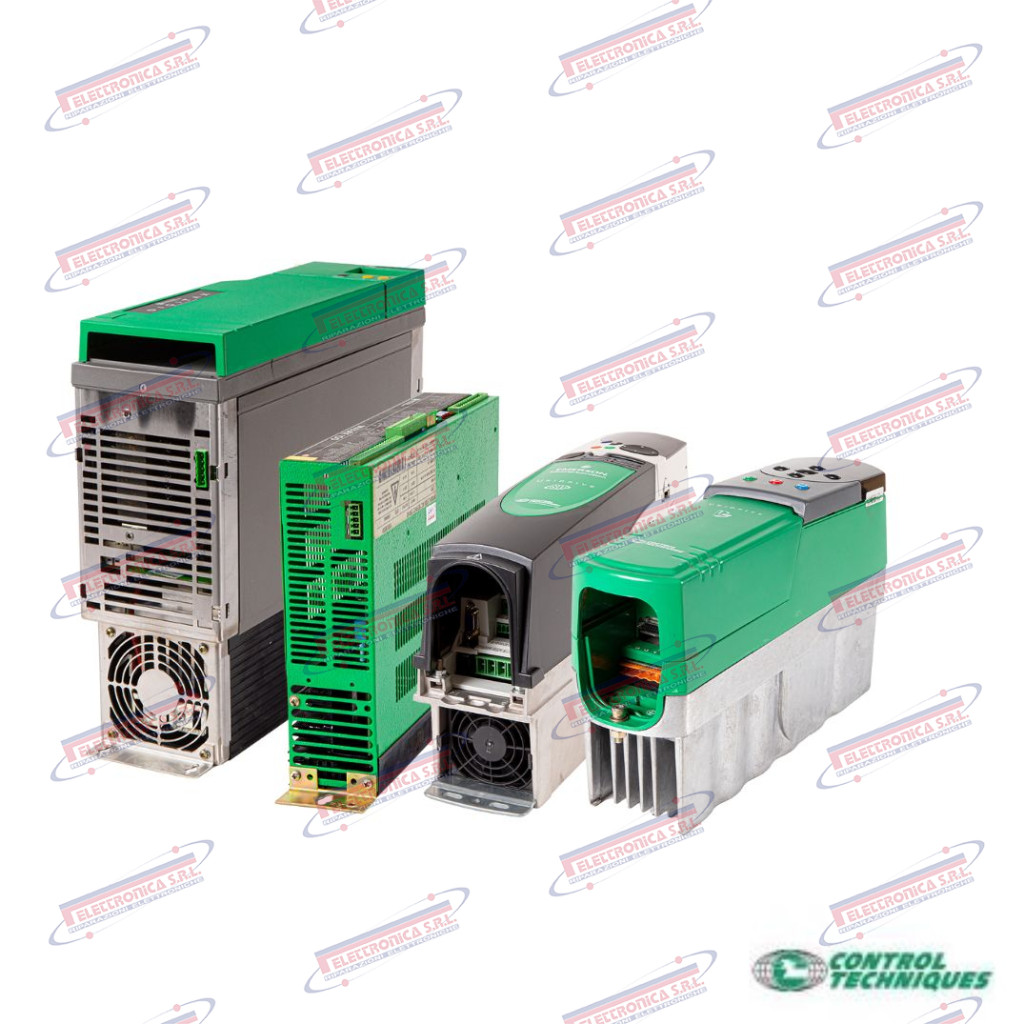
AC Variable Speed Drive – CONTROL TECHNIQUES UNI2403
The UNI2403 is an AC variable speed drive (“Variable Speed Drive”) from the Unidrive Classic family, manufactured by Control Techniques. Documented on CNC machining centres, milling machines and lathes equipped with three-phase induction motors, it regulates motor speed and torque via PWM modulation. It operates in open-loop V/Hz, open-loop vector (sensorless) and closed-loop vector modes with encoder feedback. The Unidrive Classic is the first generation of the Unidrive platform, predecessor to the Unidrive SP and Unidrive M families.
The variable frequency drive is the power and regulation element that converts three-phase mains voltage into variable voltage and frequency, enabling precise speed and torque control of the induction motor. A drive failure completely disables the associated axis or spindle, bringing the machine to a standstill; typical faults include overvoltage, overtemperature, loss of encoder feedback or short-circuit on the IGBT power stage.
Control Techniques is a British manufacturer founded in 1973, specialising in AC and DC drives, servo systems and industrial motors. Acquired by Emerson Electric in 1994 and subsequently by Nidec Corporation in 2012, it now operates as the Nidec Control Techniques division. The Unidrive Classic line is legacy / discontinued: available only as used, NOS or through specialist repair.
Main Technical Specifications
| Type | AC variable frequency drive (Variable Speed Drive) |
| Part number | UNI2403 |
| Brand | Control Techniques (Nidec Group) |
| Known application | CNC machining centres, milling machines, lathes with three-phase AC induction motors |
| Function | Three-phase induction motor speed and torque control via PWM modulation |
| Input voltage | 380–480 V AC three-phase, 50/60 Hz |
| Rated output current | ~14 A |
| Motor power | ~7.5 kW |
| Operating modes | Open-loop V/Hz; open-loop vector (sensorless); closed-loop vector (encoder) |
| Interfaces | Analogue/digital control terminal strip; encoder connector; power terminal strip |
| Weight | ~5–10 kg |
| Dimensions | ~250–350 × 150–250 mm |
| Production status | Legacy / discontinued — used/surplus/repair only |
SKU:
SP2402
Cat:
No Category
Brand:
CONTROL TECHNIQUES
Service
Repair
Exchange service
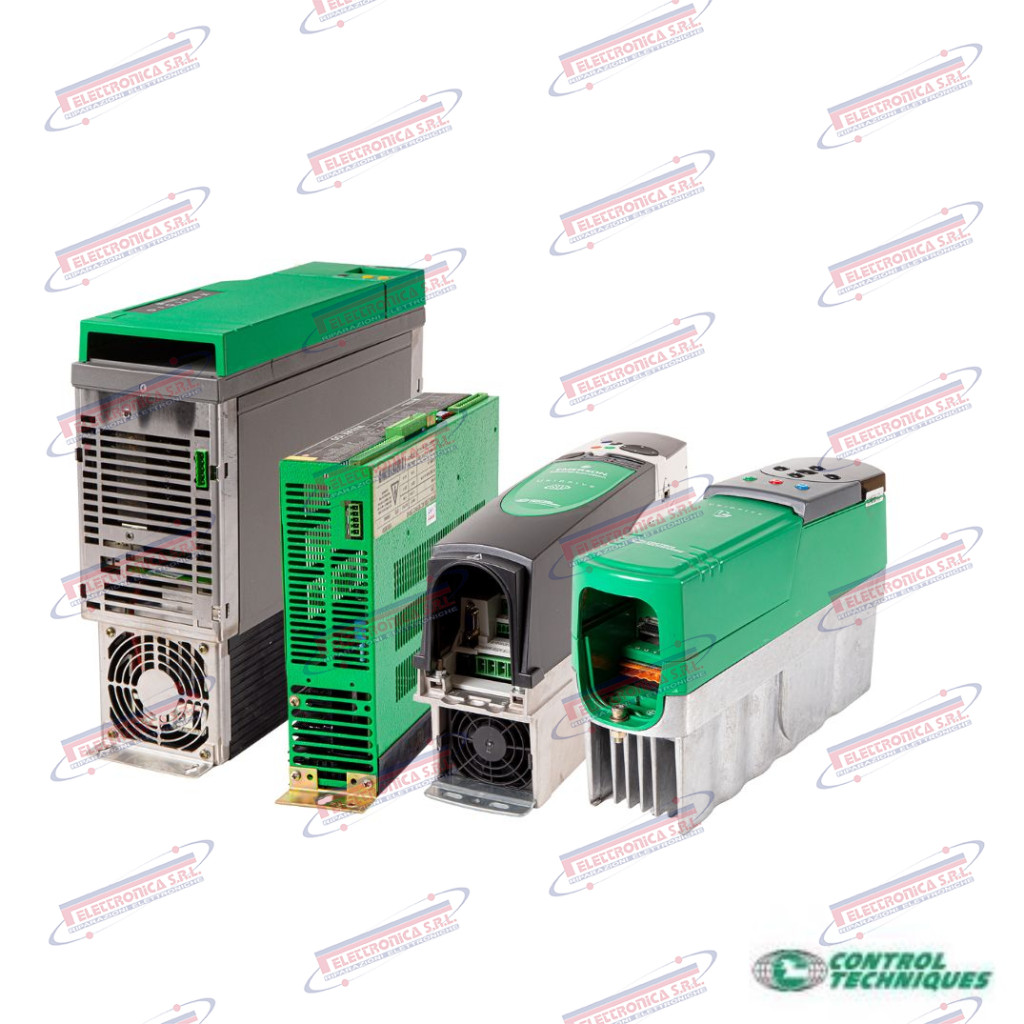
AC Vector Inverter / Variable Speed Drive – Control Techniques SP2402
The SP2402 is an AC variable speed drive (“AC Inverter / Variable Frequency Drive”) from the Unidrive SP series, manufactured by Control Techniques. It belongs to the Frame 2, 400 V class and is employed on CNC machine tools and industrial automation systems requiring precise speed and torque control of AC induction or permanent-magnet synchronous motors. It supports four operating modes: scalar V/Hz, Open Loop Vector (sensorless), Closed Loop Vector (with encoder), and Servo. An integrated RS485 / Modbus RTU interface and an option slot for fieldbus expansion modules (Profibus-DP, CANopen, DeviceNet, EtherCAT) are included.
The inverter converts the fixed-frequency mains supply into a variable-voltage, variable-frequency three-phase output, enabling precise control of motor speed and torque. In a CNC machining centre, a drive failure causes immediate shutdown of the controlled axis or spindle: the machine stops, the workpiece risks being scrapped, and — should active safety not intervene — a collision may occur.
Control Techniques is a British manufacturer founded in 1968 and specialised in variable-speed drives for AC and DC motors. Acquired by Emerson Electric in 1992 and later by Nidec Corporation in 2017, it now operates as Nidec Industrial Solutions. The Unidrive SP series is legacy / discontinued: the platform has been superseded by the Unidrive M family; SP drives are available exclusively as used, NOS (surplus), or through specialist repair centres.
Main Technical Specifications
| Type | AC inverter / variable speed drive (VFD), Unidrive SP series, Frame 2 |
| Part number | SP2402 |
| Brand | Control Techniques (Nidec Industrial Solutions) |
| Known application | CNC machine tools, machining centres and industrial automation systems with AC induction or PM synchronous motors |
| Function | AC motor speed and torque control in open-loop (sensorless) or closed-loop (encoder / resolver) mode |
| Input voltage | 380–480 V AC 3-phase, 50/60 Hz |
| Rated power | ~4.0–7.5 kW |
| Rated output current | ~9–16 A |
| Control modes | V/Hz scalar, Open Loop Vector, Closed Loop Vector, Servo |
| Feedback | Incremental encoder (AB/Z), resolver or sensorless |
| Communications | RS485 / Modbus RTU built-in; option slot for Profibus-DP, CANopen, DeviceNet, EtherCAT |
| I/O | Programmable digital and analogue inputs/outputs (parameter-configurable) |
| Protections | Overcurrent, overvoltage, undervoltage, overtemperature, earth fault, short circuit |
| Protection class | IP20 standard (IP55 with optional filter kit) |
| Weight | ~2–4 kg |
| Dimensions | ~185–250 × 100–140 × 180–230 mm |
| Production status | Legacy / discontinued — superseded by Unidrive M; available as used, NOS, or via specialist repair |

SKU:
SP1404
Cat:
No Category
Brand:
CONTROL TECHNIQUES
Service
Repair
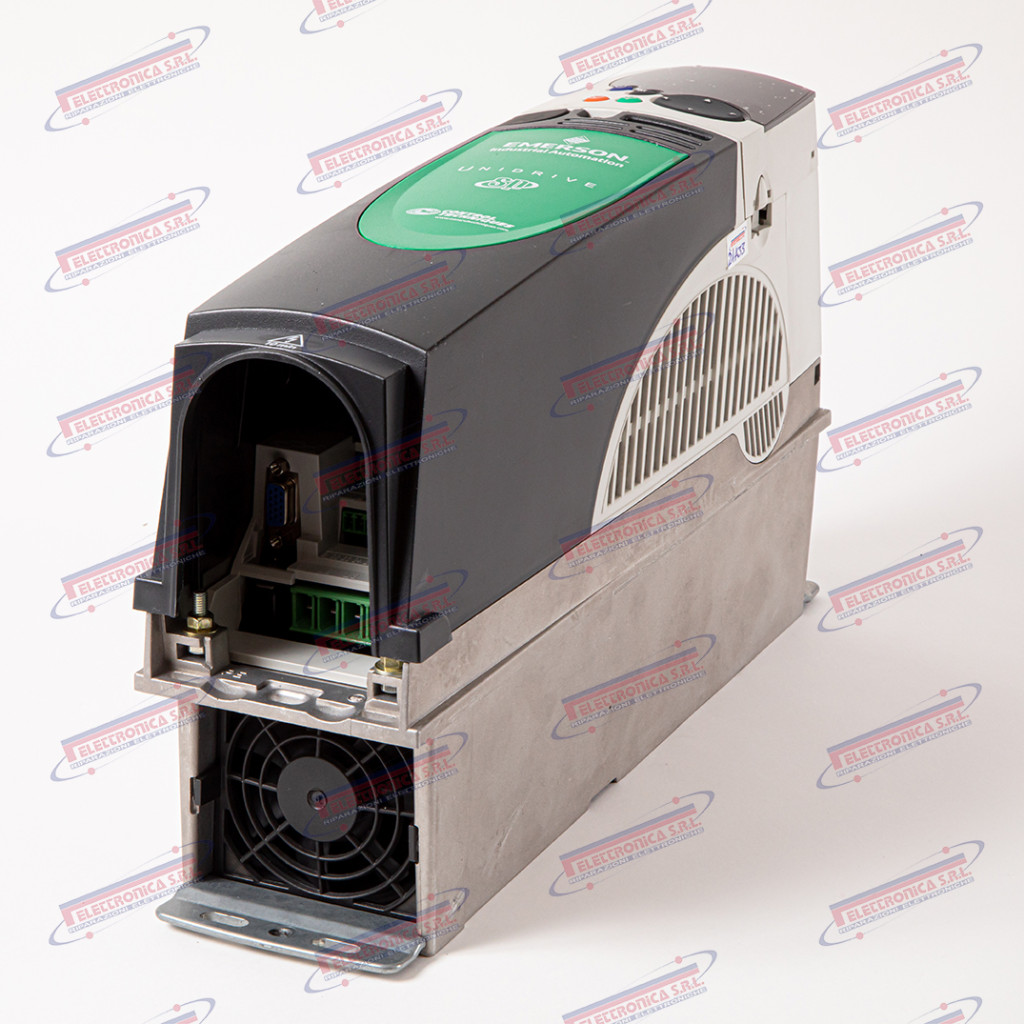
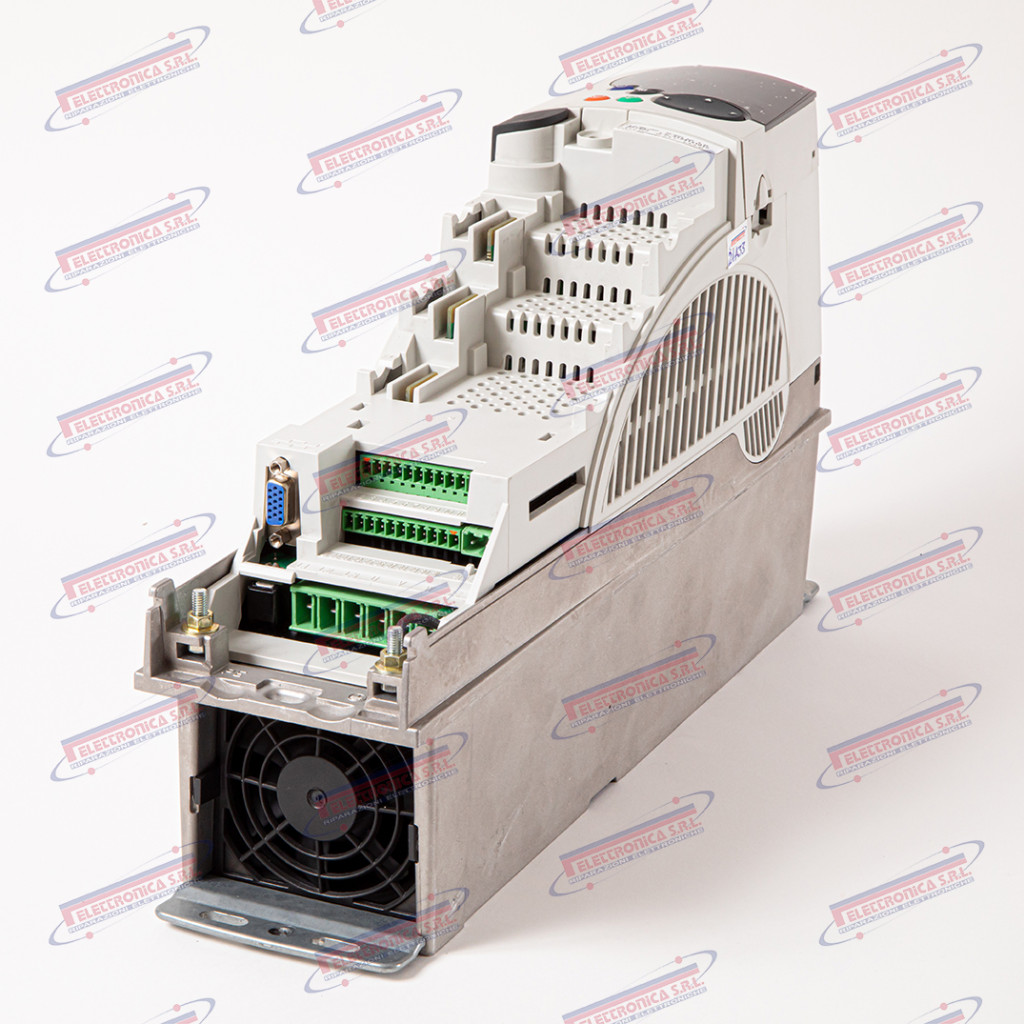
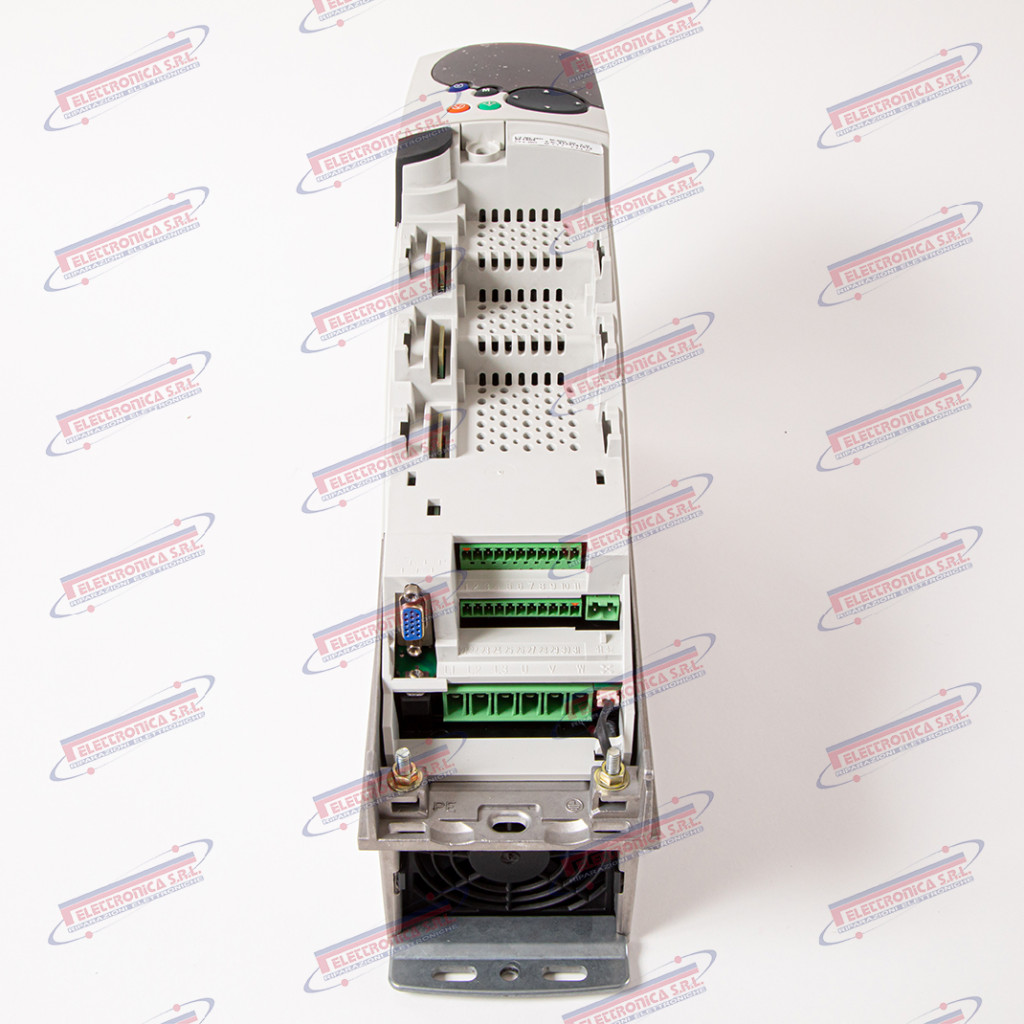
AC Variable Speed Drive – CONTROL TECHNIQUES SP1404
The SP1404 is an electronic AC variable speed drive (“AC Variable Speed Drive / Inverter”) by Control Techniques, part of the Unidrive SP series. Designed for control of three-phase induction motors and permanent magnet motors, it supports open-loop vector (RFC-A), closed-loop vector with encoder feedback, and servo control modes. Nominal input voltage 380–480 V AC three-phase 50/60 Hz; nominal output current approximately 14 A continuous; power class 5.5–7.5 kW at 400 V. Features an onboard PLC, digital and analogue I/O, RS485 serial interface, and expansion slots for optional fieldbus modules.
The AC variable speed drive is the power electronic converter that transforms fixed-frequency mains supply into variable voltage and frequency to regulate motor speed and torque. In CNC machine tools it controls the spindle, feed axes, or auxiliary motors, ensuring precise and continuous regulation across the full operating range. A drive failure results in the immediate loss of control of the affected axis or spindle, halting the machine and preventing resumption of machining.
Control Techniques is a British manufacturer of variable speed drives and servo systems, founded in 1973 and headquartered in Newtown, Wales. Acquired by Emerson Electric in 1992 and subsequently by Nidec Corporation in 2017, it now operates as Nidec Control Techniques. The Unidrive SP series is legacy / discontinued in its original variants, progressively replaced by the Unidrive M series: spare units are available primarily as used stock, NOS surplus, or through specialist repair services.
Main Technical Specifications
| Type | AC variable speed drive (Variable Speed Drive / Inverter) |
| Part number | SP1404 |
| Brand | Control Techniques (Nidec Control Techniques) |
| Known application | CNC machine tools; three-phase induction motors and permanent magnet motors |
| Function | AC motor speed and torque control via variable frequency output |
| Input voltage | 380–480 V AC, three-phase, 50/60 Hz |
| Nominal output current | ~14 A continuous (400 V class) |
| Nominal power | ~5.5–7.5 kW at 400 V |
| Control modes | Open-loop vector (RFC-A), closed-loop vector with encoder, servo |
| Communication interfaces | Onboard RS485; optional modules for Profibus, DeviceNet, CANopen, EtherNet/IP |
| I/O | Onboard digital and analogue I/O; expandable with optional modules |
| Weight | ~2–4 kg |
| Dimensions | ~230–260 mm H × 90–110 mm W × 170–190 mm D |
| Production status | Legacy / discontinued — used/surplus/repair only |



SKU:
DBE 420
Cat:
Servo Drive
Brand:
CONTROL TECHNIQUES
Service
Repair
Exchange service
Refurbished sell
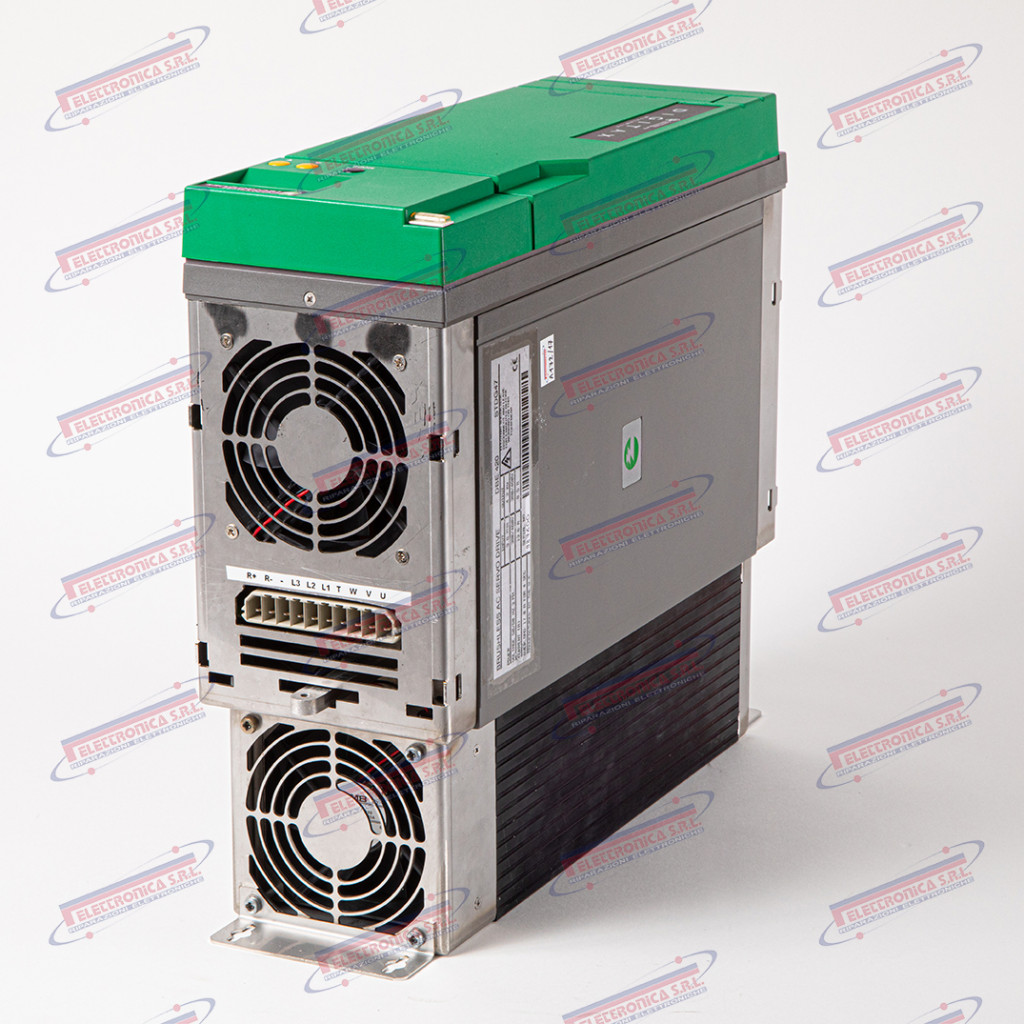
Digitax Servo Drive – Control Techniques DBE 420
The DBE 420 is an AC digital servo drive (“Digitax AC Digital Servo Drive”) manufactured by Control Techniques, part of the DIGITAX family for controlling AC brushless servo motors in motion control and CNC machine tool applications. The unit operates as a closed-loop digital servo amplifier, regulating speed, torque and position while interfacing with the CNC controller via fieldbus and encoder feedback. The designation DBE 420 identifies the size and variant within the DIGITAX catalogue; the product may exist in multiple hardware and firmware revisions.
The DIGITAX DBE 420 servo drive is the electronic controller that closes the current, speed and position loops on the servo axis: it interprets the CNC references in real time and compensates for load disturbances, maintaining axis precision and dynamics throughout machining. A drive failure renders the controlled axis completely inoperative, halting production; loss of closed-loop control can result in mechanical collisions or dimensional rejects in the workpiece.
Control Techniques is a British manufacturer and world leader in variable-speed drives and servo systems, founded in 1973 in Newtown (Wales, UK). Acquired by Emerson Electric in 1990 and subsequently by Nidec Corporation in 2017, it produces the Unidrive, Commander and DIGITAX servo drive families. Products in the DIGITAX DBE series are legacy / discontinued: available exclusively as used stock, NOS surplus, or through specialist repair services.
Main Technical Specifications
| Type | AC digital servo drive – DIGITAX series |
| Part number | DBE 420 (DBE420) |
| Brand | Control Techniques (Nidec – legacy) |
| Known application | CNC machine tools, industrial robotics and automation with AC brushless servo motors |
| Function | Digital closed-loop speed, torque and position control of AC brushless servo motor |
| Input voltage | 200–240 V AC three-phase |
| Rated output current | ~4 A nominal |
| Feedback | Incremental/absolute encoder from servo motor |
| Interfaces | Multi-pin connectors; RS-232/RS-485 serial interface |
| Weight | ~1.5–3.0 kg |
| Dimensions | ~200–300 × 80–120 mm |
| Production status | Legacy / discontinued — used/surplus/repair only |
SKU:
DB 420 NP
Cat:
No Category
Brand:
CONTROL TECHNIQUES
Service
Repair
Refurbished sell
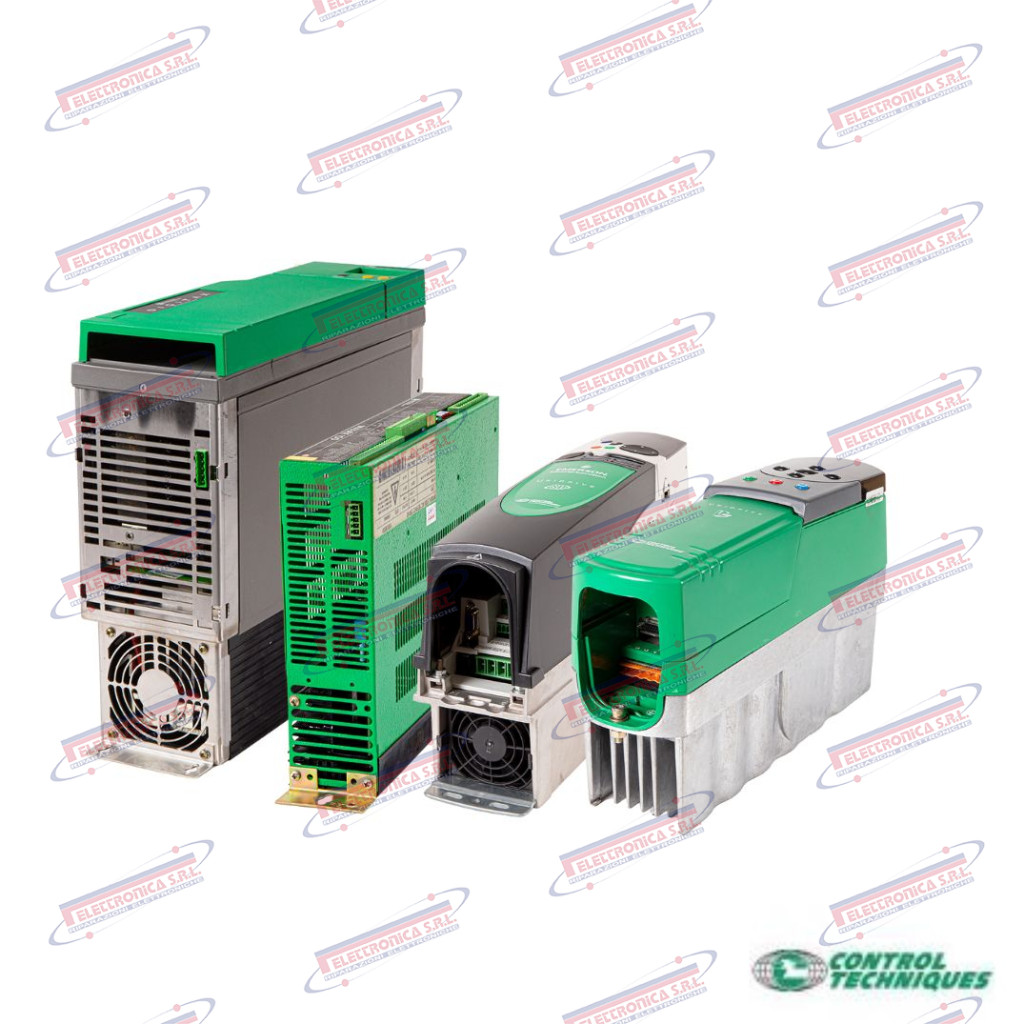
DC Motor Drive – Control Techniques DB 420 NP
The DB 420 NP is a DC motor drive (“DC Motor Drive”) manufactured by Control Techniques, belonging to the DB series of the Welsh manufacturer’s industrial drive range. The part number identifies a combined control and power unit for DC motors intended for industrial motion control applications; the NP designation denotes a specific constructional variant (typically “Non-Plug-in” or a configuration without a removable optional module). The drive manages the speed and torque regulation loops, interfacing with the CNC system’s control bus and with the motor’s tachogenerator or encoder feedback. The product is documented on CNC machine tools, automated production lines and numerical control systems using DC motors for axis or spindle drives.
The DC drive is the core of the motor control system: it receives the speed or torque reference from the numerical controller, regulates voltage and current to the motor armature and closes the feedback loop to deliver the required motion profile with precision and stability. A drive failure renders the controlled motor completely unmanageable, causing immediate process stoppage and a real risk of mechanical damage to moving parts; availability of a replacement unit is therefore critical to limiting unplanned machine downtime.
Control Techniques, founded in 1961 in Newtown (Wales, UK), is one of the world’s leading manufacturers of variable-speed drives for AC and DC motors, servo drives and motion control systems (Mentor, Unidrive, Commander, Digitax, Epsilon families). Acquired by Emerson Electric in 1992 and subsequently by Nidec Corporation in 2017, it continues to operate as an independent brand within the group. Products in the DB series are legacy / discontinued: available only as used, surplus or through specialist repair.
Main Technical Specifications
| Type | DC motor drive (DC Motor Drive) |
| Part number | DB 420 NP (DB420NP) |
| Brand | Control Techniques (Nidec Group) |
| Known application | CNC machine tools, automated production lines, motion control systems with DC motors (axis / spindle) |
| Function | DC motor speed and torque control; closed-loop armature voltage and current regulation |
| Input voltage | ~380–480 V AC three-phase |
| Output current / Power | To be verified on original datasheet |
| Feedback | Analogue tachogenerator and/or incremental encoder (typical DB series) |
| Reference input | Analogue ±10 V (typical) and/or serial interface |
| Interfaces / Connectors | Signal and power terminal strips, encoder/tachogenerator connectors, communications bus (typical) |
| Constructional variant | NP — Non-Plug-in / variant without optional plug-in module (confirm on datasheet) |
| Weight | ~2–8 kg |
| Dimensions | ~200–400 mm |
| Production status | Legacy / discontinued — used/surplus/repair only |


SKU:
UNI1401
Cat:
Servo Drive
Brand:
CONTROL TECHNIQUES
Service
Exchange service
Repair
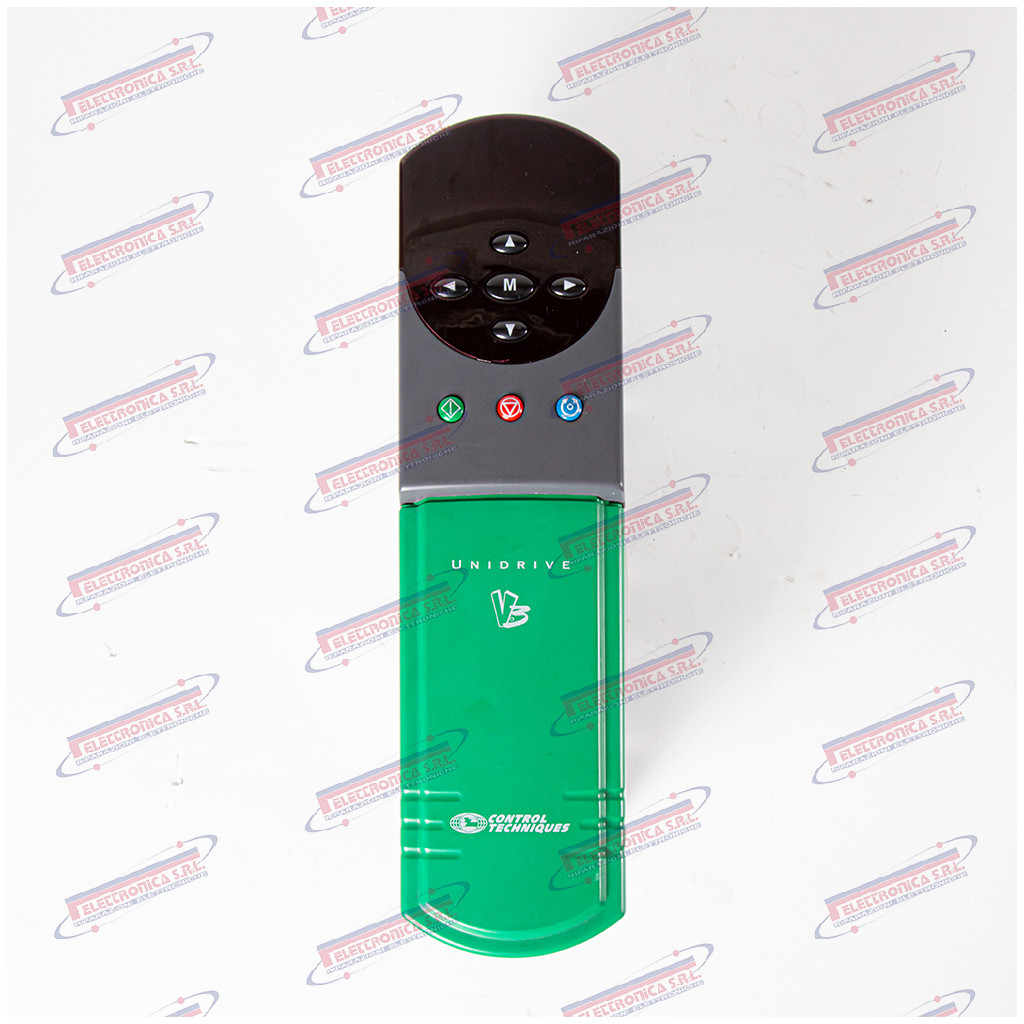
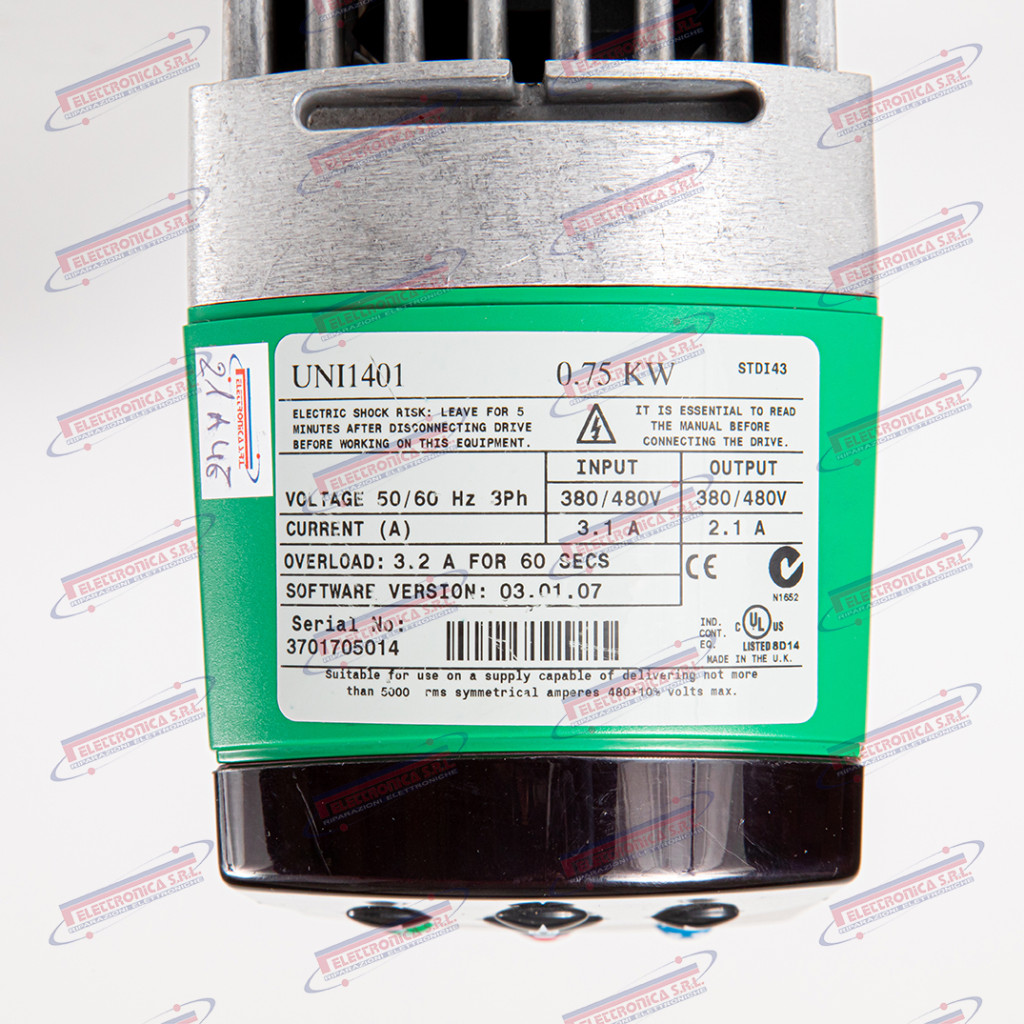
Unidrive AC Variable Speed Drive – Control Techniques UNI1401
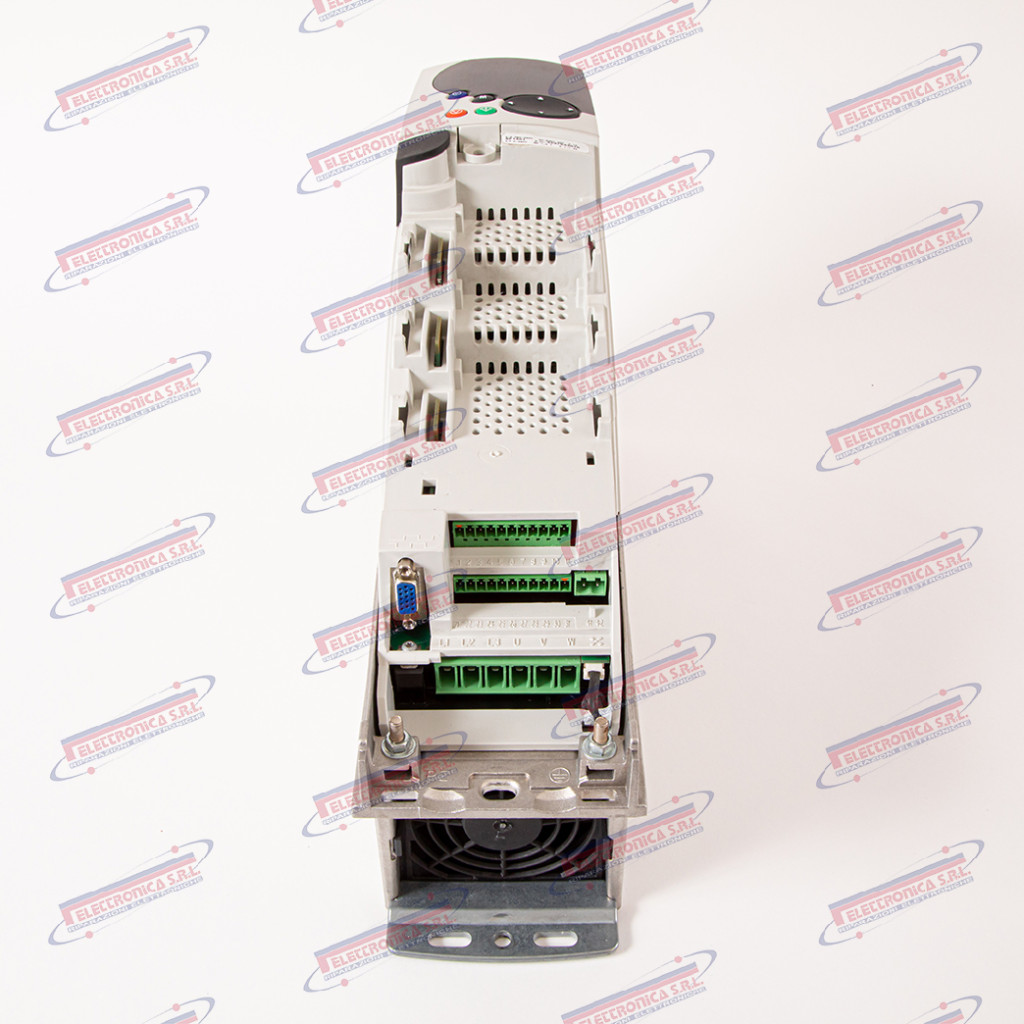
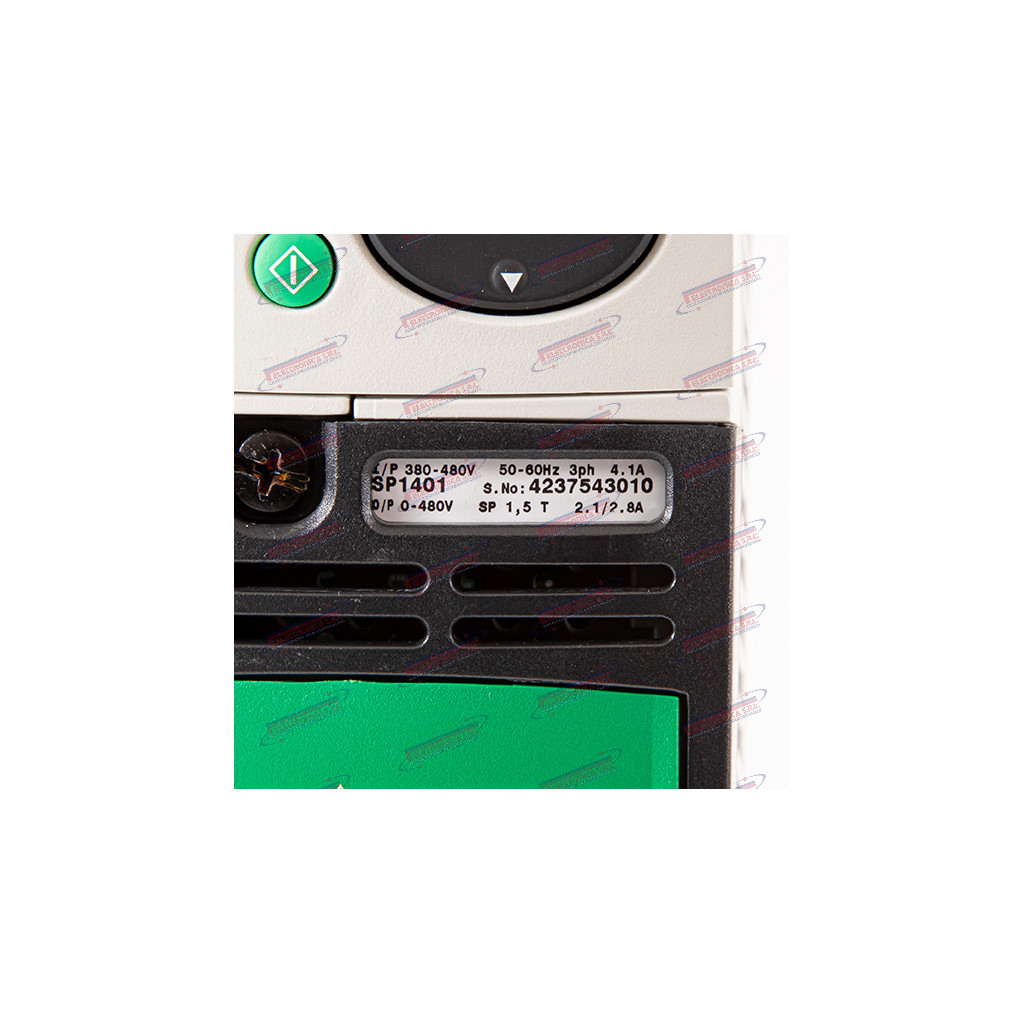
The UNI1401 is an AC variable speed drive (“AC Variable Speed Drive”) from the Unidrive Classic series by Control Techniques. Designed to control three-phase asynchronous motors, the drive supports both open-loop (V/f) and closed-loop field-oriented control (flux vector), with a three-phase 380–480 V AC input and a rated power of approximately 1.5 kW. The unit supports encoder feedback for high-precision speed and torque applications.
The Unidrive drive controls the speed and torque of the AC motor by modulating the output voltage and frequency using PWM technique: it provides smooth starts, controlled regenerative braking, and speed stability under varying loads. In case of failure, the driven axis or spindle loses complete control, rendering the machine inoperable until the drive is replaced or repaired.
Control Techniques is a British manufacturer founded in 1968, specialised in variable speed drives and servo drives for industrial automation. Acquired by Emerson Electric in 1994 and later by Nidec Corporation in 2017, it now operates as Nidec Industrial Solutions. The Unidrive Classic series is legacy / discontinued, superseded by the Unidrive SP and Unidrive M generations.
Main Technical Specifications
| Type | AC variable speed drive (AC Variable Speed Drive) |
| Part number | UNI1401 |
| Brand | Control Techniques (Nidec Industrial Solutions) |
| Series | Unidrive Classic |
| Known application | Three-phase motor control in CNC machines, machining centres and general industrial automation |
| Function | Speed and torque regulation of three-phase AC motor – V/f and flux vector modes |
| Input voltage | 3~ 380–480 V AC, 50/60 Hz |
| Rated power | ~1.5 kW |
| Output current | ~4.1 A |
| Interfaces | Digital and analogue I/O, RS-485 serial, power and control terminal strips |
| Weight | ~2–4 kg |
| Dimensions | ~180–280 mm H × 100–160 mm W |
| Production status | Legacy / discontinued — used/surplus/repair only |
SKU:
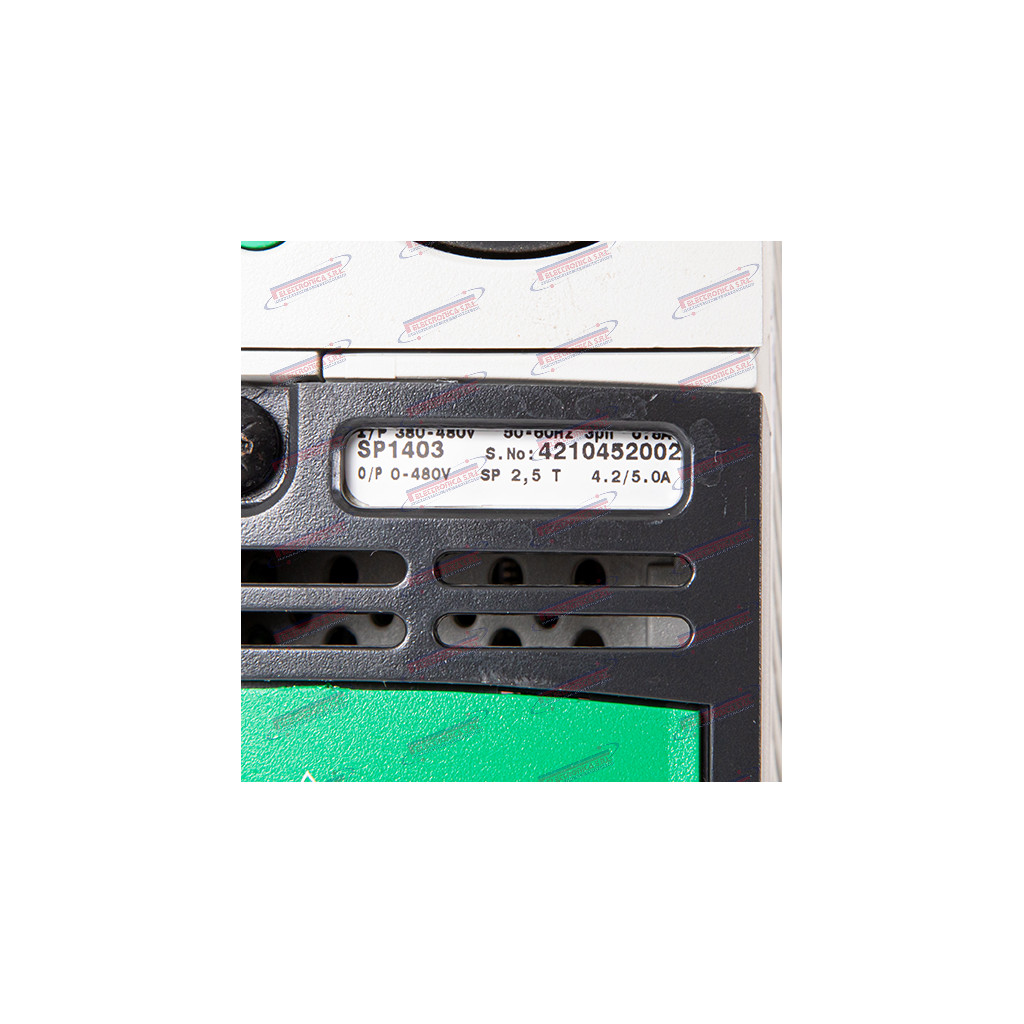
SP1403
Cat:
Servo Drive
Brand:
CONTROL TECHNIQUES
Service
Exchange service
Repair
Refurbished sell
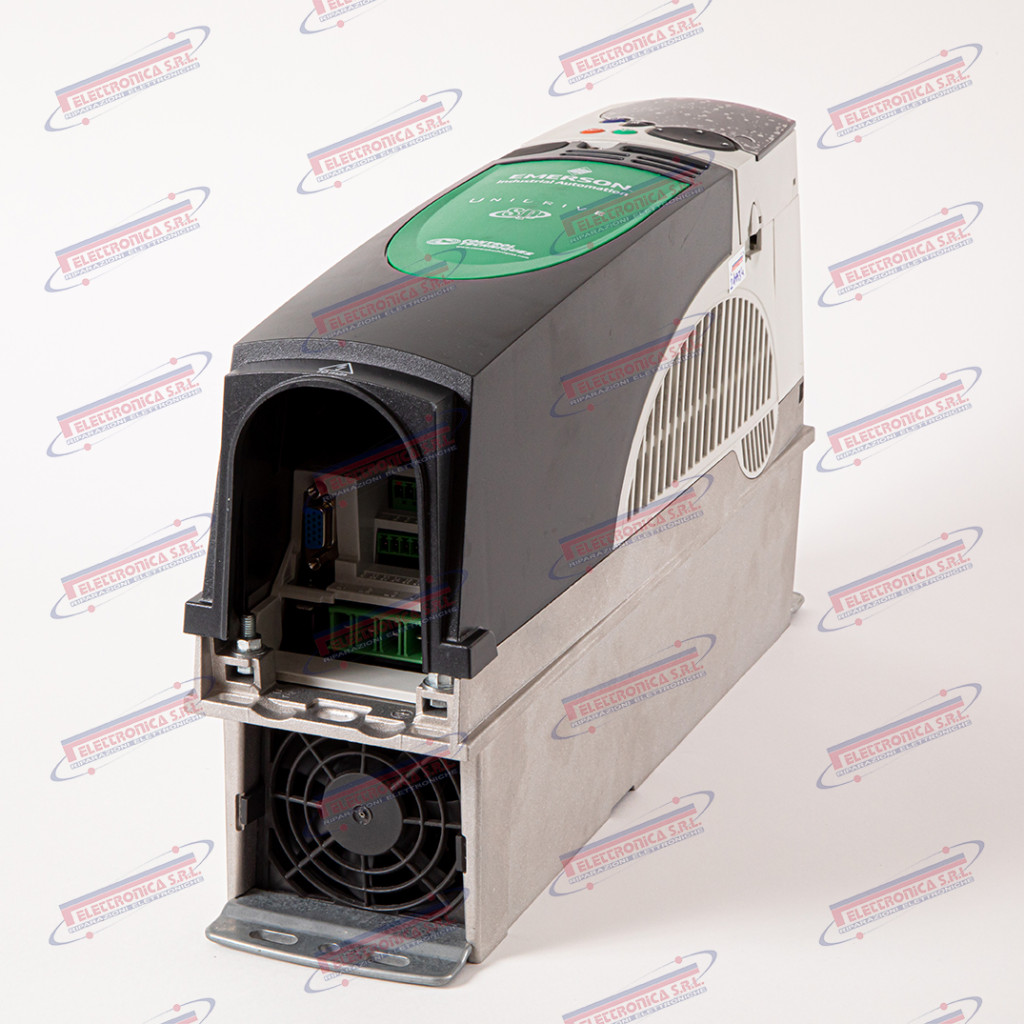
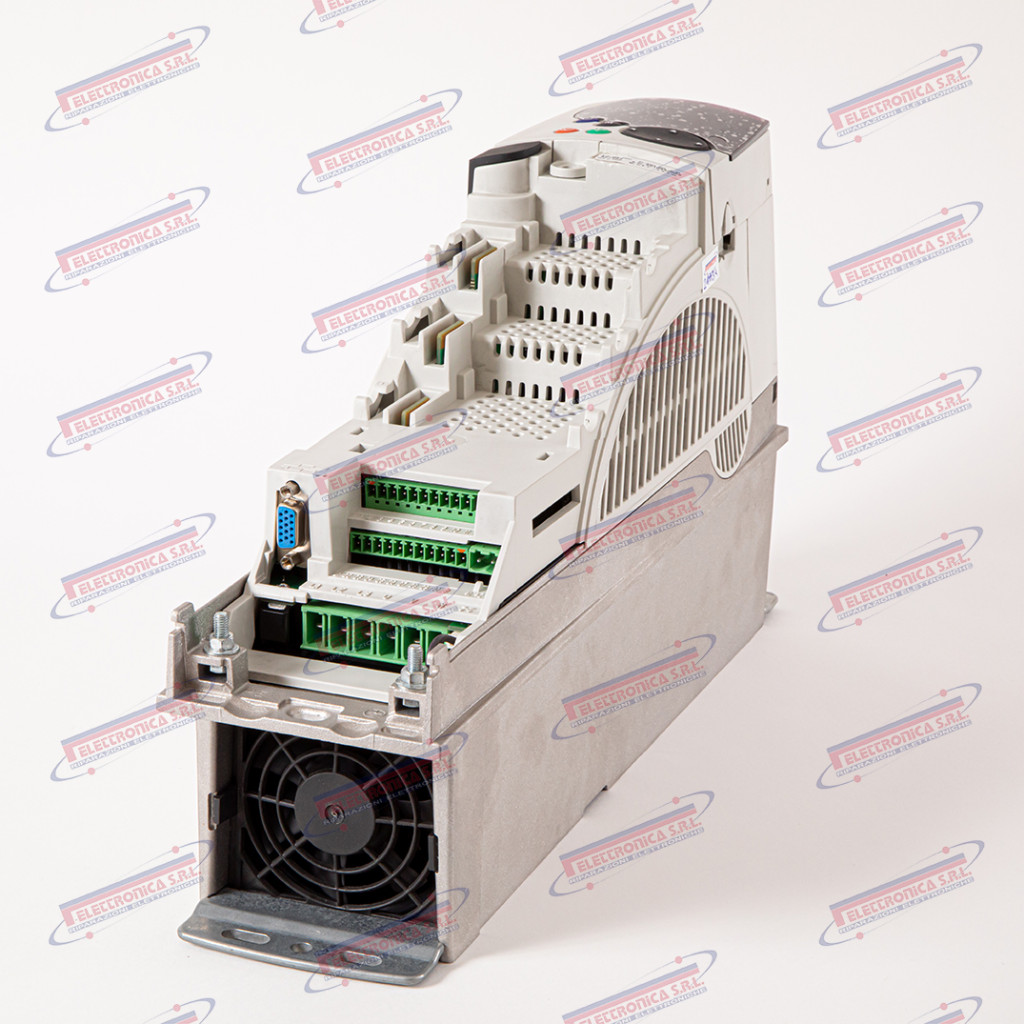
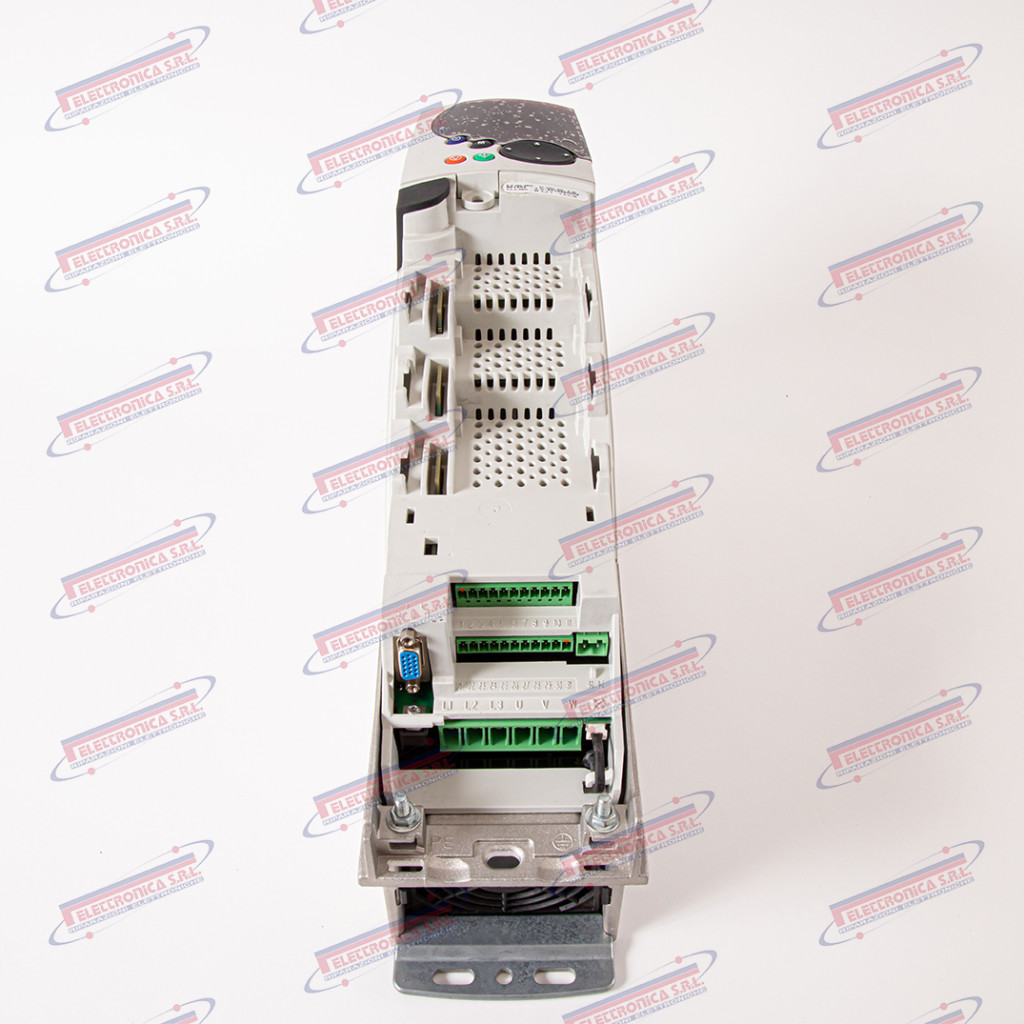
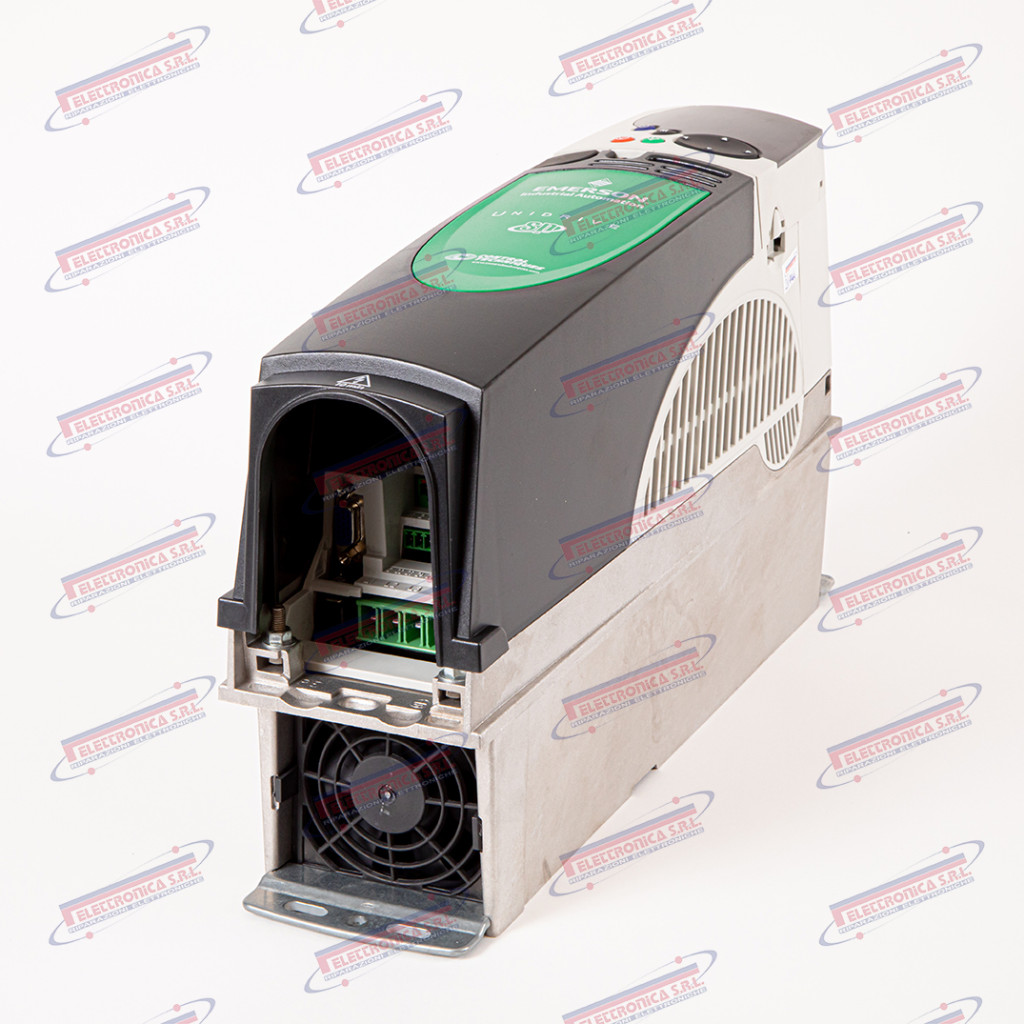
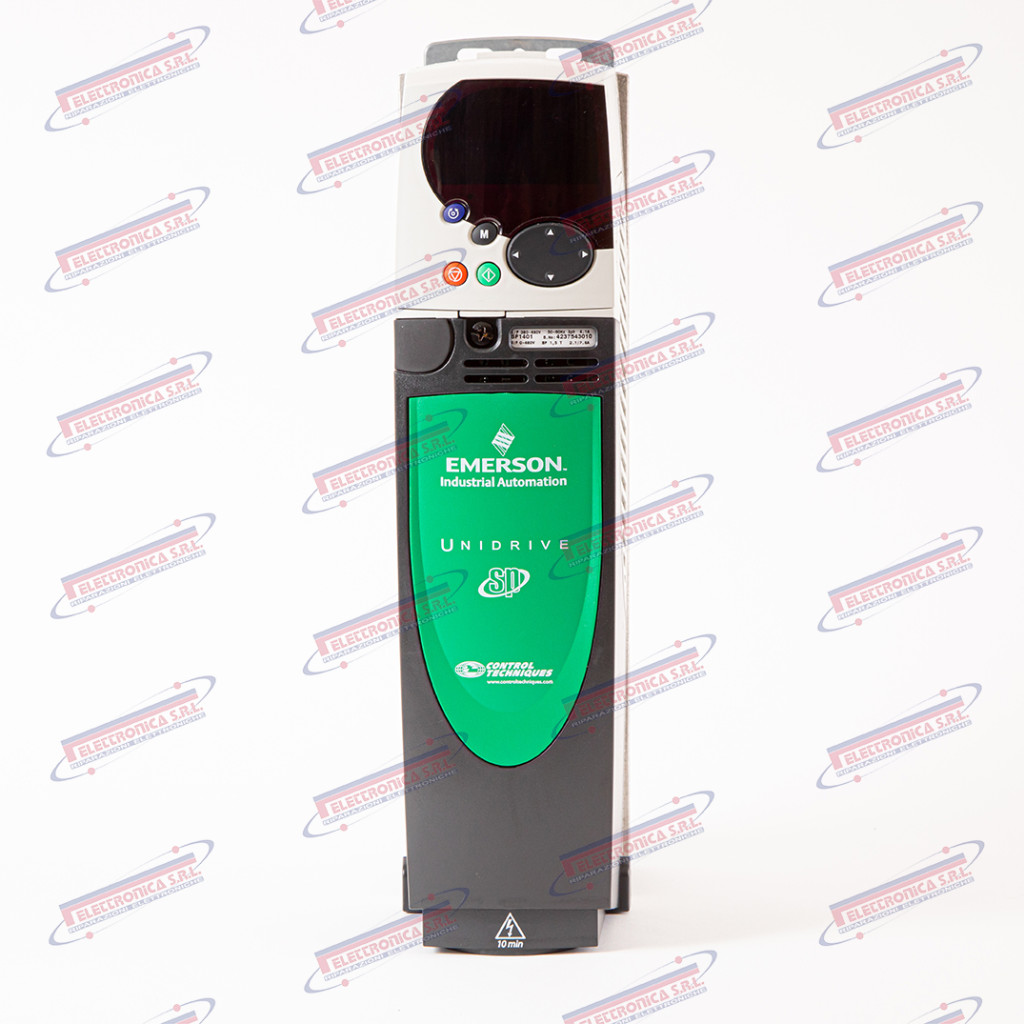
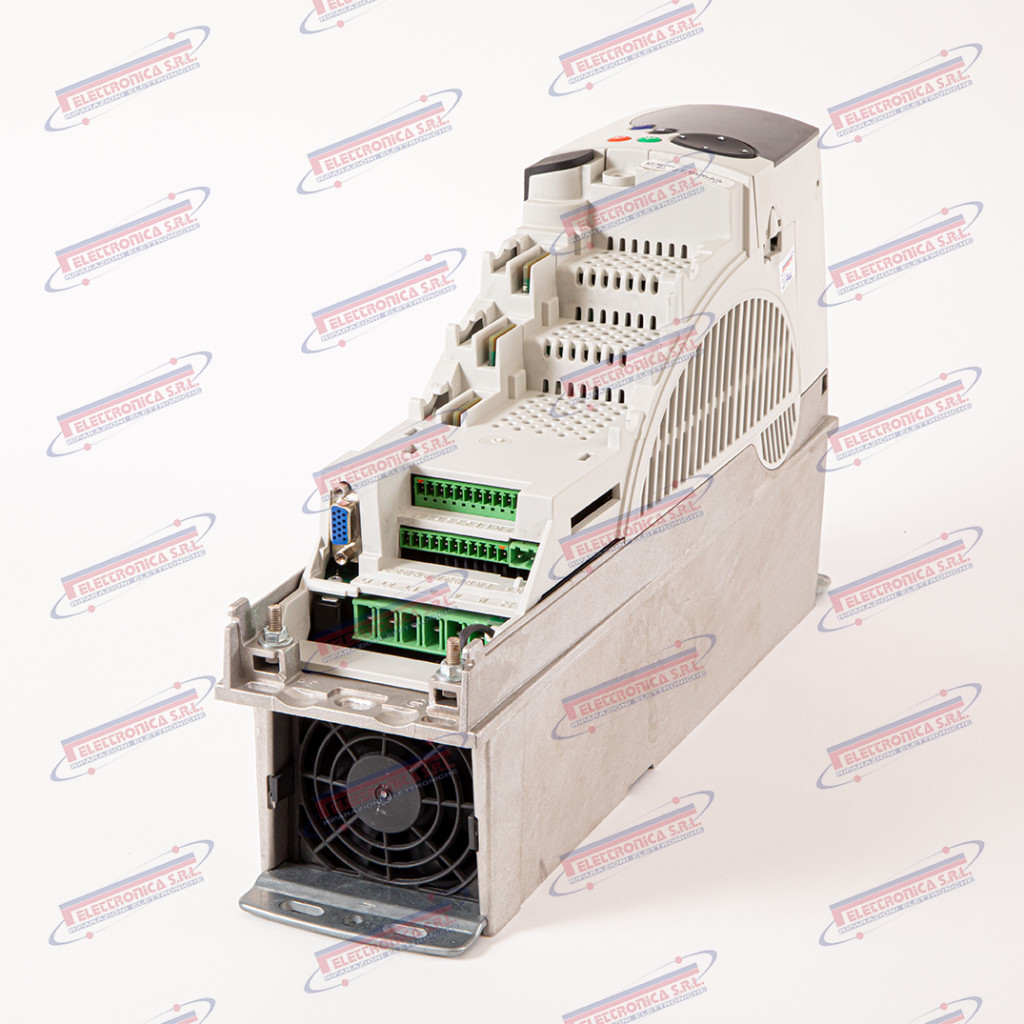
Variable Speed Drive – Control Techniques SP1403
The SP1403 is a variable speed drive (“Variable Speed Drive / Servo Drive”) from the Unidrive SP family manufactured by Control Techniques, documented in service on CNC machine tools, machining centres and industrial automation systems requiring precise control of asynchronous or synchronous motors. The Unidrive SP (“Universal Drive”) family supports open-loop, RFC (Rotor Flux Control) and servo modes with encoder feedback, managing the complete speed/torque regulation chain from the DC-bus rectifier stage through the IGBT inverter output. The unit integrates short-circuit, over-temperature and overvoltage protection, and is expandable with optional fieldbus communication and advanced encoder input cards.
The drive is the device that converts mains electrical energy into a variable voltage and frequency suitable for the motor, enabling precise speed and torque control throughout all machining phases. On a CNC machining centre its failure stops the spindle or the controlled axis, rendering the machine completely unusable; recovery requires replacing the drive and reconfiguring the regulation parameters (gains, ramps, current limits) to restore the machine’s original performance.
Control Techniques, founded in 1968 in Wales (UK), is one of the world’s leading manufacturers of variable speed drives for AC and DC motors; the Unidrive range has become a benchmark in global manufacturing industry. Acquired by Emerson Electric and subsequently by Nidec Corporation in 2017, products are now marketed under the Nidec | Control Techniques brand. The Unidrive SP series has been superseded by the Unidrive M series and is considered legacy / discontinued: available primarily as used, surplus or through specialist repair.
Main Technical Specifications
| Type | Variable speed drive / Servo drive (Unidrive SP) |
| Part number | SP1403 |
| Brand | Control Techniques (Nidec | Control Techniques) |
| Product family | Unidrive SP |
| Known application | CNC machine tools, machining centres, industrial automation systems |
| Function | AC / servo motor speed and torque control; open-loop, RFC (Rotor Flux Control) and servo modes |
| Input voltage | 380–480 V AC three-phase, 50/60 Hz |
| Rated output current | To be verified on nameplate — ~14 A |
| Nominal motor power | ~4–7.5 kW |
| Feedback | Incremental encoder / resolver / tachogenerator (via optional modules) |
| Interfaces | RS485, Modbus RTU; optional fieldbus cards (Profibus, CANopen, DeviceNet); analogue/digital control terminal strip |
| Weight | ~2–5 kg |
| Dimensions | ~170–280 × 90–130 × 180–230 mm |
| Production status | Legacy / discontinued — used/surplus/repair only |
SKU:
SP1401
Cat:
Servo Drive
Brand:
CONTROL TECHNIQUES
Service
Exchange service
Repair
Refurbished sell
AC Variable Speed Drive – CONTROL TECHNIQUES SP1401
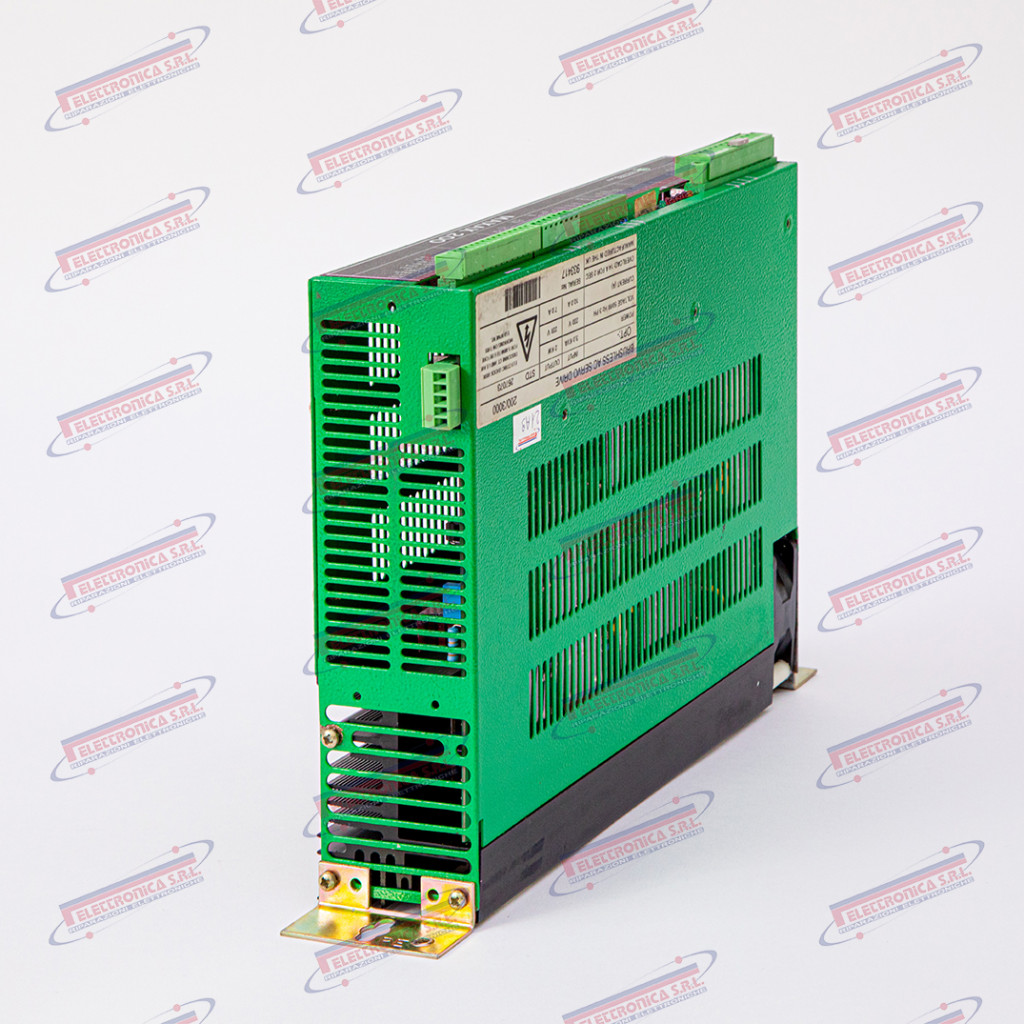
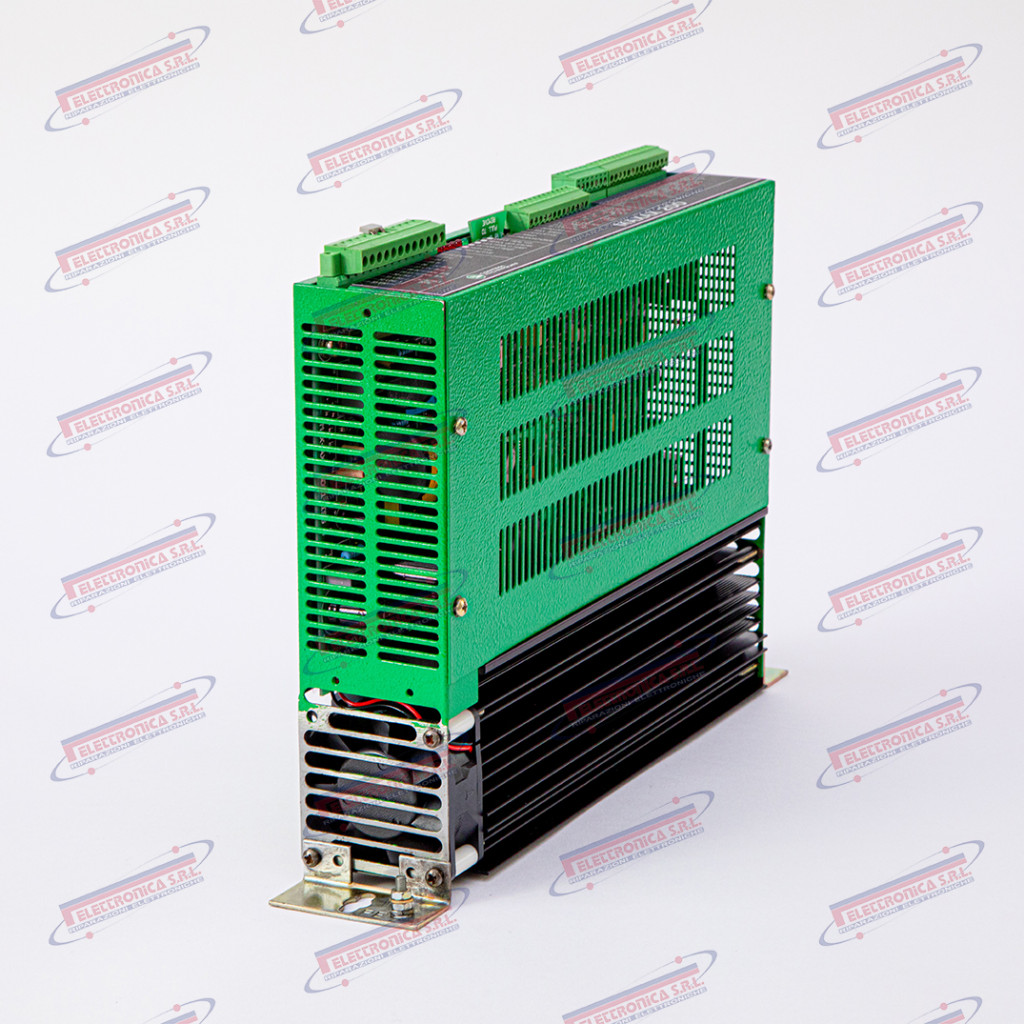
The SP1401 is an AC variable speed drive (“AC Variable Speed Drive” / inverter) manufactured by Control Techniques, belonging to the Commander SP family. Designed for three-phase induction motor speed control, it is used in CNC machine tools, material handling systems, and industrial automation. The unit integrates V/f and sensorless vector control logic, electronic protections (over-temperature, over-current, under-voltage), and a serial communication interface. Since the alternative code matches the main part number, the component is uniquely identified as SP1401.
The SP1401 drive converts mains voltage into variable voltage and frequency via PWM modulation, enabling precise motor speed control according to the CNC reference. It is the component that makes continuous feed rate or spindle speed regulation possible: without it the motor would operate only at fixed mains frequency, making any controlled machining impossible. A drive failure causes immediate stoppage of the affected axis or spindle, resulting in machine downtime.
Control Techniques is a British manufacturer founded in 1973, a world leader in variable speed drives and servo drives (product ranges: Unidrive, Commander, Mentor, Digitax). Acquired by Emerson Electric in 2004 and subsequently by Nidec Corporation in 2017, it now operates under the Nidec brand. The Commander SP range is legacy / discontinued: available only as used, surplus, or through specialist repair services.
Main Technical Specifications
| Type | AC variable speed drive (inverter / VFD) |
| Part number | SP1401 |
| Brand | Control Techniques (Nidec – Commander SP family, legacy) |
| Known application | CNC machine tools, industrial automation, material handling |
| Function | AC induction motor speed control via PWM modulation |
| Input voltage | ~200–480 V AC, single / three-phase |
| Rated power | ~0.37–2.2 kW |
| Output frequency | 0–400 Hz (typical Commander SP) |
| Control modes | V/f, sensorless open-loop vector |
| Interfaces / communication | Analogue and digital terminal strip; RS485 (typical Commander SP) |
| Weight | ~0.5–1.5 kg |
| Dimensions | ~150–250 mm |
| Production status | Legacy / discontinued — used/surplus/repair only |
SKU:
MAXAX 200/3000
Cat:
Servo Drive
Brand:
CONTROL TECHNIQUES
Service
Exchange service
Refurbished sell
Repair
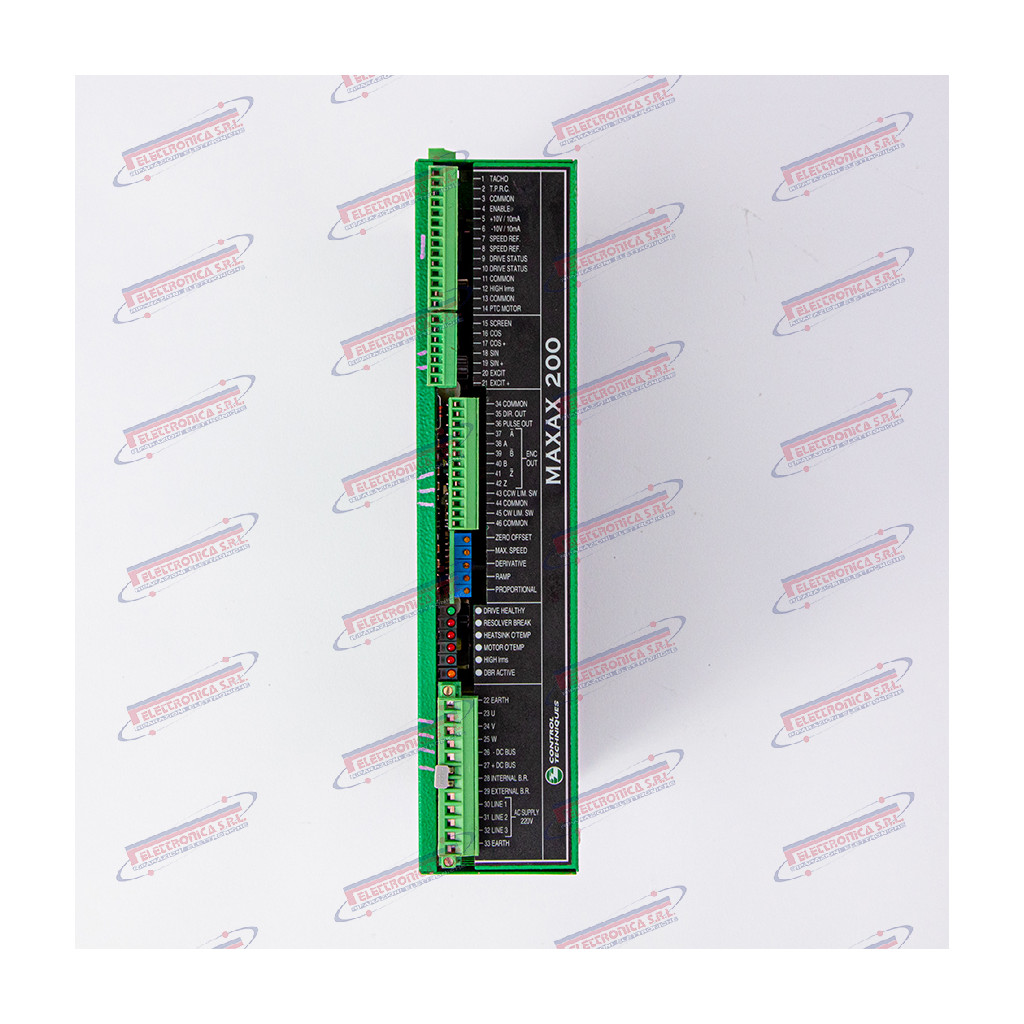
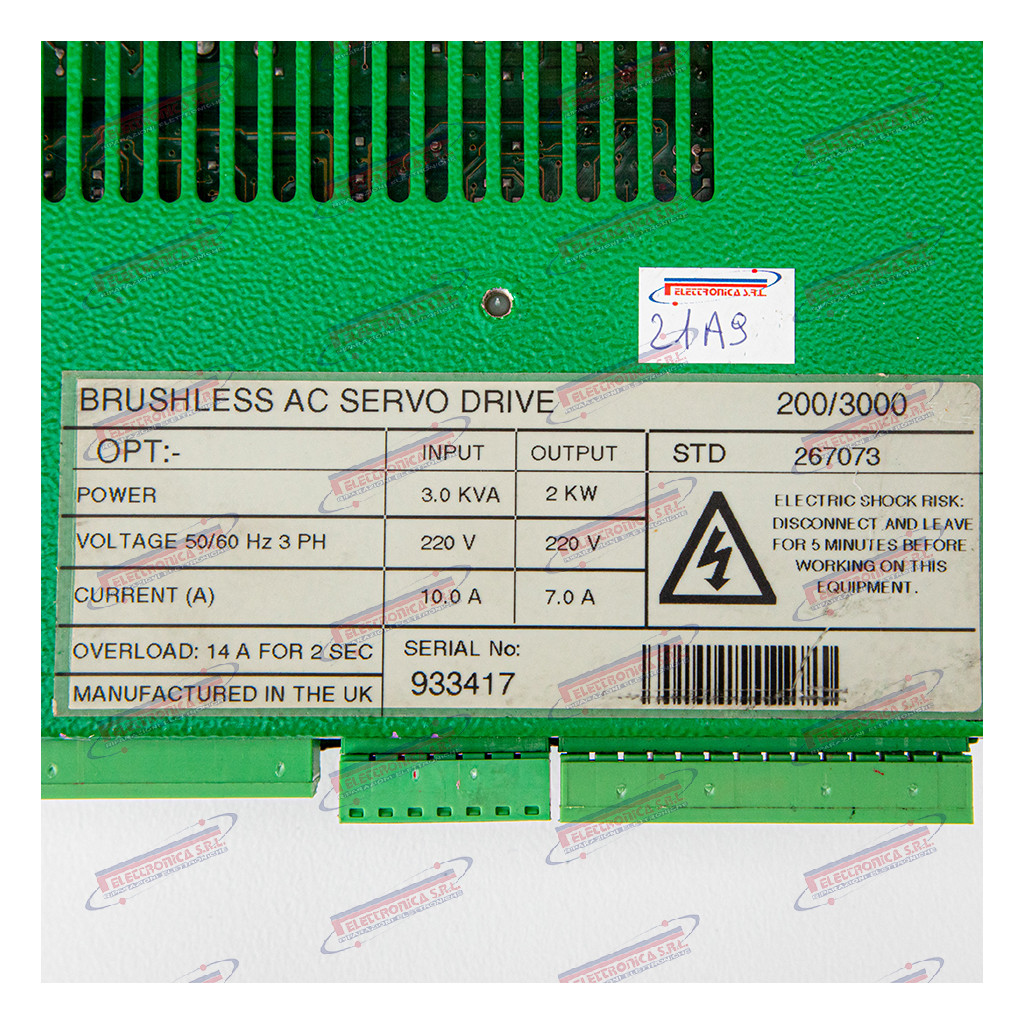
Axis Servo Drive – CONTROL TECHNIQUES MAXAX 200/3000
The MAXAX 200/3000 is an axis servo drive (“Axis Servo Drive”) manufactured by Control Techniques, belonging to the MAXAX family, a series dedicated to axis control in motion control applications for CNC machine tools. The part number identifies a compact module designed to drive servo motors (brushless AC or DC) for positioning and machining axes, with the rated voltage class and nominal speed encoded in the product designation. The module manages the current and velocity loops of the axis, interfacing with the CNC controller via an analogue speed reference and encoder feedback signals. Multiple hardware revisions and configuration variants may exist.
The axis servo drive is the power regulator that converts the position or speed references issued by the CNC into precise control currents for the axis motor: it ensures high dynamic response, positional stiffness and motor protection during machining operations. If it fails, the affected axis becomes uncontrollable or is locked in a safe state, rendering the machine completely unusable and halting production.
Control Techniques is a British manufacturer founded in 1973 in Newtown, Wales, specialising in high-performance AC, DC and servo drives for industrial automation; in 1992 it was acquired by Emerson Electric and subsequently, in 2017, by Nidec Corporation, now operating under the brand Nidec Control Techniques. All products in the MAXAX family are legacy / discontinued: available only as used, surplus or through specialist repair services.
Main Technical Specifications
| Type | Axis servo drive (Axis Servo Drive) |
| Part number | MAXAX 200/3000 (MAXAX2003000) |
| Brand | Control Techniques (Nidec / Emerson legacy) |
| Known application | CNC machine tools with servo axes (machining centres, lathes, milling machines) |
| Function | Axis servo motor current and speed regulation |
| Rated voltage | ~200 V (rated voltage class) |
| Maximum speed | ~3000 rpm (nominal reference) |
| Reference input | Analogue speed/position reference ±10 V (typical) |
| Feedback | Incremental encoder / resolver (typical for CNC axes) |
| Interfaces | Multi-pin connectors; digital I/O enable/fault; optional fieldbus |
| Weight | ~1–3 kg |
| Dimensions | ~150–300 mm |
| Production status | Legacy / discontinued — used/surplus/repair only |

SKU:
MAXAX 100/3000
Cat:
Servo Drive
Brand:
CONTROL TECHNIQUES
Service
Exchange service
Refurbished sell
Repair
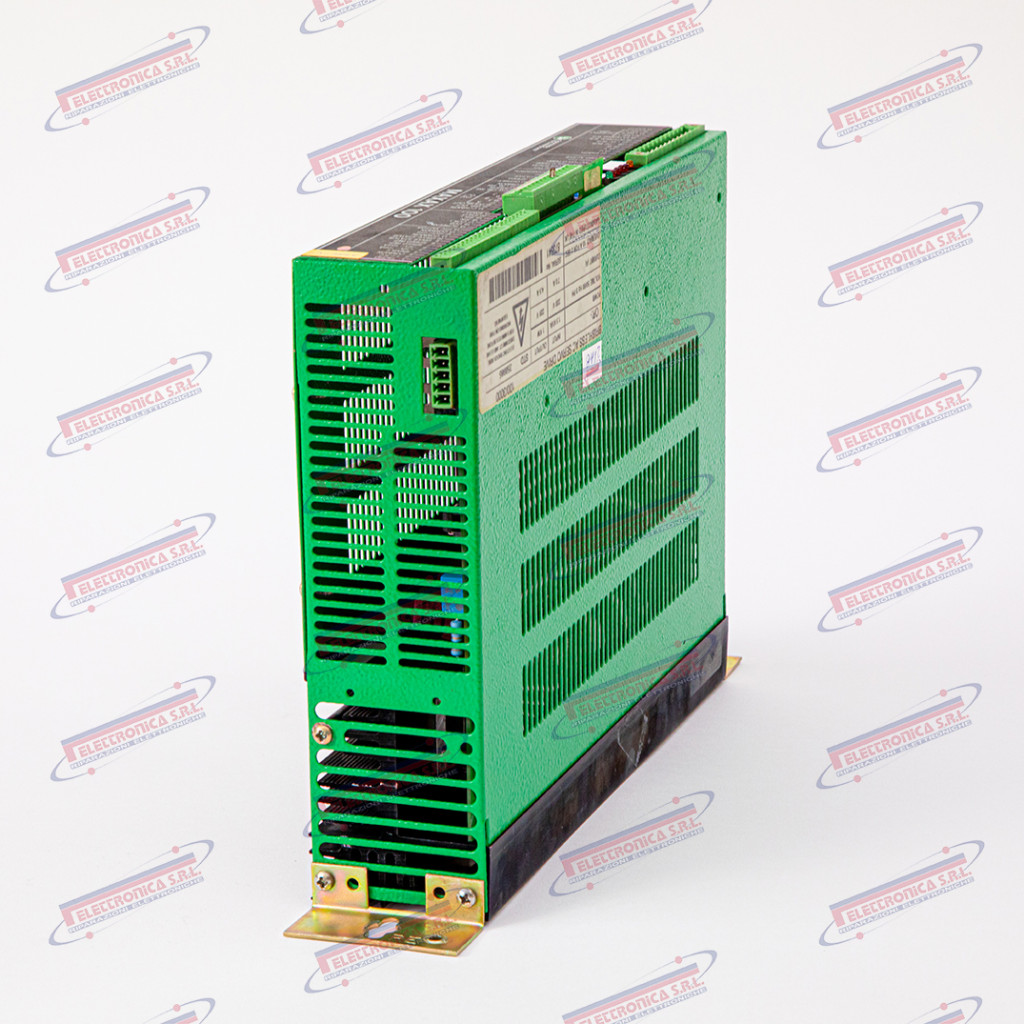
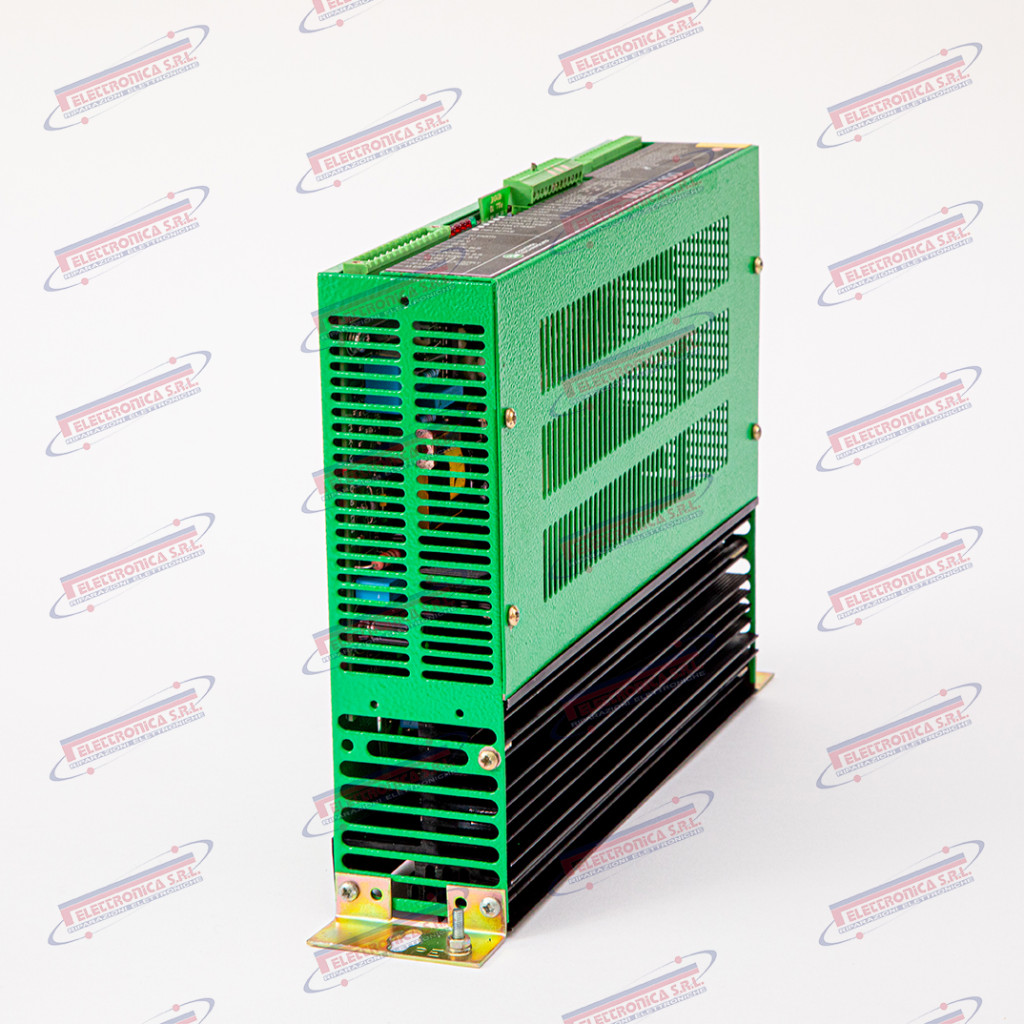
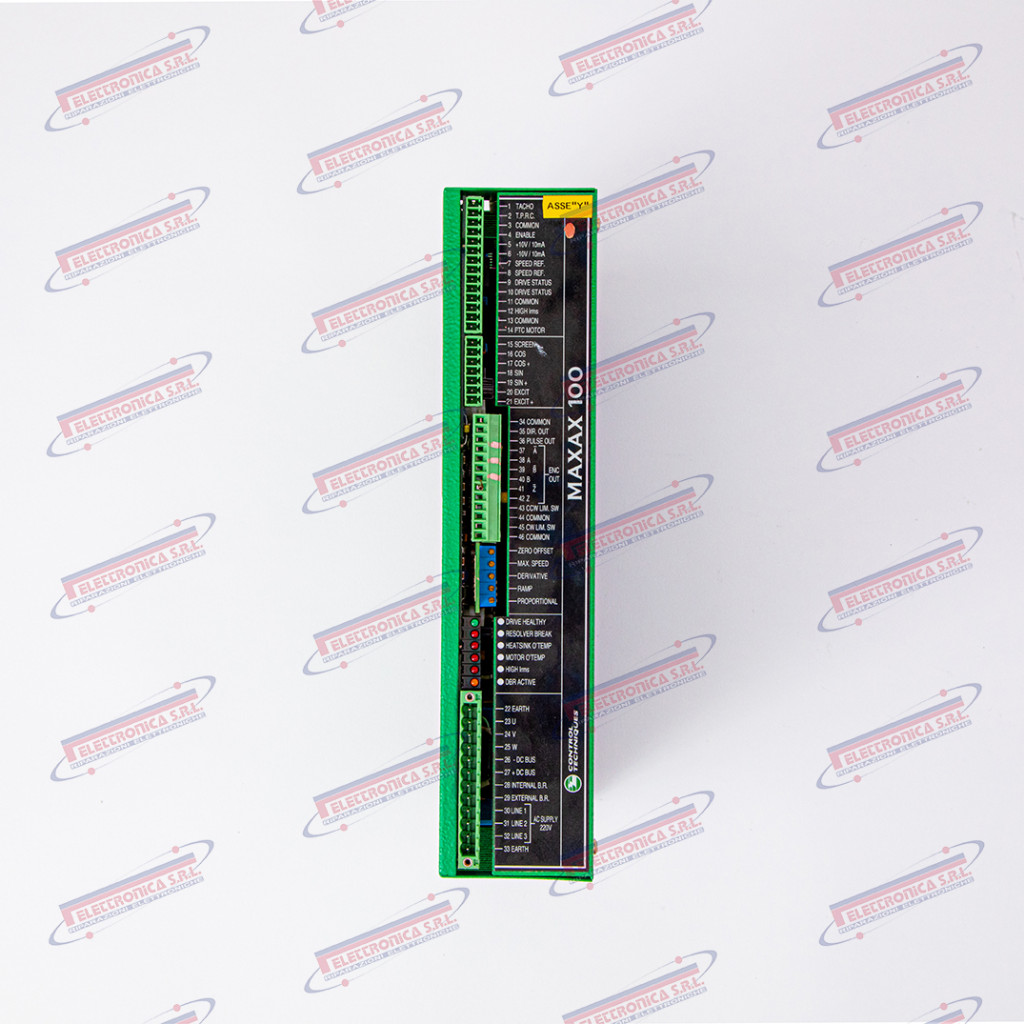
Servo Axis Drive – CONTROL TECHNIQUES MAXAX 100/3000
The MAXAX 100/3000 is a servo axis drive (“Servo Axis Drive”) manufactured by Control Techniques, belonging to the MAXAX family of the MAX multi-axis control platform. The designation MAXAX identifies the module as an axis drive (AX = axis) integrated into the MAX system; the model parameters indicate a peak current class of 100 A and a nominal motor speed of 3000 rpm. The module interfaces with the central MAX controller and the axis servo motor, managing the position–velocity–current control chain. Hardware revisions and firmware variants may exist; always verify compatibility with the installed controller version.
The servo axis drive is the component that translates position and velocity commands from the CNC into precise current signals to the motor, closing the regulation loops and ensuring exact axis positioning during machining. A failure in this module makes the axis completely uncontrollable: the machine triggers an alarm and production stops immediately, with a real risk of collisions or dimensional rejects across the entire batch being machined.
Control Techniques is a British manufacturer of variable speed drives and servo systems, founded in Newtown, Wales (UK), and established as a global reference in industrial motion control. Acquired by Emerson Electric in 2004 and subsequently by Nidec Corporation (Japan) in 2017, it now operates as a strategic brand within the Nidec Motion Control division. Products in the MAXAX series are legacy / discontinued: available only as used, surplus or through specialist repair.
Main Technical Specifications
| Type | Servo axis drive (Servo Axis Drive) |
| Part number | MAXAX 100/3000 (MAXAX1003000) |
| Brand | Control Techniques (Nidec / Emerson legacy) |
| Known application | Multi-axis CNC systems with Control Techniques MAX platform |
| Function | Position, velocity and current regulation of the axis servo motor |
| Peak current | ~100 A |
| Max motor speed | ~3000 rpm |
| Supply voltage | 200–480 V AC three-phase (typical MAX series) |
| Logic supply voltages | ±15 V and +5 V DC (typical) |
| Interfaces | MAX system bus, axis encoder/resolver, digital I/O, multi-pin edge connectors |
| Weight | ~2–5 kg |
| Dimensions | ~250–400 mm |
| Production status | Legacy / discontinued — used/surplus/repair only |

SKU:
DBE 220
Cat:
Servo Drive
Brand:
CONTROL TECHNIQUES
Service
Exchange service
Refurbished sell
Repair
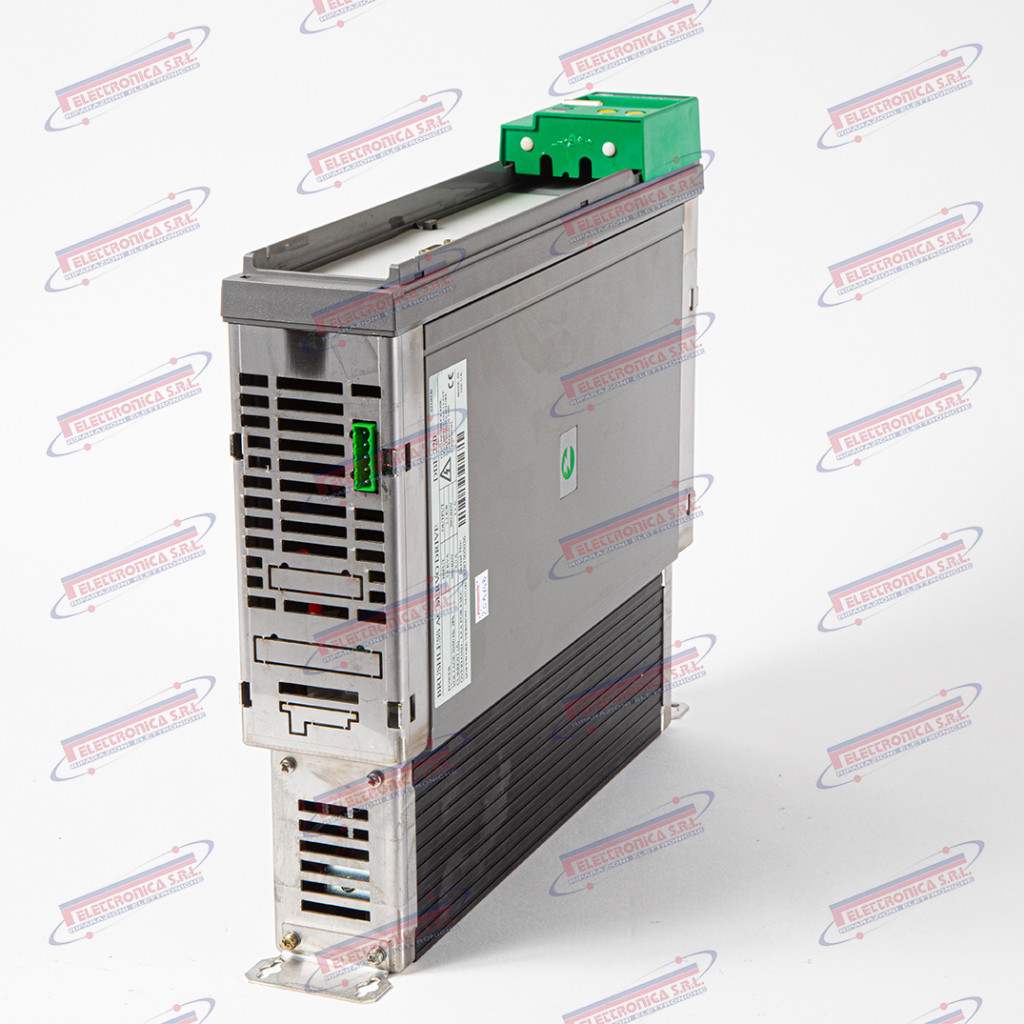
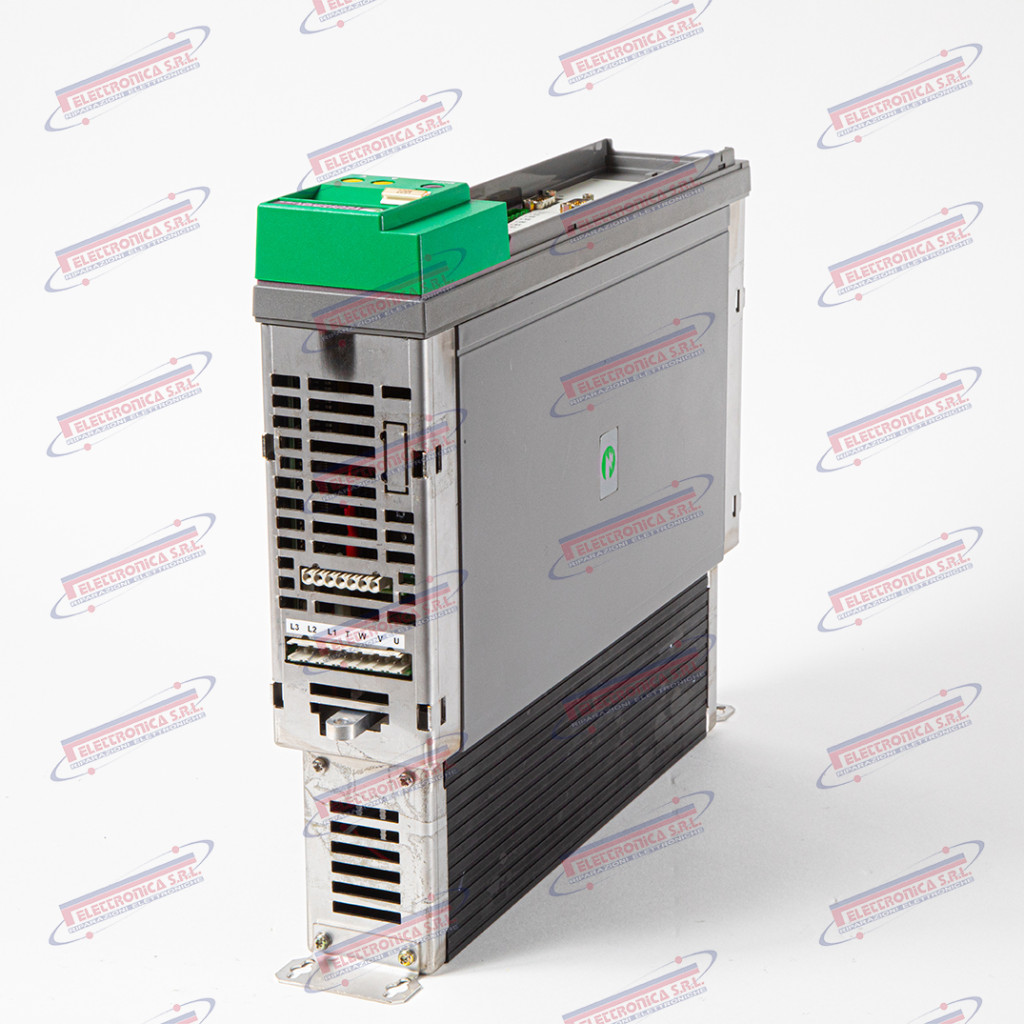
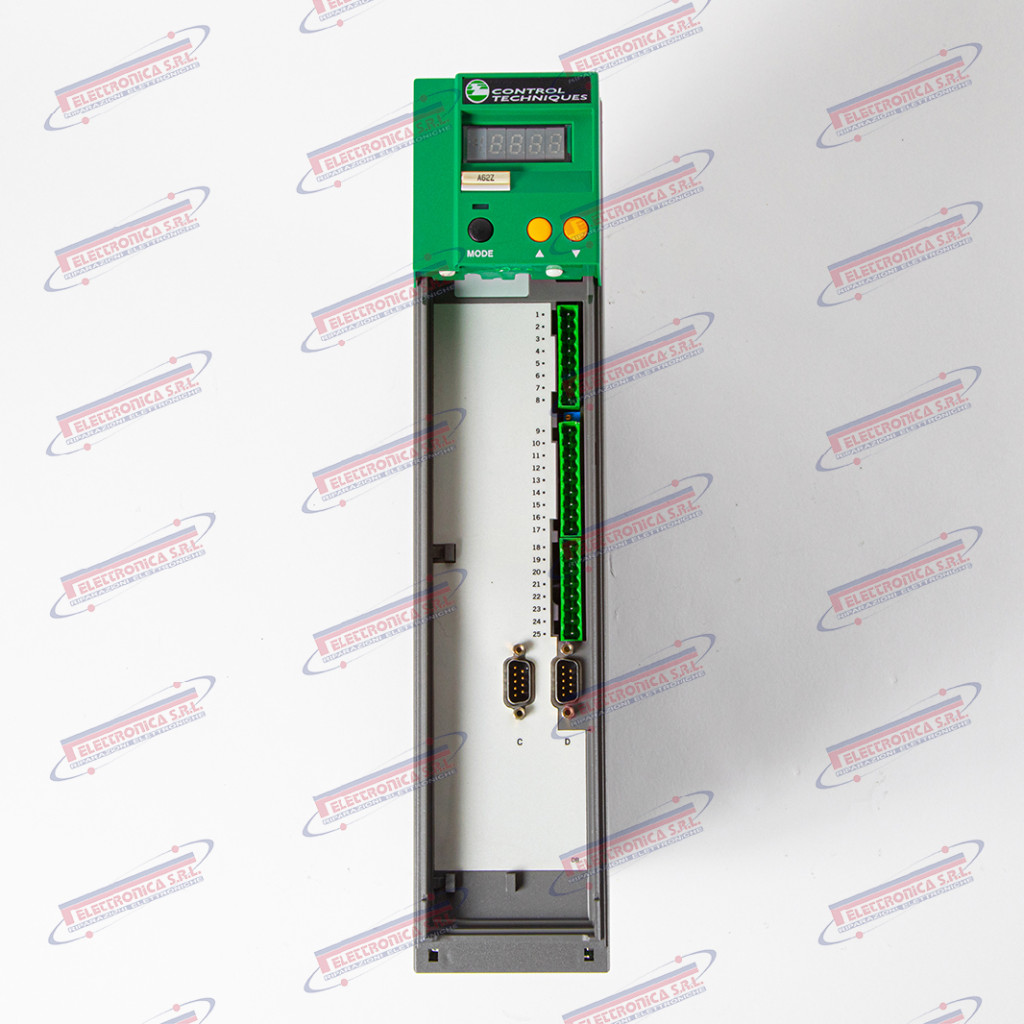
Digital Brushless Servo Drive – Control Techniques DBE 220
The DBE 220 is a digital brushless servo drive (“Digital Brushless Servo Drive”) manufactured by Control Techniques, belonging to the family of digital drives for brushless AC/DC servo motors used in CNC machine tools and industrial automation systems. The unit manages the current, speed and position control loops of the servo motor, receiving a digital or analogue reference from the CNC controller and driving the motor using high-frequency digital PWM modulation. Variants with different nominal current and supply voltage may exist; always verify the nameplate data before any replacement.
The digital servo drive is the core of the axis motion system: it converts the CNC’s numerical commands into precise power currents that accelerate, hold and decelerate the servo motor with the dynamic response demanded by the machining process. Without this component the controlled axis is stationary or uncontrollable; a failure causes an immediate machine stop with a drive alarm, making any machining cycle impossible.
Control Techniques is a British manufacturer founded in 1968 in Newtown (Wales), a pioneer in the development of AC inverters and digital servo drives for the global manufacturing industry. Acquired by Emerson Electric in 2004 and subsequently integrated into the Nidec Corporation group in 2017, the company continues to manufacture drives for industrial automation. Products from the older series, including the DBE family, are legacy / discontinued: available exclusively as used, NOS, or through specialist repair services.
Main Technical Specifications
| Type | Digital brushless servo drive (Digital Brushless Servo Drive) |
| Part number | DBE 220 (DBE220) |
| Brand | Control Techniques (Nidec / Emerson Electric legacy) |
| Known application | CNC machine tools, industrial automation and motion control systems |
| Function | Current, speed and position control for brushless AC/DC servo motor |
| Supply voltage | 200–240 V AC single/three-phase |
| Rated current | ~20 A continuous |
| Modulation technique | High-frequency digital PWM |
| Reference interface | Analogue ±10 V / incremental encoder / serial interface (version dependent) |
| Built-in protections | Overcurrent, overtemperature, short circuit, DC bus undervoltage, encoder fault |
| Weight | ~2–5 kg |
| Dimensions | ~200–350 mm |
| Production status | Legacy / discontinued — used/surplus/repair only |


SKU:
DB420
Cat:
Servo Drive
Brand:
CONTROL TECHNIQUES
Service
Repair
Digital Servo Drive for Brushless Motor – CONTROL TECHNIQUES DB420
The DB420 is a digital servo drive (“Digital Servo Drive”) belonging to the DIGITAX series by Control Techniques, designed for speed, position and torque control of brushless AC motors (permanent-magnet AC synchronous servomotors). It is documented as a component in CNC axis-control systems for machining centres, transfer machines and high-precision industrial automation. The DB420 receives the reference from the CNC controller and drives the servo motor via a high-switching-frequency three-phase PWM output; it internally manages the current (torque) and speed loops, with feedback from an incremental encoder or resolver. The “DB” designation identifies the brushless family within the DIGITAX series; “420” refers to the current/voltage rating. No distinct alternative part number is known other than the main code.
The digital servo drive is the electronic controller that translates CNC commands into precise current delivered to the axis motor: it maintains position and speed with sub-millisecond accuracy, ensuring dimensional repeatability of the machined workpiece. If the DB420 fails, the controlled axis is completely locked or uncontrollable; the machine triggers an alarm and cannot produce, with immediate impact on productivity and a potential risk of collision.
Control Techniques is a British manufacturer founded in the 1970s, a world leader in the design of AC drives, servo drives and motion control systems. The company was acquired by Emerson Electric in 2004 and subsequently by Nidec Corporation in 2017, continuing to operate under its own brand. The original generations of the DIGITAX product line (prior to the ST series) are legacy / discontinued: available exclusively as used, surplus or through specialist repair.
Main Technical Specifications
| Type | Digital servo drive for brushless AC motor — DIGITAX series |
| Part number | DB420 |
| Brand | Control Techniques (Nidec group) |
| Series | DIGITAX (legacy generation) |
| Known application | CNC machining centres, transfer machines, industrial automation systems with brushless AC servomotors |
| Function | Speed, position and torque control of brushless AC servomotors (current loop + speed/position loop) |
| Supply voltage | ~400 V AC three-phase, 50/60 Hz |
| Output current | ~20 A nominal |
| Feedback | Incremental encoder / resolver (typical DIGITAX series) |
| Analogue inputs | Speed reference ±10 V DC (typical) |
| Communication interfaces | RS-232 / RS-485; fieldbus options CANopen, PROFIBUS-DP |
| Weight | ~1.5–4.0 kg |
| Dimensions | ~75–120 mm (W) × 200–320 mm (H) × 130–200 mm (D) |
| Production status | Legacy / discontinued — used/surplus/repair only |


SKU:
UNI3401
Cat:
Servo Drive
Brand:
CONTROL TECHNIQUES
Service
Exchange service
Repair
Refurbished sell
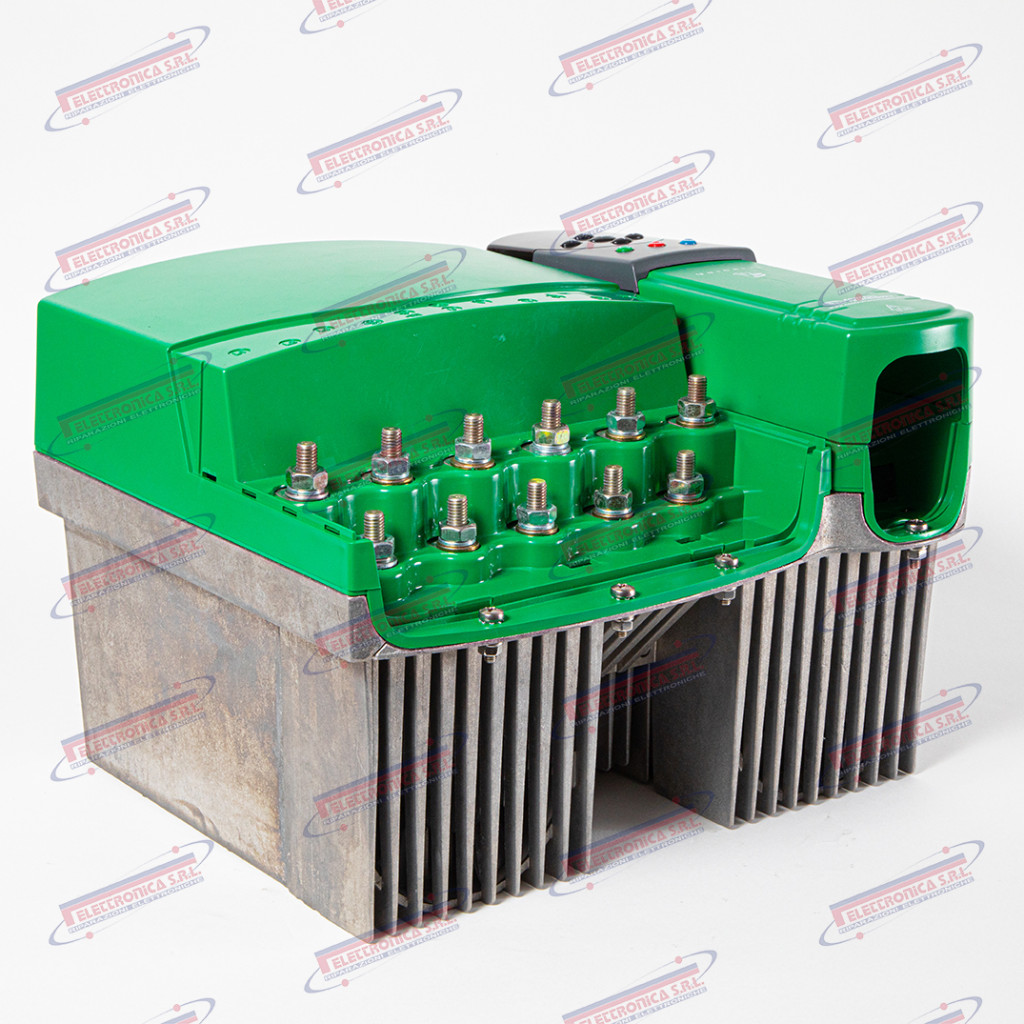
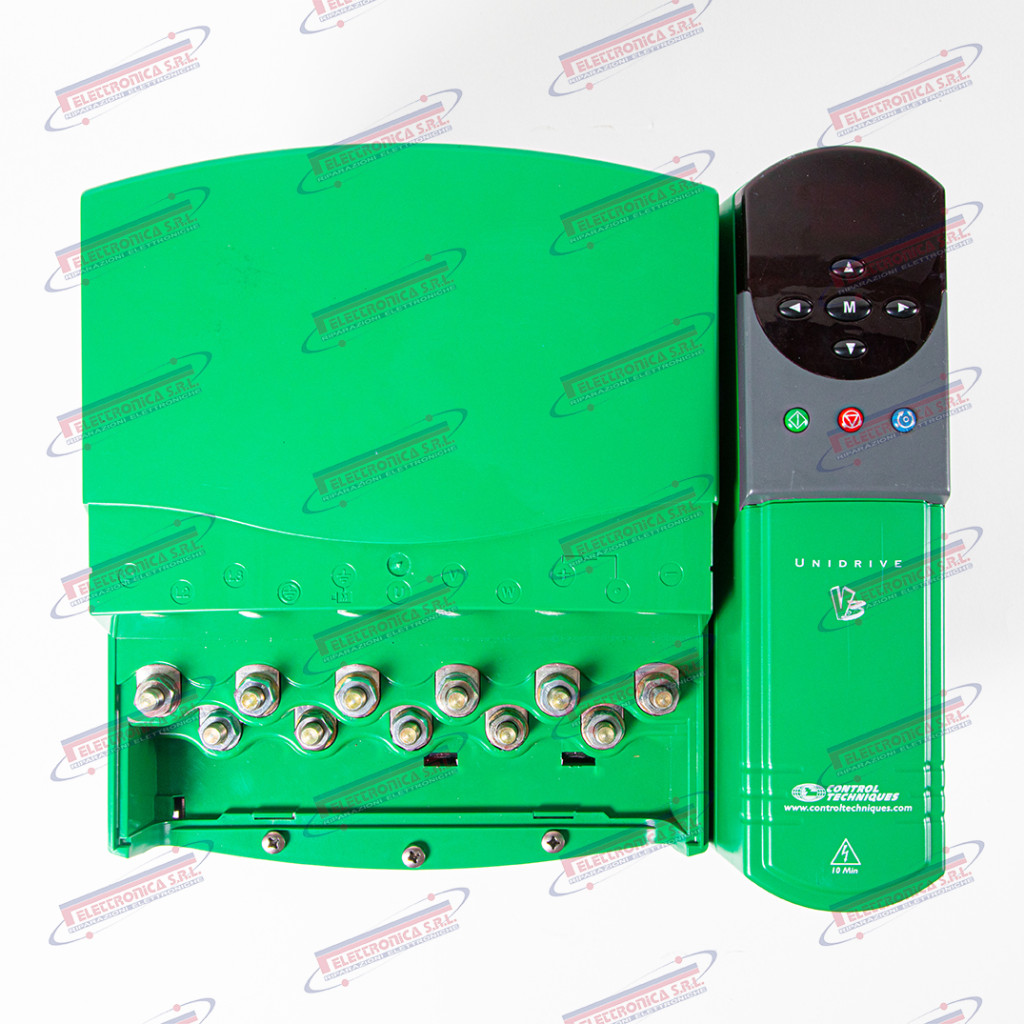
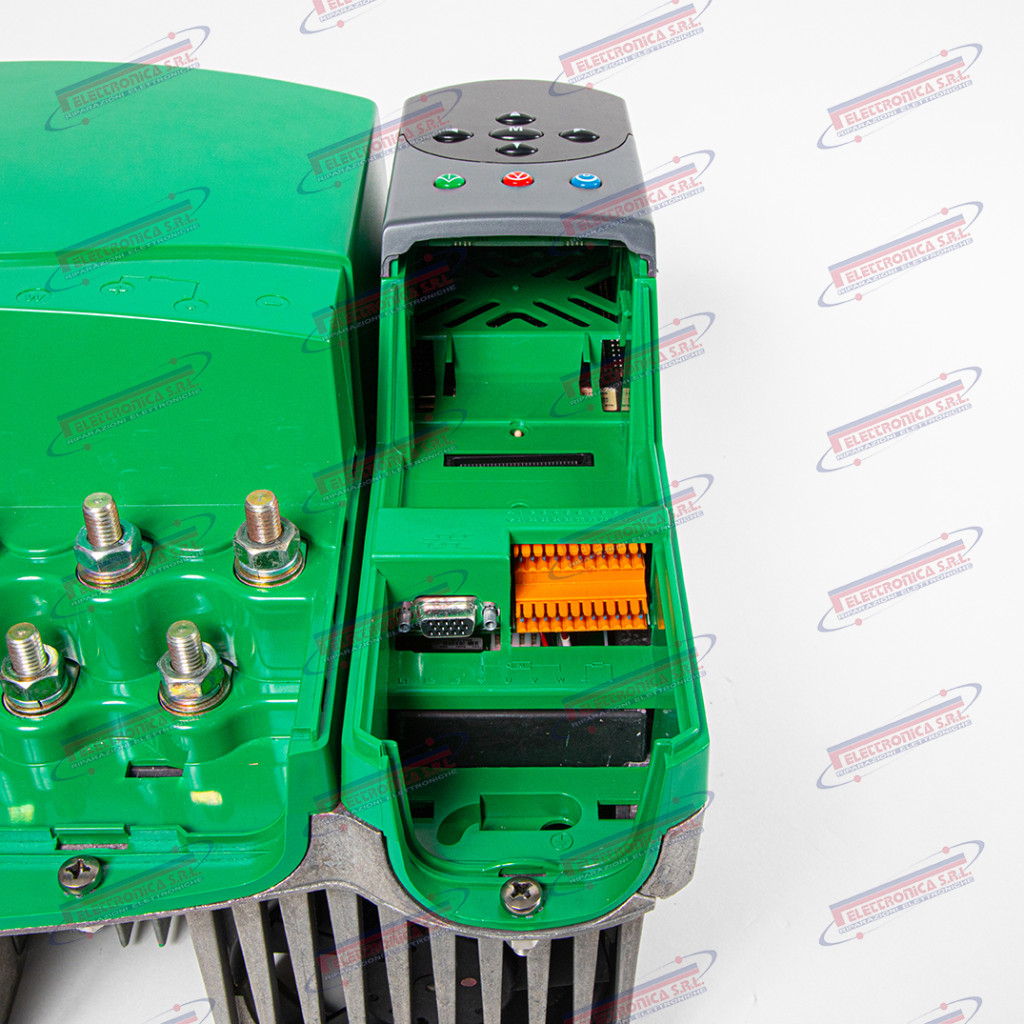
AC Variable Speed Drive – Control Techniques UNI3401
The UNI3401 is an AC variable speed drive from the Unidrive Classic series by Control Techniques. It is a medium-frame (frame 3) three-phase inverter for 400 V AC supply, designed to control induction and permanent-magnet synchronous motors in CNC machine tools, industrial automation, and motion control applications. The drive supports five operating modes: open-loop V/Hz, open-loop vector, closed-loop vector (with encoder feedback), servo (brushless PM motors), and regenerative. It is not a CPU board or standalone I/O module, but a fully integrated power conversion and digital regulation drive. Option expansion slots are provided for additional I/O, fieldbus modules, and supplementary encoder interfaces.
The Unidrive drive is the core of the axis and spindle motion system in a CNC machine: it receives the speed or torque reference from the numerical control and continuously adjusts output frequency and voltage to drive the motor with high accuracy. A drive failure immediately stops the controlled axis or spindle, rendering the machine unusable; replacing or repairing the drive becomes the critical path to restoring production.
Control Techniques is a British manufacturer of drives and servo systems founded in 1968 in Newtown (Wales, UK), acquired by Emerson Electric in 1994 and absorbed into the Nidec Corporation group in 2017. The Unidrive Classic series is legacy / discontinued: superseded by the Unidrive SP series and subsequently by Unidrive M, it is now available only as used, surplus, or through specialist repair centres.
Main Technical Specifications
| Type | AC variable speed drive – Unidrive Classic series, frame 3 |
| Part number | UNI3401 |
| Brand | Control Techniques (Nidec group – formerly Emerson Electric) |
| Known application | CNC machine tools, industrial automation, motion control systems (1990s–2000s) |
| Function | Speed and torque control of AC induction and PM synchronous motors |
| Input voltage | 380–480 V AC three-phase ±10%, 50/60 Hz |
| Rated output current | ~25–40 A |
| Motor power | ~11–18 kW at 400 V |
| Operating modes | Open-loop V/Hz, open/closed-loop vector (encoder), servo (PM), regenerative |
| Interfaces / connectors | RS-485 (CT protocol), option expansion slots (I/O, fieldbus, encoder), control terminal strips |
| Protection rating | IP20 (panel mounting) |
| Weight | ~10–18 kg |
| Dimensions | ~250 × 500 × 220 mm W×H×D |
| Production status | Legacy / discontinued — used/surplus/repair only |