
 Italiano


SKU:
ACURITEIII
Cat:
No Category
Brand:
ACU-RITE
Service
Repair
Exchange service
Refurbished sell
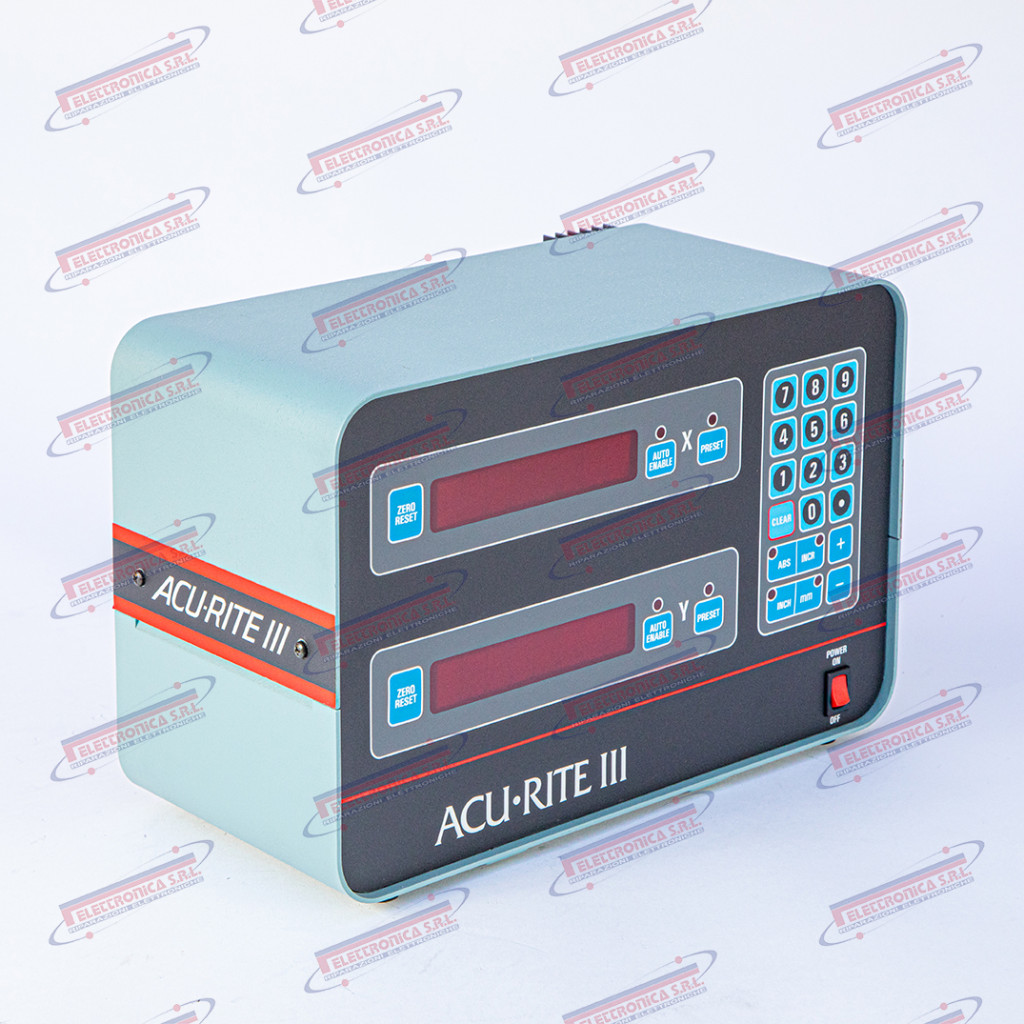
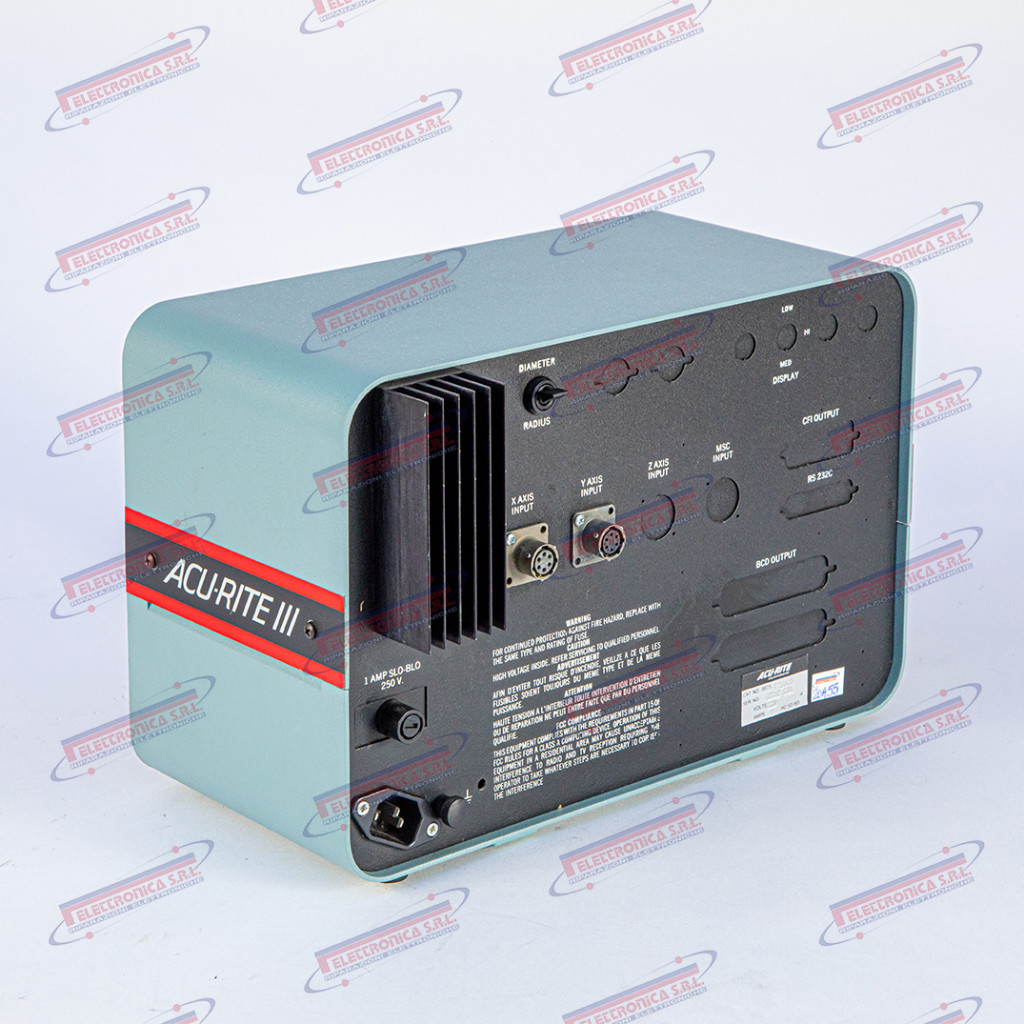
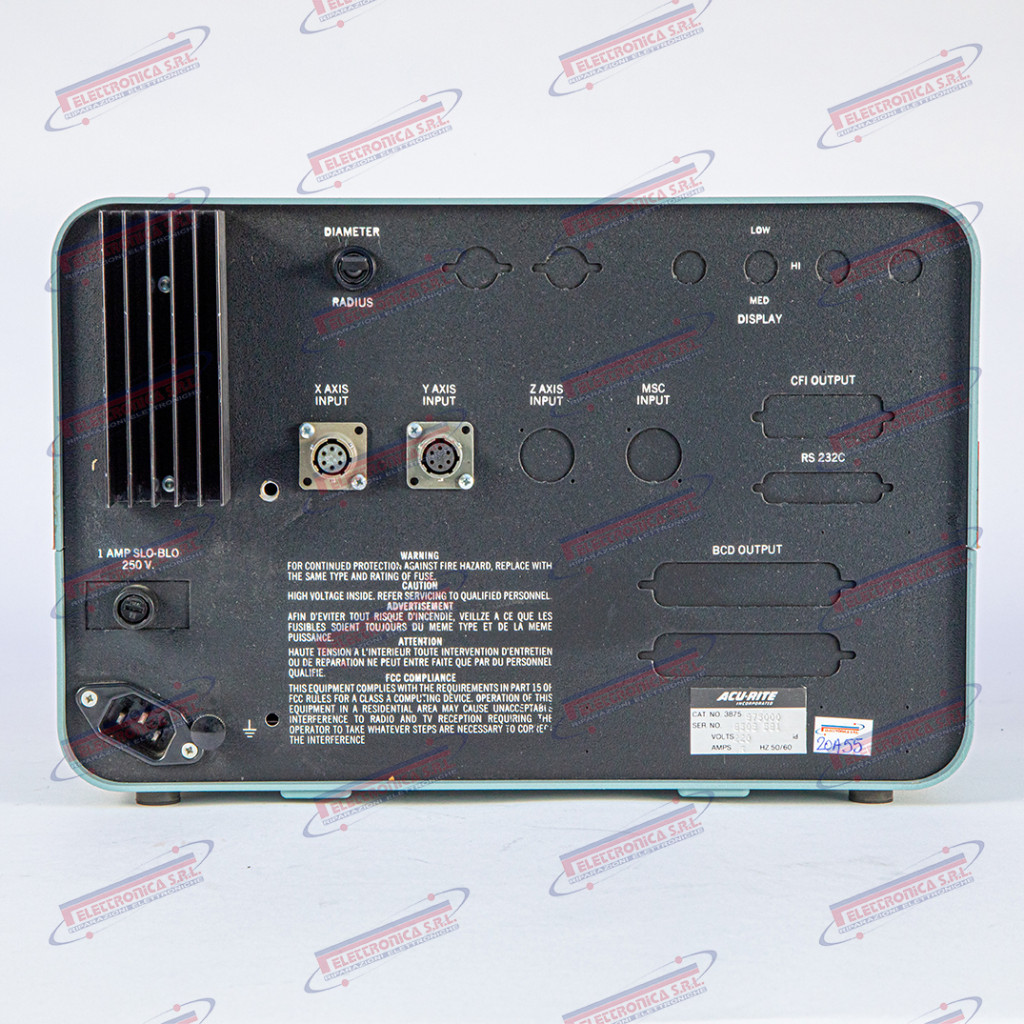
Digital Position Readout (DRO) – ACU-RITE III
The ACURITEIII is a digital position readout (“Digital Readout” – DRO) from the ACU-RITE® III series, manufactured by ACU-RITE (USA). It is a 2- or 3-axis display unit designed for manual and semi-automatic machine tools including milling machines, lathes, and grinding machines. The system receives position signals from linear encoders or glass scales, processes them, and displays machine axis coordinates in real time on an LED segment or LCD display. It incorporates basic calculation functions: axis zeroing, backlash compensation, bolt-hole circle calculation, and metric/imperial unit switching.
The digital position readout is the instrument that allows the operator to know at all times the exact position of the machine axes relative to the work zero point. Without the DRO the operator must rely on the mechanical verniers of the lead screws, with a typical inaccuracy of 0.05–0.1 mm; a faulty readout results in the loss of dimensional accuracy of machined parts and a significant increase in cycle times.
ACU-RITE is a US company founded in Jamestown (NY), historically specialised in precision scales and DRO systems for machine tools. Acquired by HEIDENHAIN (Germany) — a world leader in position measurement systems — ACU-RITE products continue to be distributed as a dedicated line for the manual and retrofit machine tool market. Models in the III series are legacy / discontinued, superseded by newer generations (200S, 300S series, etc.).
Main Technical Specifications
| Type | Digital position readout (Digital Readout – DRO), 2/3 axes |
| Part number | ACURITEIII |
| Brand | ACU-RITE (HEIDENHAIN Group) |
| Known application | Manual and semi-automatic milling machines, lathes, grinding machines; CNC retrofit installations |
| Function | Real-time display of machine axis position via linear encoder signals |
| Number of axes | 2 or 3 axes (X, Y, Z) |
| Display resolution | 0.001 mm / 0.0001″ (typical) |
| Compatible encoder signal | TTL square wave / 1 Vpp sinusoidal (ACU-RITE or compatible linear scales) |
| Power supply | ~110–240 V AC, 50/60 Hz |
| Display type | 7-segment LED (red) – typical of the III series |
| Software functions | Axis zeroing, absolute/incremental readout, backlash compensation, bolt-hole circle, metric/imperial |
| Interfaces / connectors | D-Sub connectors for linear scales; RS-232 output on some versions |
| Weight | ~1.5–3.5 kg |
| Dimensions | ~280–380 × 100–160 × 80–120 mm |
| Production status | Legacy / discontinued — superseded by ACU-RITE 200S/300S series |

SKU:
SPDM 260RGE
Cat:
Servo Drive
Brand:
ANSALDO
Service
Repair
Refurbished sell
ASROBICON Servo Drive Module – ANSALDO SPDM 260RGE
The SPDM 260RGE is a digital servo drive module (“Servo Drive Module”) from the ASROBICON series, manufactured by ANSALDO Automazione (Italy). The unit is designed for digital control of servo motors in industrial CNC systems, with integrated current and speed regulation loops. The commercial alternative part number is SPDM 260RGE (internal article code SPDM260RGE). The module may be available in multiple revisions or electrical configuration variants; always verify compatibility with the installed control system before replacement.
The ASROBICON drive is the active core of the axis or spindle control loop: it receives digital references from the CNC, regulates in real time the current delivered to the servo motor, and maintains position and speed accuracy throughout the machining cycle. A failure in this module causes the immediate and uncontrolled stop of the associated axis or spindle, rendering the machine inoperable until the unit is replaced or repaired.
ANSALDO is a historic Italian industrial group with roots dating back to the 19th century, active in automation, railway traction, energy, and defence. The ANSALDO Automazione division produced CNC systems, digital drives, and servo motors for machine tools for decades, serving both the Italian and international markets. The ASROBICON series represented ANSALDO’s flagship digital drive range. These products are now legacy / discontinued: available exclusively as used stock, NOS surplus, or through specialist repair centres.
Main Technical Specifications
| Type | Digital servo drive module (Servo Drive Module) – ASROBICON series |
| Part number | SPDM 260RGE (SPDM260RGE) |
| Brand | ANSALDO Automazione (Italy) |
| Family / Series | ASROBICON |
| Known application | CNC machine tools with ANSALDO control system; linear axis or spindle drive |
| Function | Digital current and speed regulation of servo motor; closure of control loops |
| Supply voltage | ~380–480 V AC three-phase |
| Rated current | ~260 A |
| Feedback supported | Incremental encoder / resolver (typical ASROBICON series) |
| Interfaces | Serial fieldbus to CNC; encoder/resolver connectors; power terminal blocks |
| Weight | ~5–15 kg |
| Dimensions | ~250–500 mm (; cabinet-mount module format) |
| Production status | Legacy / discontinued — used / surplus / repair only |

SKU:
LPT43
Cat:
No Category
Brand:
ASTEC
Service
Repair
Refurbished sell
Switching Power Supply – ASTEC LPT43
The LPT43 is a multi-output switching power supply unit (“Switching Power Supply Unit”) manufactured by ASTEC, belonging to the LPT series, designed to power control boards, operator interfaces and peripherals in CNC machine tools and industrial automation systems. The unit converts mains voltage into multiple regulated DC voltages (typically +5 V, ±12 V and +24 V DC) using high-frequency switching technology, delivering high efficiency, low ripple and protection against overload. It is not a conventional linear supply but a compact SMPS module with multiple independent outputs.
The power supply is the energy core of the CNC control cabinet: it provides all electronic boards with the service voltages without which no axis, no I/O and no interface can operate. A fault in the LPT43 causes the immediate shutdown of the entire machine; typical symptoms range from failure to power on to spontaneous resets, intermittent voltage errors and erratic axis behaviour under load.
ASTEC International was founded in 1975 as a pioneer in switching power supplies for the electronics and automation industries. Acquired by Emerson Electric, the products were absorbed into Emerson Network Power; the division subsequently became Artesyn Technologies (2014) and finally part of Advanced Energy Industries (2019). All products in the LPT series are legacy / discontinued: available exclusively as used, NOS or through specialist repair.
Main Technical Specifications
| Type | Multi-output switching power supply (SMPS – Switching Power Supply Unit) |
| Part number | LPT43 |
| Brand | ASTEC (Emerson Network Power / Artesyn Technologies – legacy) |
| Known application | CNC control cabinets and industrial automation systems; machine tools from the 1980s–1990s |
| Function | Regulated multi-output DC supply for CNC control boards, I/O modules and peripherals |
| Output voltages (typical) | +5 V DC, ±12 V DC, +24 V DC |
| Input voltage | 115 V / 230 V AC, 50/60 Hz |
| Total output power | ~40–100 W |
| Technology | High-frequency switching (SMPS) |
| Protections | Overload, short-circuit, overvoltage |
| Interfaces / connectors | Screw terminal block and/or multi-pin Molex connectors |
| Weight | ~0.5–1.5 kg |
| Dimensions | ~150–250 mm |
| Production status | Legacy / discontinued — used/surplus/repair only |
SKU:
LPT42
Cat:
No Category
Brand:
ASTEC
Service
Repair
Refurbished sell
Switching Power Supply – ASTEC LPT42
The LPT42 is a compact switching power supply (“Switching Power Supply”) manufactured by ASTEC International, belonging to the LPT series of high-efficiency compact switching power supply modules. The unit converts AC mains voltage into multiple regulated DC outputs, typically +5 V, ±12 V and +24 V, intended to power the electronic control boards in CNC control cabinets and industrial automation systems. The LPT series is noted for its compact form factor and universal input range, which led to its widespread adoption across a broad range of machine tools and measurement systems throughout the 1980s and 1990s.
The power supply is the energy core of the CNC control system: without it, no electronic board — CPU, axis drives, I/O modules — receives the voltage required to operate. A power supply failure results in an immediate total machine shutdown; out-of-tolerance output voltages or excessive ripple can also cause intermittent malfunctions that are difficult to diagnose and may damage downstream boards.
ASTEC International (founded in 1970 in Hong Kong) was a pioneer in industrial switching power supplies, with an extensive product range covering automation, telecommunications and computing. Acquired by Emerson Electric, the product line was absorbed into Emerson Network Power and subsequently into Artesyn Embedded Technologies. Many models in the LPT series are legacy / discontinued: available only as NOS (New Old Stock), used, or through specialist repair.
Main Technical Specifications
| Type | Compact switching power supply (Switching Power Supply) |
| Part number | LPT42 |
| Brand | ASTEC International (Emerson / Artesyn legacy) |
| Known application | CNC control cabinets and industrial automation systems, 1980s–1990s |
| Function | AC mains to multiple regulated DC outputs for CNC control electronics |
| Input voltage | 85–264 V AC, 47–63 Hz |
| DC outputs | +5 V, ±12 V, +24 V |
| Total power | ~40–50 W |
| Protections | Over-voltage (OVP), over-current (OCP), short-circuit (SCP) |
| Interfaces / connectors | Terminal strip / wire harness connectors (typical LPT series) |
| Cooling | Natural convection or forced ventilation |
| Weight | ~0.5–1.5 kg |
| Dimensions | ~150–250 mm |
| Production status | Legacy / discontinued — NOS / used / surplus / repair only |

SKU:
LPQ113
Cat:
No Category
Brand:
ASTEC
Service
Repair
Refurbished sell
Multi-Output Switching Power Supply – ASTEC LPQ113
The LPQ113 is a multi-output switching power supply (“Multi-Output Switching Power Supply”) manufactured by ASTEC, used as the main power unit in CNC controllers and industrial automation systems from various machine builders. The module delivers the regulated DC voltages required by logic boards, control circuits and system interfaces. The ASTEC reference code is LPQ113; no documented alternative codes or known revisions are recorded for this item.
The power supply is the central element of the energy distribution system within the CNC controller: it converts the mains voltage into regulated low-voltage outputs (+5 V, ±12 V and, typically, one or more auxiliary rails) essential for the correct operation of CPUs, memories, I/O boards and communication circuits. A power supply failure immediately results in the inability to start the machine or in hard-to-diagnose operating faults, causing unplanned machine downtime.
ASTEC International (Advanced Switching Technology) is a long-established manufacturer of switching power supplies for industrial, telecommunications and embedded applications, founded in Hong Kong in the 1970s. Acquired by Emerson Network Power, the business subsequently became part of Artesyn Technologies (now part of Advanced Energy Industries). All products in the LPQ series are legacy / discontinued: available only as used stock, surplus or through specialist repair.
Main Technical Specifications
| Type | Multi-output switching power supply |
| Part number | LPQ113 |
| Brand | ASTEC (Emerson Network Power / Artesyn Technologies / Advanced Energy – legacy) |
| Known application | CNC controllers and industrial automation systems (specific application to be verified on machine documentation) |
| Function | Conversion and regulation of supply voltages for logic boards and CNC control circuits |
| Input voltage | 100–240 V AC, 47–63 Hz universal input |
| Output voltages | +5 V, +12 V, −12 V DC (typical LPQ series outputs – exact values to be verified on datasheet) |
| Total output power | ~75–150 W |
| Interfaces / connectors | Molex connectors / PCB terminal strip |
| Form factor | Open frame |
| Weight | ~0.5–1.5 kg |
| Dimensions | ~150–250 mm |
| Production status | Legacy / discontinued — used/surplus/repair only |
SKU:
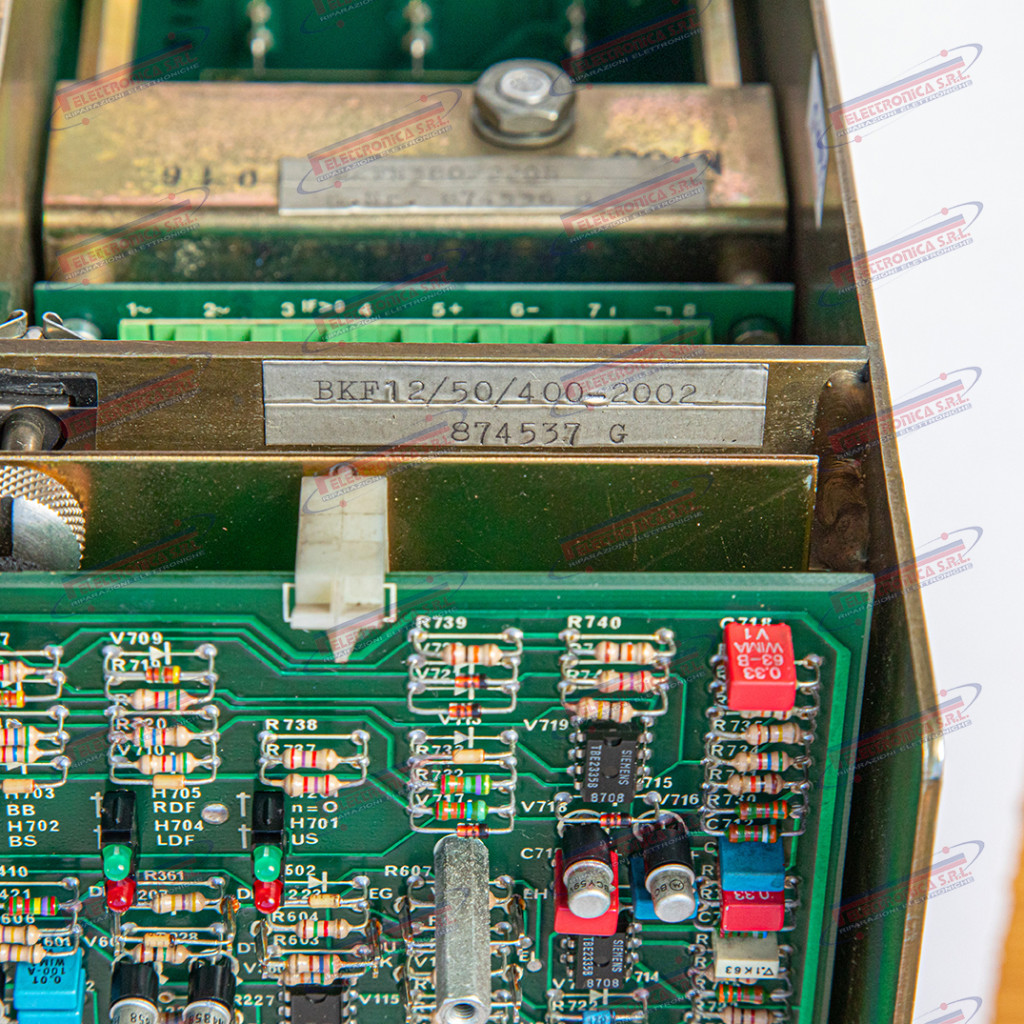
BKF12/50/400-2002
Cat:
No Category
Brand:
BAUMULLER
Service
Repair
Exchange service
Refurbished sell
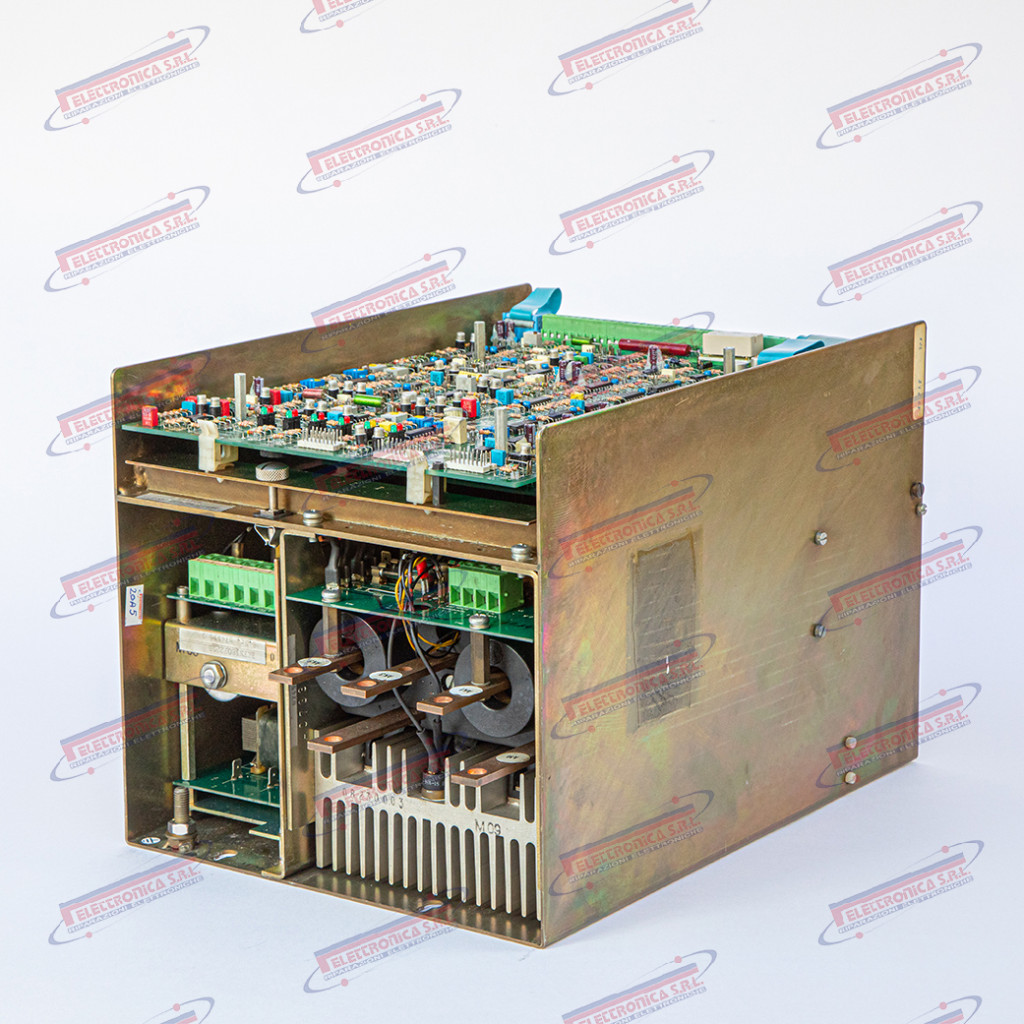
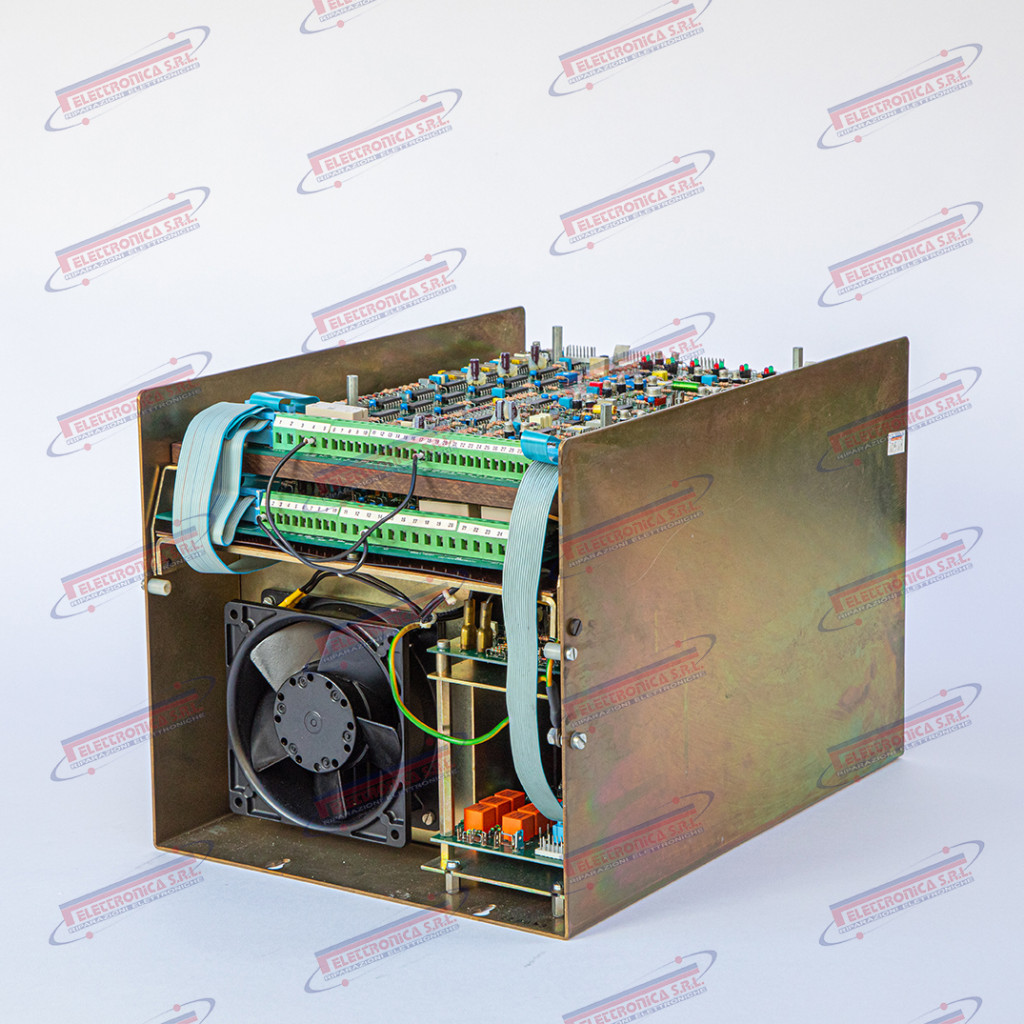
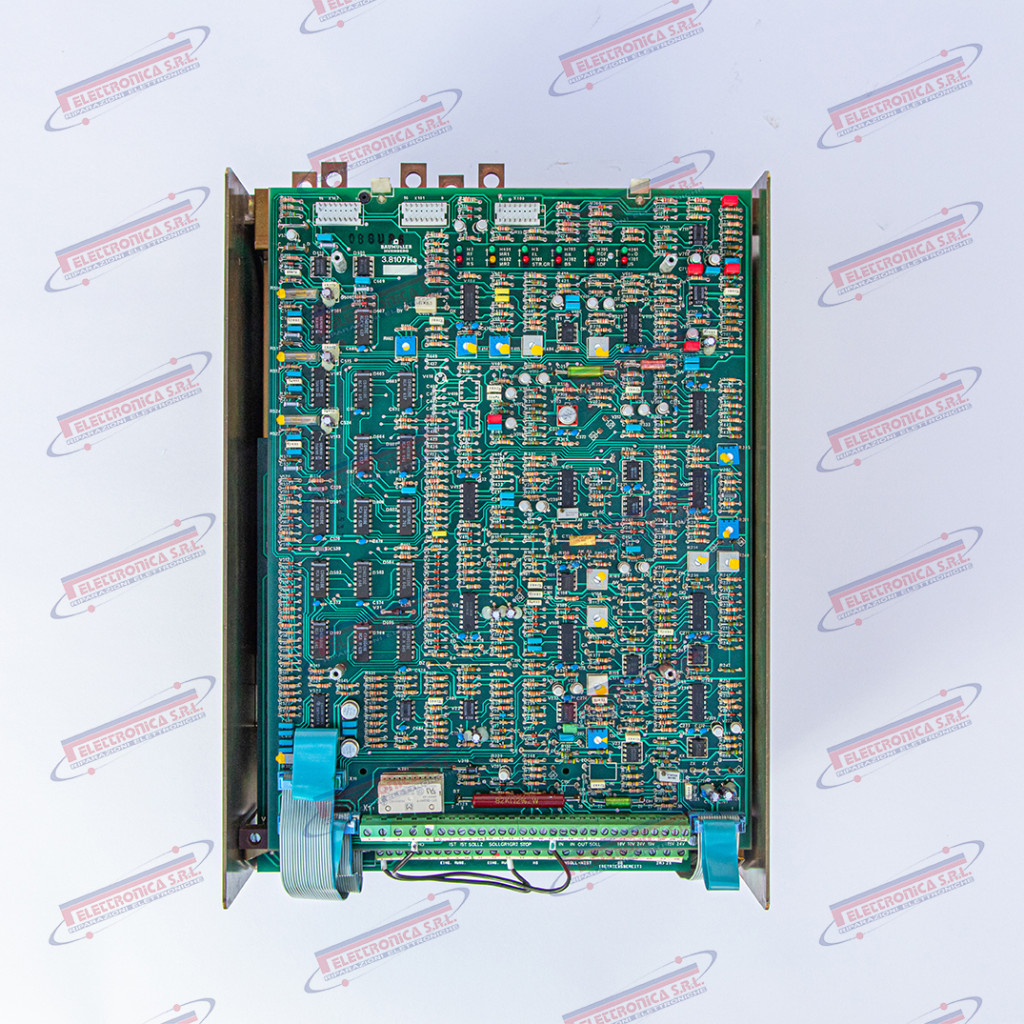
Digital Compact Servo Drive – BAUMÜLLER BKF12/50/400-2002
The BKF12/50/400-2002 is a digital compact servo drive (“Digital Compact Servo Drive”) from the BKF series, manufactured by Baumüller, designed to control synchronous and asynchronous AC servo motors in advanced industrial automation applications. The unit is typically installed in CNC machine tools, injection moulding machines for plastics, textile machines, and printing machinery equipped with Baumüller drive systems. It closes the current, speed, and position control loops, interfacing with the numerical controller via analogue speed reference and digital I/O. The suffix -2002 identifies a specific hardware/firmware revision of the series.
The servo drive is the heart of the axis motion system: it receives the position or speed reference from the CNC, processes the feedback signal from the encoder or resolver mounted on the motor, and generates the current required to drive the motor windings to follow the programmed trajectory with precision. A drive failure causes immediate loss of control on the affected axis, rendering the machine inoperable; in multi-axis systems the CNC may raise a general alarm on all axes to protect both the machine and the workpiece in progress.
Baumüller is a German company founded in 1930 in Nuremberg, specialising in electric drive systems, servo motors, and precision industrial automation; its products are present worldwide in the machine tool, plastics, textile, and printing sectors. The BKF series belongs to a previous generation of compact digital drives, now superseded by the b maXX next-generation families: all products in this family are therefore legacy / discontinued, available only as used, NOS surplus, or through specialist repair services.
Main Technical Specifications
| Type | Digital compact servo drive (Digital Compact Servo Drive) |
| Part number | BKF12/50/400-2002 (BKF12504002002) |
| Brand | Baumüller (Baumüller Nürnberg GmbH) |
| Known application | CNC machine tools, injection moulding machines, textile and printing machinery with Baumüller drive systems |
| Function | Current, speed and position regulation for synchronous/asynchronous AC servo motors |
| Rated output current | 12 A (rated, from part number) |
| Peak current | 50 A (peak, from part number) |
| Supply voltage | 3×400 V AC, 50/60 Hz |
| Feedback | Incremental encoder / resolver (typical for BKF series) |
| Reference input | Analogue ±10 V; digital I/O |
| Fieldbus options | SERCOS, PROFIBUS DP (typical BKF series) |
| Weight | ~3–6 kg |
| Dimensions | ~200–350 mm |
| Production status | Legacy / discontinued — used/surplus/repair only |

SKU:
ACU-RITE IIA
Cat:
No Category
Brand:
BAUSCH & LOMB
Service
Repair
Exchange service
Refurbished sell
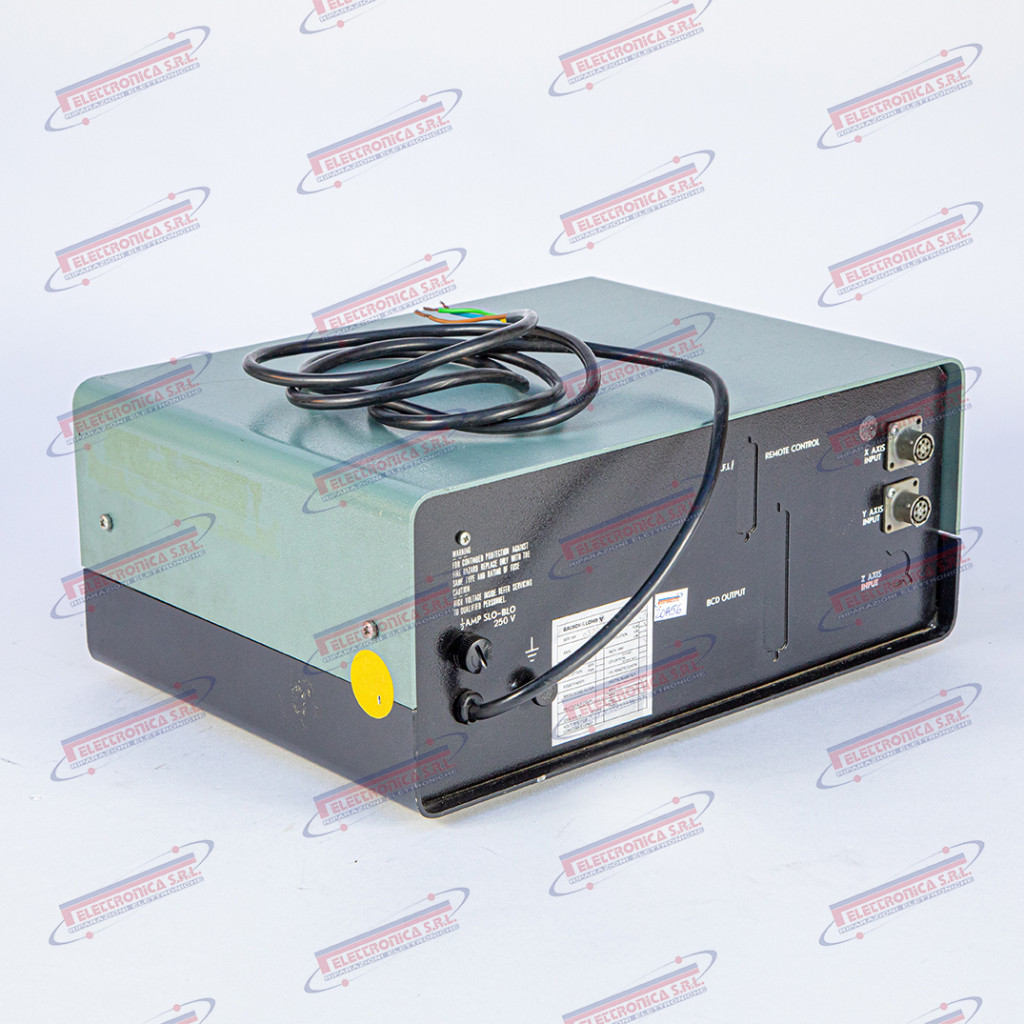
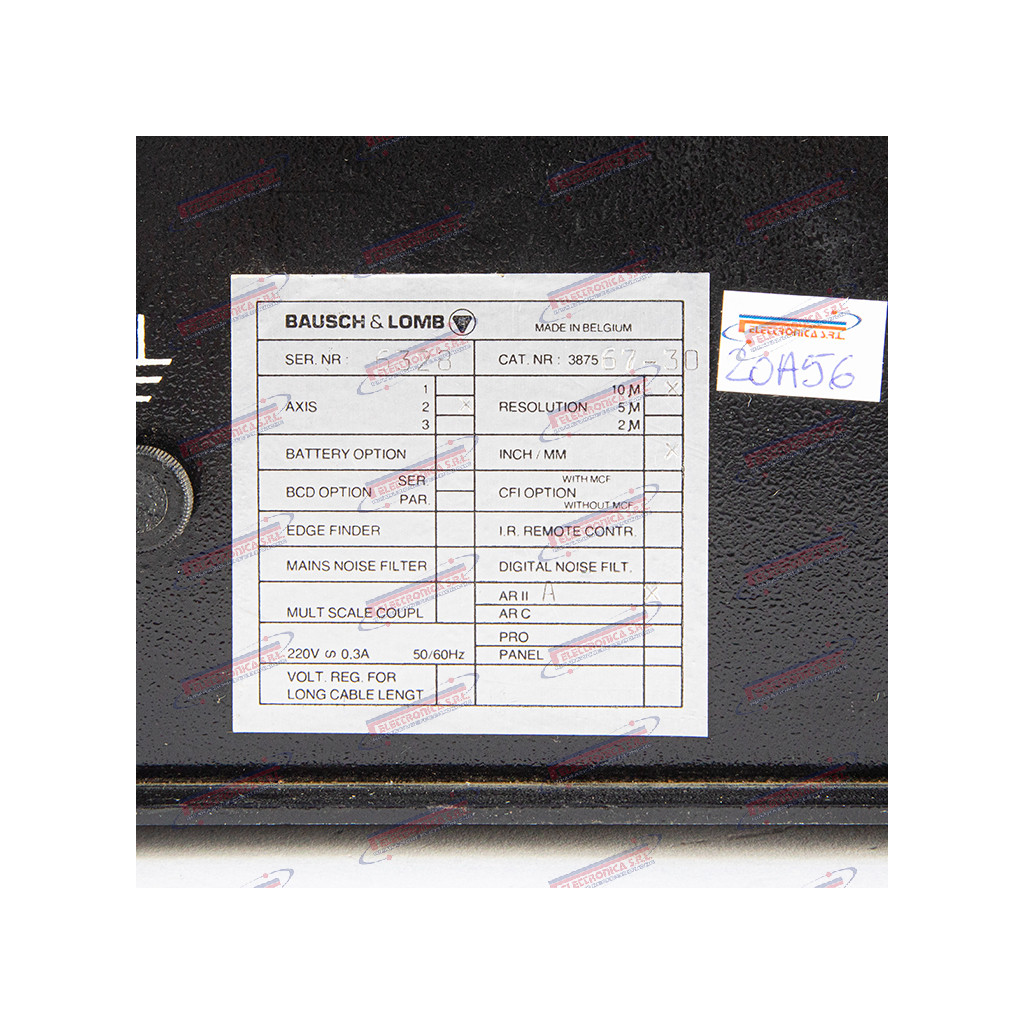
2-Axis Digital Position Readout (DRO) – BAUSCH & LOMB ACU-RITE IIA
The ACU-RITE IIA is a 2-axis digital position readout display (“Two-Axis Digital Readout Display”) manufactured by Bausch & Lomb under the ACU-RITE brand, documented as a position display unit for conventional machine tools (milling machines, lathes, surface grinders). The system acquires signals from optical or magnetic linear scales mounted on the machine axes and displays the position on 7-segment LED digit readouts. The unit supports display in both millimetres and inches and includes preset, incremental zero, and — in certain variants — bolt-hole circle calculator functions. The ACU-RITE Series II is available in several variants (including the IIA) differing in axis configuration and additional features.
The digital position readout is the device that allows the operator to know the precise position of the machine tool axes during manual machining. Without this unit the operator must rely solely on mechanical vernier dials and micrometers, dramatically reducing both accuracy and machining speed. A failure of the display or the acquisition circuitry makes it impossible to perform dimensionally accurate operations, increasing the risk of scrap parts and extending cycle time.
Bausch & Lomb is a historic American company founded in 1853, best known in the scientific and ophthalmic optics sector (lenses, microscopes, military telescopes). Its Scientific Instruments Division developed the ACU-RITE line of digital position readouts from the 1960s, becoming a benchmark for precision conventional machine tools. The division was divested and changed ownership several times before being acquired by Heidenhain in 1999. All products in the ACU-RITE IIA family are legacy / discontinued: available only as used, surplus, or through specialist repair services.
Main Technical Specifications
| Type | 2-axis digital position readout (DRO – Digital Readout) |
| Part number | ACU-RITE IIA (ACURITEIIA) |
| Brand | Bausch & Lomb – ACU-RITE (now Heidenhain, legacy) |
| Known application | Precision conventional milling machines, lathes, and surface grinders |
| Function | Digital display of X and Y axis positions; preset, incremental zero, mm / inch switching |
| Number of axes | 2 (X, Y) |
| Display | 7-segment LED digits, 6–7 digits per axis (typical) |
| Resolution | 0.001 mm / 0.0001 inch (typical for Series IIA) |
| Scale input | ACU-RITE optical or magnetic linear scales (TTL or sinusoidal 1 Vpp signal) |
| Power supply | 110 V AC or 220 V AC, 50–60 Hz (typical; selectable) |
| Interfaces / connectors | Multi-pin connectors for linear scales; power terminal strip |
| Weight | ~2.5–5 kg |
| Dimensions | ~280–380 mm × 150–220 mm × 100–160 mm |
| Production status | Legacy / discontinued — used / surplus / repair only |
SKU:
PNL-CC100M
Cat:
No Category
Brand:
BOSCH
Service
Repair
Refurbished sell
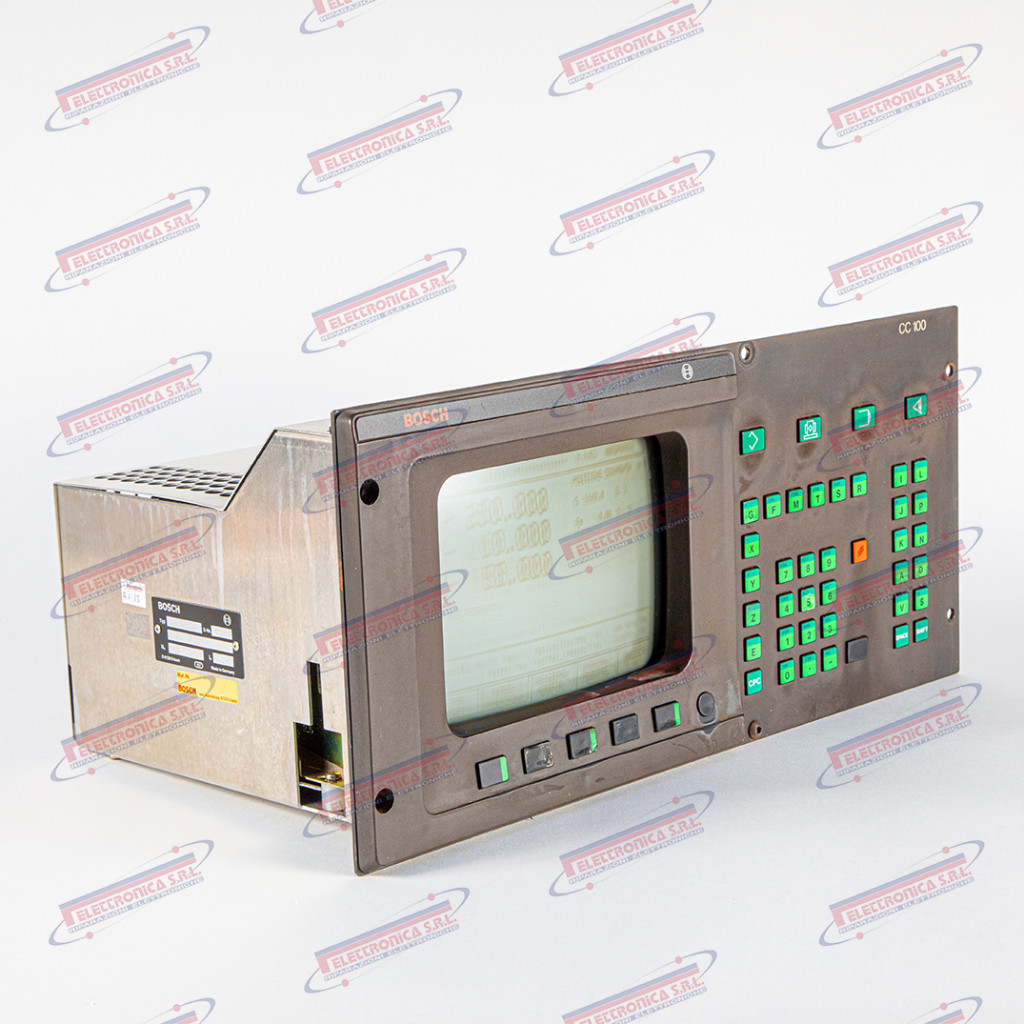
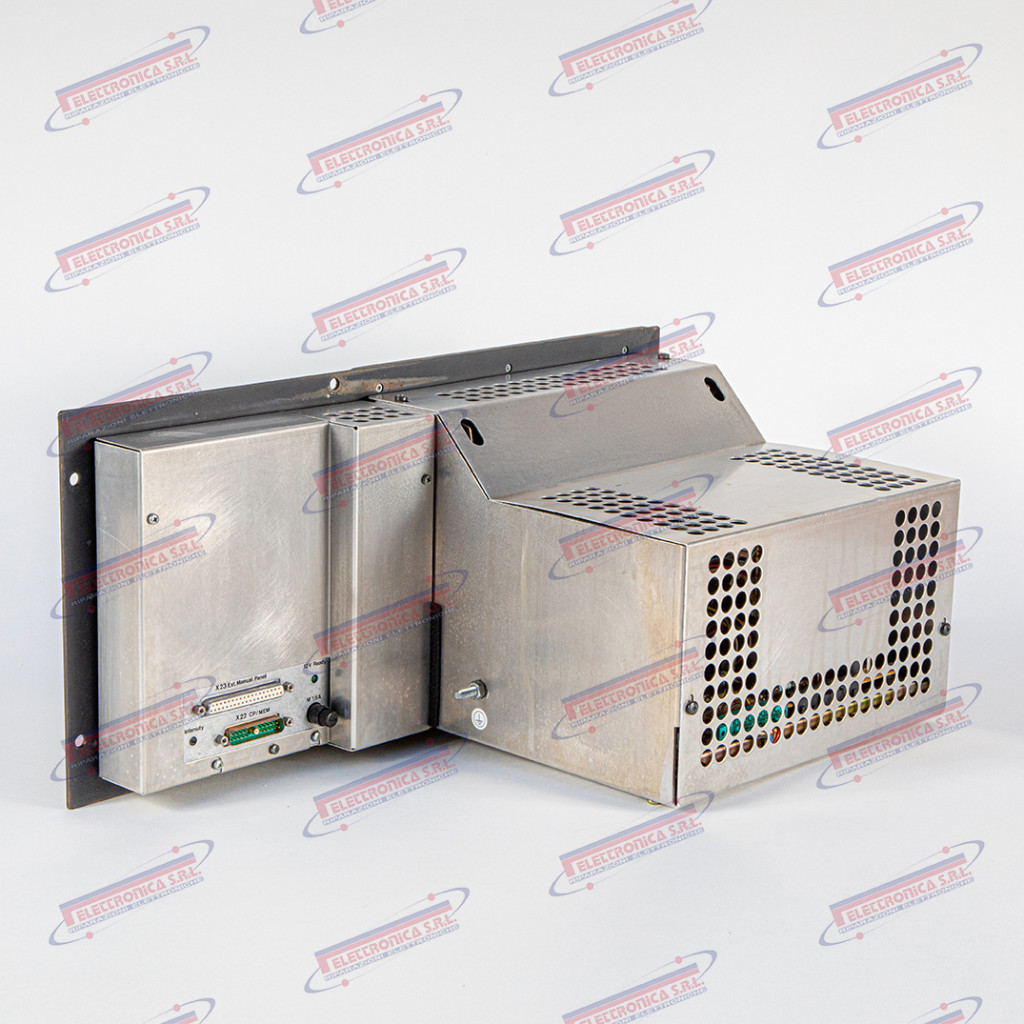
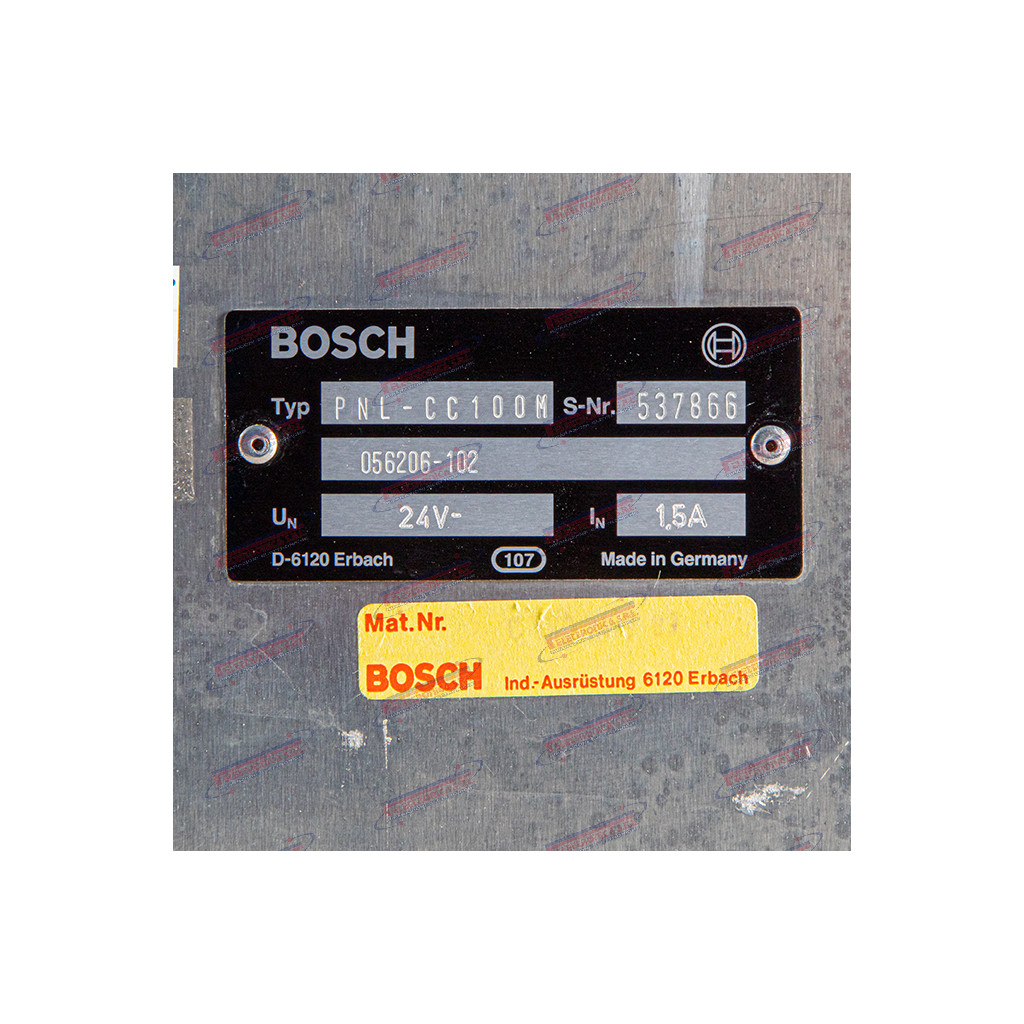
CNC Operator Panel – BOSCH PNL-CC100M
The PNL-CC100M is the operator panel (“Operator Panel” / “Bedientafel”) for the BOSCH CC100M CNC control system, designed for CNC milling machines equipped with the BOSCH CC100 series numerical control (M = milling variant). It serves as the primary human-machine interface of the CNC, integrating a monochrome display, membrane keyboard with function keys and axis keys, spindle and feed override selectors, and LED status indicators. It connects to the main CNC unit via proprietary BOSCH connectors.
The operator panel is the primary interface between the operator and the CNC numerical control: it enables ISO/G-code program entry and editing, operating mode selection (automatic, MDI, JOG, home), spindle speed and feed rate override adjustment, and real-time axis position and machine status monitoring. A failure of the operator panel makes any interaction with the CNC impossible, causing a complete machine stoppage even when all other mechanical and electrical modules are functioning normally.
BOSCH is a German multinational with a long tradition of manufacturing CNC numerical controls for machine tools (CC100, CC200, CC300, CC500, CNC 432 series). In 2001, its automation and drive activities were merged into Bosch Rexroth AG, a joint venture with Mannesmann Rexroth. All products in the CC series are legacy / discontinued: available exclusively as used/surplus or through specialist repair.
Main Technical Specifications
| Type | CNC operator panel (Operator Panel / Bedientafel) |
| Part number | PNL-CC100M (PNLCC100M) |
| Brand | BOSCH (Bosch Rexroth legacy) |
| Known application | CNC milling machines with BOSCH CC100M control (CC100 series, milling variant) |
| Function | Operator interface: program entry/editing, operating mode selection, spindle and feed override, axis position and status display |
| Display | Integrated monochrome display (CRT or dot-matrix LCD — typical for CC100 series) |
| Keyboard | Membrane keyboard: function keys F1–F8, axis keys (X/Y/Z), JOG, E-stop, override selectors |
| Interfaces | Proprietary BOSCH connectors to main CNC unit; flat/ribbon multipole cable |
| Logic supply voltage | 24 V DC (typical for CC series panel logic) |
| Weight | ~4–9 kg |
| Dimensions | ~380–520 × 270–420 × 100–200 mm |
| Production status | Legacy / discontinued — used/surplus/repair only |


SKU:
P11082B
Cat:
No Category
Brand:
CHLORIDE ELECTRO NETWORKS
Service
Repair
Refurbished sell
Industrial Power Supply – CHLORIDE ELECTRO NETWORKS P11082B
The P11082B is an industrial switching power supply (“Industrial Switching Power Supply”) manufactured by Chloride Electro Networks, designed for automation and CNC machine tool applications. The unit converts AC mains voltage into one or more regulated DC outputs required to power control boards, logic circuits, interfaces and actuators within the CNC system. The part number P11082B identifies the specific variant of this power supply within the Chloride Electro Networks product range.
The power supply is the critical component that delivers stable, regulated energy to all electronic circuits in the CNC machine: CPU boards, I/O interfaces, servo amplifiers and safety devices. A fault in the power supply causes widespread malfunctions across the entire machine, often with symptoms that are difficult to diagnose (spontaneous resets, non-repeatable CNC errors, random lockups). Timely replacement or repair is essential to restore production.
Chloride Electro Networks was a division of the British group Chloride Group plc, specialising in industrial power supplies, UPS systems and power conditioning devices for critical applications in automation, telecommunications and industry. Chloride Group was acquired by Emerson Electric in 2010; all products in this family are legacy / discontinued: available only as used, surplus or through specialist repair.
Main Technical Specifications
| Type | Industrial switching DC power supply (Industrial Switching Power Supply) |
| Part number | P11082B |
| Brand | Chloride Electro Networks (Chloride Group / Emerson Electric legacy) |
| Known application | CNC machine tools and industrial automation systems |
| Function | AC/DC voltage conversion and regulation for CNC control circuits |
| Input voltage | 115 / 230 V AC, 50–60 Hz |
| Output voltage | ±15 V, +5 V, +24 V DC (typical outputs — verify on sample unit) |
| Output current | To be verified on sample unit (typically 2–10 A per rail) |
| Interfaces / connectors | Screw terminal strip / edge connectors |
| Weight | ~1.0–3.0 kg |
| Dimensions | ~150–300 mm |
| Production status | Legacy / discontinued — used/surplus/repair only |
SKU:
UNI2403
Cat:
No Category
Brand:
CONTROL TECHNIQUES
Service
Repair
Exchange service
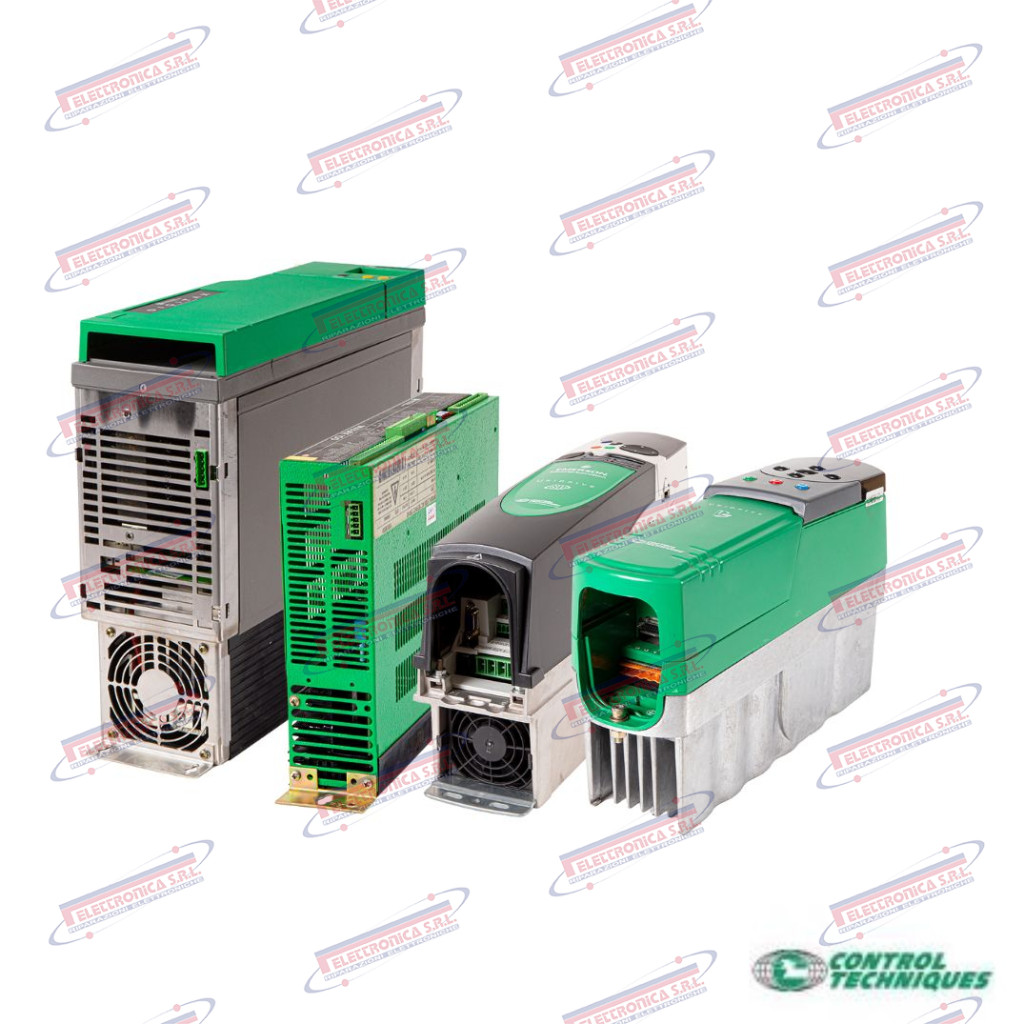
AC Variable Speed Drive – CONTROL TECHNIQUES UNI2403
The UNI2403 is an AC variable speed drive (“Variable Speed Drive”) from the Unidrive Classic family, manufactured by Control Techniques. Documented on CNC machining centres, milling machines and lathes equipped with three-phase induction motors, it regulates motor speed and torque via PWM modulation. It operates in open-loop V/Hz, open-loop vector (sensorless) and closed-loop vector modes with encoder feedback. The Unidrive Classic is the first generation of the Unidrive platform, predecessor to the Unidrive SP and Unidrive M families.
The variable frequency drive is the power and regulation element that converts three-phase mains voltage into variable voltage and frequency, enabling precise speed and torque control of the induction motor. A drive failure completely disables the associated axis or spindle, bringing the machine to a standstill; typical faults include overvoltage, overtemperature, loss of encoder feedback or short-circuit on the IGBT power stage.
Control Techniques is a British manufacturer founded in 1973, specialising in AC and DC drives, servo systems and industrial motors. Acquired by Emerson Electric in 1994 and subsequently by Nidec Corporation in 2012, it now operates as the Nidec Control Techniques division. The Unidrive Classic line is legacy / discontinued: available only as used, NOS or through specialist repair.
Main Technical Specifications
| Type | AC variable frequency drive (Variable Speed Drive) |
| Part number | UNI2403 |
| Brand | Control Techniques (Nidec Group) |
| Known application | CNC machining centres, milling machines, lathes with three-phase AC induction motors |
| Function | Three-phase induction motor speed and torque control via PWM modulation |
| Input voltage | 380–480 V AC three-phase, 50/60 Hz |
| Rated output current | ~14 A |
| Motor power | ~7.5 kW |
| Operating modes | Open-loop V/Hz; open-loop vector (sensorless); closed-loop vector (encoder) |
| Interfaces | Analogue/digital control terminal strip; encoder connector; power terminal strip |
| Weight | ~5–10 kg |
| Dimensions | ~250–350 × 150–250 mm |
| Production status | Legacy / discontinued — used/surplus/repair only |
SKU:
SP2402
Cat:
No Category
Brand:
CONTROL TECHNIQUES
Service
Repair
Exchange service
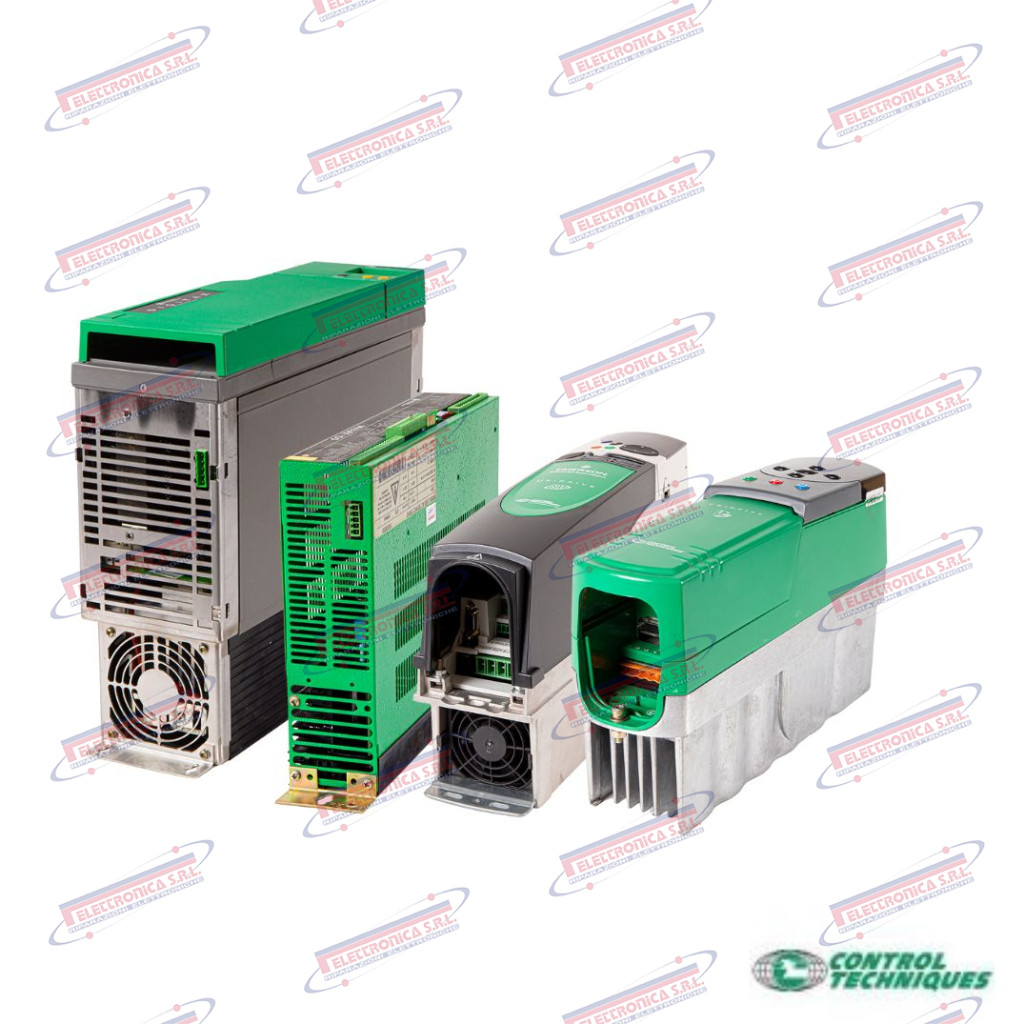
AC Vector Inverter / Variable Speed Drive – Control Techniques SP2402
The SP2402 is an AC variable speed drive (“AC Inverter / Variable Frequency Drive”) from the Unidrive SP series, manufactured by Control Techniques. It belongs to the Frame 2, 400 V class and is employed on CNC machine tools and industrial automation systems requiring precise speed and torque control of AC induction or permanent-magnet synchronous motors. It supports four operating modes: scalar V/Hz, Open Loop Vector (sensorless), Closed Loop Vector (with encoder), and Servo. An integrated RS485 / Modbus RTU interface and an option slot for fieldbus expansion modules (Profibus-DP, CANopen, DeviceNet, EtherCAT) are included.
The inverter converts the fixed-frequency mains supply into a variable-voltage, variable-frequency three-phase output, enabling precise control of motor speed and torque. In a CNC machining centre, a drive failure causes immediate shutdown of the controlled axis or spindle: the machine stops, the workpiece risks being scrapped, and — should active safety not intervene — a collision may occur.
Control Techniques is a British manufacturer founded in 1968 and specialised in variable-speed drives for AC and DC motors. Acquired by Emerson Electric in 1992 and later by Nidec Corporation in 2017, it now operates as Nidec Industrial Solutions. The Unidrive SP series is legacy / discontinued: the platform has been superseded by the Unidrive M family; SP drives are available exclusively as used, NOS (surplus), or through specialist repair centres.
Main Technical Specifications
| Type | AC inverter / variable speed drive (VFD), Unidrive SP series, Frame 2 |
| Part number | SP2402 |
| Brand | Control Techniques (Nidec Industrial Solutions) |
| Known application | CNC machine tools, machining centres and industrial automation systems with AC induction or PM synchronous motors |
| Function | AC motor speed and torque control in open-loop (sensorless) or closed-loop (encoder / resolver) mode |
| Input voltage | 380–480 V AC 3-phase, 50/60 Hz |
| Rated power | ~4.0–7.5 kW |
| Rated output current | ~9–16 A |
| Control modes | V/Hz scalar, Open Loop Vector, Closed Loop Vector, Servo |
| Feedback | Incremental encoder (AB/Z), resolver or sensorless |
| Communications | RS485 / Modbus RTU built-in; option slot for Profibus-DP, CANopen, DeviceNet, EtherCAT |
| I/O | Programmable digital and analogue inputs/outputs (parameter-configurable) |
| Protections | Overcurrent, overvoltage, undervoltage, overtemperature, earth fault, short circuit |
| Protection class | IP20 standard (IP55 with optional filter kit) |
| Weight | ~2–4 kg |
| Dimensions | ~185–250 × 100–140 × 180–230 mm |
| Production status | Legacy / discontinued — superseded by Unidrive M; available as used, NOS, or via specialist repair |
SKU:
SP1404
Cat:
No Category
Brand:
CONTROL TECHNIQUES
Service
Repair
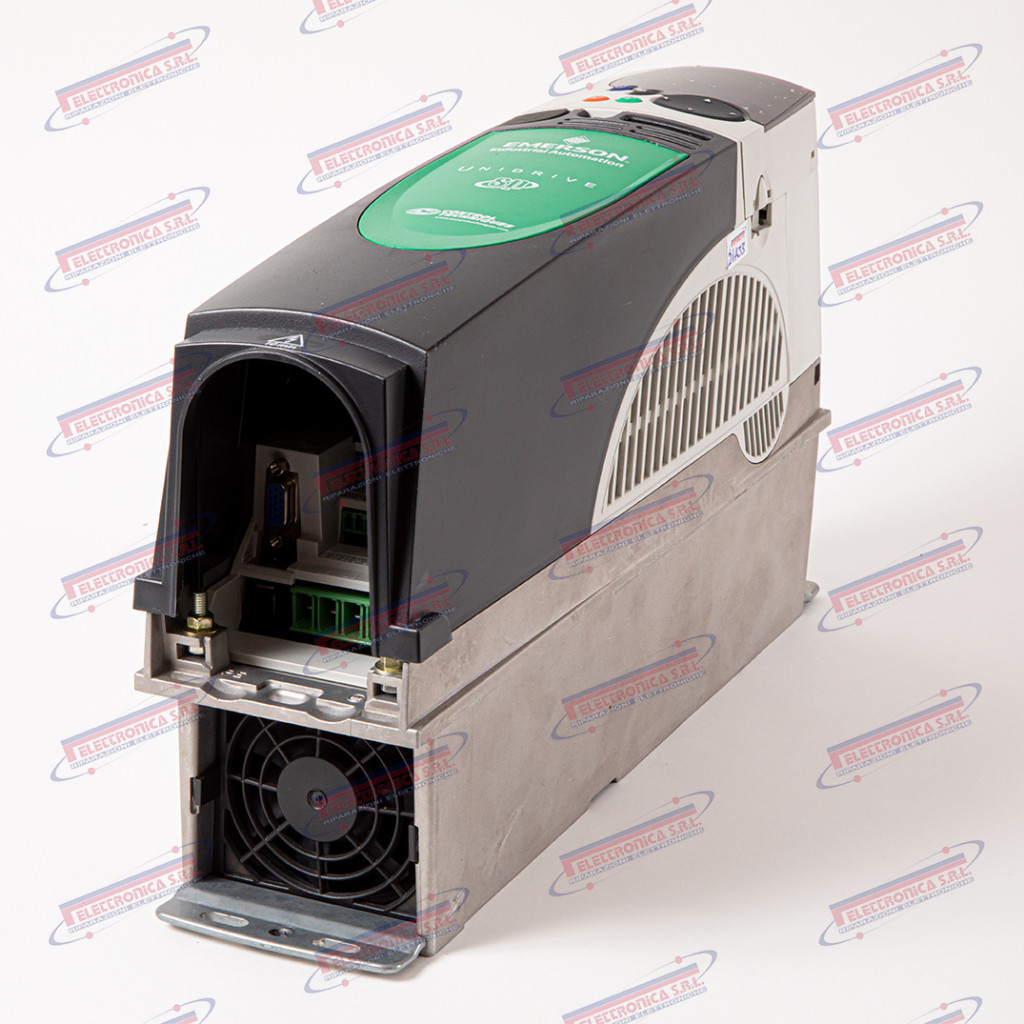
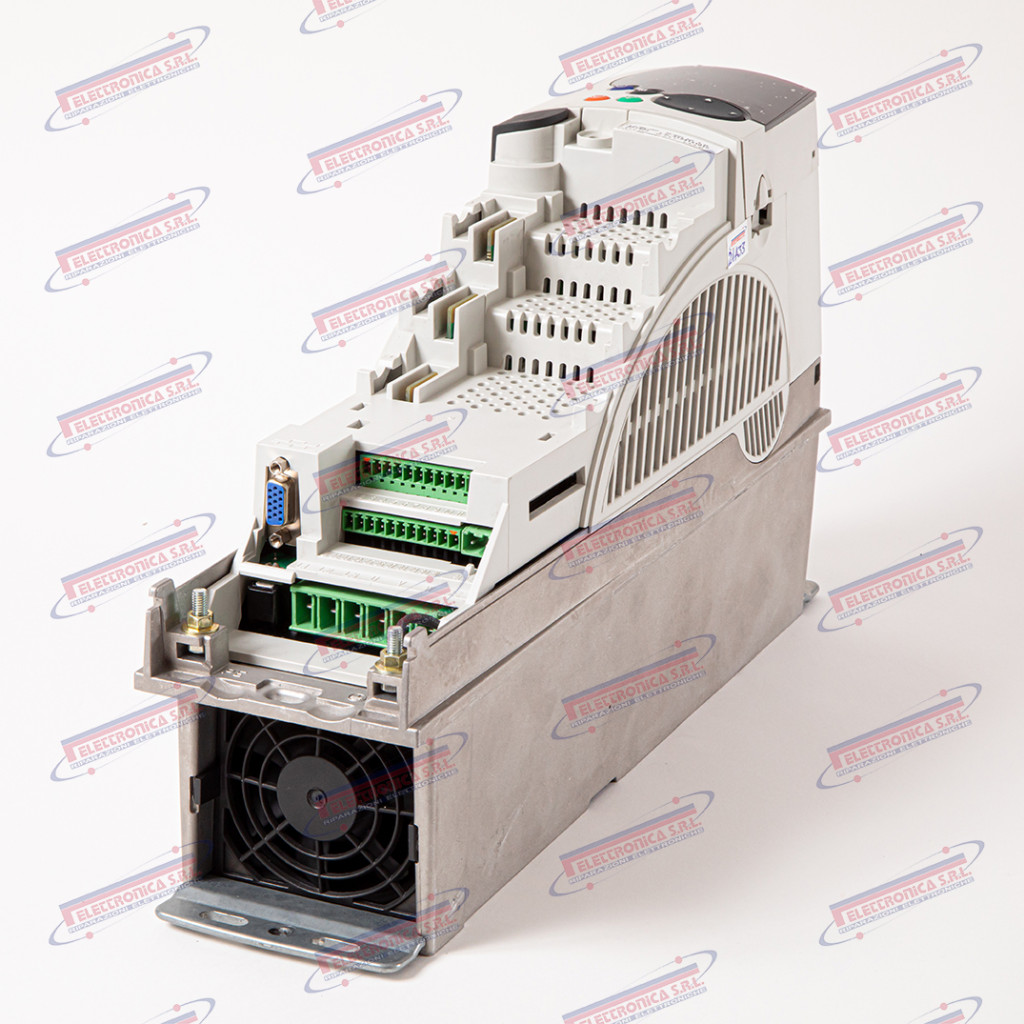
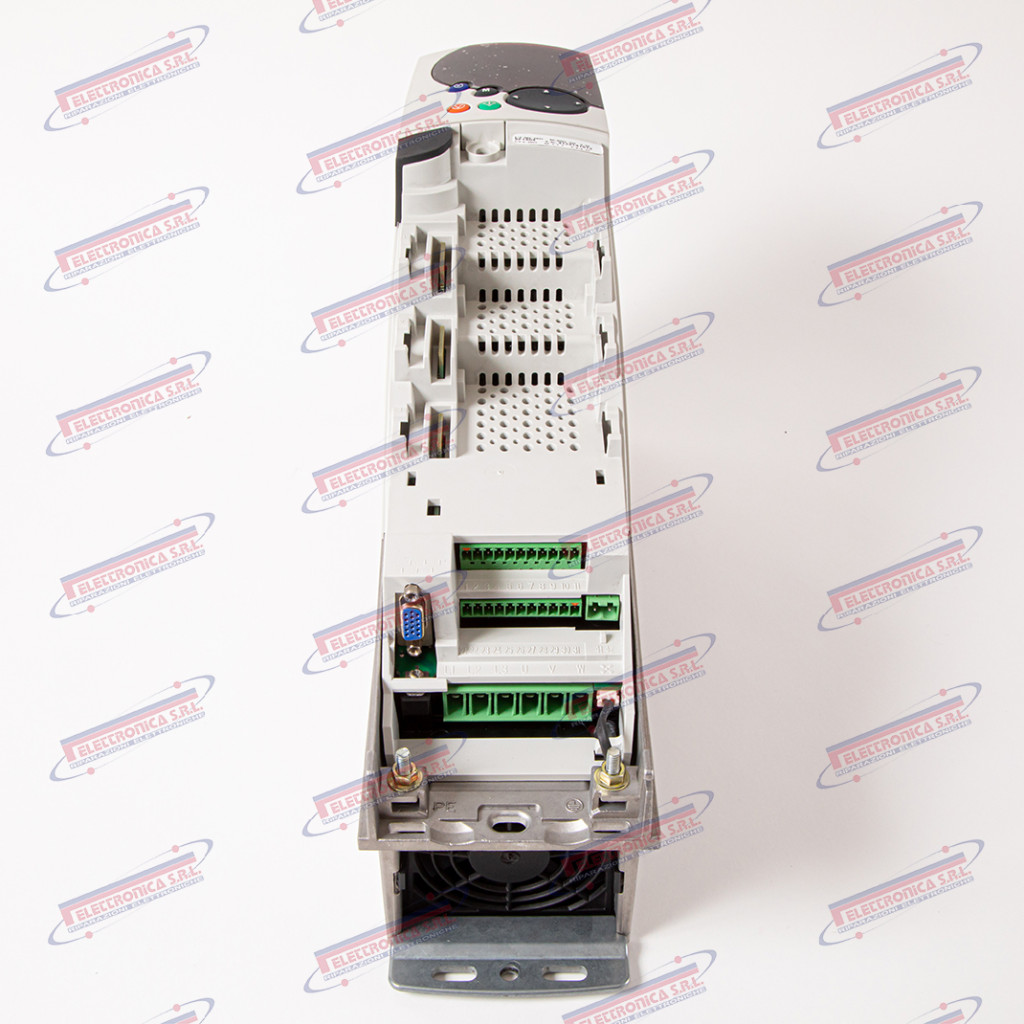
AC Variable Speed Drive – CONTROL TECHNIQUES SP1404
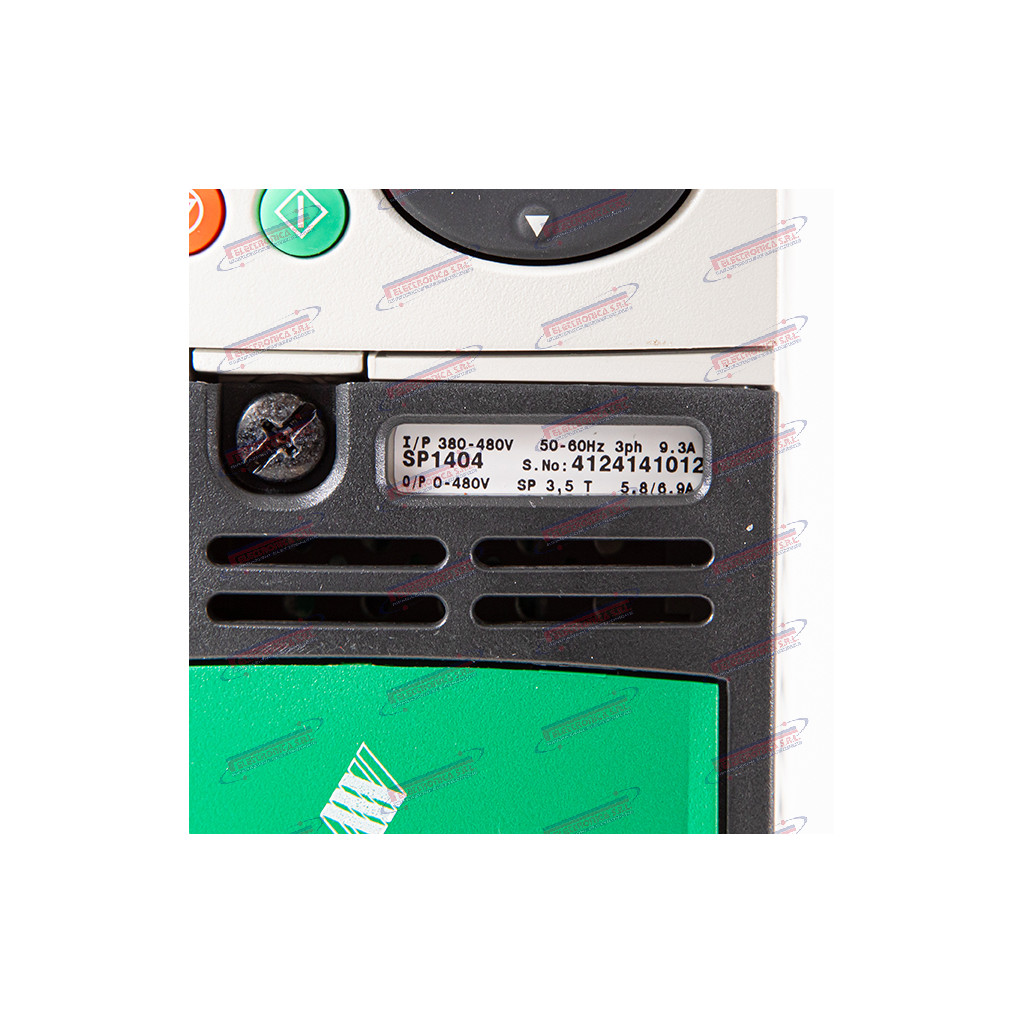
The SP1404 is an electronic AC variable speed drive (“AC Variable Speed Drive / Inverter”) by Control Techniques, part of the Unidrive SP series. Designed for control of three-phase induction motors and permanent magnet motors, it supports open-loop vector (RFC-A), closed-loop vector with encoder feedback, and servo control modes. Nominal input voltage 380–480 V AC three-phase 50/60 Hz; nominal output current approximately 14 A continuous; power class 5.5–7.5 kW at 400 V. Features an onboard PLC, digital and analogue I/O, RS485 serial interface, and expansion slots for optional fieldbus modules.
The AC variable speed drive is the power electronic converter that transforms fixed-frequency mains supply into variable voltage and frequency to regulate motor speed and torque. In CNC machine tools it controls the spindle, feed axes, or auxiliary motors, ensuring precise and continuous regulation across the full operating range. A drive failure results in the immediate loss of control of the affected axis or spindle, halting the machine and preventing resumption of machining.
Control Techniques is a British manufacturer of variable speed drives and servo systems, founded in 1973 and headquartered in Newtown, Wales. Acquired by Emerson Electric in 1992 and subsequently by Nidec Corporation in 2017, it now operates as Nidec Control Techniques. The Unidrive SP series is legacy / discontinued in its original variants, progressively replaced by the Unidrive M series: spare units are available primarily as used stock, NOS surplus, or through specialist repair services.
Main Technical Specifications
| Type | AC variable speed drive (Variable Speed Drive / Inverter) |
| Part number | SP1404 |
| Brand | Control Techniques (Nidec Control Techniques) |
| Known application | CNC machine tools; three-phase induction motors and permanent magnet motors |
| Function | AC motor speed and torque control via variable frequency output |
| Input voltage | 380–480 V AC, three-phase, 50/60 Hz |
| Nominal output current | ~14 A continuous (400 V class) |
| Nominal power | ~5.5–7.5 kW at 400 V |
| Control modes | Open-loop vector (RFC-A), closed-loop vector with encoder, servo |
| Communication interfaces | Onboard RS485; optional modules for Profibus, DeviceNet, CANopen, EtherNet/IP |
| I/O | Onboard digital and analogue I/O; expandable with optional modules |
| Weight | ~2–4 kg |
| Dimensions | ~230–260 mm H × 90–110 mm W × 170–190 mm D |
| Production status | Legacy / discontinued — used/surplus/repair only |