
 Italiano

SKU:
1006-0601 (2CH)
Cat:
No Category
Brand:
OKUMA
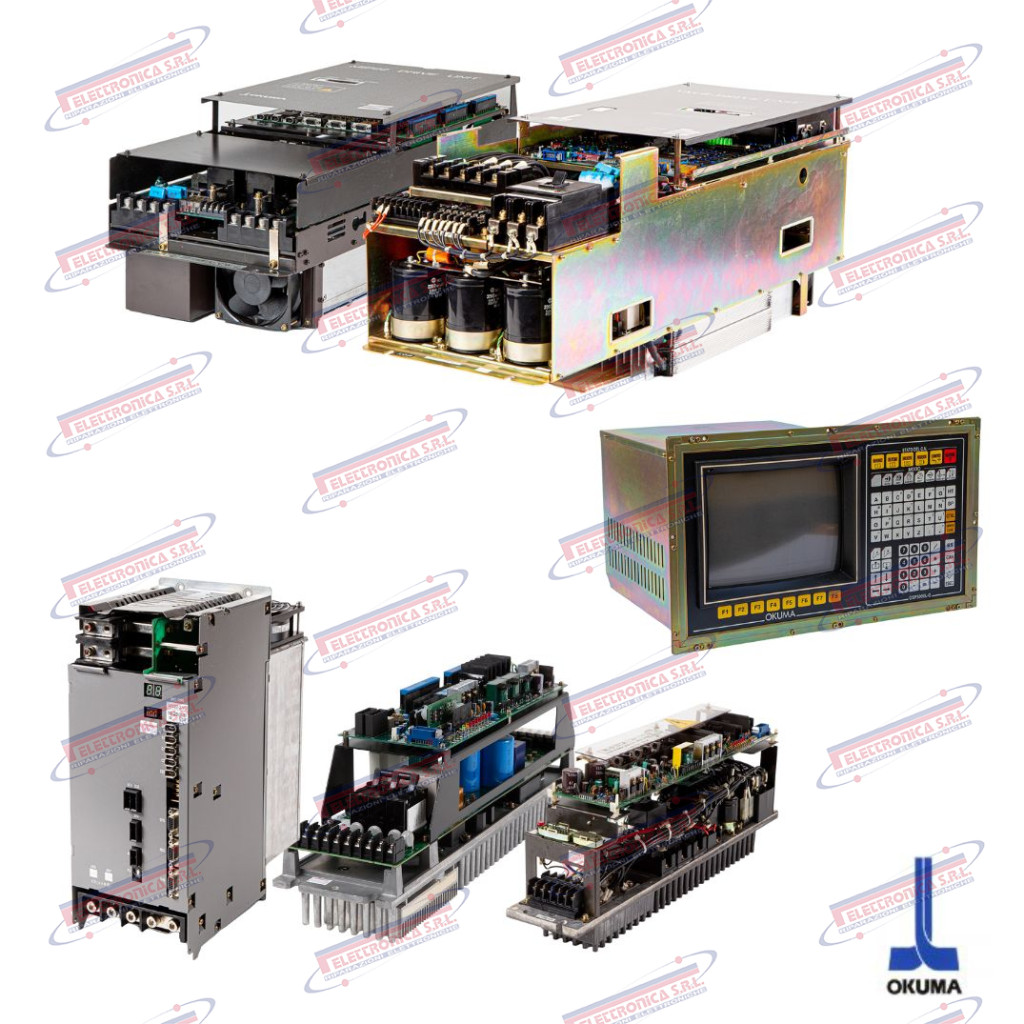
Servo Velocity Control Board SVC II – OKUMA 1006-0601 (2CH)
The 1006-0601 (2CH) is an electronic servo velocity control board (SVC II – “Servo Velocity Control II”) manufactured by OKUMA, documented as a component of the proprietary OSP (Open System Platform) CNC systems installed on OKUMA machining centres and lathes. The board implements the digital velocity controller for the machine’s servo axes, receiving velocity references from the CNC main CPU and closing the feedback loop via encoder or resolver signals mounted on the motors. Available in a dual-channel (2CH) variant, it is capable of managing two independent servo axes simultaneously on the same control backplane.
The SVC II board is the digital controller that closes the velocity loop on the machine’s servo axes: it interprets the velocity command issued by the OSP CNC CPU and generates the current reference to the drive power stage, keeping motor rotation stable and precise even under load variations. In case of failure, the control system loses velocity feedback on the affected axes, rendering the machine inoperable and triggering axis or drive alarms on the CNC panel.
OKUMA Corporation is a Japanese machine tool manufacturer founded in 1898 in Nagoya, among the world leaders in machining centres, lathes and grinding systems. A hallmark of OKUMA is complete vertical integration: machines, CNC controls (OSP – Open System Platform), drives and motors are all designed and manufactured in-house. The SVC II board belongs to the OSP5000/OSP7000 generations of the 1980s–90s and is legacy / discontinued: available only as used spare, surplus stock or through specialist repair.
Main Technical Specifications
| Type | Dual-channel servo velocity control board (Servo Velocity Control II) |
| Part number | 1006-0601 (2CH) (10060601) |
| Brand | OKUMA Corporation |
| Known application | OKUMA machining centres and lathes with OSP CNC system (OSP5000, OSP7000) |
| Function | Digital servo axis velocity regulation – velocity loop closure |
| Number of channels | 2 (2CH variant) |
| CPU interface | Proprietary OSP parallel bus / control backplane |
| Feedback | Encoder / resolver on each servo axis |
| Supply voltages | ±15 V and +5 V DC (typical) |
| Interfaces / connectors | Edge connectors on OSP backplane; dedicated connectors for encoder and drive control signals |
| Weight | ~0.3–1.0 kg |
| Dimensions | ~200–350 mm |
| Production status | Legacy / discontinued — used/surplus/repair only |
SKU:
1006-0600 (1CH)
Cat:
No Category
Brand:
OKUMA
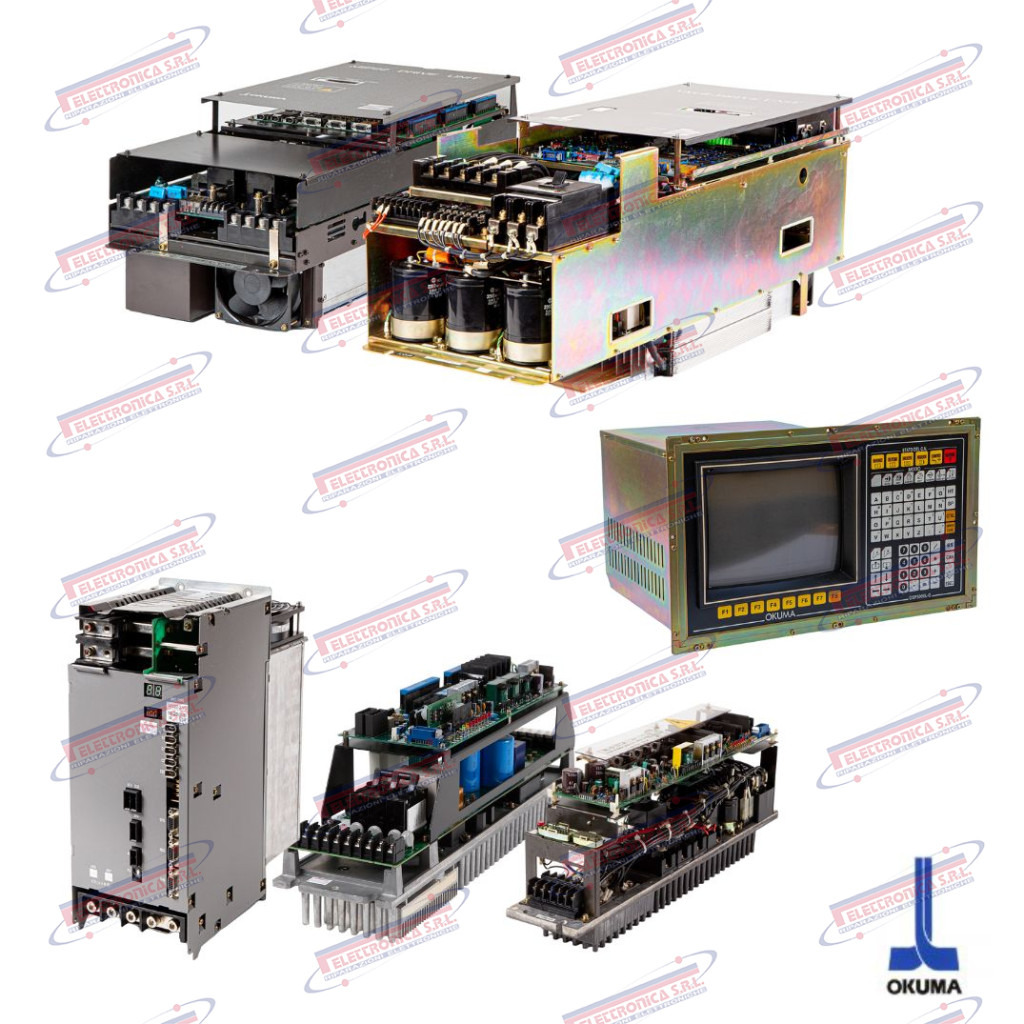
SVC II Servo Control Board – OKUMA 1006-0600 (1CH)
The 1006-0600 (1CH) is an electronic servo control board (“Servo Velocity Control Board – SVC II”) manufactured by OKUMA, documented as a component of the OSP (Open System Platform) series CNC machining centres and lathes. The board manages a single axis drive channel (1CH), closing the speed and current regulation loops on the servo motor of the corresponding axis and interfacing with the CNC axis control unit. The “II” suffix denotes the second generation of the SVC family; the single-channel variant is identified by the 1CH suffix in the commercial part number.
The SVC II board is the electronic controller that governs axis servo motor speed and torque: it receives the speed reference from the CNC controller and maintains the programmed position and velocity during interpolated motion. A failure of this module causes loss of control on the affected axis, with immediate program halt, an axis alarm, and inability to perform any machining until the board is replaced or repaired.
OKUMA Corporation is a historic Japanese CNC machine tool manufacturer, founded in 1898 in Oguchi (Aichi Prefecture). It is one of the few manufacturers worldwide to integrate the design and production of the machine, CNC control (OSP series), motors and drives within a single company. Products in the SVC II family belong to dated OSP systems and are legacy / discontinued: available only as used or surplus stock, or through specialist repair services.
Main Technical Specifications
| Type | Single-channel servo control board (Servo Velocity Control Board – SVC II) |
| Part number | 1006-0600 (1CH) (10060600) |
| Brand | OKUMA Corporation |
| Known application | OKUMA CNC machining centres and lathes, OSP series (Open System Platform) |
| Function | Single-axis servo motor speed and current control (1 channel – 1CH) |
| Number of channels | 1 (single-channel – 1CH) |
| Reference input | Analogue speed reference (±10 V) or serial via OSP bus |
| Feedback | Encoder / resolver from axis servo motor |
| Logic supply voltages | ±15 V and +5 V DC (typical) |
| Interfaces | Edge connectors / flat cable; OSP internal bus |
| Weight | ~0.3–1.0 kg |
| Dimensions | ~200–350 mm |
| Production status | Legacy / discontinued — used/surplus/repair only |
SKU:
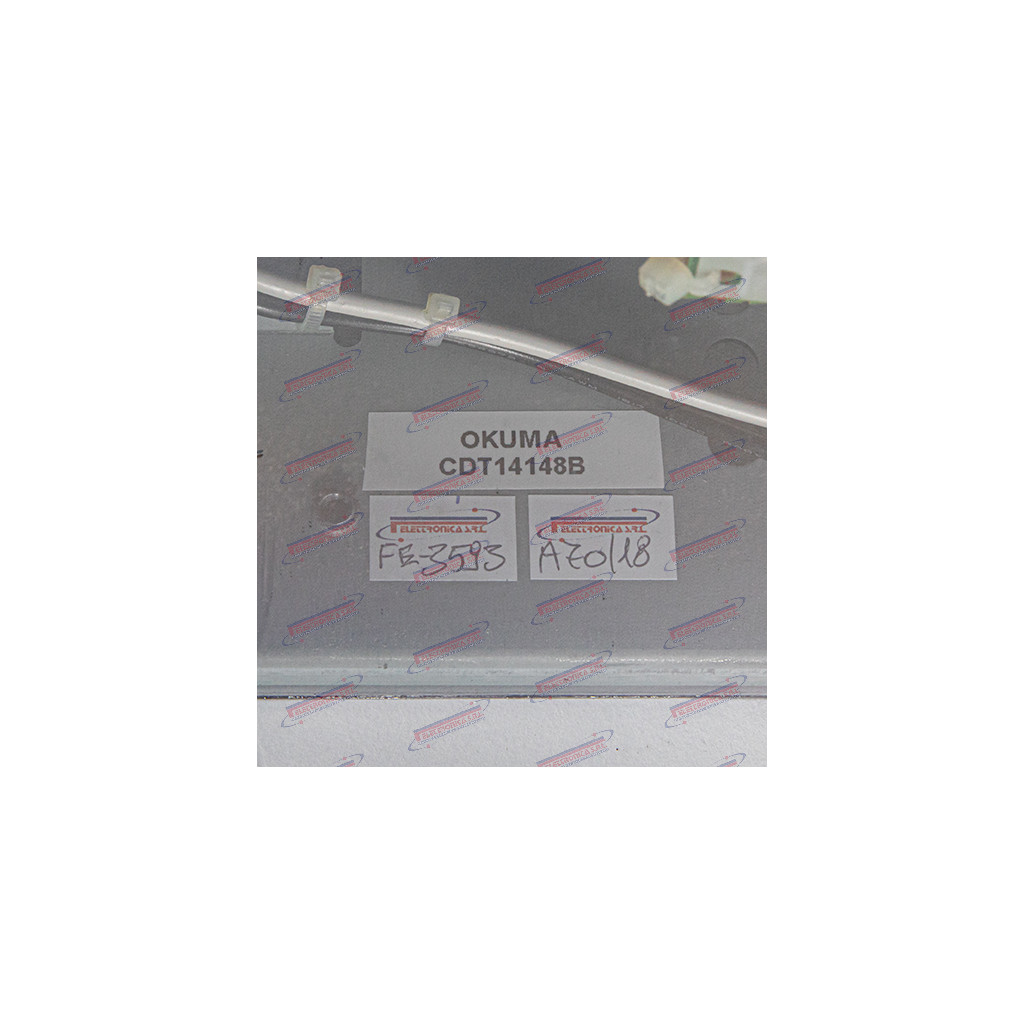
CDT14148B
Cat:
Monitor
Brand:
OKUMA
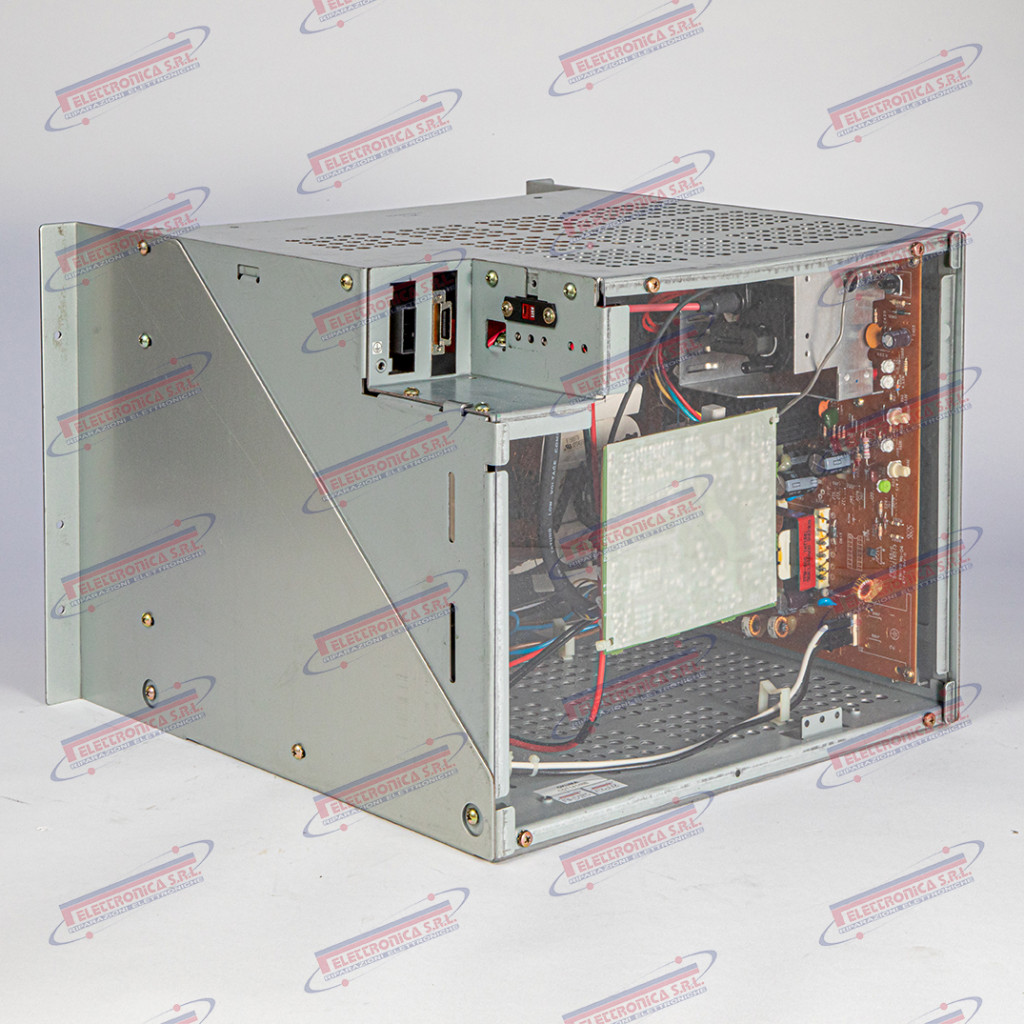
14” Colour CRT Monitor – OKUMA CDT14148B
The CDT14148B is a 14-inch colour CRT monitor (“14-inch Colour CRT Display”) manufactured for OKUMA CNC systems, documented as the operator panel display unit for controls in the OSP (Open System Platform) series. The monitor provides the visual interface between the numeric control and the operator, displaying NC programs, machine parameters, diagnostic screens, and alarm messages. It is a colour cathode-ray tube (CRT) monitor with a 14-inch 4:3 screen, designed for integration into the machine tool operator panel.
The operator panel monitor is the primary interface between the operator and the CNC control: without a working display it is impossible to access machining programs, diagnostic functions, or machine parameters. A monitor failure renders the machine completely inoperable, blocking any interaction with the numeric control, including programming, tool offset verification, and safety alarm monitoring.
OKUMA Corporation is one of the world’s largest and most established Japanese CNC machine tool manufacturers, founded in 1898 in Nagoya; it is among the few builders that develop both the machines and their own proprietary CNC controls (OSP – Open System Platform series) in-house. CRT monitors in the CDT14148B family are legacy / discontinued components: the transition away from CRT technology has made new units unavailable; replacement parts are obtainable only as used, NOS, or through conversion to a compatible LCD monitor.
Main Technical Specifications
| Type | 14” colour CRT operator panel monitor for CNC |
| Part number | CDT14148B |
| Brand | OKUMA |
| Known application | OKUMA CNC machines with OSP control (series OSP-5000, OSP-7000, OSP-U100 and related); OKUMA lathes, machining centres, grinders |
| Function | Operator interface (HMI) display: NC programs, machine parameters, diagnostics, alarms |
| Display technology | Colour CRT (cathode-ray tube) |
| Screen diagonal | 14” (35.6 cm) |
| Resolution | ~640×480 pixels – VGA |
| Video input | Analogue RGB with separate or composite sync; dedicated OKUMA/OSP connector |
| Power supply | 100–240 V AC, 50/60 Hz |
| Interfaces | Proprietary OKUMA video connector for OSP control connection |
| Weight | ~10–16 kg |
| Dimensions | ~370×350×400 mm |
| Production status | Legacy / discontinued — available as used, NOS, or LCD replacement only |
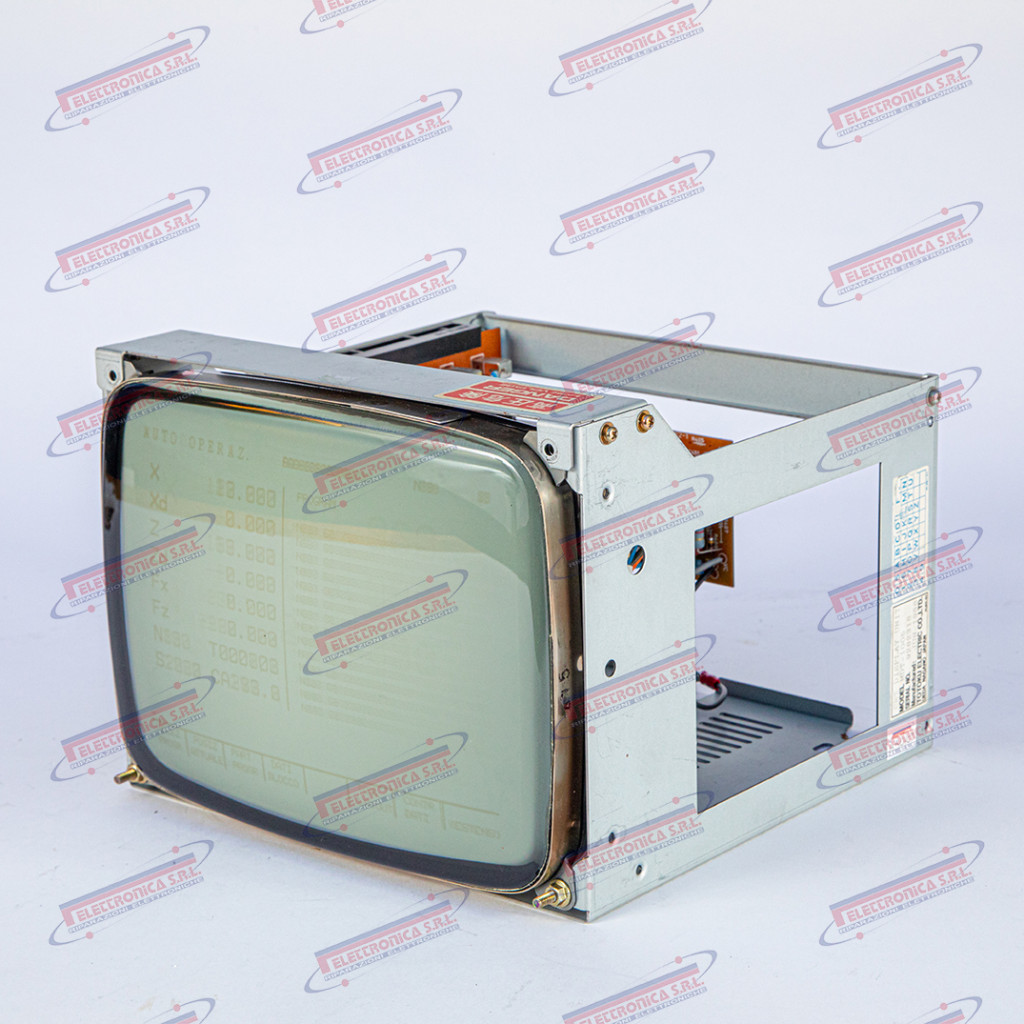
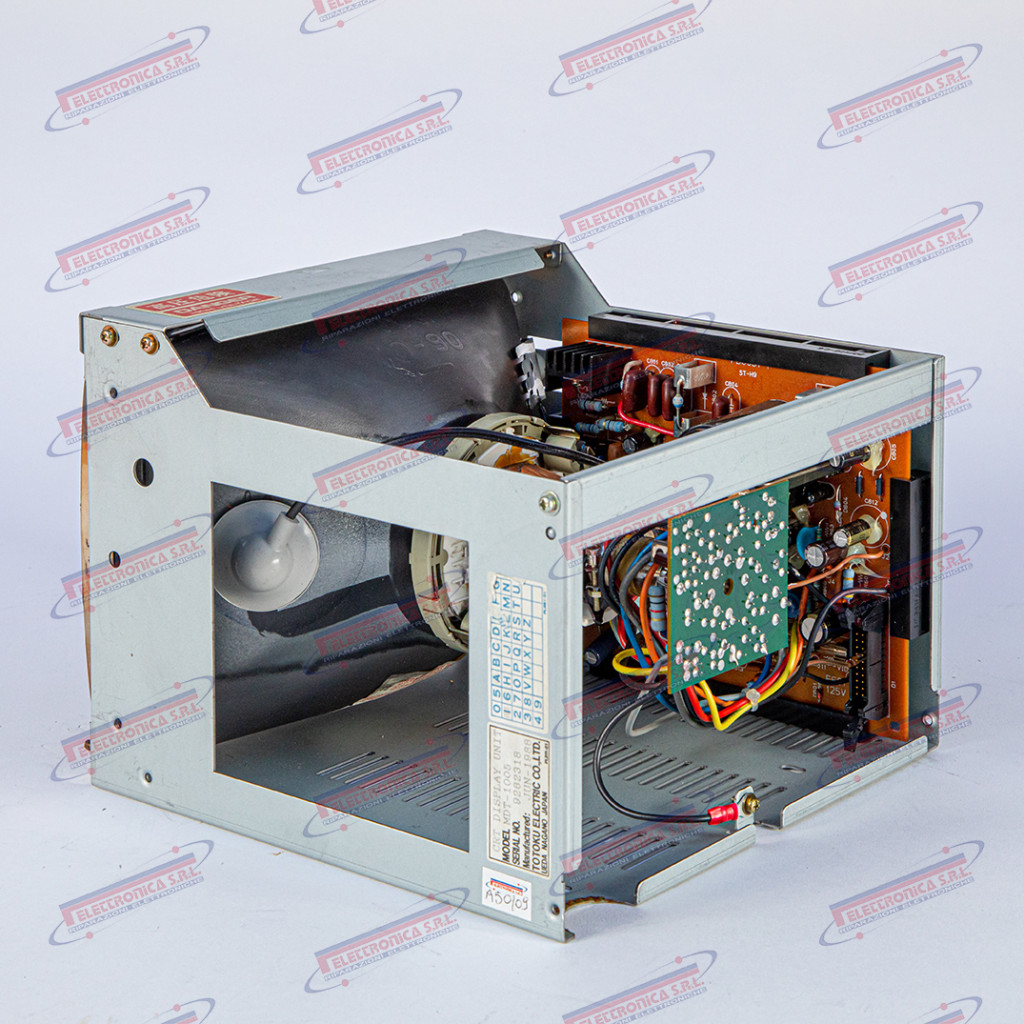
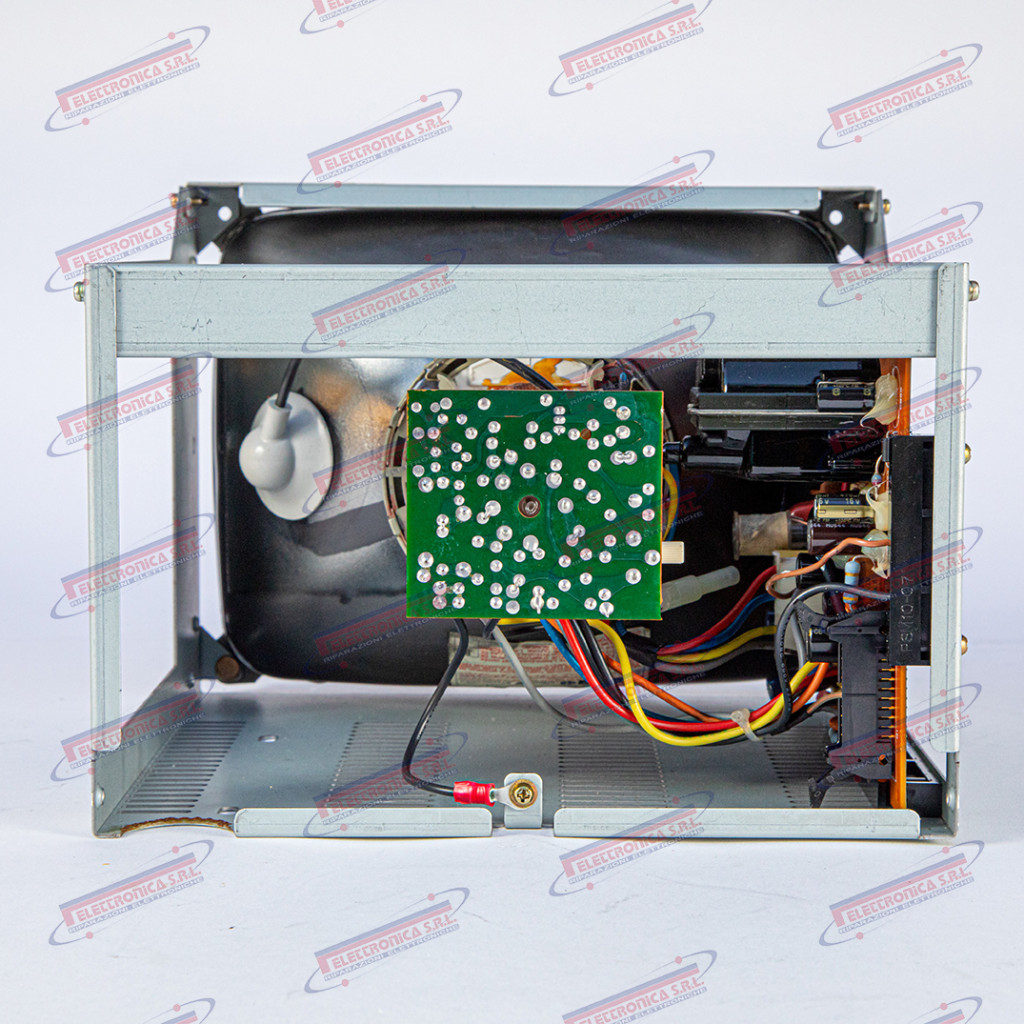
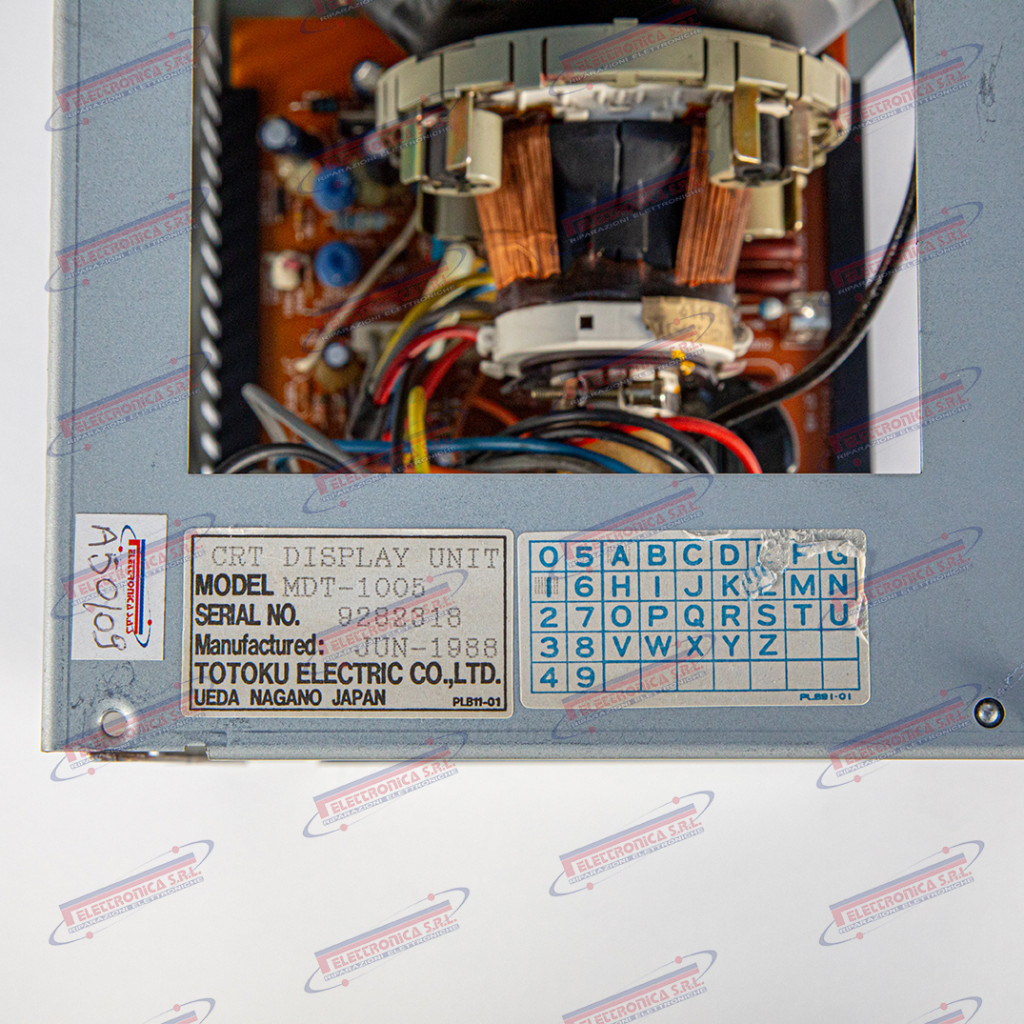
SKU:
MDT-1005
Cat:
Monitor
Brand:
OKUMA
10-Inch Monochrome CRT Monitor – OKUMA MDT-1005
The MDT-1005 is a 10-inch monochrome CRT display unit (“Monochrome CRT Display Unit”) manufactured by OKUMA, documented as the operator display for the OKUMA OSP 500 CNC control system. The screen constitutes the human-machine interface (HMI) of the CNC panel, showing machining parameters, programming pages, alarm messages, and machine diagnostics. The tube is a monochrome green-phosphor CRT, typical of 1980s–1990s CNC technology. This component was fitted to OKUMA lathes and machining centres equipped with the OSP 500 control.
The CRT monitor is the display unit that makes the CNC operator interface accessible: without it, the operator cannot read programs, machining parameters, tool offsets, or alarm messages. A faulty monitor renders the machine operationally blind — no cycles can be started, no adjustments made, and no faults diagnosed, resulting in an immediate production stoppage.
OKUMA Corporation is a Japanese manufacturer founded in 1898, a world leader in CNC machine tools (lathes, machining centres, grinders) and proprietary control systems. The OSP 500 control belongs to a legacy generation from the 1980s–1990s; the MDT-1005 monitor is legacy / discontinued: available only as used stock, surplus, or through specialist repair.
Main Technical Specifications
| Type | Monochrome CRT display unit (Monochrome CRT Display Unit) |
| Part number | MDT-1005 (MDT1005) |
| Brand | OKUMA Corporation |
| Known application | OKUMA OSP 500 CNC control system (lathes and machining centres) |
| Function | CNC operator HMI display unit |
| Screen diagonal | 10 inches (~254 mm) |
| Display technology | Monochrome green-phosphor CRT (P31, typical) |
| Video signal | TTL / composite sync – typical OSP 500 systems |
| Interface | Dedicated connector on OSP 500 operator panel |
| Power supply | ~100–240 V AC / panel-supplied |
| Weight | ~5–10 kg |
| Dimensions | ~300–380 mm W × 280–340 mm H × 340–420 mm D |
| Production status | Legacy / discontinued — used/surplus/repair only |
SKU:
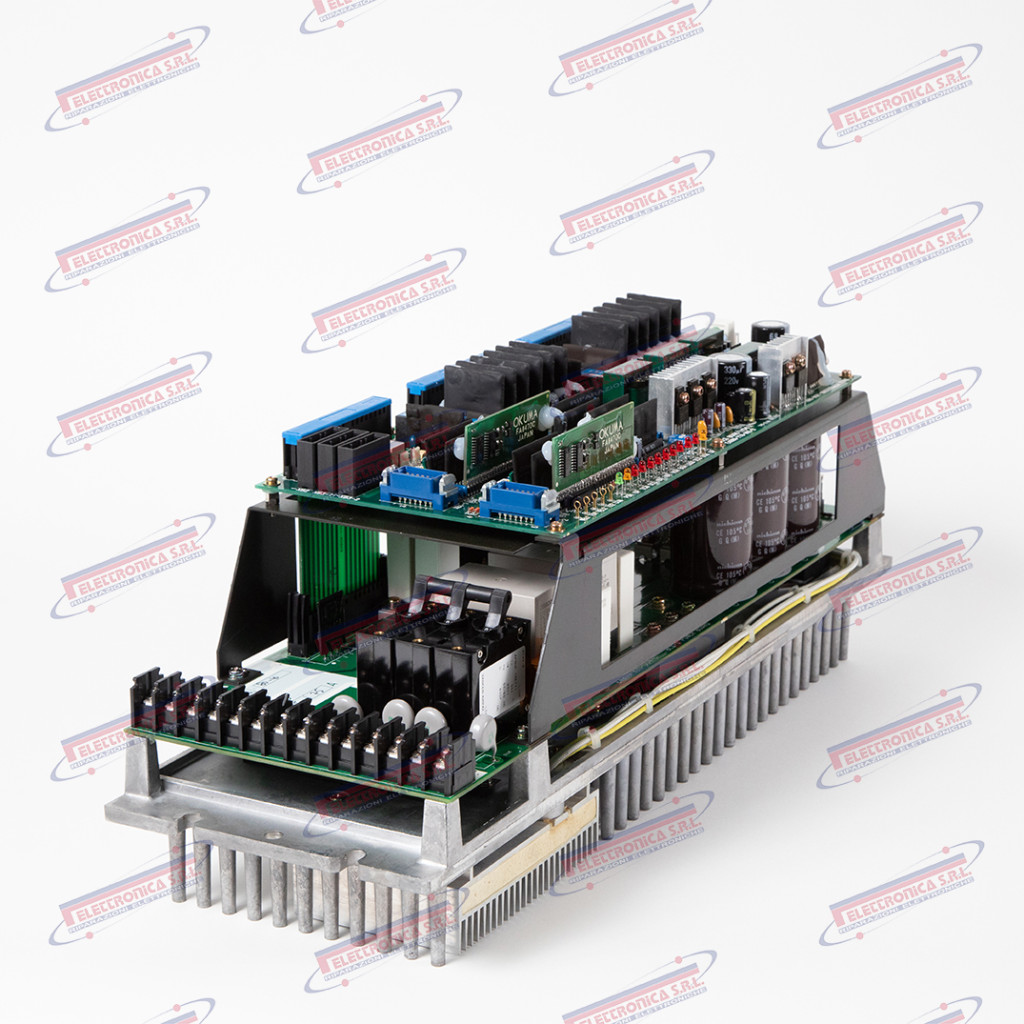
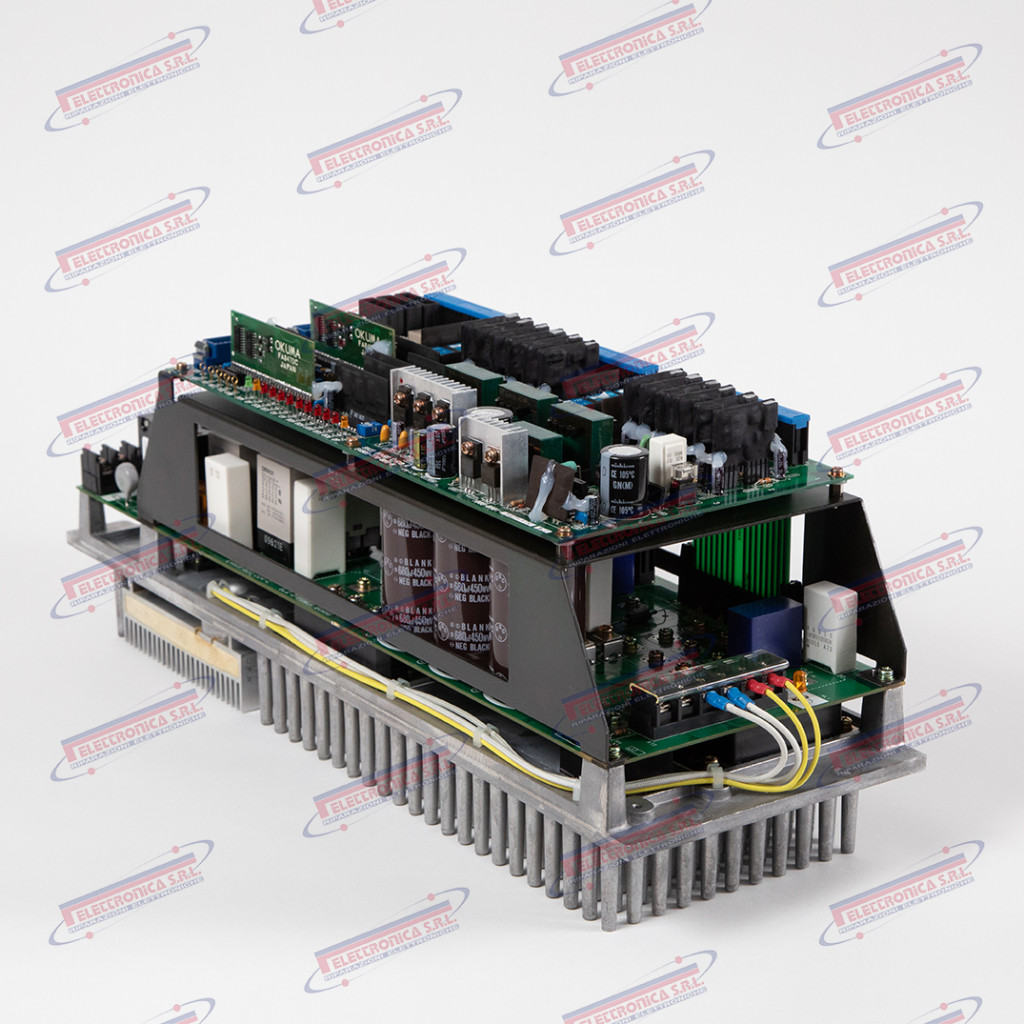
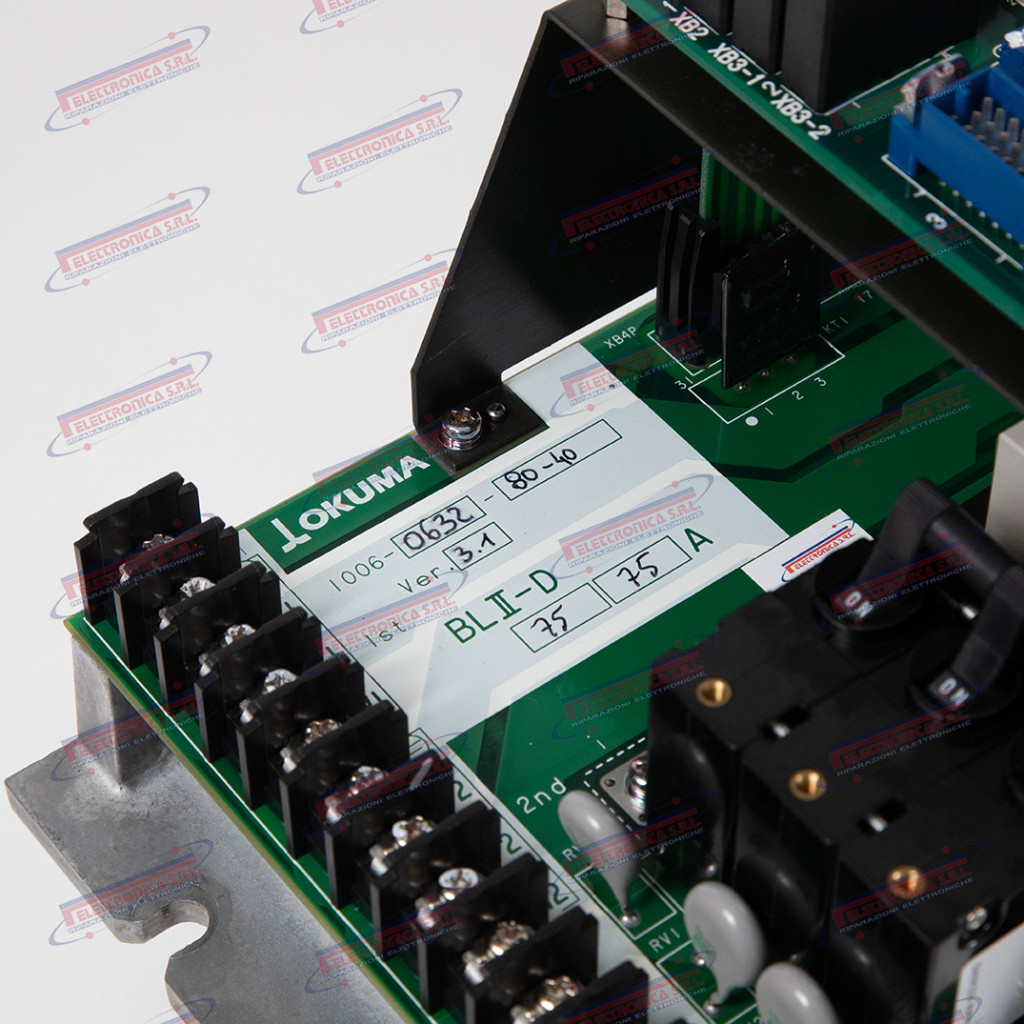
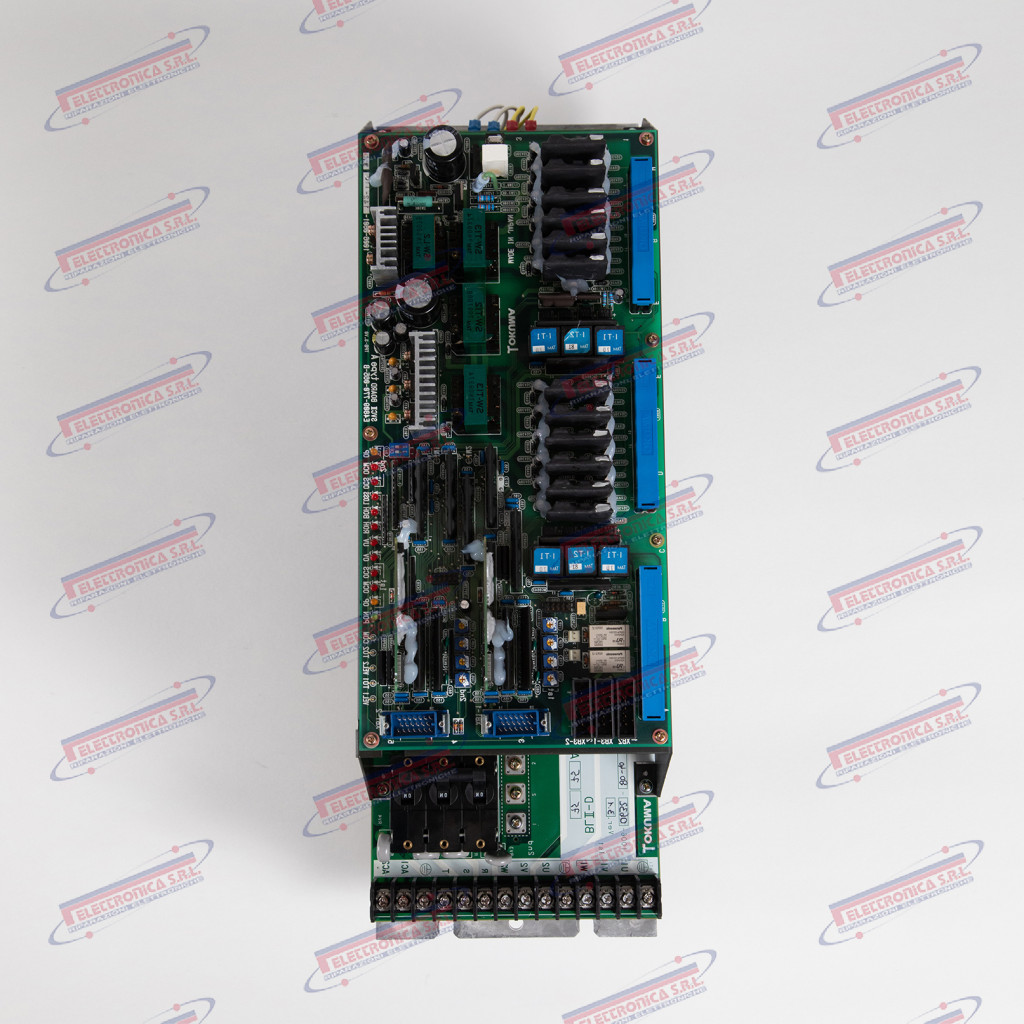
BLII-D7575A
Cat:
Servo Drive
Brand:
OKUMA
Brushless II Servo Drive – OKUMA BLII-D7575A
The BLII-D7575A is an AC brushless servo drive (“AC Brushless Servo Amplifier”) from the BLII (Brushless II) series manufactured by OKUMA Corporation, designed for CNC machining centers, lathes, and milling machines equipped with OKUMA’s proprietary OSP (Open System Platform) control. The module is a digital drive that manages speed and current control loops for AC brushless servo motors on the working axes. The suffix “D7575A” identifies the size variant and revision within the BLII series; versions with different torque/power ratings may exist.
The servo drive is the power electronic stage that energises and regulates the axis servo motor: it converts digital commands from the CNC into precise phase currents, closing the speed and position control loops. A failure of the BLII-D7575A renders the corresponding axis uncontrollable, causing immediate machine stoppage and the risk of dimensional rejects or collisions during the machining operation in progress.
OKUMA Corporation is a Japanese manufacturer founded in 1898 in Oguchi, Aichi, and one of the world’s largest producers of CNC machine tools. OKUMA is one of the few manufacturers in the world to design machine, CNC control (OSP), and servo/spindle drives entirely in-house, ensuring full system integration. The BLII series belongs to a mature generation of the OKUMA product portfolio; all products in this line are legacy / discontinued and available only as used, surplus, or through specialist repair services.
Main Technical Specifications
| Type | Servo drive / AC brushless servo amplifier |
| Part number | BLII-D7575A (BLIID7575A) |
| Brand | OKUMA Corporation |
| Known application | OKUMA CNC machining centers, lathes, and milling machines with OSP control |
| Series | BLII (Brushless II) |
| Function | AC brushless servo motor drive and speed/current regulation |
| Input supply | Three-phase ~200–400 V AC, 50/60 Hz |
| Rated current | ~7.5–75 A |
| Control interface | Proprietary OSP serial bus / dedicated OKUMA connectors |
| Feedback | Incremental or absolute encoder from servo motor |
| Logic supply voltages | ±15 V and +5 V DC |
| Weight | ~3–8 kg |
| Dimensions | ~250–450 mm L |
| Production status | Legacy / discontinued — used/surplus/repair only |
SKU:
OSP50X0-LED
Cat:
Monitor
Brand:
OKUMA
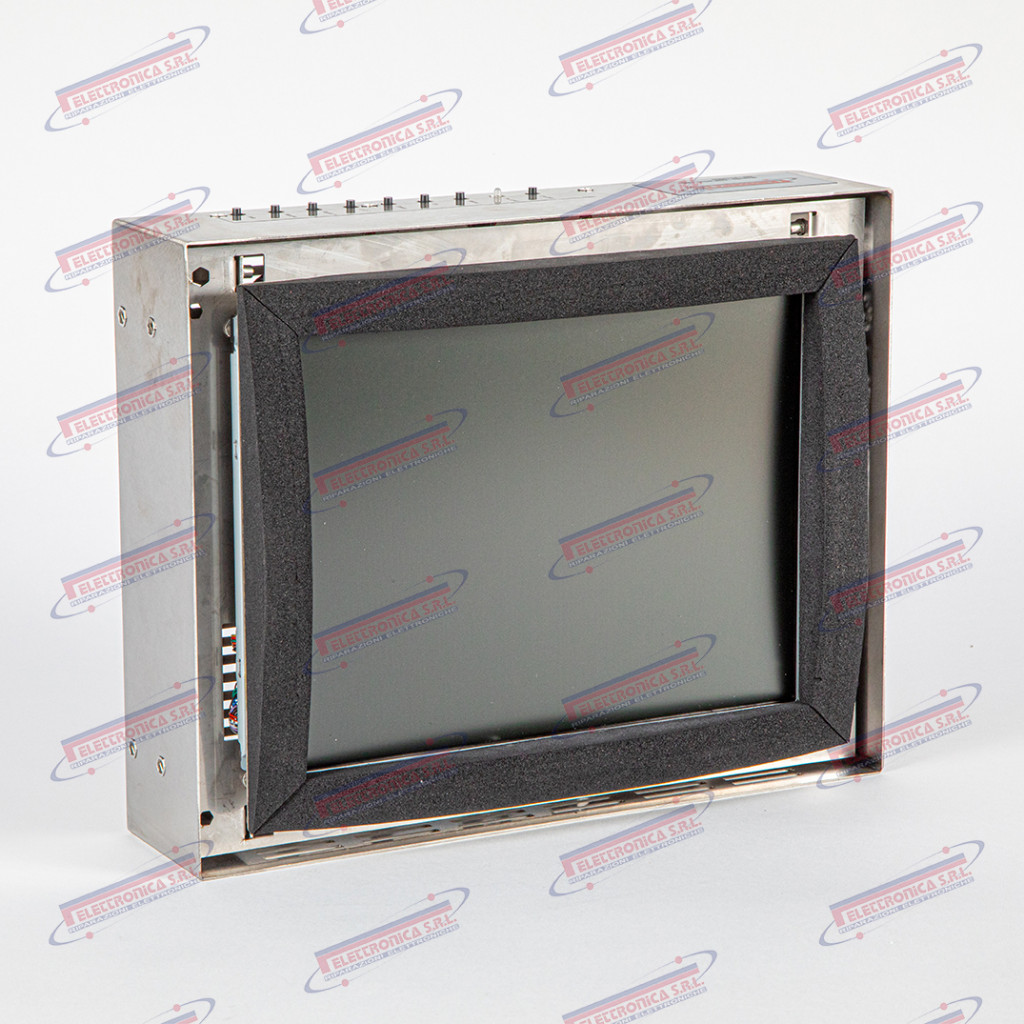
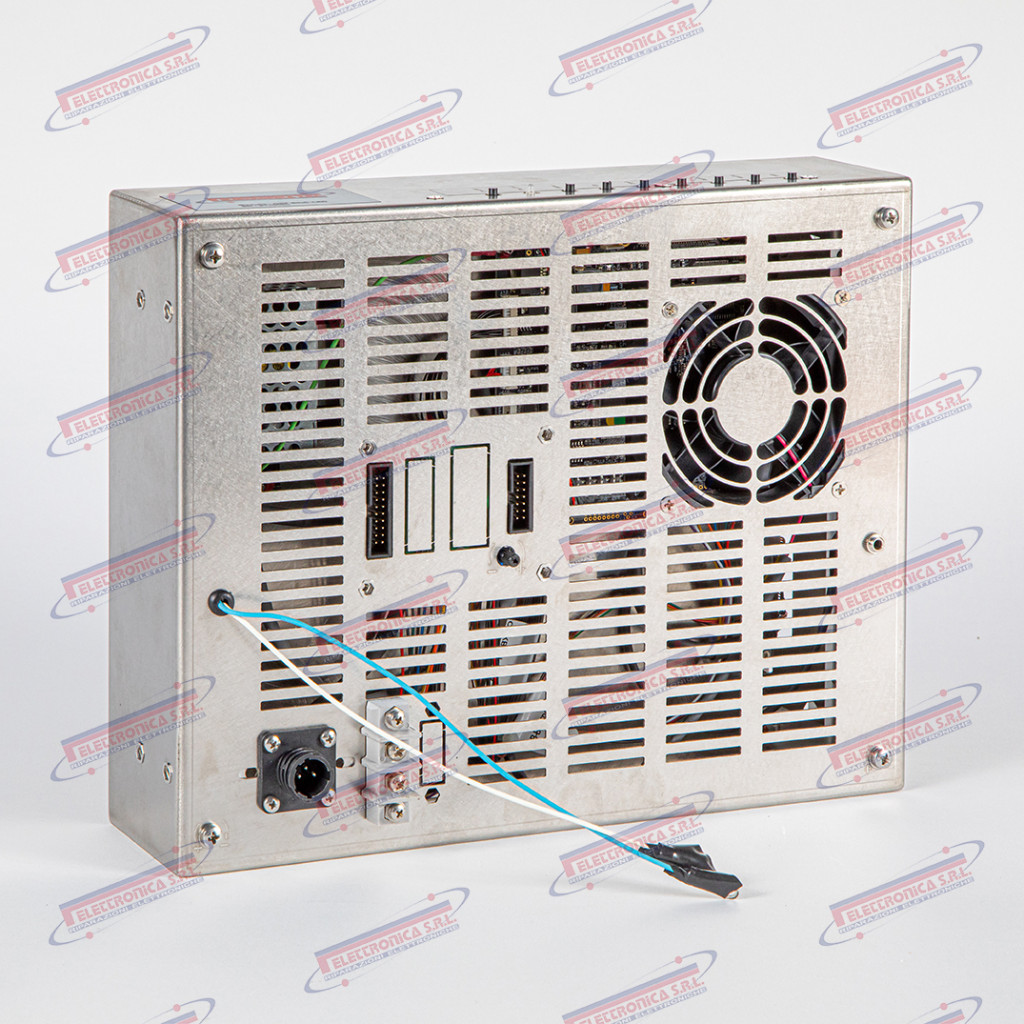
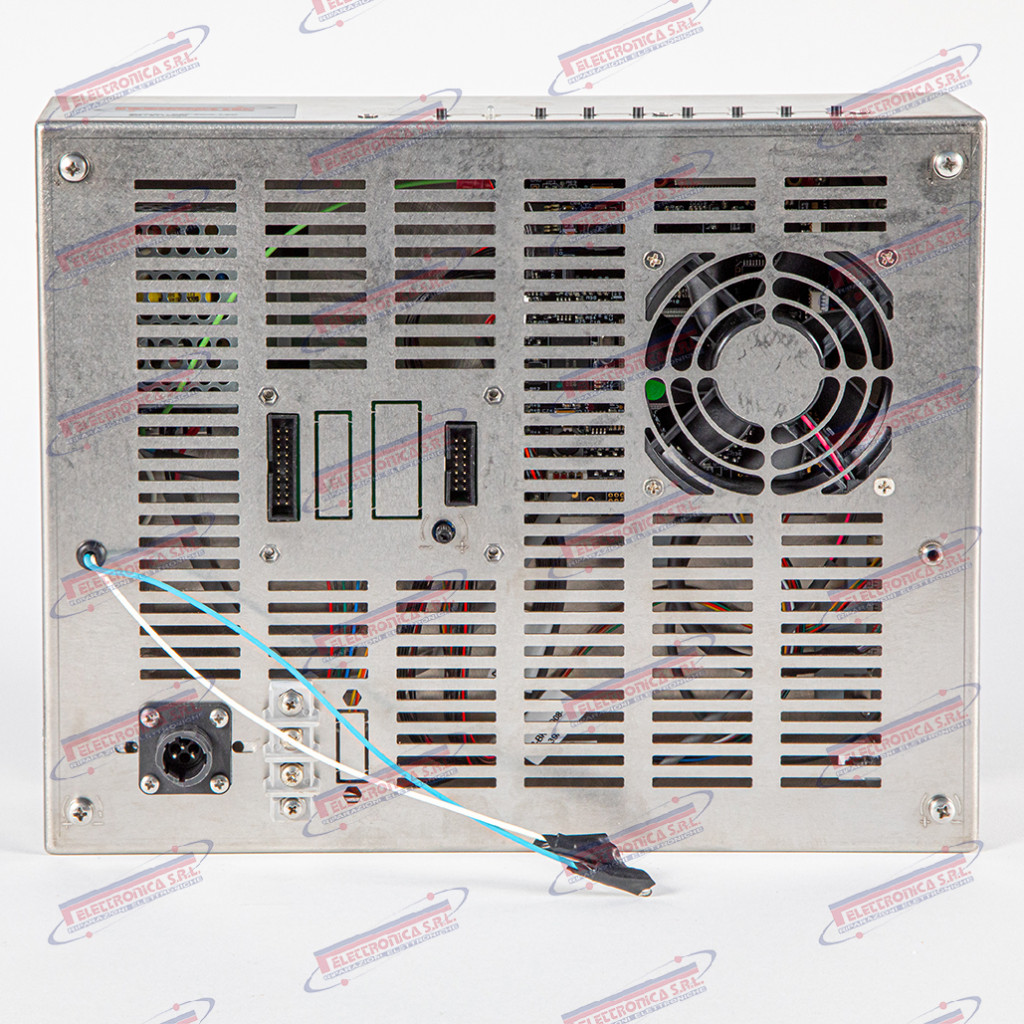
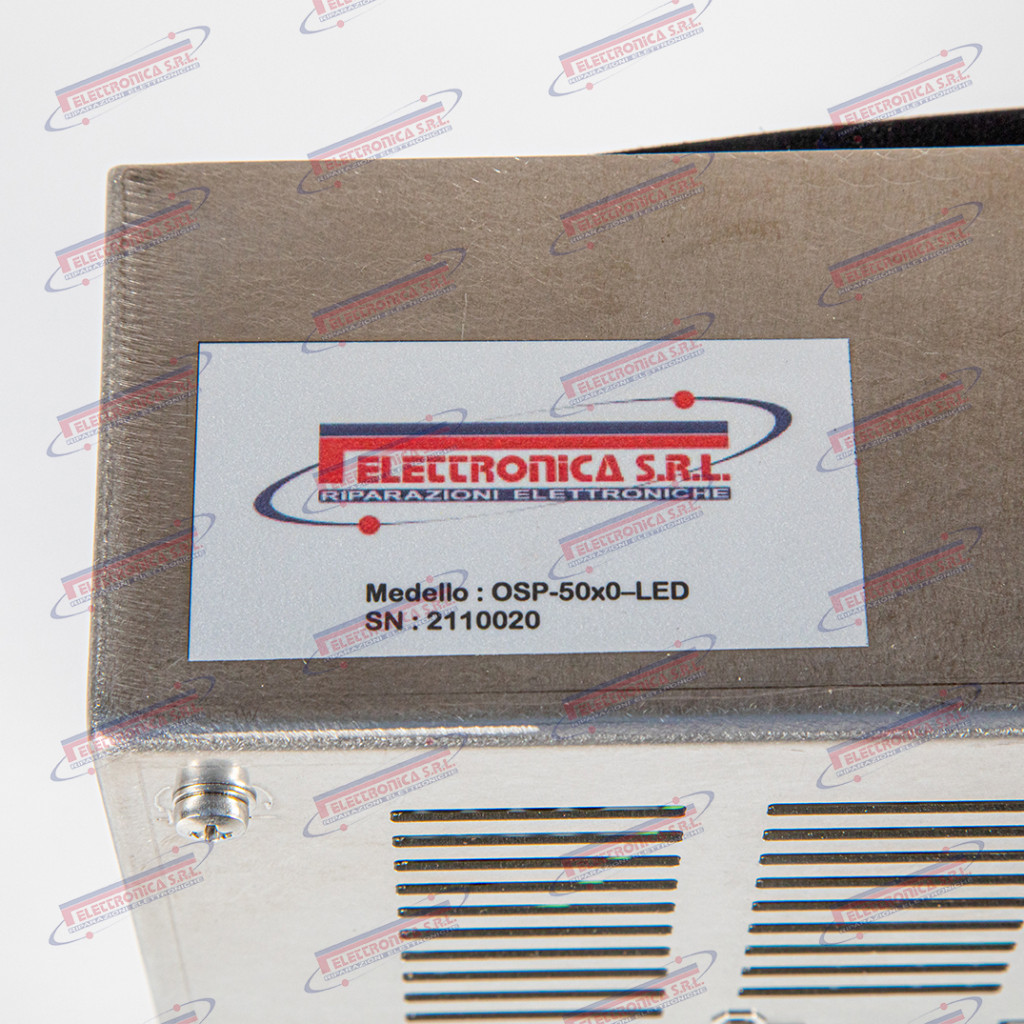
10″ LED Monitor – OKUMA OSP50X0-LED
The OSP50X0-LED is a 10-inch LED display panel for CNC operator panels (“10″ LED Operator Panel Monitor”) manufactured by OKUMA, designed as a replacement display unit for OKUMA OSP-5000 series CNC controls (OSP-5000L, OSP-5000M, OSP-5020L, OSP-5020M and variants). The display uses LED-backlit LCD technology as a modern drop-in replacement for aging original CRT monitors or fluorescent-backlit (CCFL) panels. The designation OSP50X0-LED indicates cross-compatibility with the full OSP-50x0 control family, where “X” covers the different machine variants (OKUMA lathes, machining centres, and grinding machines).
The operator panel monitor is the sole visual interface between the operator and the CNC system: it displays the active NC program, axis position readouts, tool offsets, machining parameters and all machine diagnostic alarms. Without a functional display the operator cannot read machine status, modify parameters or interpret alarms, making the CNC lathe or machining centre effectively unusable in production.
OKUMA Corporation is a Japanese machine tool manufacturer founded in 1898 in Nagoya, specialised in CNC lathes, vertical and horizontal machining centres, grinding machines and entirely in-house developed control systems. The OSP (Open Systems Platform) control platform is well known for its high reliability and long operational life. Components for the now-dated OSP-5000 series are available as spare parts in limited quantities and may require significant lead times to source.
Main Technical Specifications
| Type | 10-inch LCD/LED monitor for CNC operator panel |
| Part number | OSP50X0-LED (OSP50X0LED) |
| Brand | OKUMA |
| Known application | OKUMA OSP-5000 series CNC controls: OSP-5000L, OSP-5000M, OSP-5020L, OSP-5020M and variants |
| Function | Primary HMI display: NC program, axis readouts, tool offsets, diagnostic alarms |
| Screen size | 10 inches (10″) diagonal |
| Display technology | LED-backlit LCD (drop-in replacement for CRT/CCFL monitors) |
| Resolution | ~640 × 480 px VGA |
| Interfaces / connectors | OKUMA proprietary connector for OSP-50x0 panel wiring harness |
| Power supply | ~12–24 V DC |
| Weight | ~1.5–3.0 kg |
| Dimensions | ~260–320 × 200–250 mm |
| Production status | Spare part for legacy / discontinued OSP-5000 series controls — limited availability; consult OKUMA or specialist distributors |
SKU:
VAC III-D3/6
Cat:
Servo Drive
Brand:
OKUMA
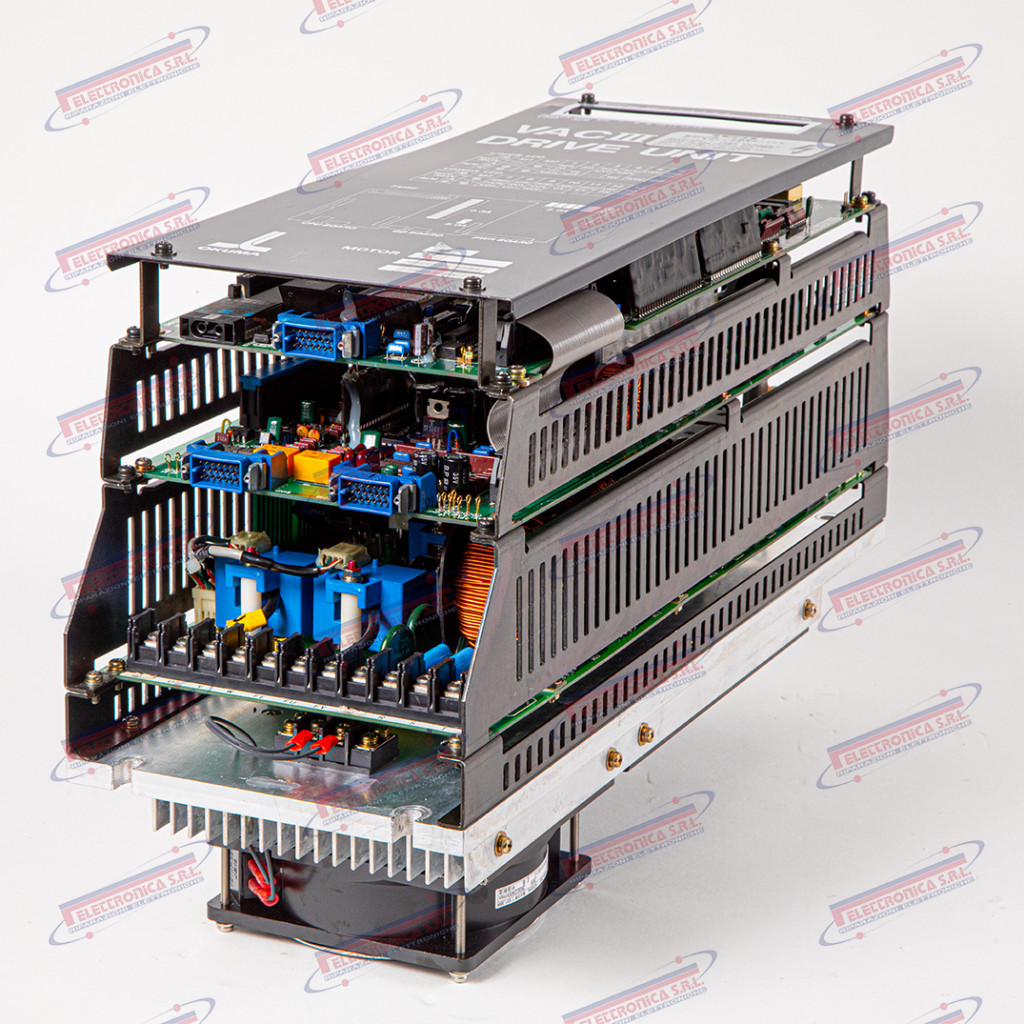
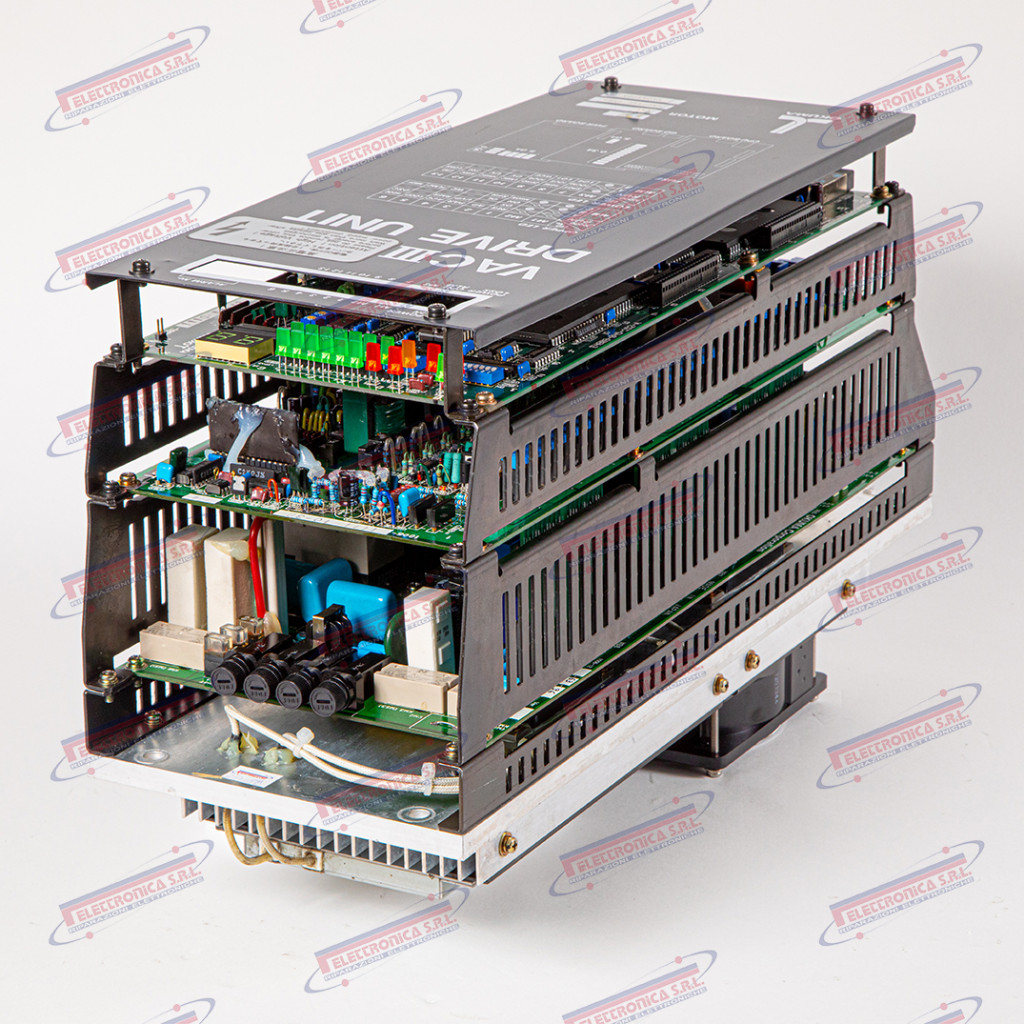
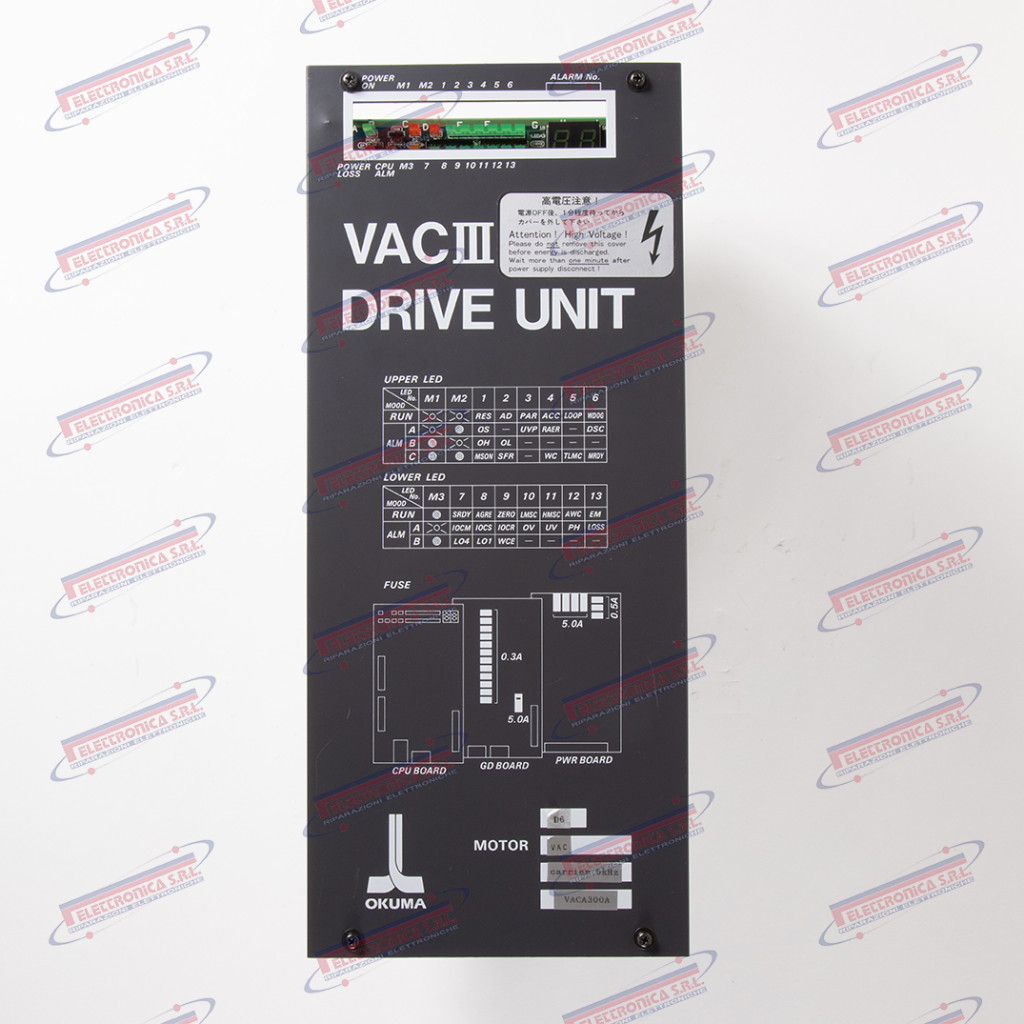
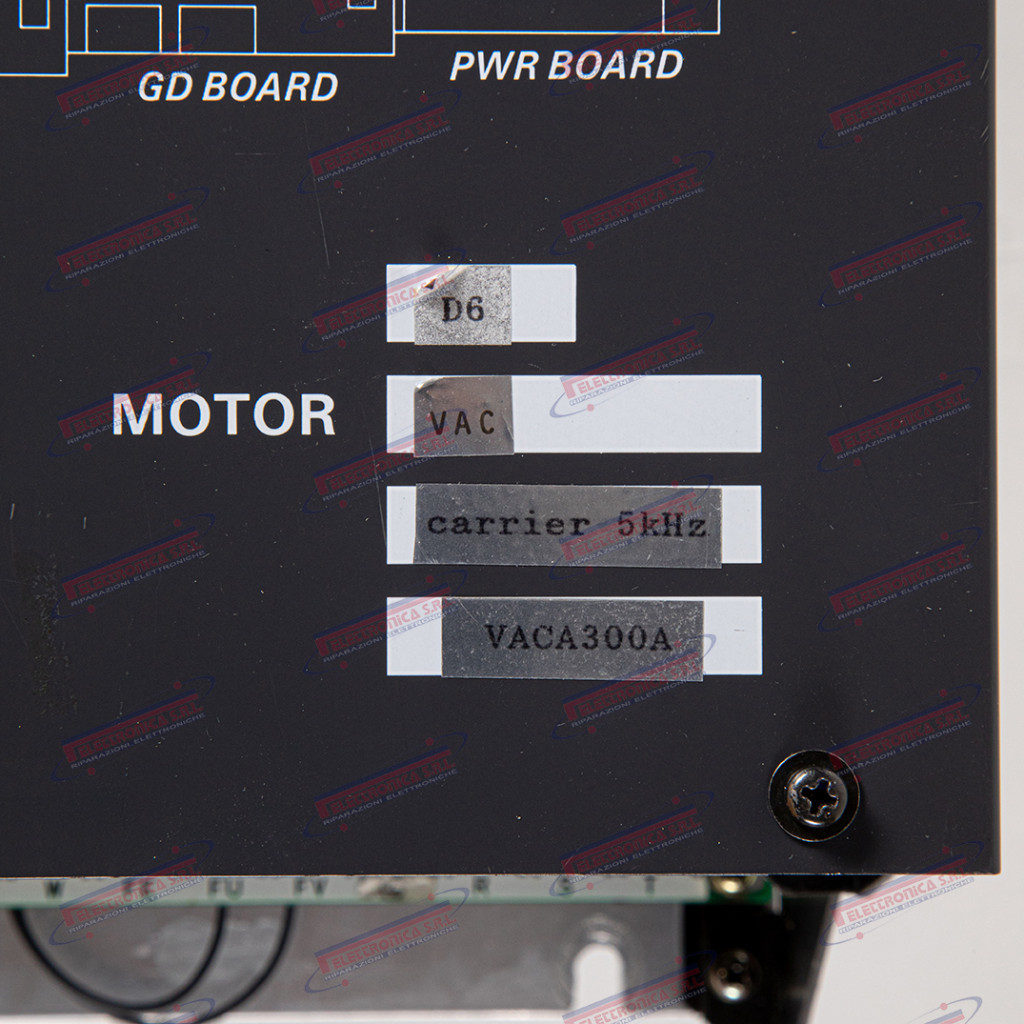
Servo Axis Drive – OKUMA VAC III-D3/6
The VAC III-D3/6 is a servo axis drive amplifier (“Servo Drive Amplifier”) from the VAC III series manufactured by OKUMA, documented as a component of OKUMA CNC machining centers and lathes from the 1980s–1990s equipped with the proprietary OSP numerical control. The module manages the current and velocity regulation loops of the servo axis motor, interfacing with the CNC unit via the signal bus and with the motor through the power bus and encoder feedback connectors. The designation D3/6 indicates the nominal/peak current rating of the drive; this is not a CPU or I/O module, but a dedicated drive stage for linear or rotary axes.
The servo axis drive is the electronic module that converts CNC position and velocity commands into power signals for the axis motor: it closes the current and velocity loops, ensuring positioning accuracy and dynamic stability throughout the machining process. A failure in the drive makes the corresponding axis completely unusable, causing an immediate machine stoppage and preventing any cutting operations until the component is replaced or repaired.
OKUMA is one of Japan’s leading CNC machine tool manufacturers, founded in 1898 in Nagoya. The company is renowned for its vertical integration between machine and proprietary numerical control (OSP – Open System Platform), covering milling machines, lathes, machining centers, and high-precision grinding machines. All components in the VAC III series are legacy / discontinued: available only as used stock, surplus, or through specialist repair services.
Main Technical Specifications
| Type | Servo axis drive amplifier (Servo Drive Amplifier) |
| Part number | VAC III-D3/6 (VACIIID36) |
| Brand | OKUMA |
| Known application | OKUMA CNC machining centers and lathes, 1980s–1990s series with OSP control |
| Function | Servo axis motor current and velocity regulation; position loop closure in cooperation with the CNC |
| Rated / peak current | 3 A / 6 A |
| DC bus voltage | ~300 V DC |
| Compatible control | OKUMA OSP (Open System Platform) |
| Interfaces / connectors | CN connectors for OKUMA CNC bus; motor power and encoder feedback connectors |
| Weight | ~1.5–4 kg |
| Dimensions | ~150×200×100 mm |
| Production status | Legacy / discontinued — used/surplus/repair only |
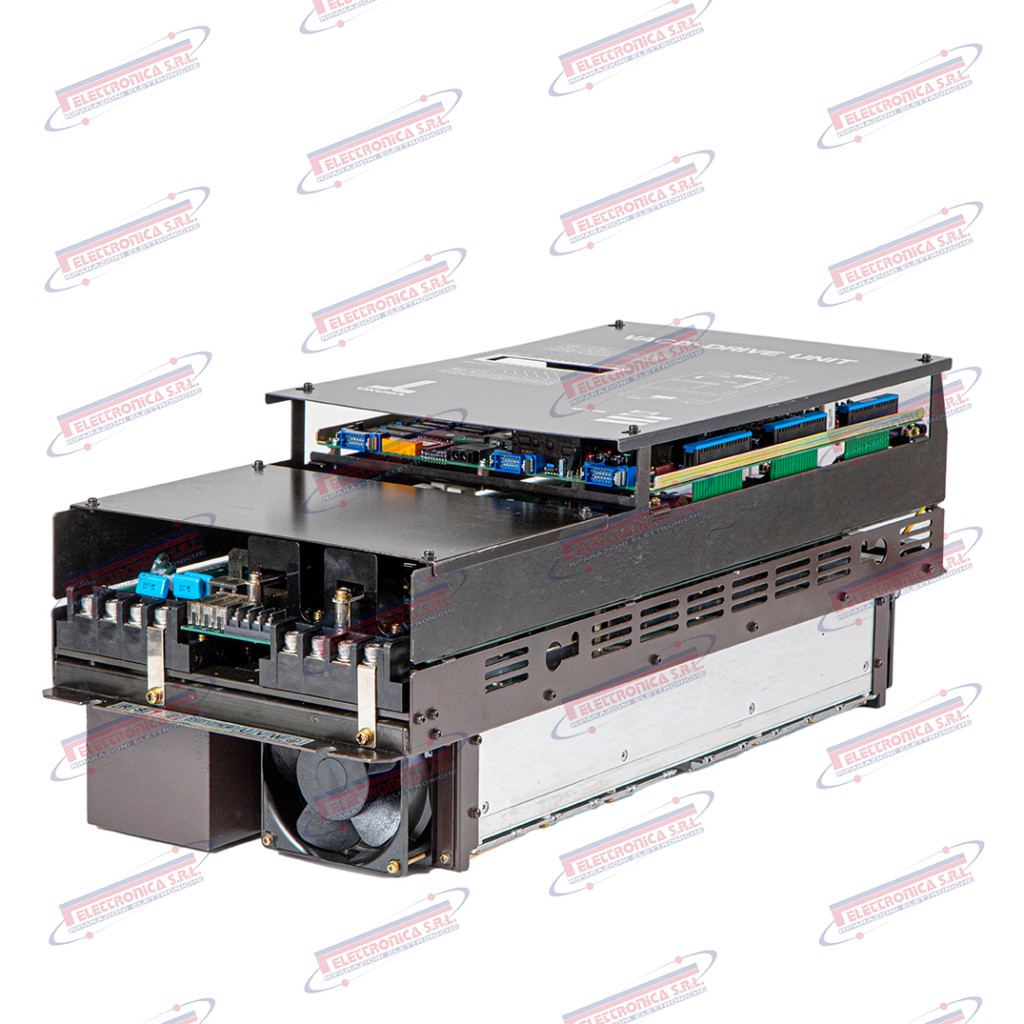
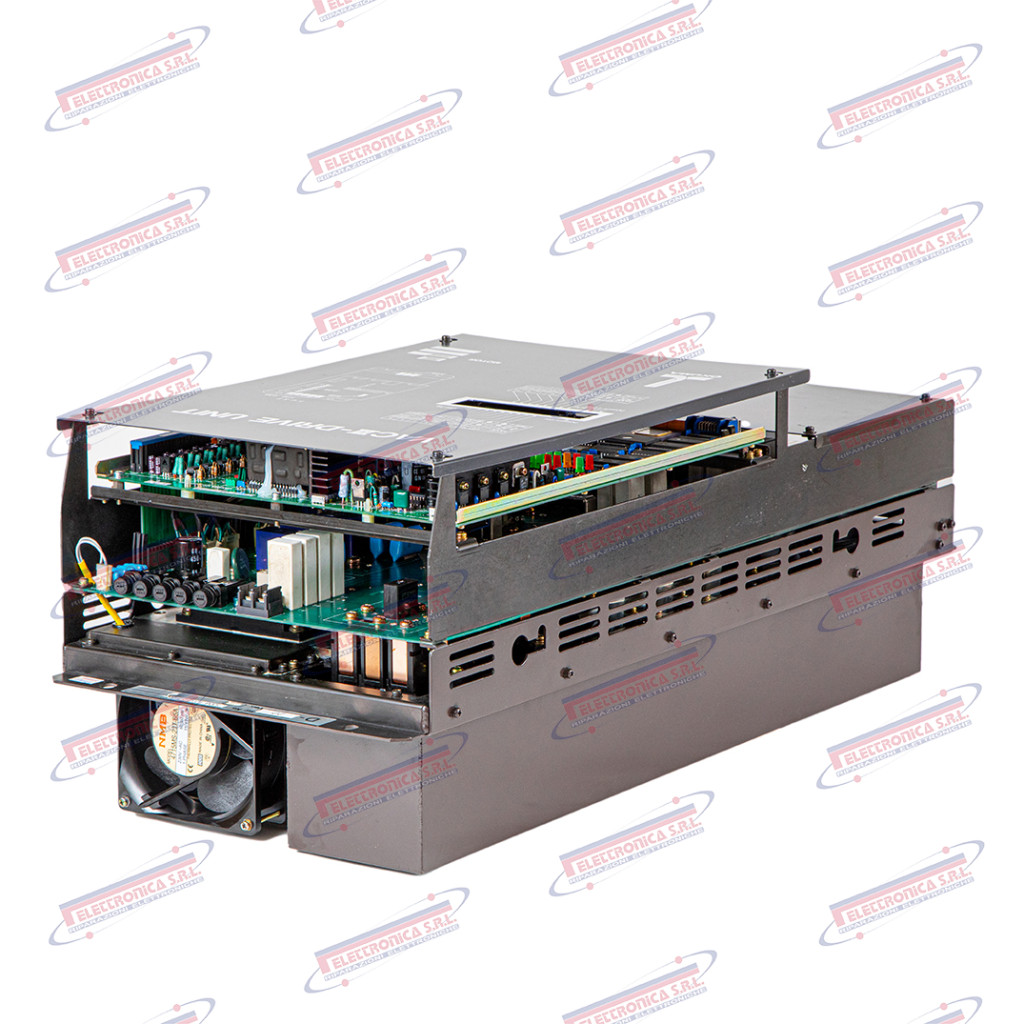
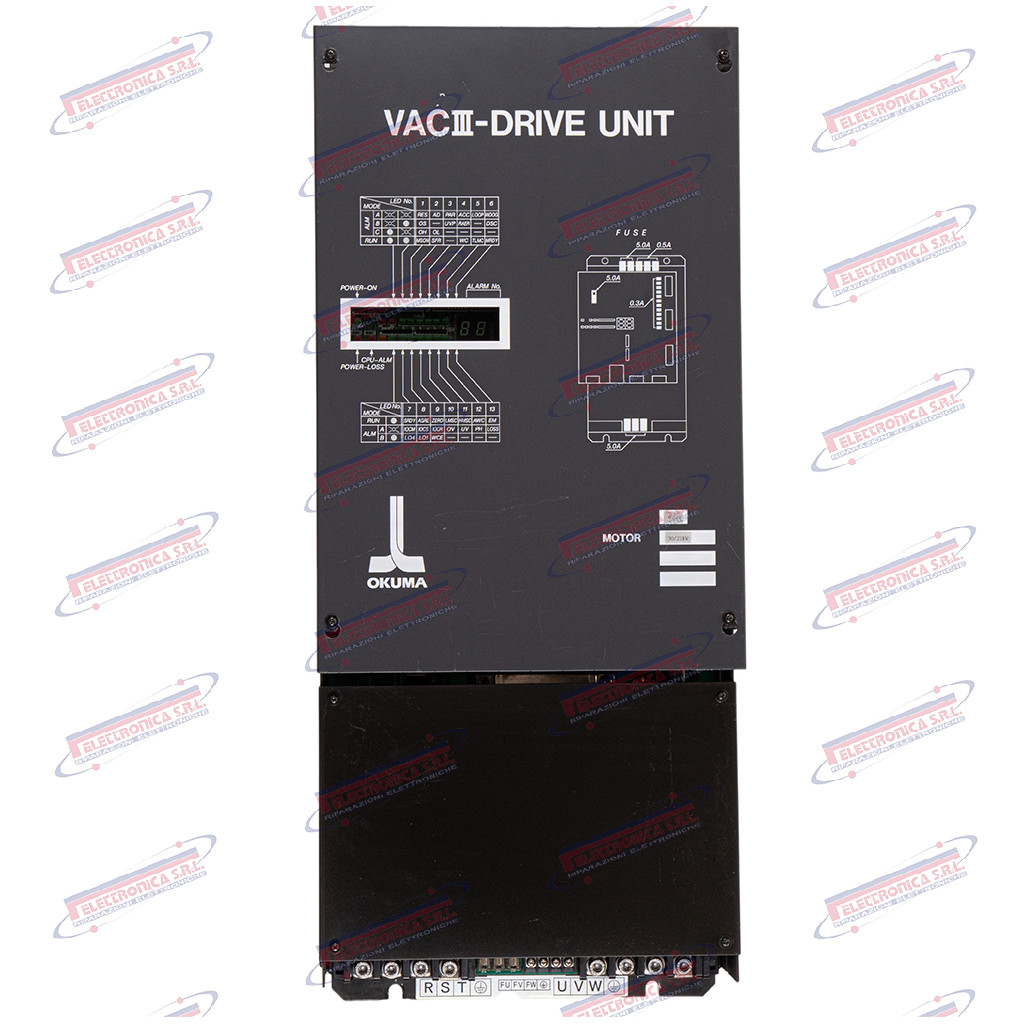
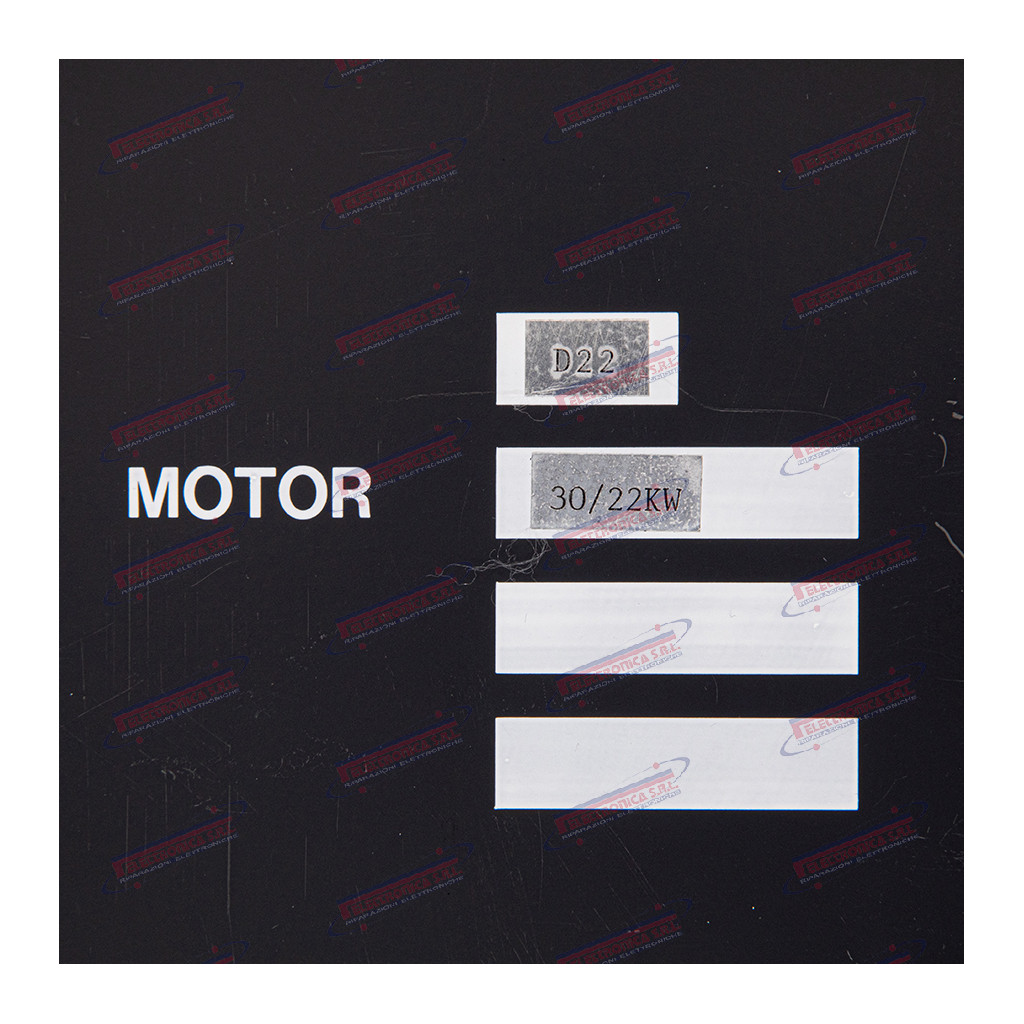
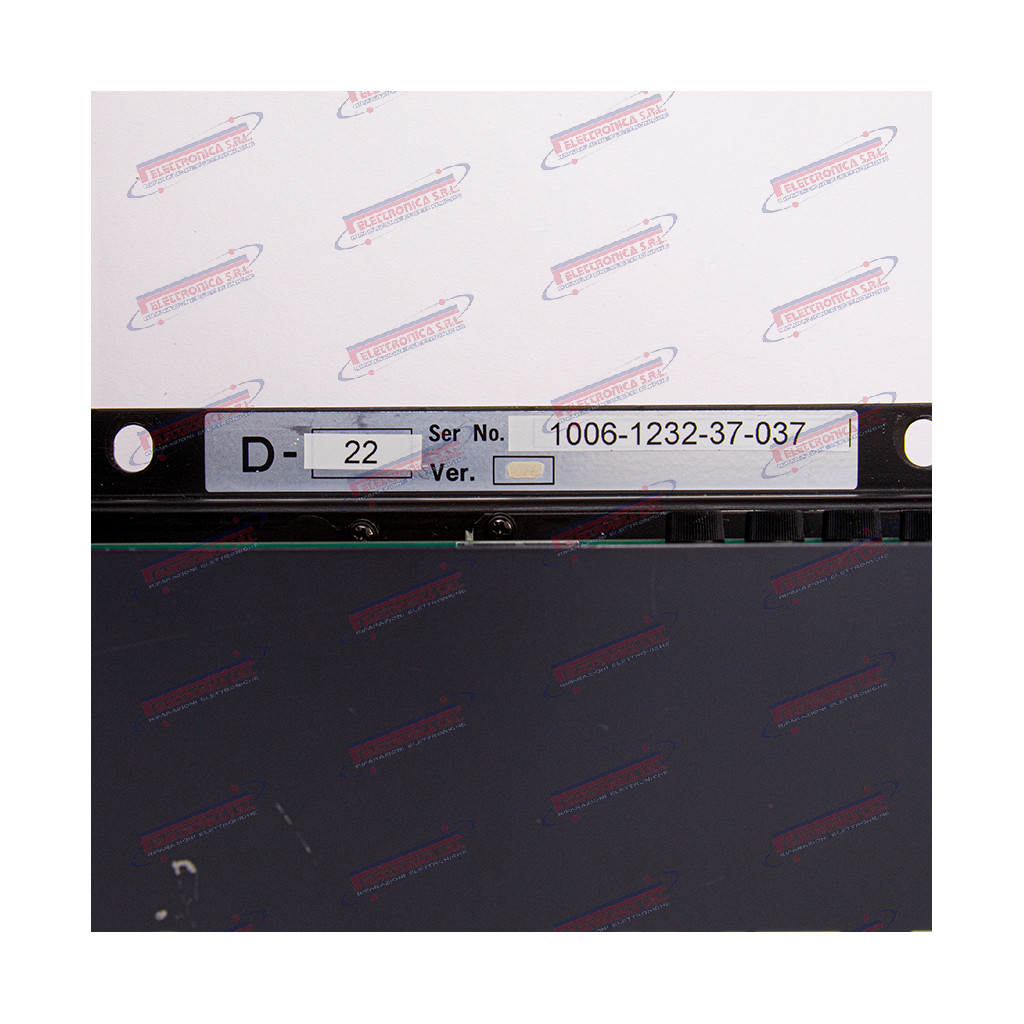
SKU:
VAC III D-22
Cat:
Servo Drive
Brand:
OKUMA
AC Axis Servo Drive – OKUMA VAC III D-22
The VAC III D-22 is an AC axis servo drive (“AC Axis Servo Drive”) manufactured by OKUMA Corporation, belonging to the VAC III series (Vector AC Control, third generation). The unit is documented on OKUMA CNC machining centres and lathes equipped with the OSP (Open System Platform) control, including the MB, MA, MC and LB, LT series. The module performs PWM vector control of the AC axis servo motor, receiving position and speed references from the CNC via proprietary digital bus or fibre optic link, and driving the IGBT power stage to the axis motor. The suffix D-22 identifies the specific size within the series (nominal current or power class).
The axis servo drive is the critical component of the machine motion system: it receives the position profile from the CNC, closes the position and speed loops on the motor, and guarantees the precision, dynamics, and repeatability of each axis during machining. A failure of this module causes complete loss of control of the corresponding axis, immediately stopping the machine and making any machining cycle impossible until the unit is replaced or repaired.
OKUMA Corporation is a Japanese CNC machine tool manufacturer founded in 1898, headquartered in Nagoya. It is one of the few manufacturers in the world to develop in-house both the machines and the CNC controls (OSP – Open System Platform) and drive systems, ensuring full vertical integration and optimised compatibility across all system levels. Products in the VAC III series are legacy / discontinued: available exclusively as used, surplus, or through specialist repair centres.
Main Technical Specifications
| Type | AC axis servo drive with vector control (AC Axis Servo Drive) |
| Part number | VAC III D-22 (VACIIID22) |
| Brand | OKUMA Corporation |
| Series | VAC III (Vector AC Control, third generation) |
| Known application | OKUMA CNC machining centres and lathes with OSP control (MB, MA, MC, LB, LT series) |
| Function | Vector position and speed control of AC axis servo motor |
| Control technology | PWM vector modulation on IGBT power stage |
| Supply voltage | 3 ~ 200–400 V AC three-phase, 50/60 Hz (version dependent); 24 V DC for logic |
| CNC interface | Proprietary OKUMA digital bus / fibre optic link to OSP control |
| Feedback | Absolute / incremental encoder or resolver on axis servo motor |
| Protection features | Overcurrent, overtemperature, position error, motor phase short-circuit |
| Weight | ~3–8 kg |
| Dimensions | ~200–400 mm |
| Production status | Legacy / discontinued — used/surplus/repair only |
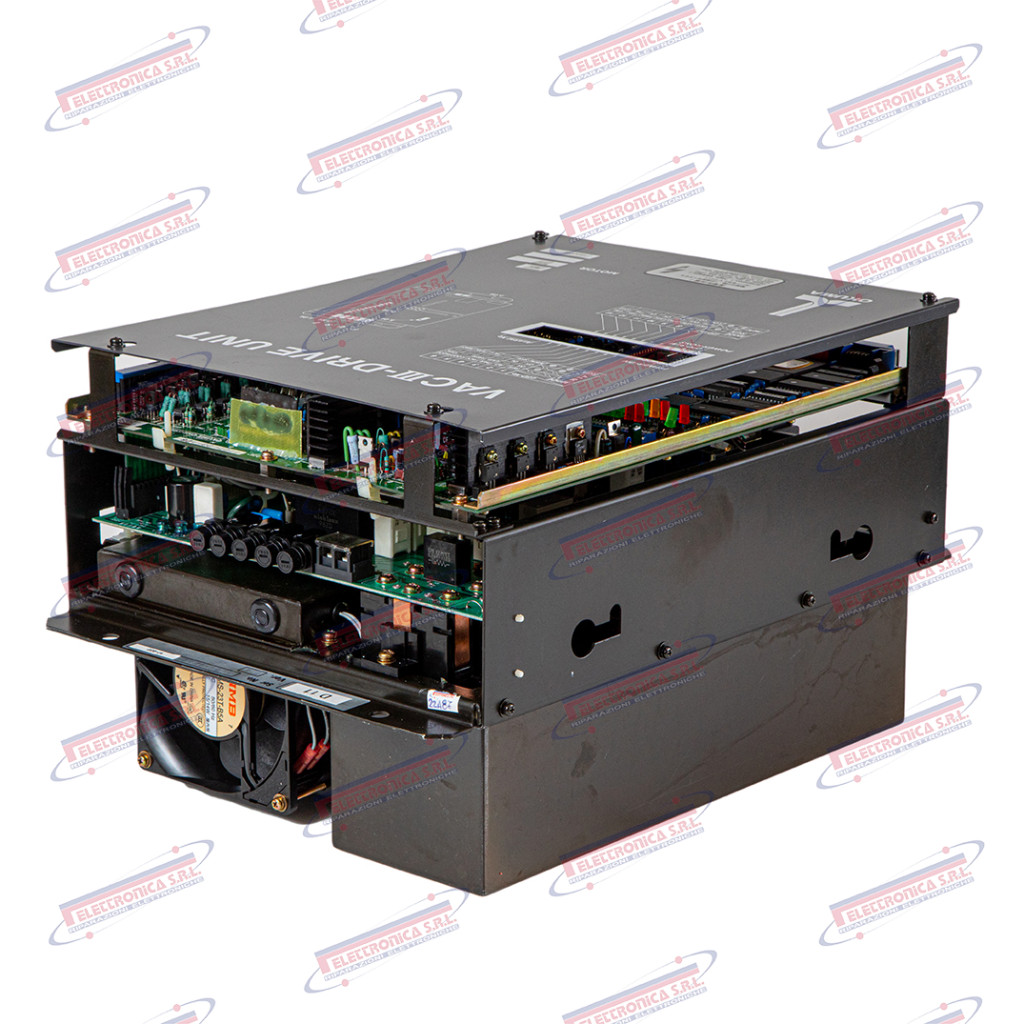
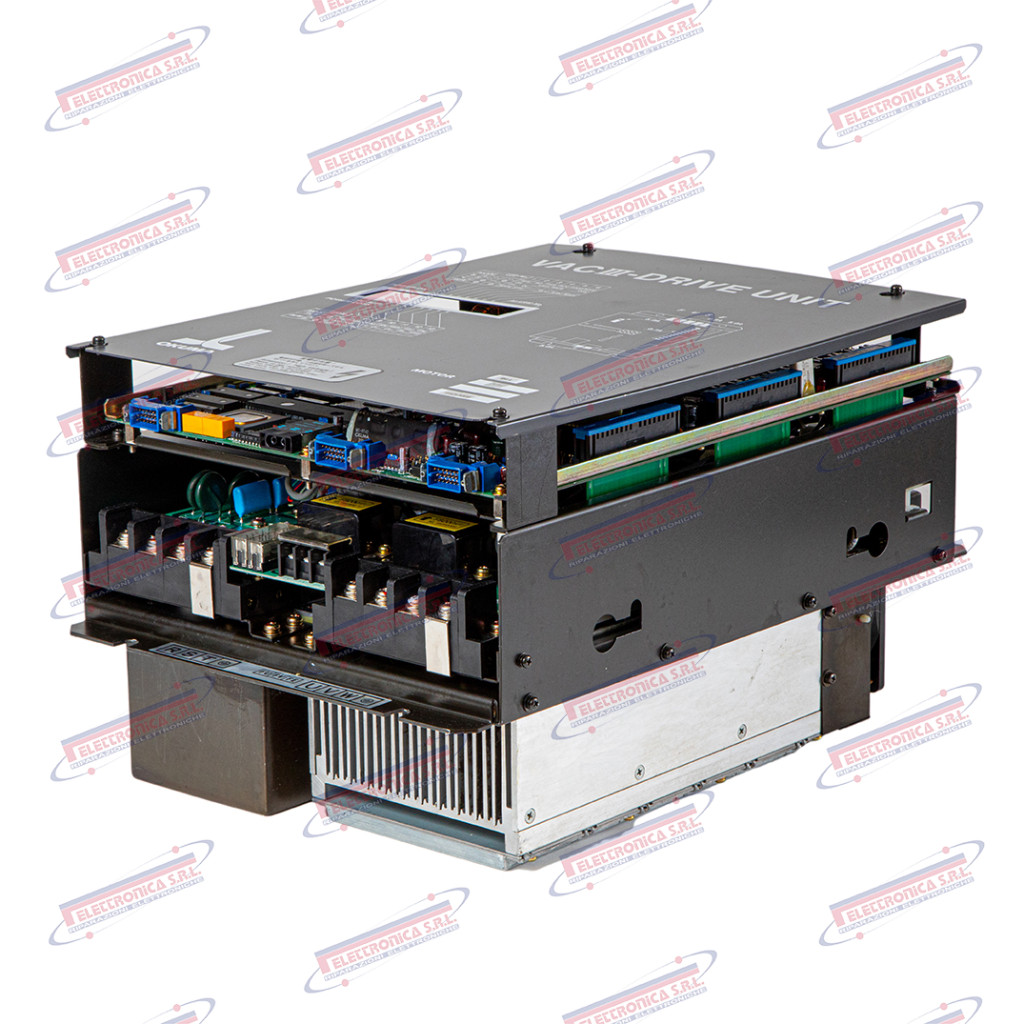
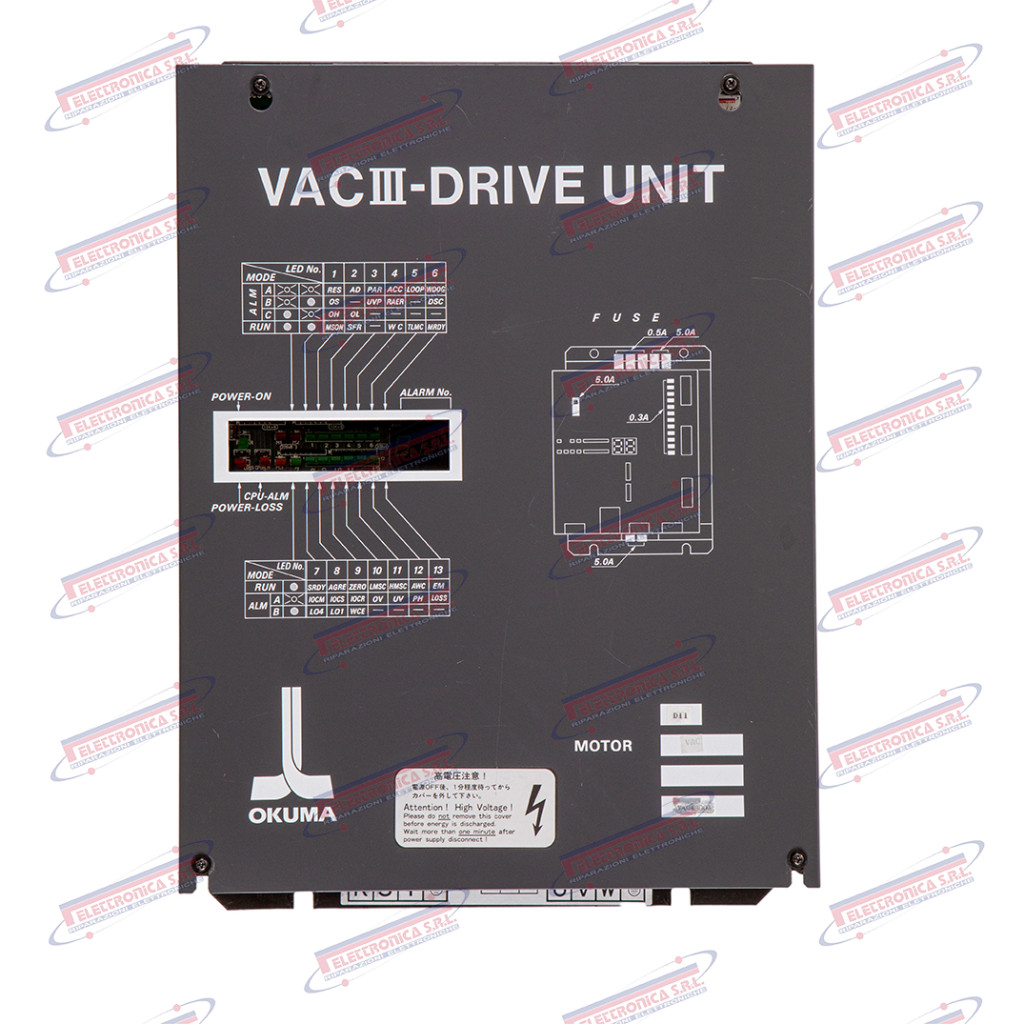
SKU:
VAC III D-11
Cat:
Servo Drive
Brand:
OKUMA
Servo Drive Card – OKUMA VAC III D-11
The VAC III D-11 is a servo drive card (“Velocity Amplifier Card”) manufactured by OKUMA, a component of the axis drive system for CNC machine tools equipped with an OSP (Open System Platform) controller. The card belongs to the third generation of the VAC (Velocity Amplifier Card) series; the D-11 designation identifies the specific power and regulation topology variant. It interfaces the CNC controller with the servo motor power stage, processing the analogue velocity reference and the feedback signal from the resolver or encoder.
The VAC III D-11 is the electronic controller that closes the velocity loop on the axis servo motor: it receives the position/velocity reference from the CNC unit and generates the command signal for the power stage, ensuring precise axis positioning during machining. A failure of this component results in the immediate loss of the affected axis, causing machine downtime and complete inability to resume production until the component is repaired or replaced.
OKUMA is a Japanese machine tool manufacturer founded in 1898 in Oguchi (Aichi, Japan). It is one of the few manufacturers worldwide to produce both machine tools and its own CNC control system (OSP – Open System Platform), ensuring full integration between mechanics and control electronics. Products from the VAC III series are legacy / discontinued: available exclusively as used, surplus, or through specialist repair services.
Main Technical Specifications
| Type | Axis servo drive card / velocity amplifier card (Velocity Amplifier Card) |
| Part number | VAC III D-11 (VACIIID11) |
| Brand | OKUMA |
| Known application | OKUMA CNC machine tools with OSP control (machining centres, lathes, CNC milling machines) |
| Function | Axis servo motor speed and current regulation; velocity loop closure |
| Reference input | Analogue velocity reference ±10 V (typical) |
| Feedback | Resolver / encoder from axis servo motor |
| Logic supply voltages | ±15 V and +5 V DC (typical) |
| Interfaces | On-board connectors for integration in OKUMA CNC rack/cabinet |
| Series generation | VAC III (third generation of the OKUMA Velocity Amplifier Card series) |
| Weight | ~0.5–1.5 kg |
| Dimensions | ~200–350 mm |
| Production status | Legacy / discontinued — used/surplus/repair only |
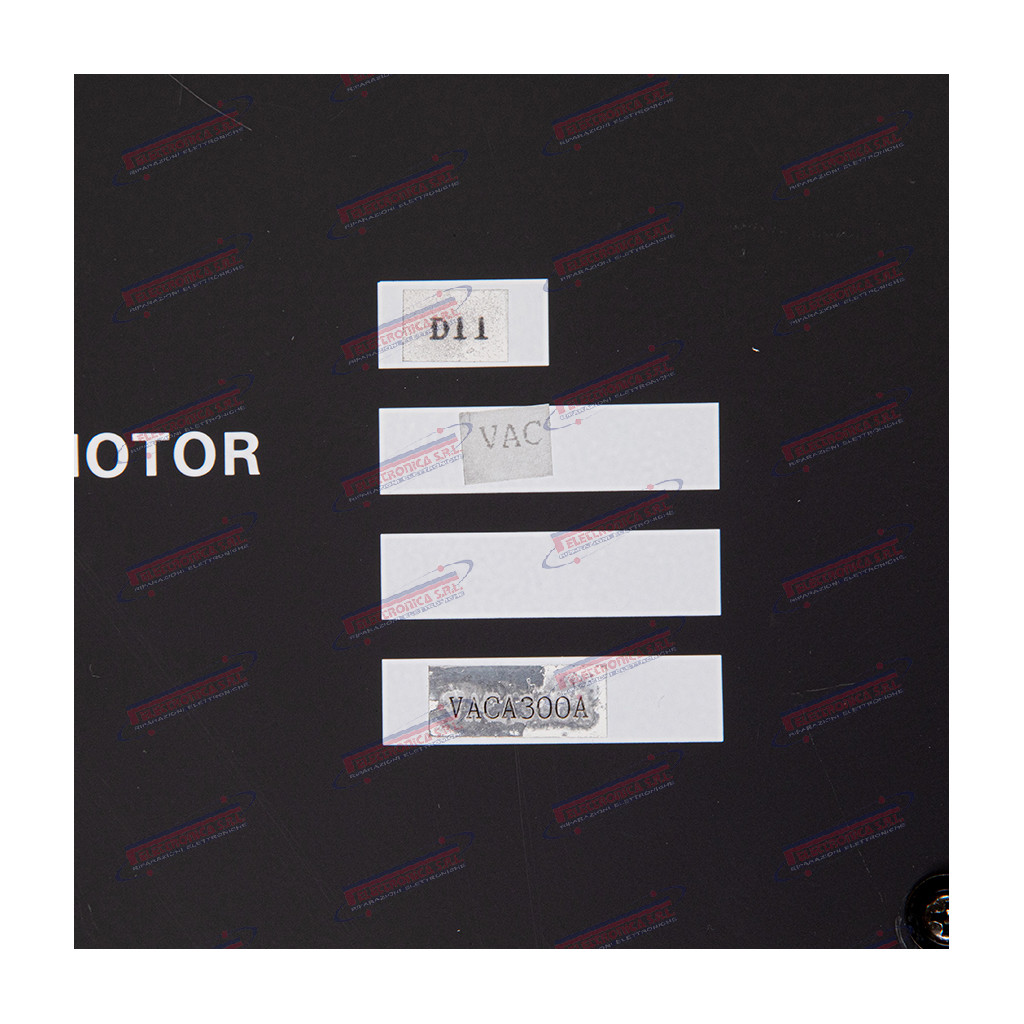
SKU:
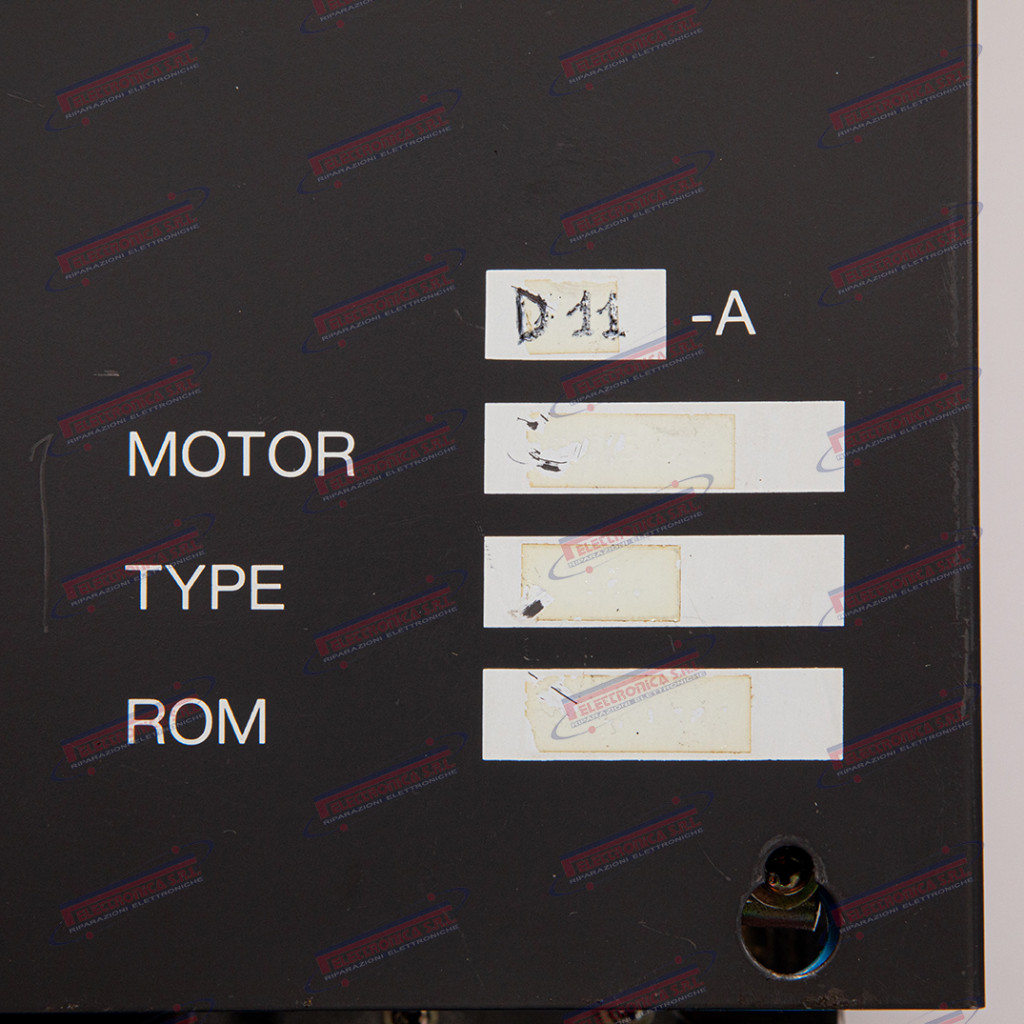
VACII D-11A
Cat:
Servo Drive
Brand:
OKUMA
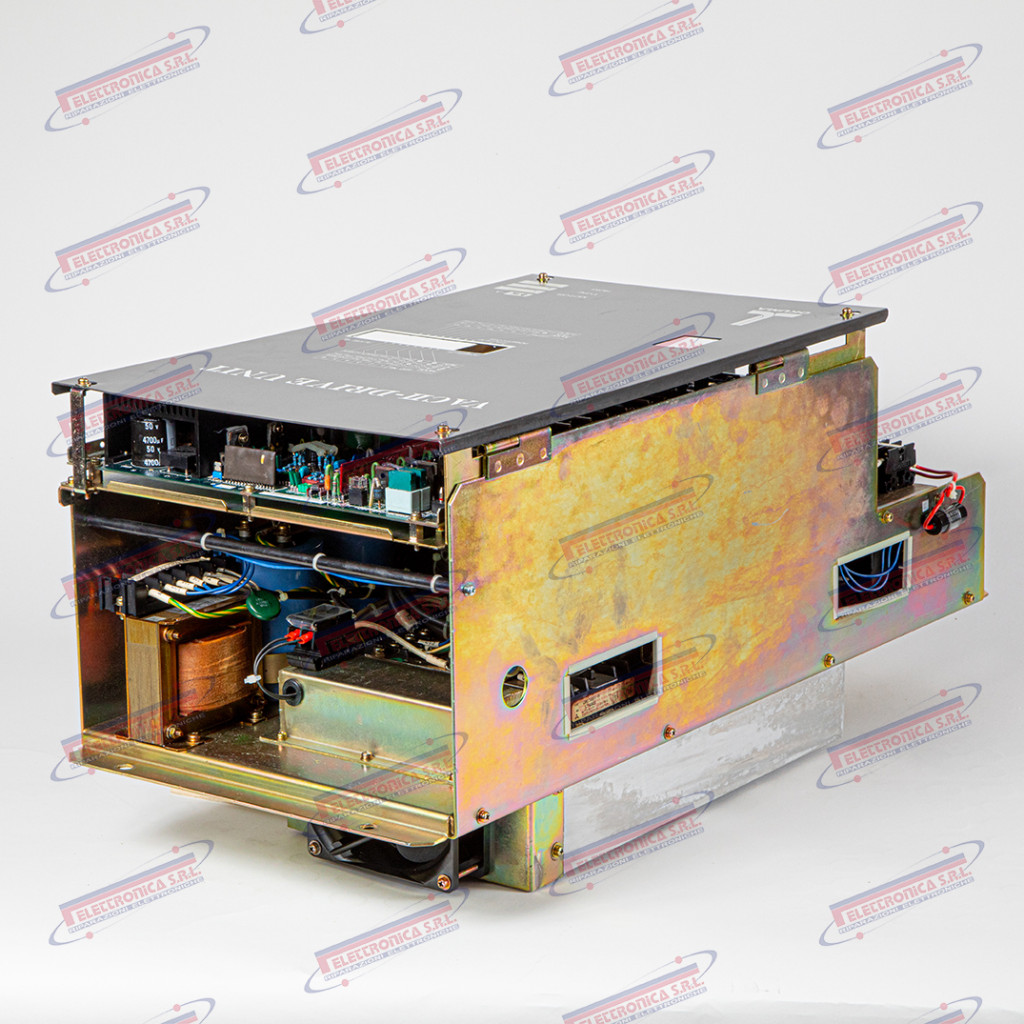
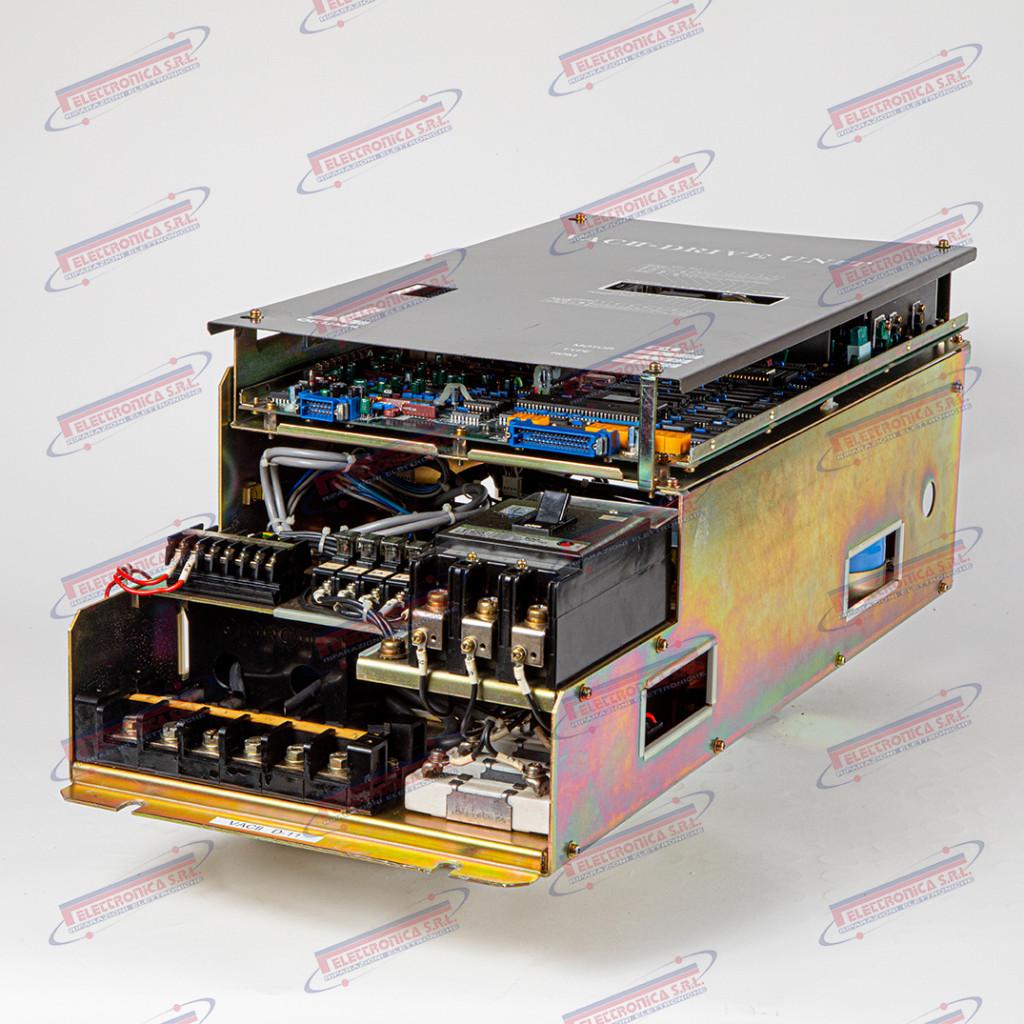
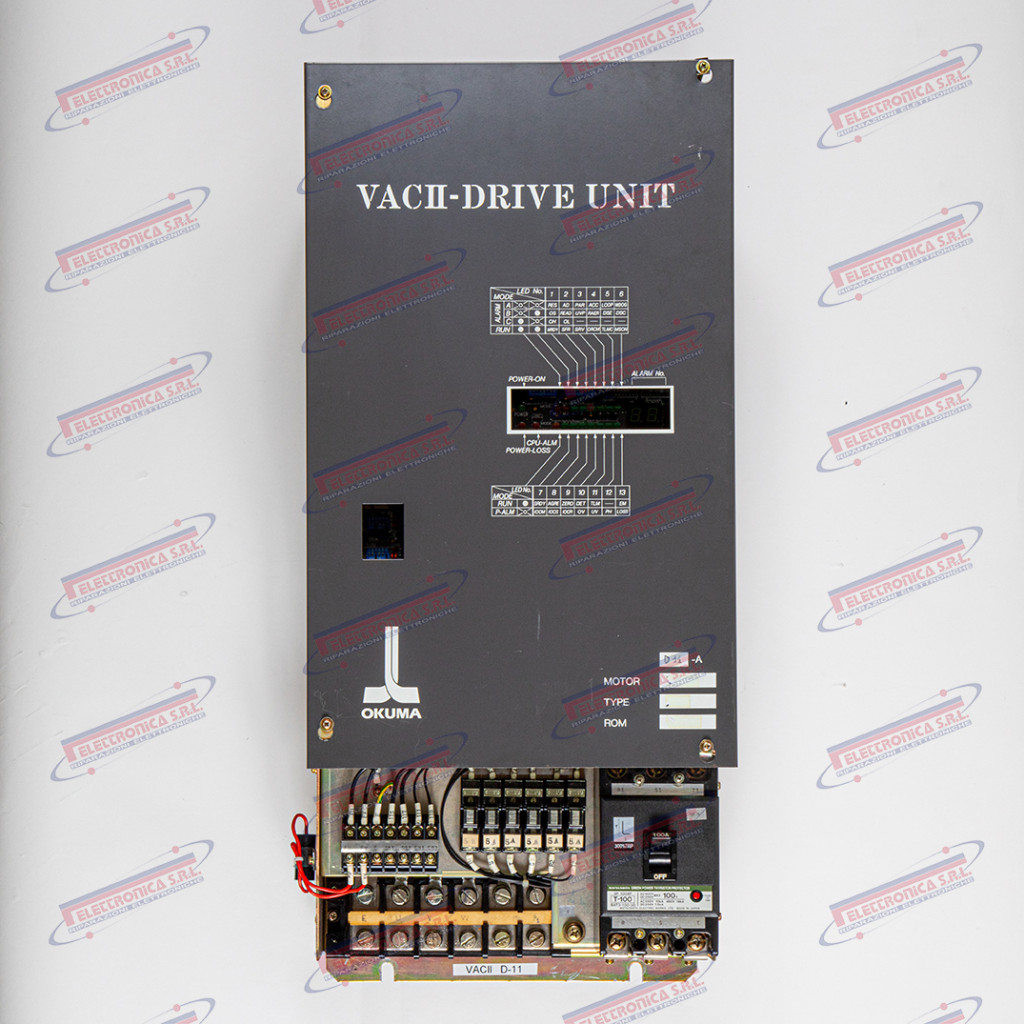
Servo Axis Drive – OKUMA VACII D-11A
The VACII D-11A is a servo axis drive (“Servo Velocity Amplifier Drive”) manufactured by OKUMA Corporation, belonging to the VACII (Velocity Amplifier Control II) series. It is documented as a component of OKUMA CNC machining centres and lathes equipped with the OSP-5000 and OSP-7000 control systems. The unit manages the velocity loop of the DC axis servo motor, receiving the speed reference from the OKUMA controller and driving the power stage of the drive. The component may exist in construction variants related to the firmware revision of the corresponding OSP control.
The servo axis drive is the electronic controller that closes the velocity loop on the axis motor: it receives the speed reference from the CNC and drives the motor maintaining the required position and speed during machining. A failure in this unit causes immediate loss of control of the corresponding axis, with a CNC alarm and machine stop; as a proprietary OKUMA component, replacement requires an identical unit or specialist repair on OKUMA hardware.
OKUMA Corporation, founded in 1898 in Nagoya, Japan, is one of the world’s leading manufacturers of CNC machine tools and proprietary control systems (the OSP – Okuma Servo Pack series). OKUMA develops both machines and controllers in-house, ensuring tight hardware/software integration. Components of the VACII series are legacy / discontinued: available only as used, surplus, or through specialist repair.
Main Technical Specifications
| Type | Servo axis drive (Servo Velocity Amplifier Drive) |
| Part number | VACII D-11A (VACIID11A) |
| Brand | OKUMA Corporation |
| Known application | OKUMA CNC machining centres and lathes with OSP-5000 / OSP-7000 control |
| Function | DC axis servo motor speed and current regulation |
| Reference input | Analogue speed reference (±10 V) |
| Feedback | Tachogenerator / encoder from axis servo motor |
| Supply voltages | 200–230 V AC three-phase (power stage); ±15 V / +5 V DC (logic) – typical |
| Interfaces | Terminal strips / rack connectors; OKUMA proprietary internal bus |
| Weight | ~1.5–3.5 kg |
| Dimensions | ~250–400 mm |
| Production status | Legacy / discontinued — used / surplus / repair only |
SKU:
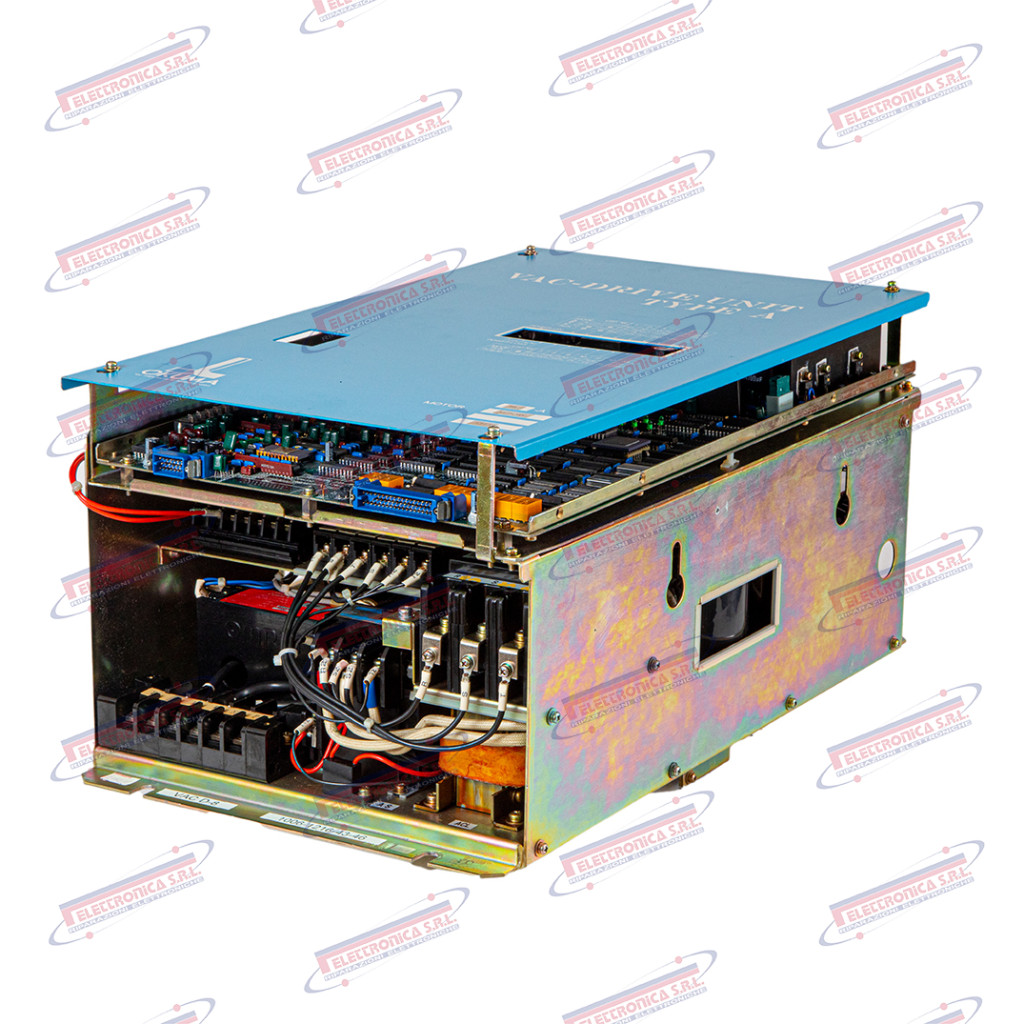
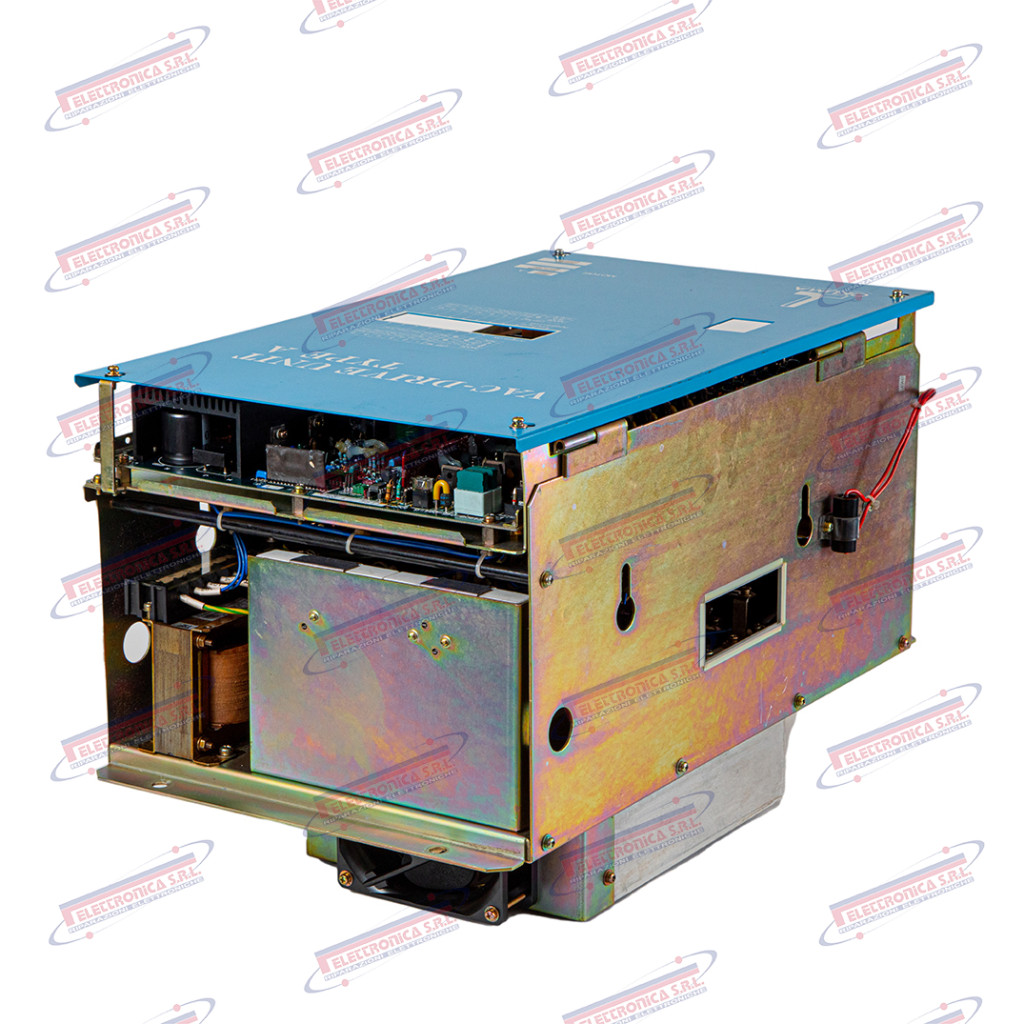
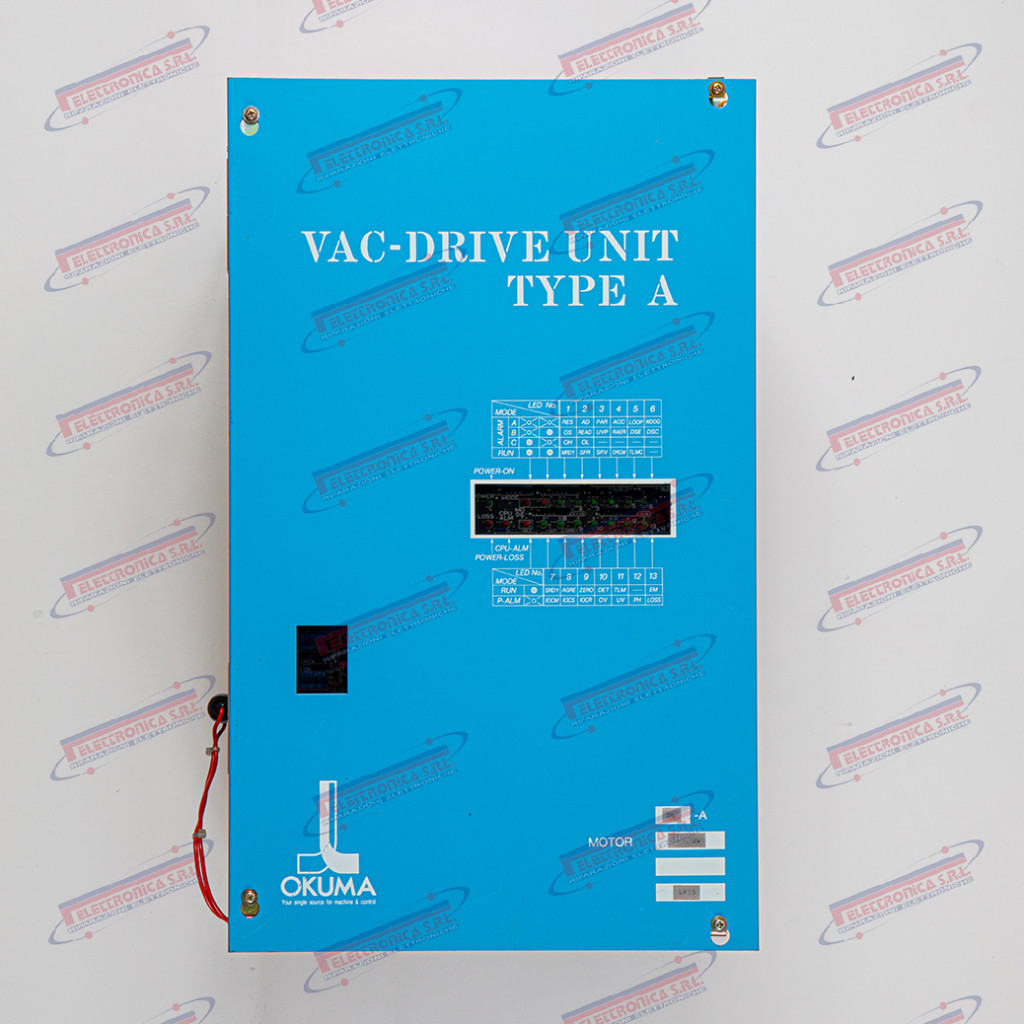
VAC-D-8A
Cat:
Servo Drive
Brand:
OKUMA
AC Axis Servo Drive – OKUMA VAC-D-8A
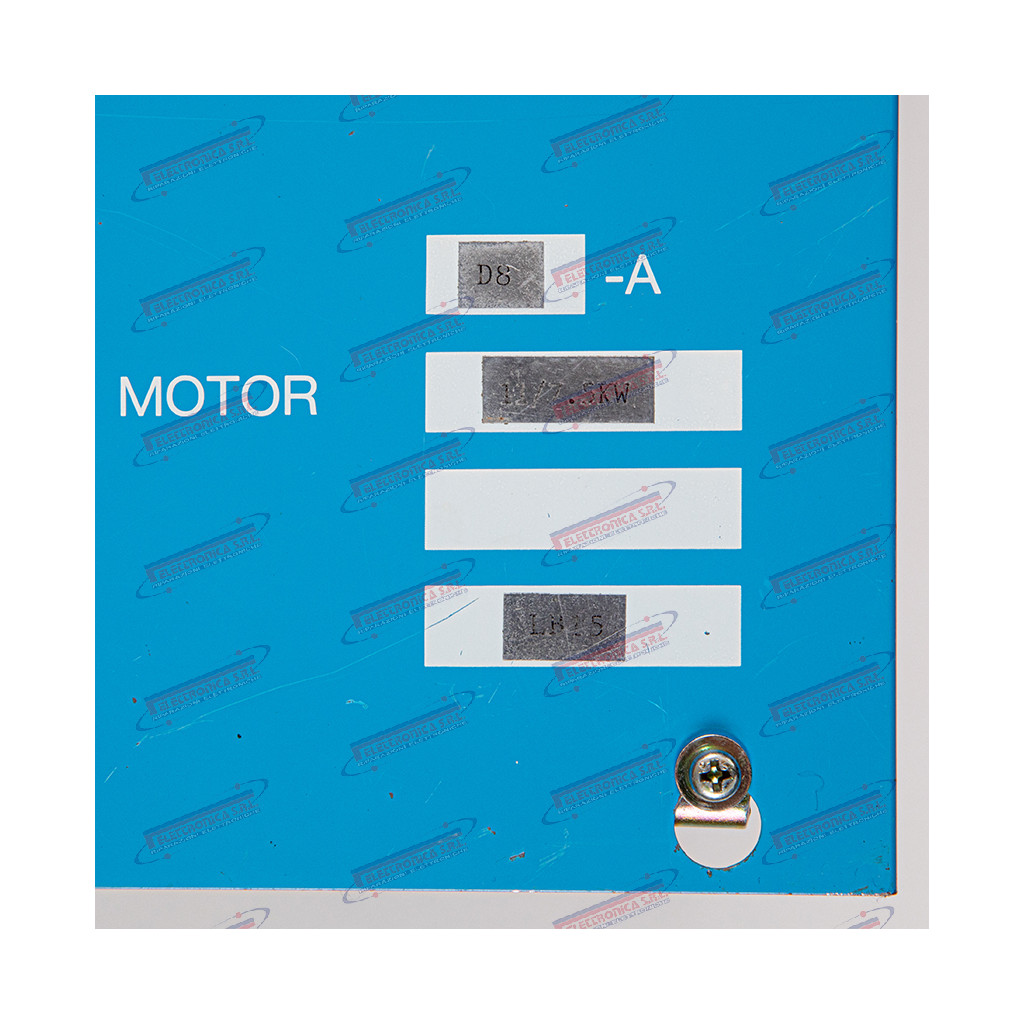
The VAC-D-8A (internal code VACD8A) is an AC axis servo drive manufactured by OKUMA, a Japanese builder of CNC machine tools and proprietary CNC control systems. The unit belongs to the VAC-D series of AC servo drives integrated in the control cabinets of OKUMA machines equipped with the OSP (Open System Platform) CNC controller. The “8A” designation indicates the drive’s rated output current, typically 8 A continuous. The device receives position and speed references from the CNC and drives the corresponding axis servo motor by closing the regulation loops.
The servo drive is the core of an axis drive circuit: it converts the CNC’s digital commands into power signals for the servo motor, simultaneously managing the position, speed, and current control loops. A failure of the VAC-D-8A results in the complete loss of the controlled axis, an immediate machine halt, and a drive alarm; prompt replacement or repair is essential to restore production.
OKUMA is a Japanese company founded in 1898, one of the world’s leading manufacturers of CNC lathes, machining centres, and closed-loop CNC control systems. Unlike many competitors, OKUMA designs and manufactures both the machines and the CNC control (OSP) in-house, ensuring unique vertical integration in the industry. Products in the VAC-D series are legacy / discontinued and available exclusively as used, surplus, or through specialist repair.
Main Technical Specifications
| Type | AC axis servo drive (AC Axis Servo Drive) |
| Part number | VAC-D-8A (VACD8A) |
| Brand | OKUMA Corporation |
| Known application | OKUMA CNC lathes and machining centres with OSP control |
| Function | AC servo drive for axis control (position, speed, current) |
| Rated current | 8 A (rated motor output) |
| Input voltage | Three-phase AC ~200–230 V |
| Feedback | Incremental / absolute encoder from axis servo motor |
| Interfaces | OKUMA OSP proprietary bus; edge connectors on control rack |
| Installation | Rack-mounted module in machine electrical cabinet |
| Weight | ~1.5–3.5 kg |
| Dimensions | ~150–250 × 200–350 mm |
| Production status | Legacy / discontinued — used/surplus/repair only |
SKU:
VAC D-22
Cat:
Servo Drive
Brand:
OKUMA
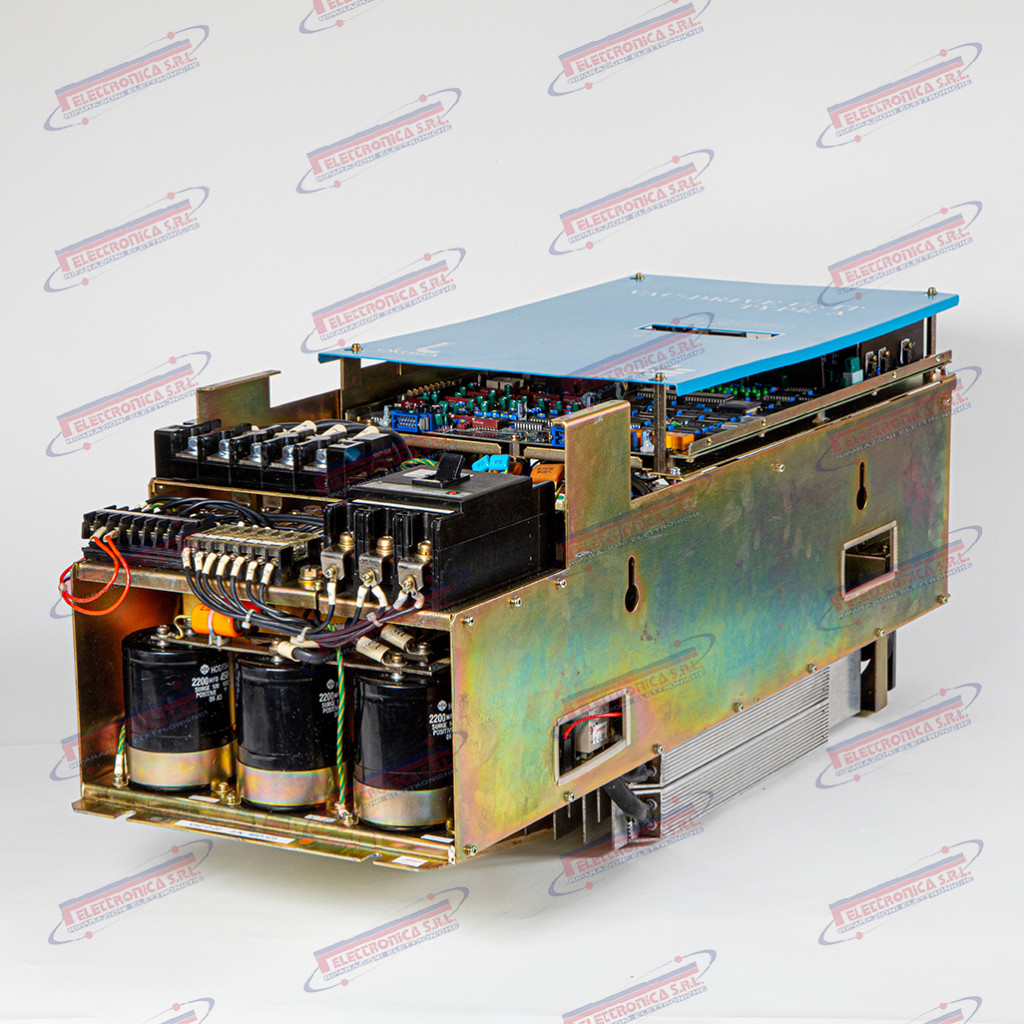
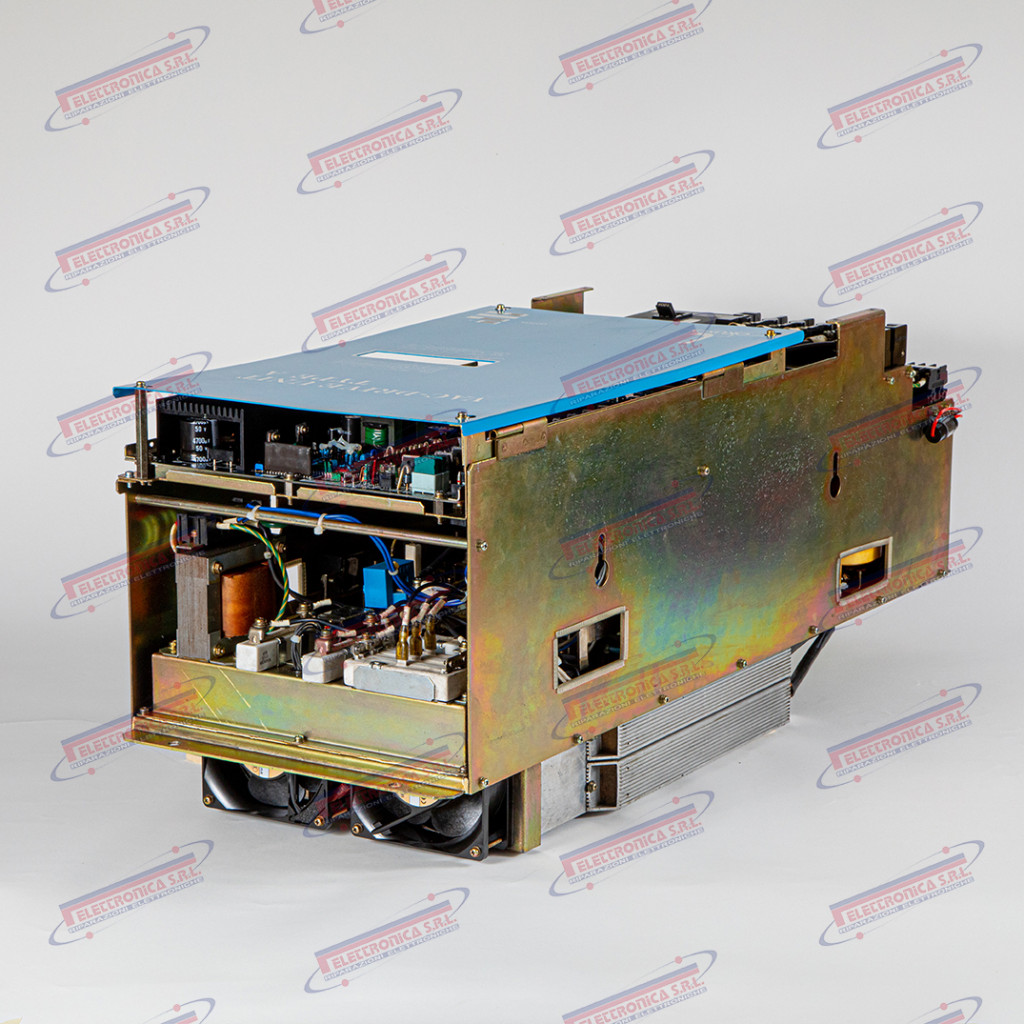
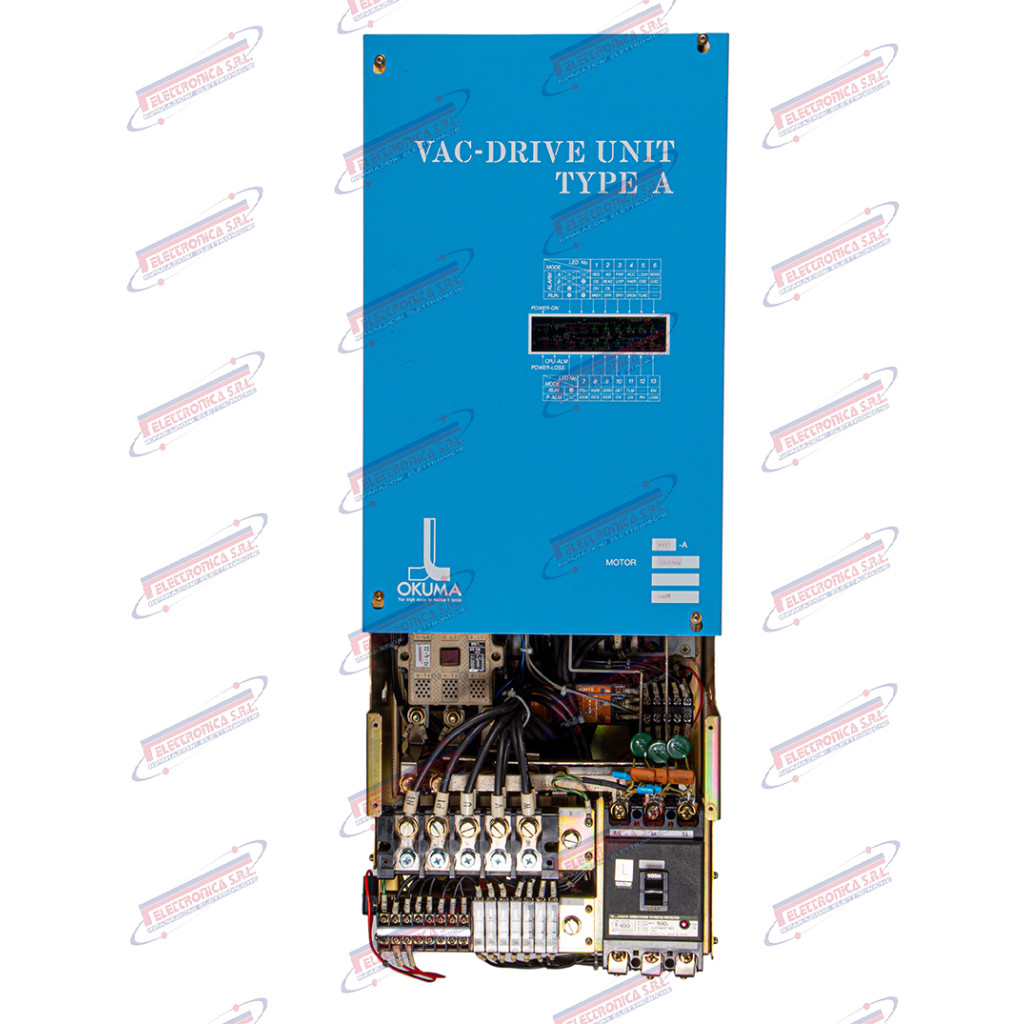
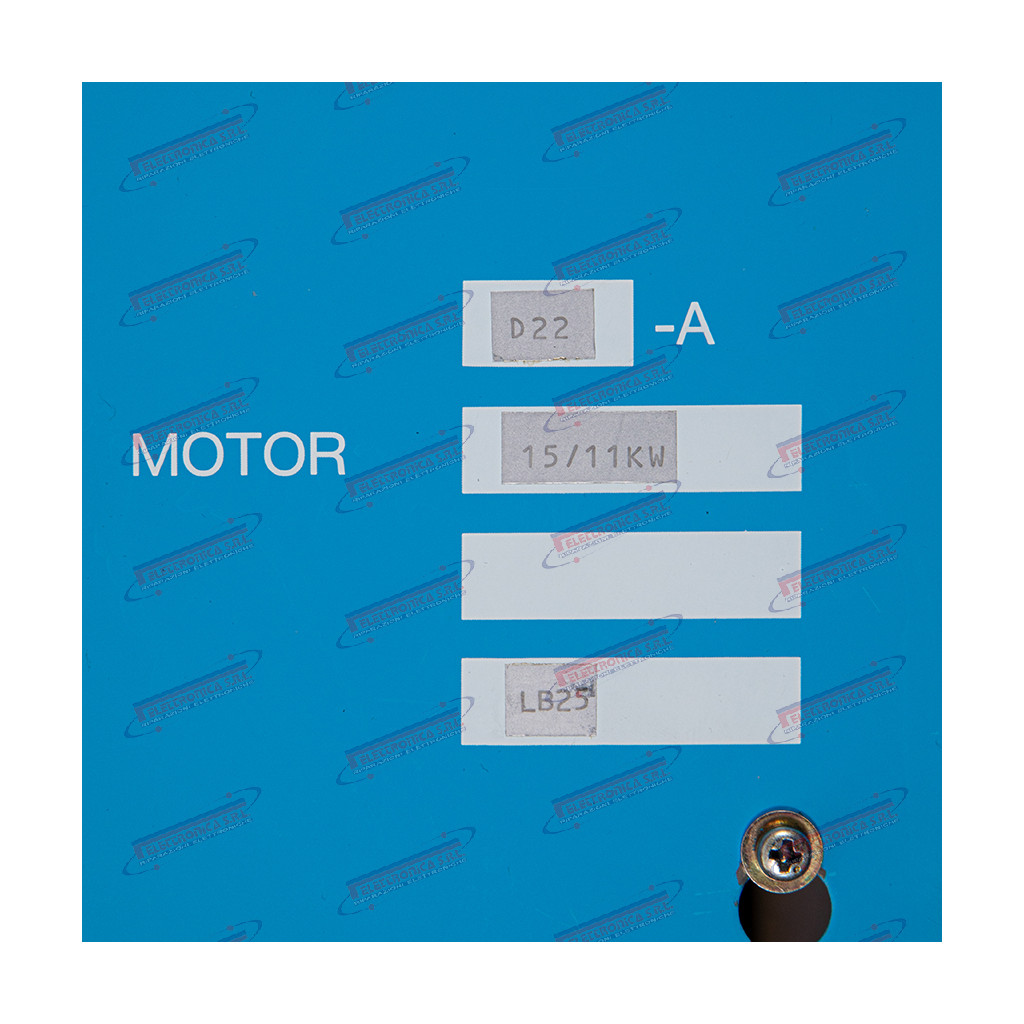
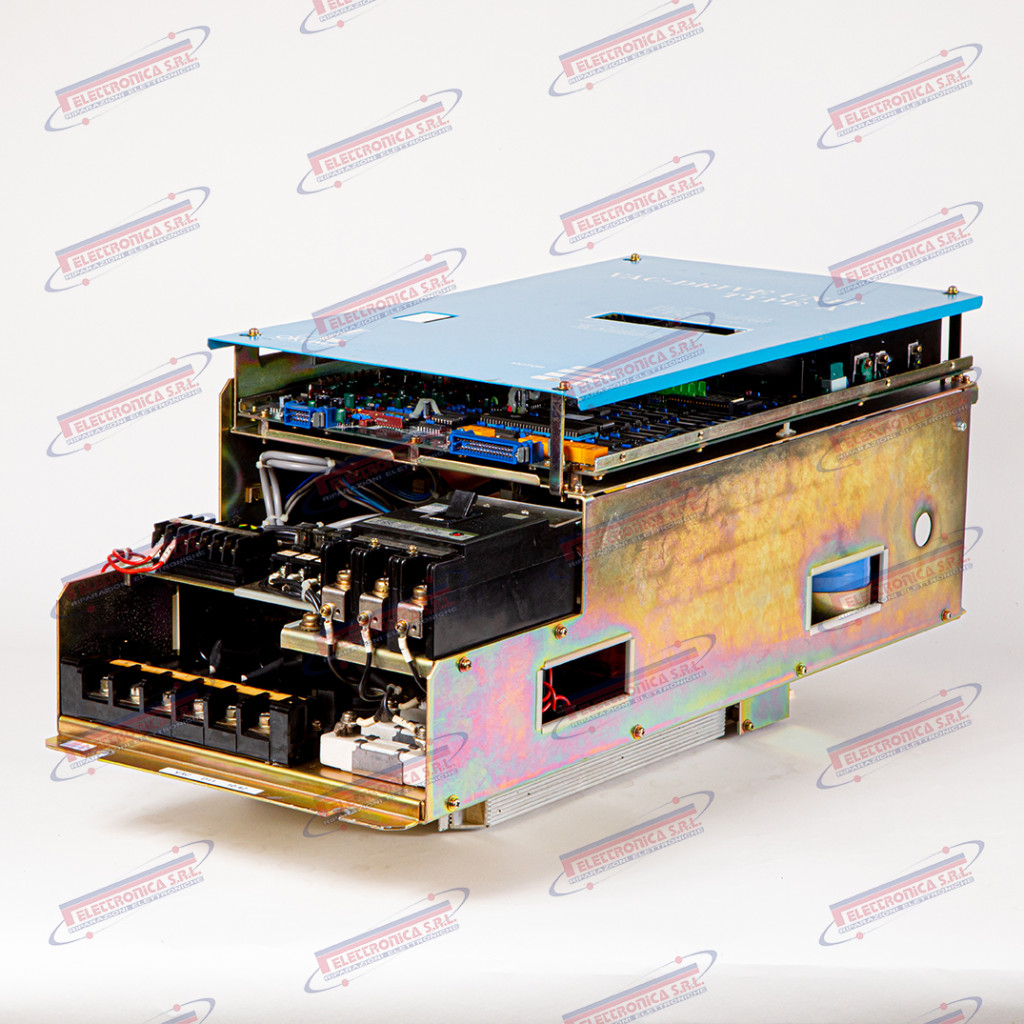
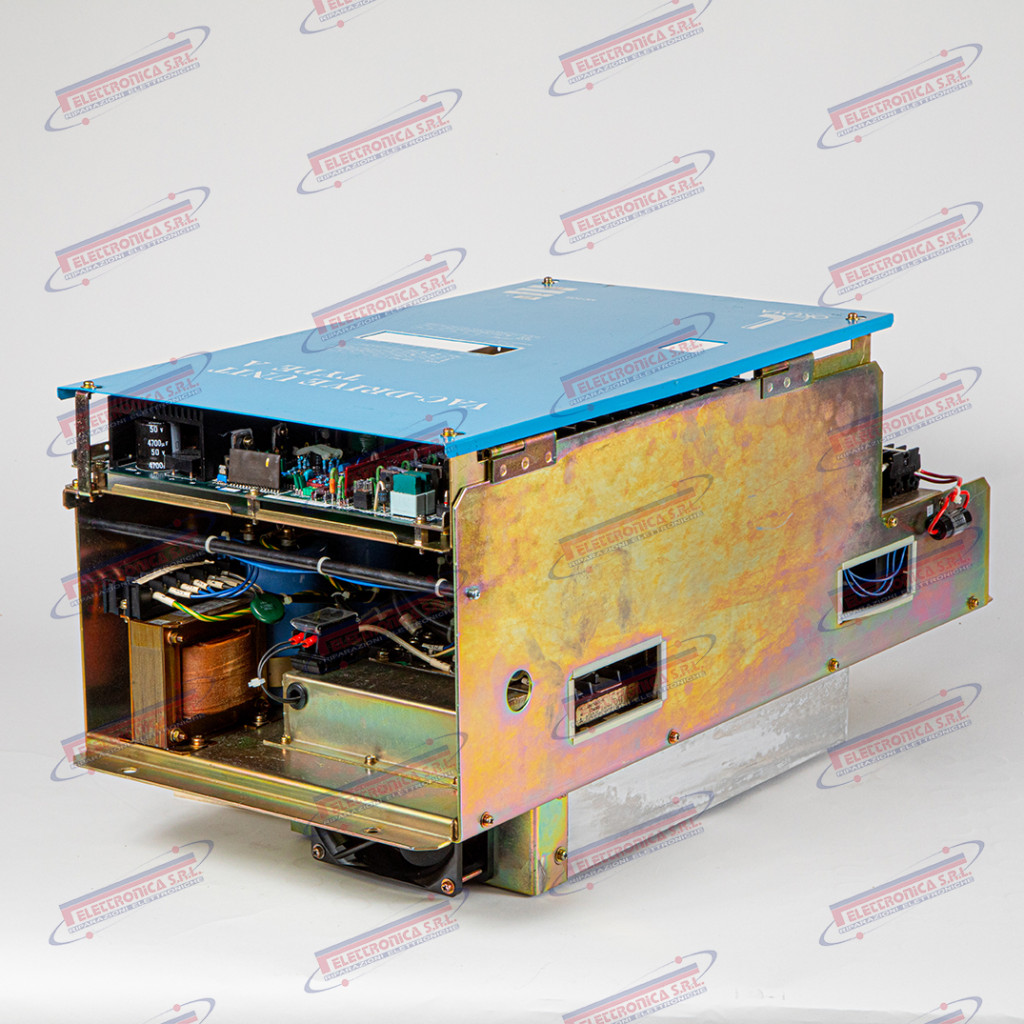
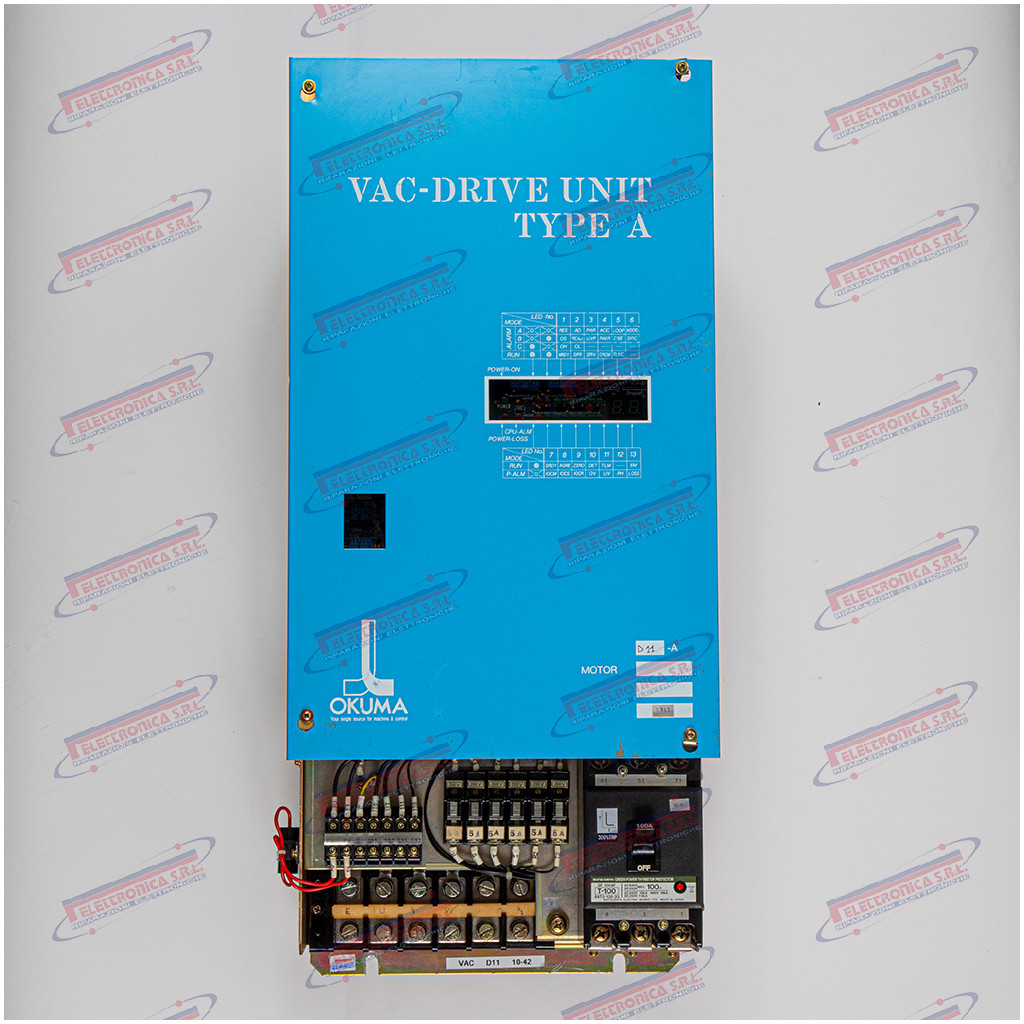
AC Spindle Drive – OKUMA VAC D-22
The VAC D-22 is an AC spindle drive unit manufactured by OKUMA Corporation, designed for vector control of the spindle motor in OKUMA CNC machine tools. The unit belongs to the VAC (Variable AC Drive) series, typically employed on machining centers and CNC lathes equipped with the OSP (Open System Platform) CNC control. It manages torque, speed and current of the spindle motor, receiving references directly from the CNC via the proprietary OKUMA bus. The component is installed either as a standalone rack unit or as an integrated module within the machine’s electrical cabinet.
The spindle drive is the core of the spindle control system: it converts three-phase mains voltage into a variable-frequency, variable-voltage output applied to the spindle motor, maintaining stable rotational speed regardless of load variations during machining. A failure in this module causes immediate and uncontrolled spindle stop, rendering the machine completely inoperable: without the drive, no cutting operation can be performed, resulting in immediate production downtime.
OKUMA Corporation is a Japanese manufacturer founded in 1898 in Nagoya, Japan, and one of the world’s leading producers of CNC machine tools (lathes, machining centers, grinding machines) and related OSP series CNC controls. OKUMA designs both the machines and the drives and motors in-house, ensuring full hardware and software system integration. Products in the VAC series are legacy / discontinued: available only as used, NOS (surplus), or through specialist repair services.
Main Technical Specifications
| Type | AC Spindle Drive Unit |
| Part number | VAC D-22 (VACD22) |
| Brand | OKUMA Corporation |
| Known application | OKUMA CNC machining centers and lathes with OSP control |
| Function | Vector control of AC spindle motor speed, torque and current |
| Power supply | 3-phase ~200–400 V AC, 50/60 Hz (typical) |
| Rated current | ~22 A |
| Spindle power handled | ~5.5–15 kW |
| CNC interface | Proprietary OKUMA OSP bus; 40–60 pin connectors (typical) |
| Feedback | Spindle motor encoder / resolver |
| Weight | ~3–8 kg |
| Dimensions | ~250–400 mm × 150–300 mm |
| Production status | Legacy / discontinued — used/surplus/repair only |
SKU:
VAC D-11
Cat:
Servo Drive
Brand:
OKUMA
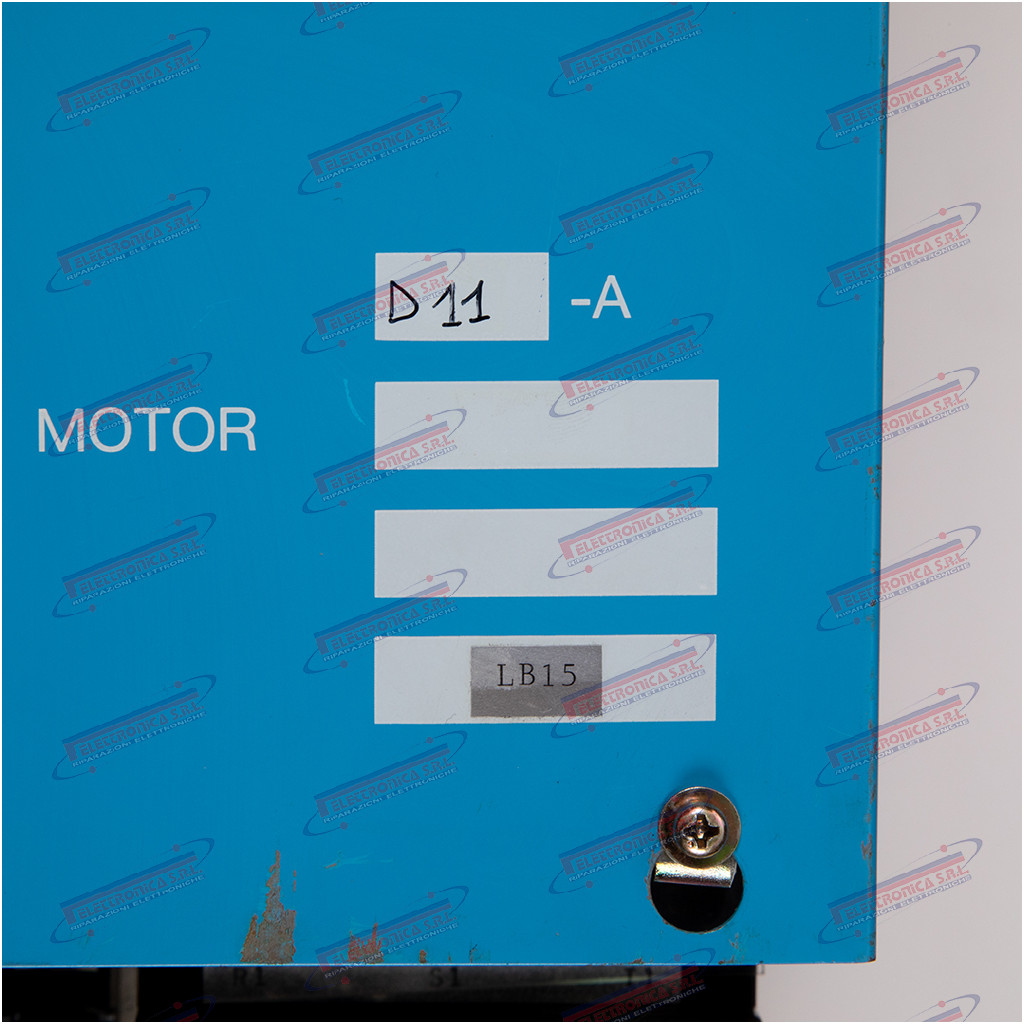
AC Drive Unit – OKUMA VAC D-11
The VAC D-11 is an AC drive unit (“AC Drive Unit”) manufactured by OKUMA, documented as a component of OKUMA CNC systems equipped with the OSP (OKUMA Servo Pack) control. The drive handles speed and torque regulation of AC motors, covering both linear axes and the spindle, and interfaces directly with the numeric control via a proprietary bus. The designation VAC refers to “Vector AC” control technology, adopted by OKUMA for its machine series from the 1980s–1990s.
The VAC drive unit is the power and regulation node that converts the CNC’s digital references into voltage and current for the machine’s AC motors: without it, the controlled axis or spindle receives no regulated power and the machine halts immediately on alarm. A drive failure typically results in position loss, dimensional rejects, or an abrupt machining cycle stop with collision risk.
OKUMA Corporation, founded in Japan in 1898, is one of the world’s leading CNC machine tool manufacturers (lathes, machining centres, grinders) and develops its own machines, CNC controls (OSP series) and drives in-house, ensuring full hardware/software integration. Products from the legacy VAC series are legacy / discontinued: available only as used, NOS surplus, or through specialist repair.
Main Technical Specifications
| Type | AC drive unit (AC Drive Unit – Vector Control) |
| Part number | VAC D-11 (VACD11) |
| Brand | OKUMA Corporation (Japan) |
| Known application | OKUMA CNC machine tools with OSP control (machining centres, lathes, grinders) |
| Function | Vector control of AC motors for linear axes or spindle |
| Input supply | AC three-phase, 200–400 V (typical for VAC series) |
| Output | Variable voltage and current to AC motor (PWM vector modulation) |
| Interfaces / connectors | OKUMA proprietary connectors; internal serial CNC communication bus (OSP) |
| Built-in protections | Over-temperature, overcurrent, short circuit, undervoltage (typical) |
| Weight | ~3–8 kg |
| Dimensions | ~200×300×150 mm |
| Production status | Legacy / discontinued — used/surplus/repair only |
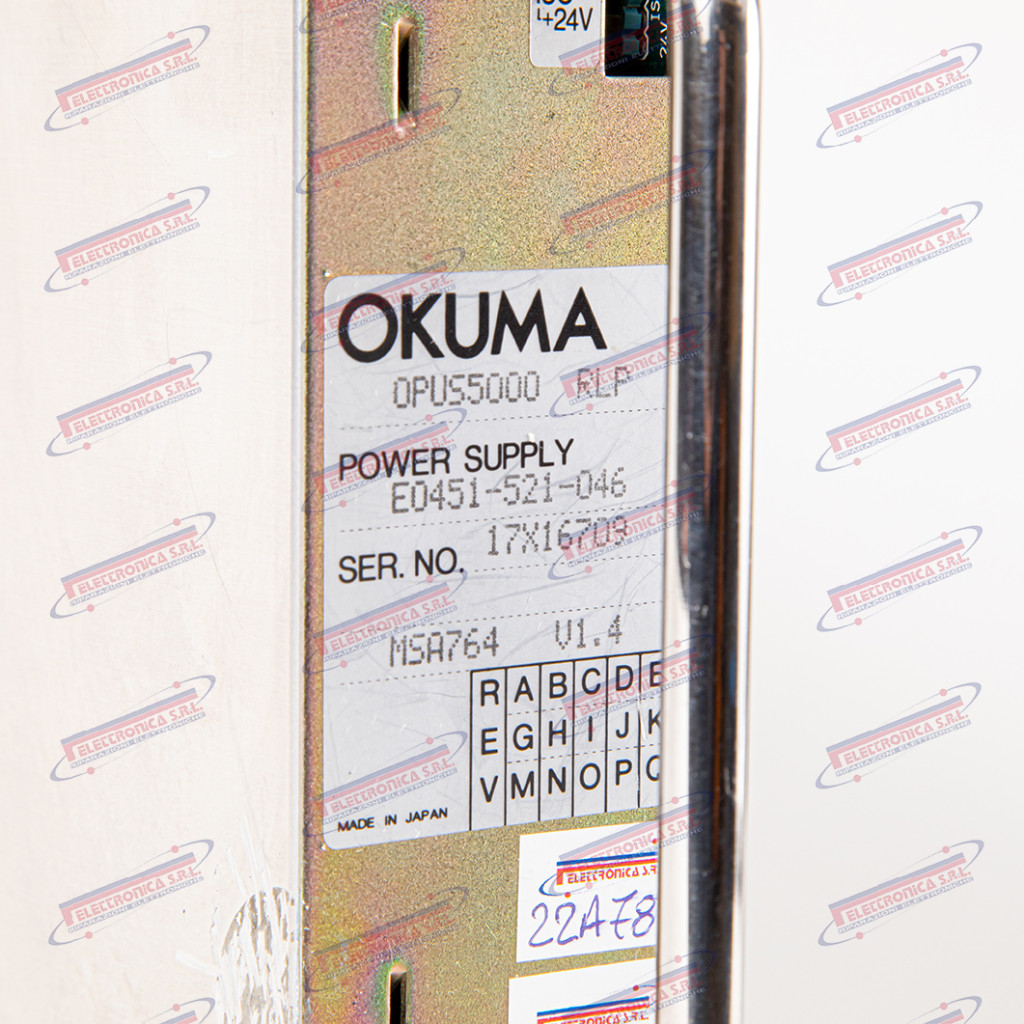
SKU:
OPUS 5000 RLP
Cat:
Power Supply
Brand:
OKUMA
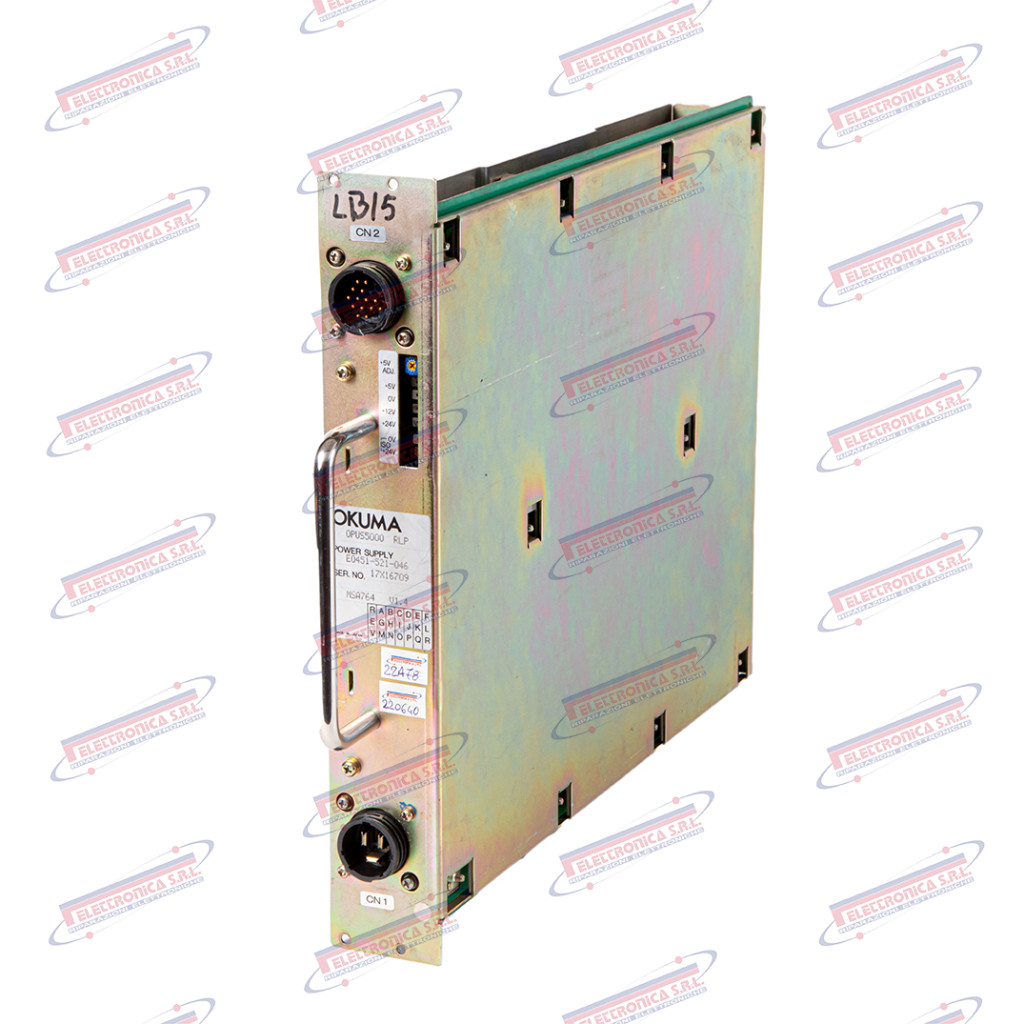
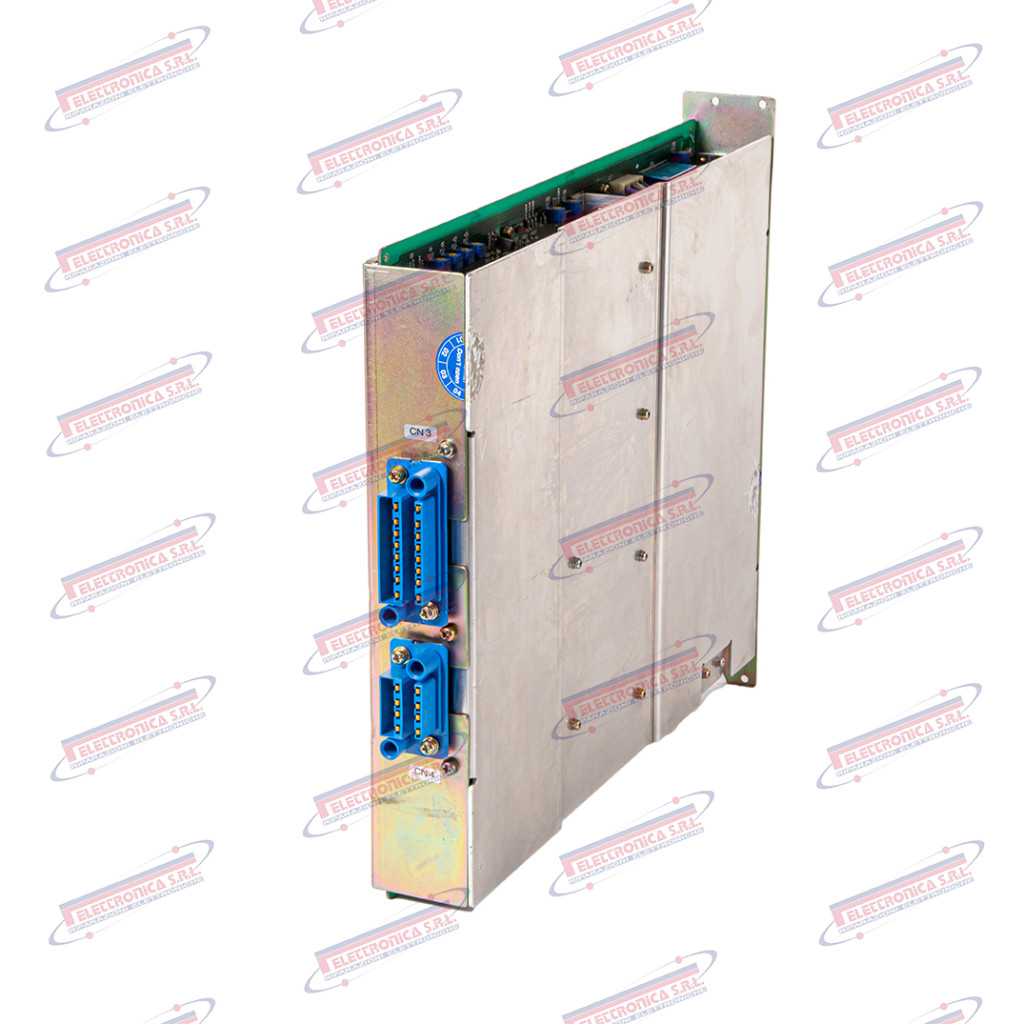
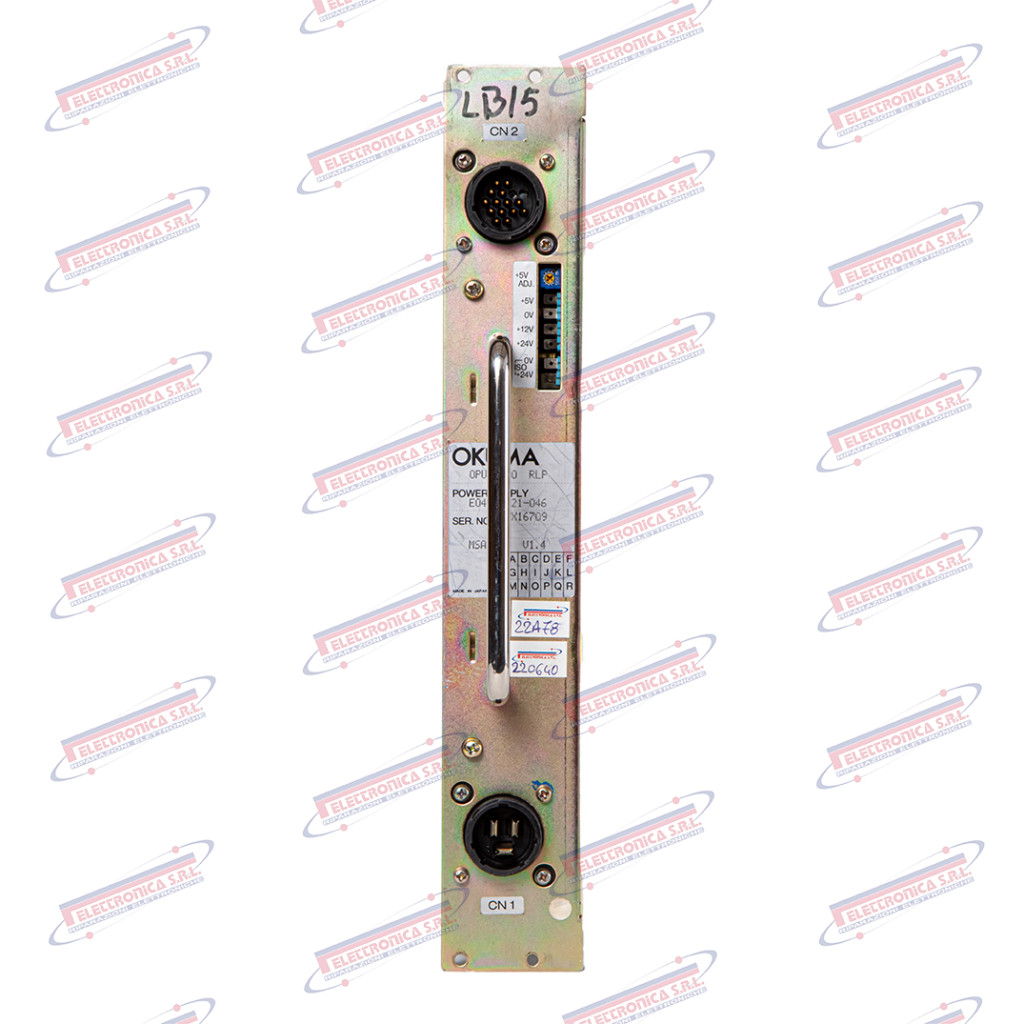
CNC Control Power Supply Module – OKUMA OPUS 5000 RLP
The OPUS 5000 RLP is a regulated logic power supply module for CNC control (“Regulated Logic Power Supply Module”) manufactured by OKUMA, a component of the OPUS 5000 CNC control system fitted to OKUMA machining centres and CNC lathes produced during the 1980s and 1990s. The module generates and distributes the stabilised DC voltages required to power the logic boards, processors and interface circuits of the CNC. It is classified as a power unit internal to the control rack, distinct from axis or spindle drives.
The power supply is the energy core of the numerical control unit: it continuously and reliably delivers working voltages to all CNC logic modules. A fault in the power supply causes an immediate shutdown of the entire machine, as without the correct supply voltages no control board can operate; typical symptoms include axis position loss, undiagnosable alarms and inability to start the machining cycle.
OKUMA Corporation is one of Japan’s leading CNC machine tool manufacturers, founded in 1898 in Nagoya. It designs and builds both the machines and its own numerical controls (the OPUS series, succeeded by the OSP – Open System Platform), ensuring full vertical integration. The OPUS 5000 series is legacy / discontinued: spare parts are available only as used stock, NOS surplus, or through specialist repair services.
Main Technical Specifications
| Type | Regulated logic power supply module for CNC control rack |
| Part number | OPUS 5000 RLP (OPUS5000RLP) |
| Brand | OKUMA Corporation |
| Known application | OKUMA machining centres and CNC lathes with OPUS 5000 control (e.g. MC-40VA, MC-50VA, LB-15, LB-25) |
| Function | Regulated DC voltage supply to the logic boards and interface modules of the OPUS 5000 CNC |
| Input voltage | ~100–240 V AC, 50/60 Hz |
| Output voltages | +5 V, ±12 V, ±15 V, +24 V DC |
| Output power | ~100–300 W |
| Interfaces / connectors | Proprietary OKUMA rack connectors; AC terminal strip on input side |
| Weight | ~1.5–3.5 kg |
| Dimensions | ~250–400 mm |
| Production status | Legacy / discontinued — used/surplus/repair only |
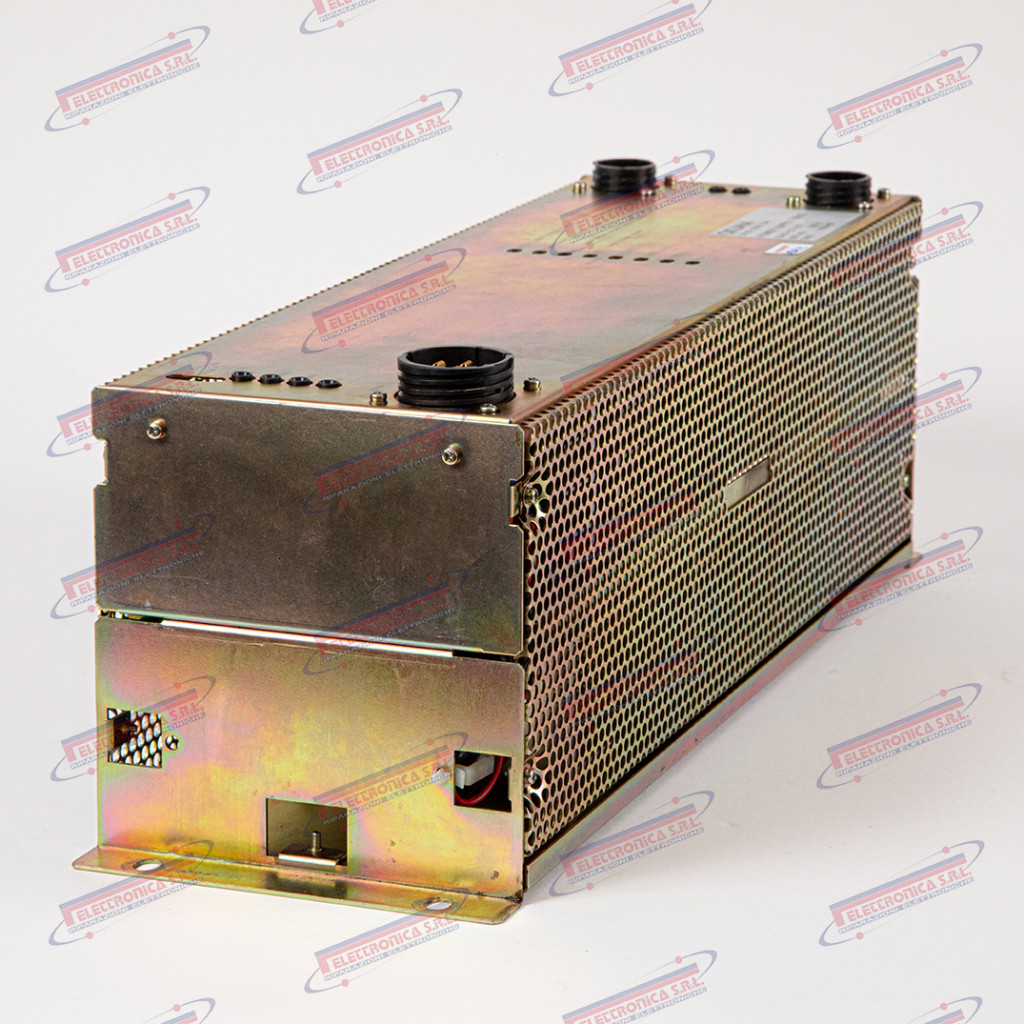
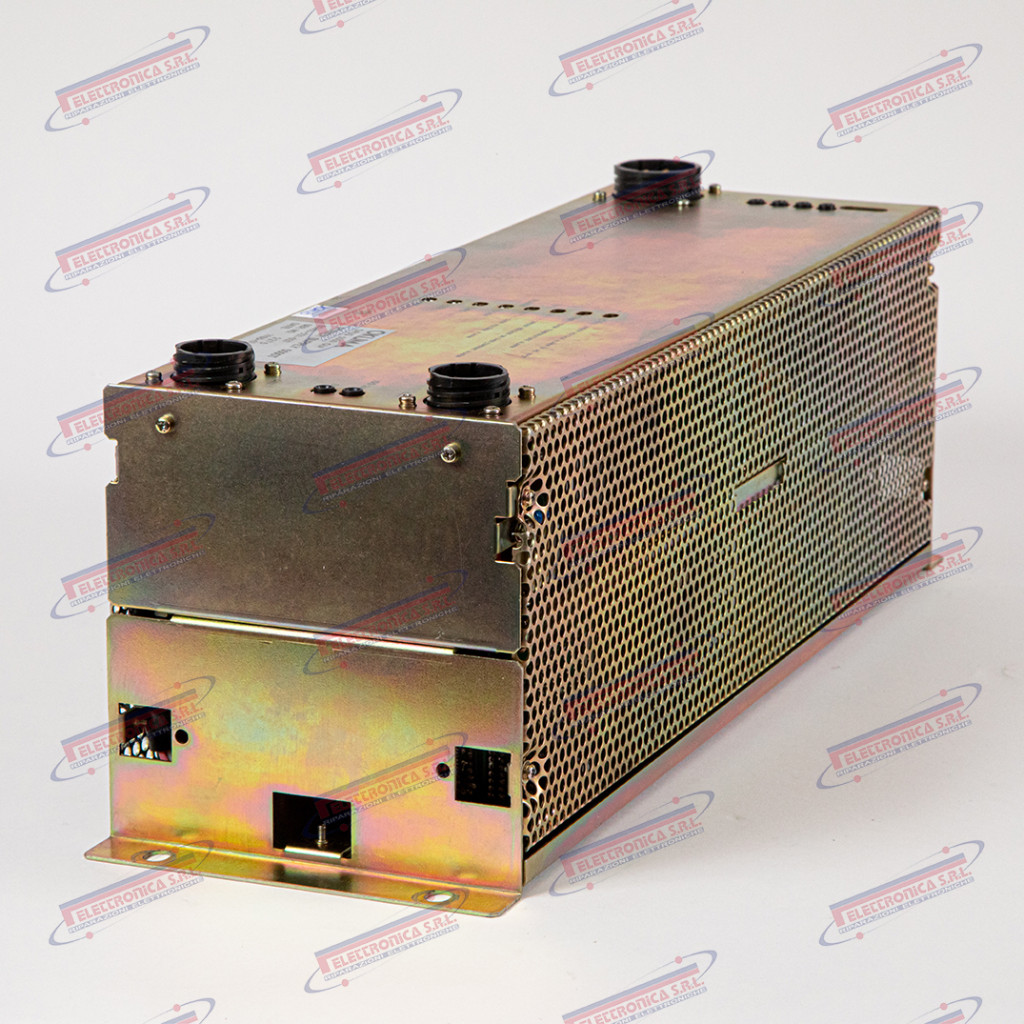
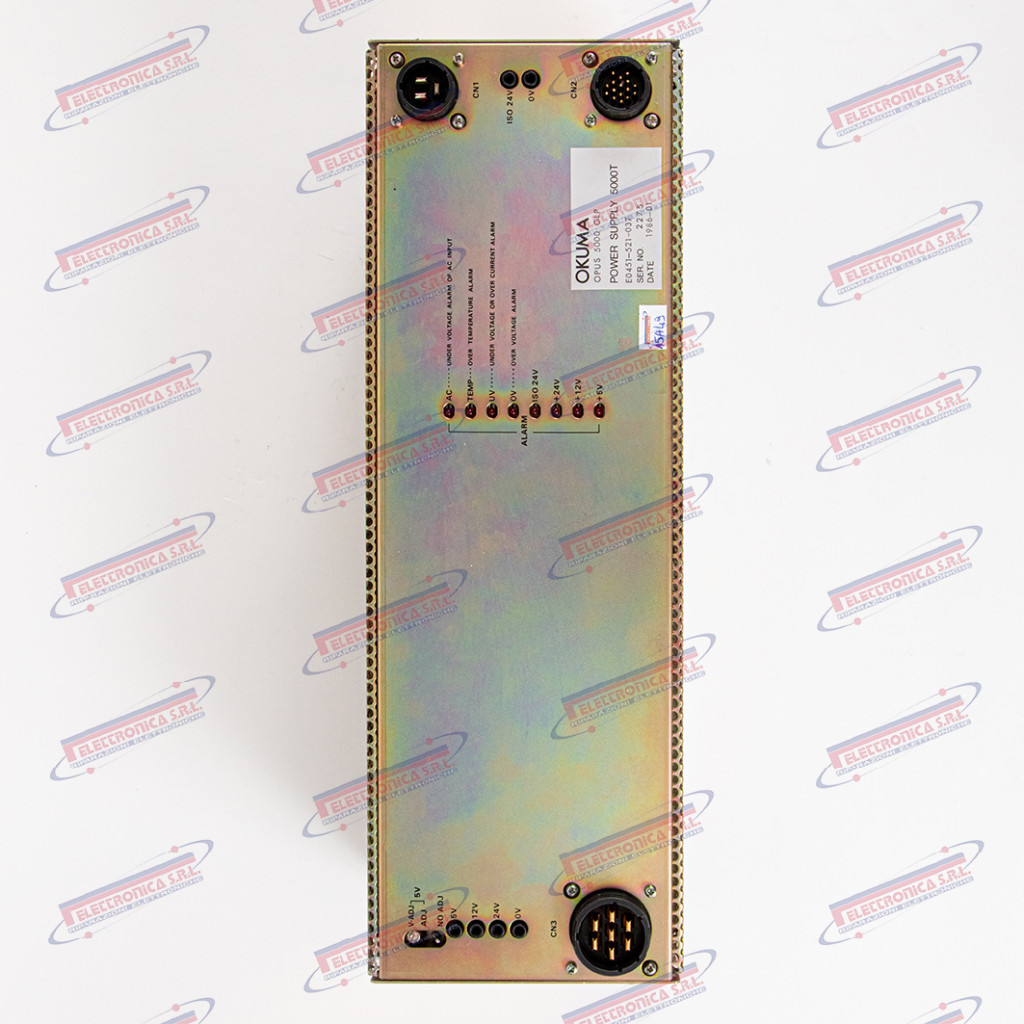
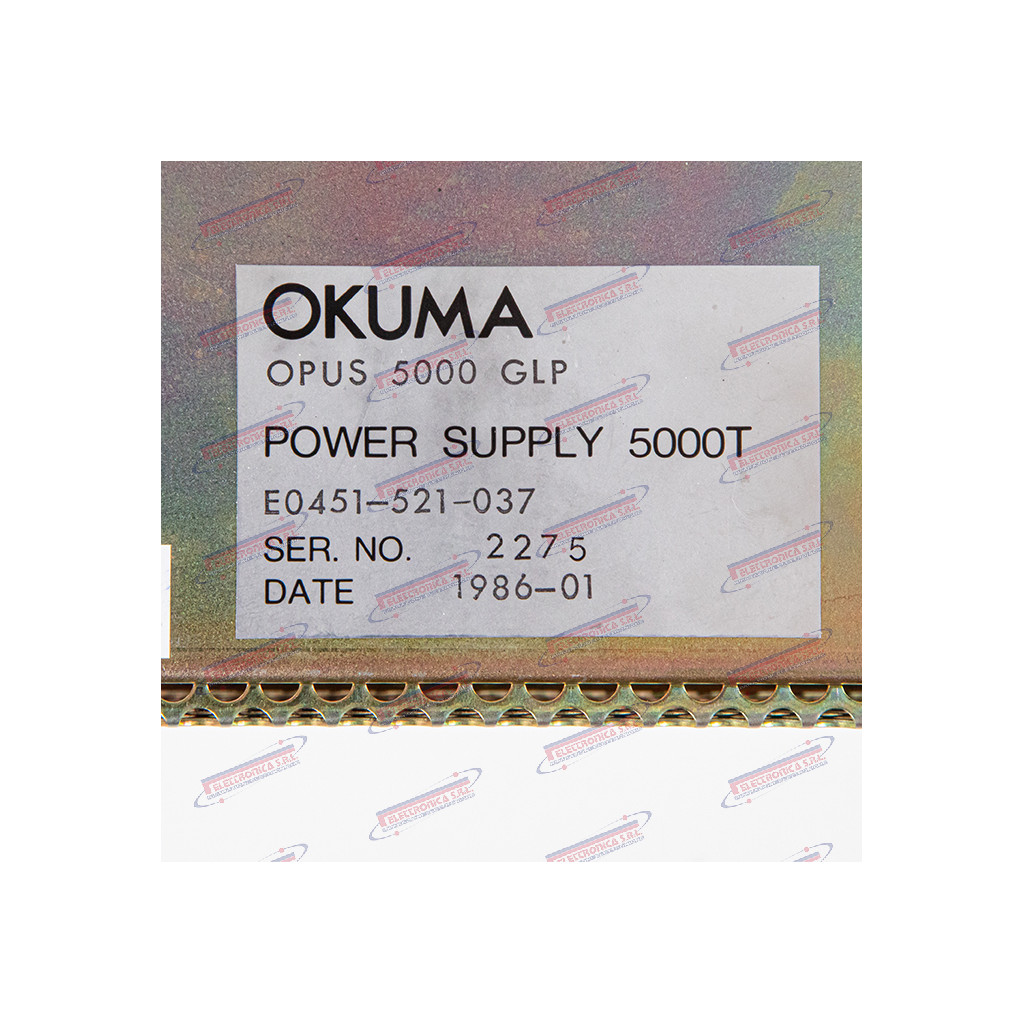
SKU:
OPUS 5000 GLP
Cat:
Power Supply
Brand:
OKUMA
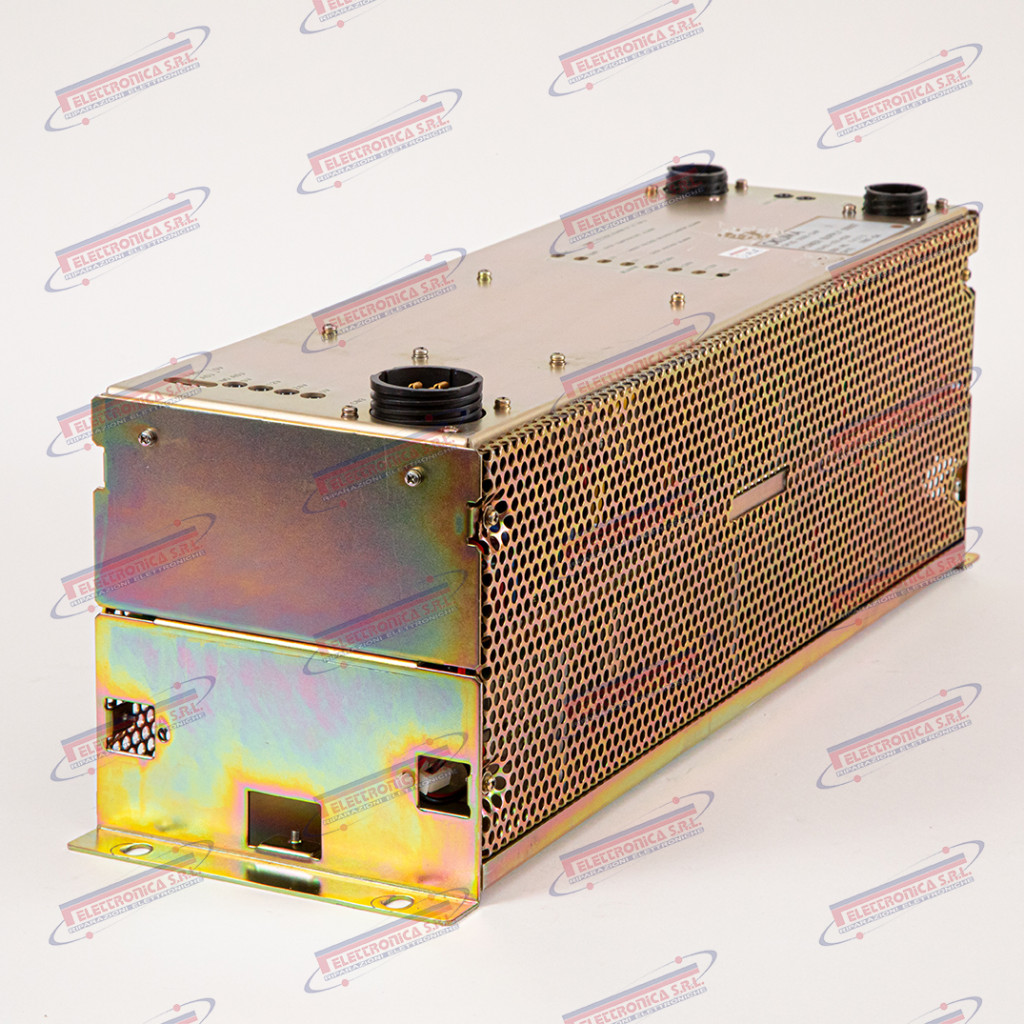
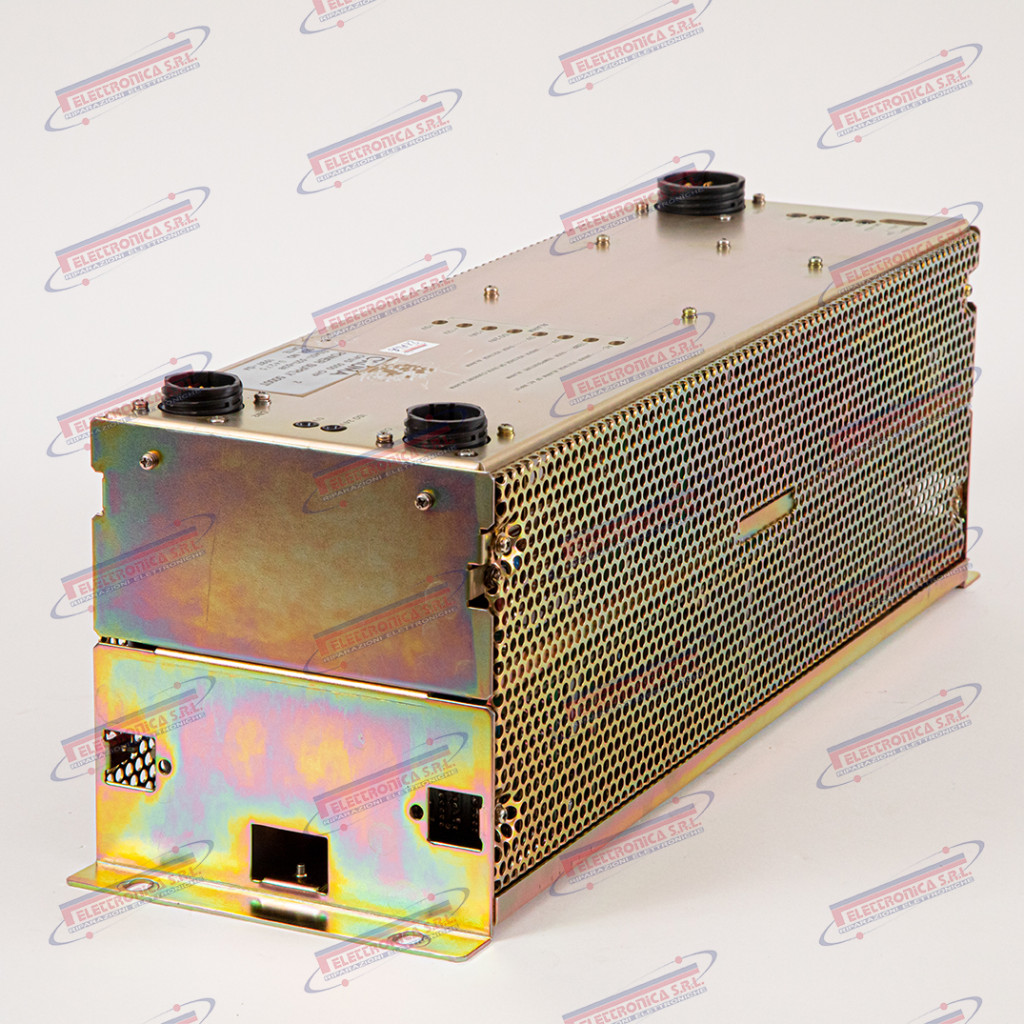
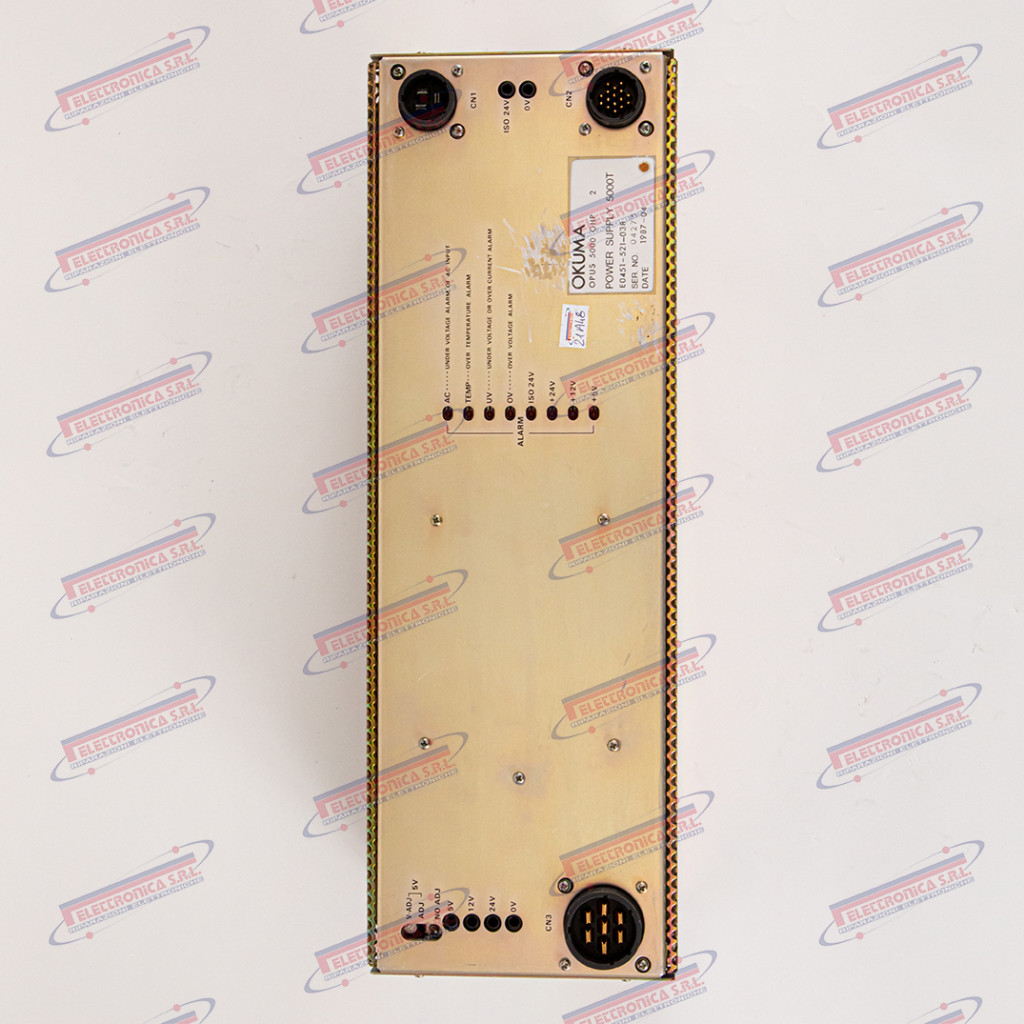
CNC Power Supply Unit – OKUMA OPUS 5000 GLP
The OPUS 5000 GLP is an electronic power supply unit for CNC control (“CNC Power Supply Unit”) manufactured by OKUMA, a component of the OPUS 5000 control cabinet. It provides the regulated DC voltages required for the operation of all electronic modules in the control system: logic boards, I/O interfaces, interpolation cards and memory units. The designation GLP identifies the specific configuration of this power supply within the OPUS 5000 family. The OPUS 5000 system was installed on a wide range of OKUMA vertical and horizontal machining centres and CNC lathes from the 1980s and 1990s.
The power supply is the component that converts mains voltage into stabilised and filtered DC voltages, essential for the correct operation of all machine control electronics. A power supply failure causes an immediate and complete shutdown of the CNC control: the machine is rendered unusable until the module is replaced or repaired, resulting in unplanned production downtime and the inability to execute any machining cycle.
OKUMA is a Japanese manufacturer founded in 1898, one of the world’s leading producers of CNC machine tools and proprietary control systems. The OPUS 5000 series represents one of the first open control platforms developed by OKUMA, now fully replaced by the next-generation OSP-P and OSP-P300 systems. All products in the OPUS 5000 family are legacy / discontinued: available exclusively as used, surplus or through specialist repair.
Main Technical Specifications
| Type | CNC control power supply unit (CNC Power Supply Unit) |
| Part number | OPUS 5000 GLP (OPUS5000GLP) |
| Brand | OKUMA |
| Known application | OKUMA OPUS 5000 CNC control (lathes and machining centres, 1980s–1990s) |
| Function | Regulated DC voltage supply for CNC control electronic modules |
| Input voltage | 220–240 V AC, 50/60 Hz (typical) |
| Output voltages | +5 V, ±15 V, +24 V DC (typical for OPUS 5000 controls) |
| Interfaces | Multi-pin connectors for OPUS 5000 backplane; mains input terminal strip |
| Form factor | Rack module for OKUMA OPUS 5000 control cabinet |
| Protections | Overvoltage and overcurrent protection on each output rail (typical) |
| Weight | ~1.5–4.0 kg |
| Dimensions | ~250–400 mm |
| Production status | Legacy / discontinued — used/surplus/repair only |
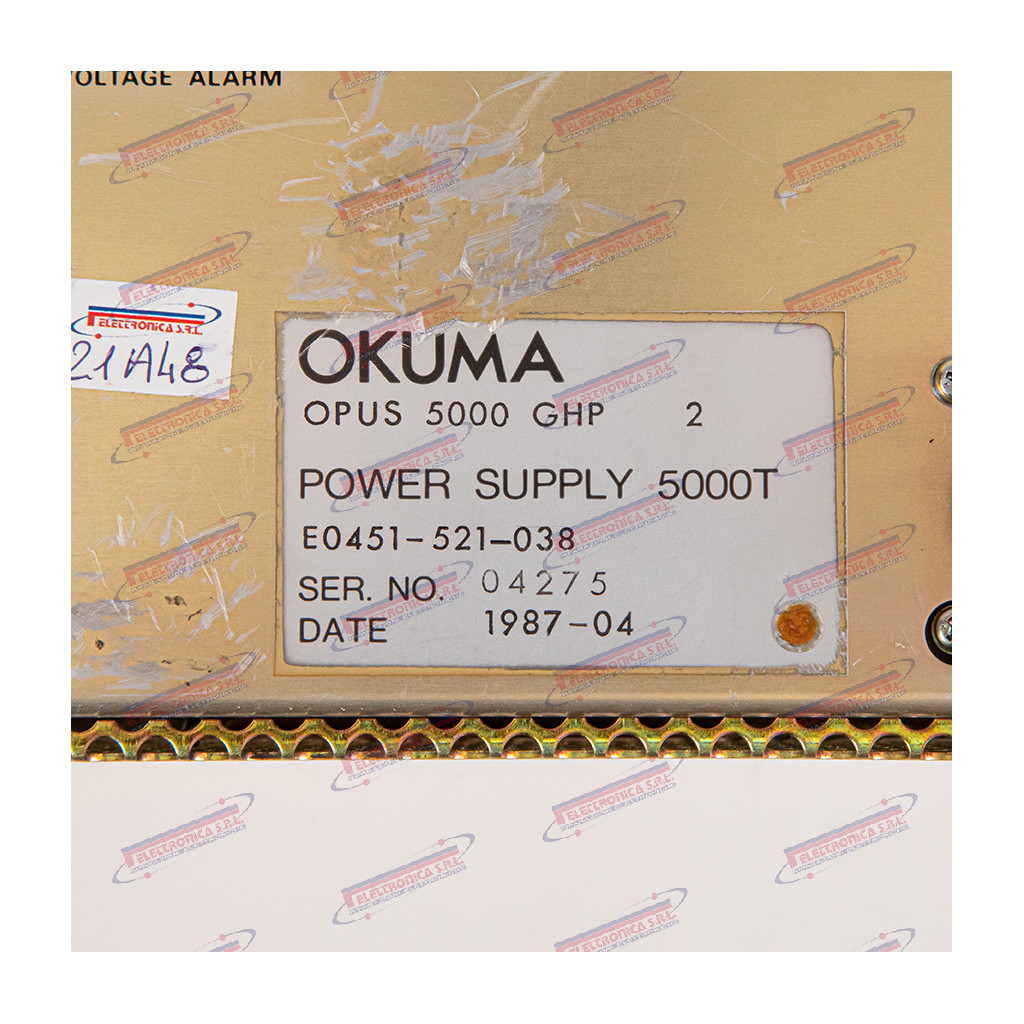
SKU:
OPUS 5000 GHP
Cat:
Power Supply
Brand:
OKUMA
CNC Control Power Supply Unit – OKUMA OPUS 5000 GHP
The OPUS 5000 GHP is an electronic power supply unit for CNC control (“CNC Control Power Supply Unit”) manufactured by OKUMA, designed as a component of the OPUS 5000 CNC control unit installed on OKUMA machining centres and CNC lathes from the 1980s and 1990s. It converts and regulates the AC mains voltage into the stabilised DC voltages required by the control boards, servo amplifiers, and I/O modules of the system. The suffix GHP identifies the specific variant of this power supply within the OPUS 5000 family.
The power supply is the heart of the CNC control unit’s electrical system: it provides regulated, stable voltages to all active components of the numerical control, from CPU logic to I/O outputs and axis amplifiers. A fault or degradation of its output voltages causes unpredictable CNC behaviour (axis alarms, cyclic CPU resets, parameter loss), immobilising the machine until the unit is replaced or repaired.
OKUMA was founded in 1898 in Nagoya, Japan, and is one of the world’s leading manufacturers of CNC machine tools (lathes, machining centres, grinding machines) and their proprietary control systems. The OPUS series (OPUS 3000, OPUS 5000, OPUS 7000) represents the CNC control generation of the 1980s–1990s, superseded by the open OSP (Open System Platform) still in production today. All products in this family are legacy / discontinued: available only as used, NOS/surplus, or through specialist repair.
Main Technical Specifications
| Type | CNC control power supply unit (CNC Control Power Supply Unit) |
| Part number | OPUS 5000 GHP (OPUS5000GHP) |
| Brand | OKUMA |
| Known application | OKUMA CNC machining centres and lathes equipped with OPUS 5000 control unit |
| Function | Regulated DC supply for CNC control boards, I/O modules and logic circuitry |
| Input voltage | 200–240 V AC, 50/60 Hz (typical for OKUMA OPUS controls) |
| Output voltages | +5 V, ±12 V or ±15 V, +24 V DC |
| Output power | ~100–300 W |
| Protections | Overcurrent, overvoltage, short-circuit (typical) |
| Interfaces / connectors | Edge connectors / terminal strips for integration in OPUS 5000 rack |
| Weight | ~1.5–3.5 kg |
| Dimensions | ~250–400 mm |
| Production status | Legacy / discontinued — used/surplus/repair only |
SKU:
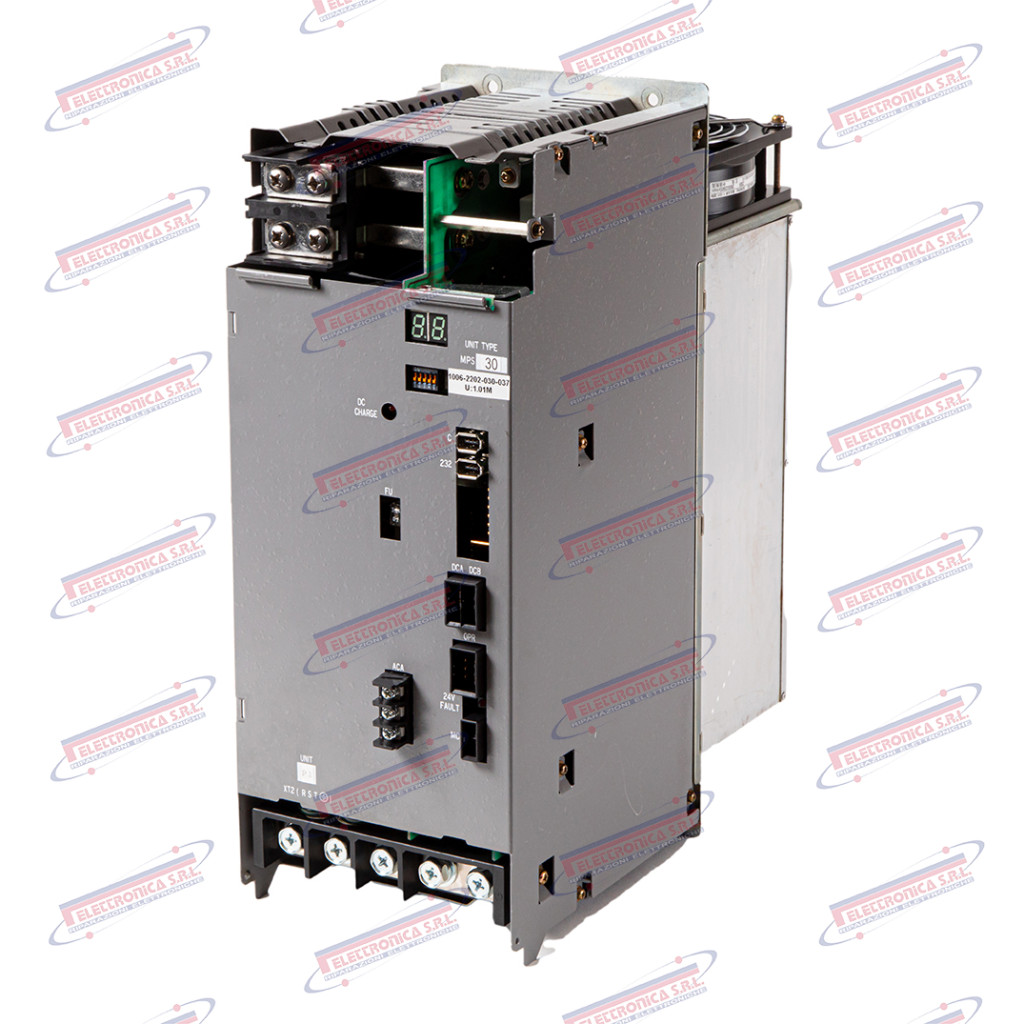
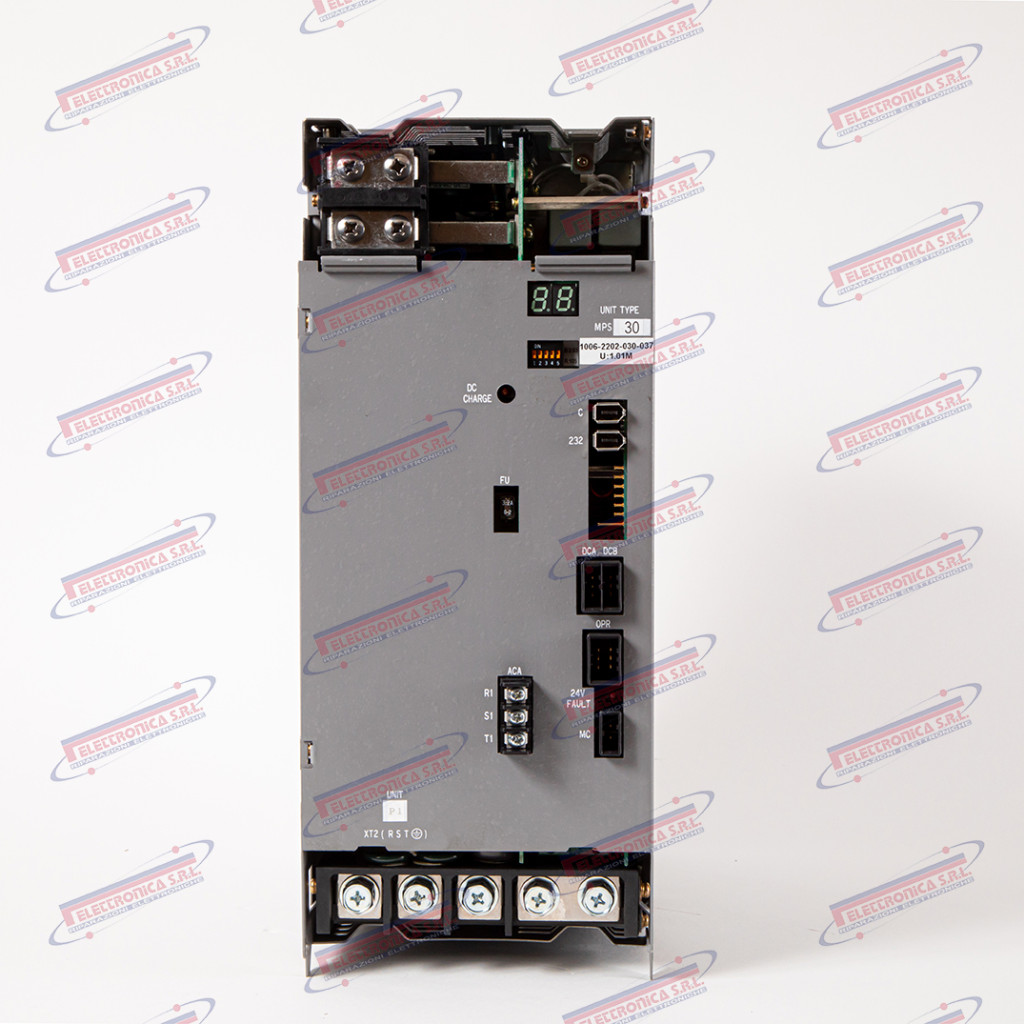
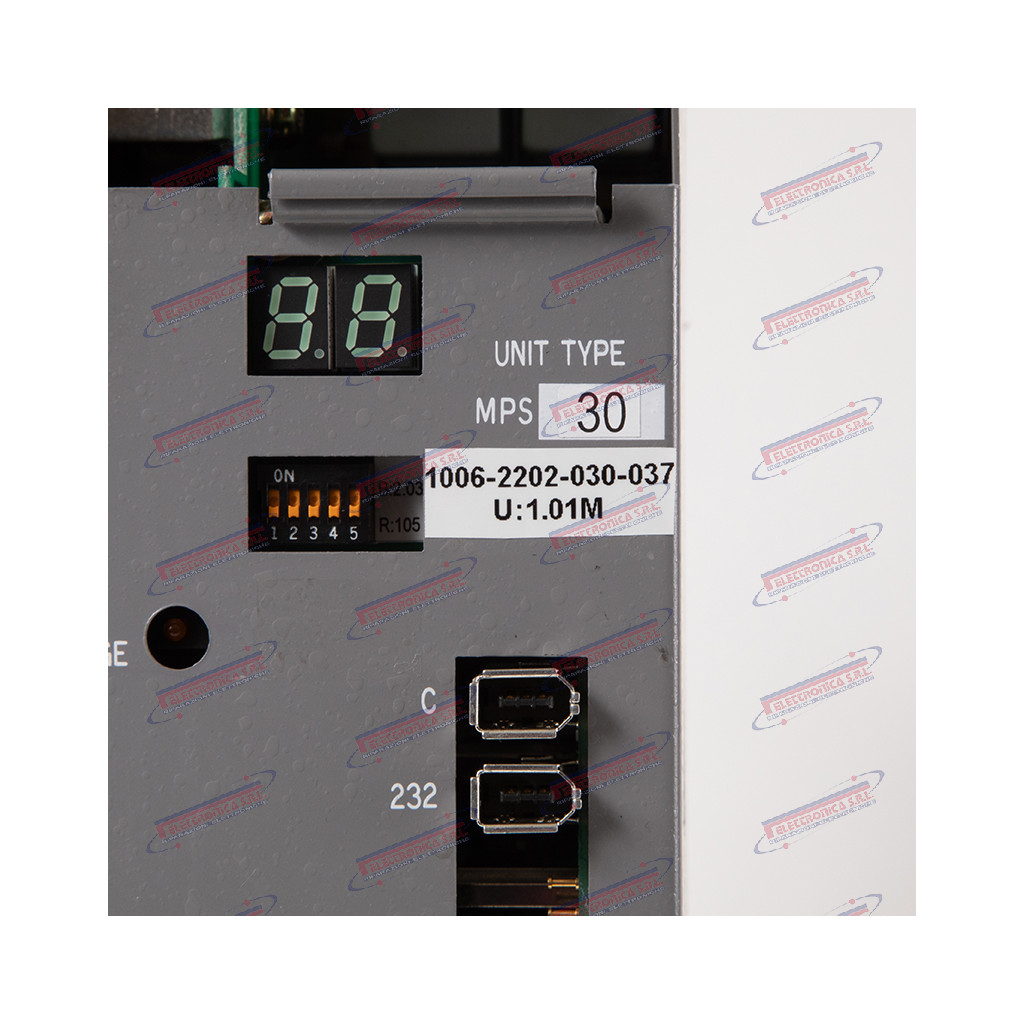
MPS 30
Cat:
Power Supply
Brand:
OKUMA
CNC Power Supply – OKUMA MPS 30
The MPS 30 is a switching power supply for CNC control systems (“CNC Power Supply Module”) manufactured by OKUMA Corporation, a Japanese builder of machine tools and CNC control systems. The unit is designed to provide the regulated DC supply voltages required by the logic boards, digital drives, and I/O modules of OKUMA OSP CNC controllers (series OSP700, OSP5000, OSP-U and related). It converts the AC mains input into multiple stabilised and filtered DC outputs. The component is identified interchangeably as MPS30 or MPS 30.
The power supply is the energy backbone of the CNC system: without clean, regulated DC power, the logic boards, communication bus, and servo drives cannot operate reliably. A power supply failure causes an immediate total machine shutdown; excessive ripple on the DC rails can trigger random alarms, positioning errors, or premature degradation of the dependent electronic boards.
OKUMA Corporation was founded in 1898 in Nagoya, Japan, and is one of the world’s leading CNC machine tool manufacturers, designing both the machines (lathes, machining centres, grinding machines) and their own OSP (Open System Platform) CNC control series. The MPS 30 belongs to the power supply family for legacy OSP controls: the product is discontinued and available exclusively as used/NOS surplus or through specialist repair services.
Main Technical Specifications
| Type | Switching power supply for CNC control system (CNC Power Supply Module) |
| Part number | MPS 30 (MPS30) |
| Brand | OKUMA Corporation |
| Known application | OKUMA OSP CNC controllers (OSP700, OSP5000, OSP-U and related); OKUMA CNC machine tools (lathes, machining centres) |
| Function | Conversion and regulation of AC mains to stabilised DC voltages for CNC logic boards, drives, and I/O modules |
| Input voltage | 200–230 V AC, 50/60 Hz (typical for OSP systems; verify against machine schematic) |
| Output voltages | +5 V DC, ±12 V DC, +24 V DC (typical for OSP series; exact values from OKUMA schematic) |
| Rated power | ~100–300 W (typical for OSP power supplies) |
| Interfaces / Connectors | Edge connectors on internal DC bus; AC input on dedicated terminal strip |
| Protections | Overvoltage (OVP), overcurrent (OCP) and short-circuit protection (typical for industrial switching PSU) |
| Weight | ~1–3 kg |
| Dimensions | ~200–350 mm |
| Production status | Legacy / discontinued — used/surplus/repair only |
SKU:
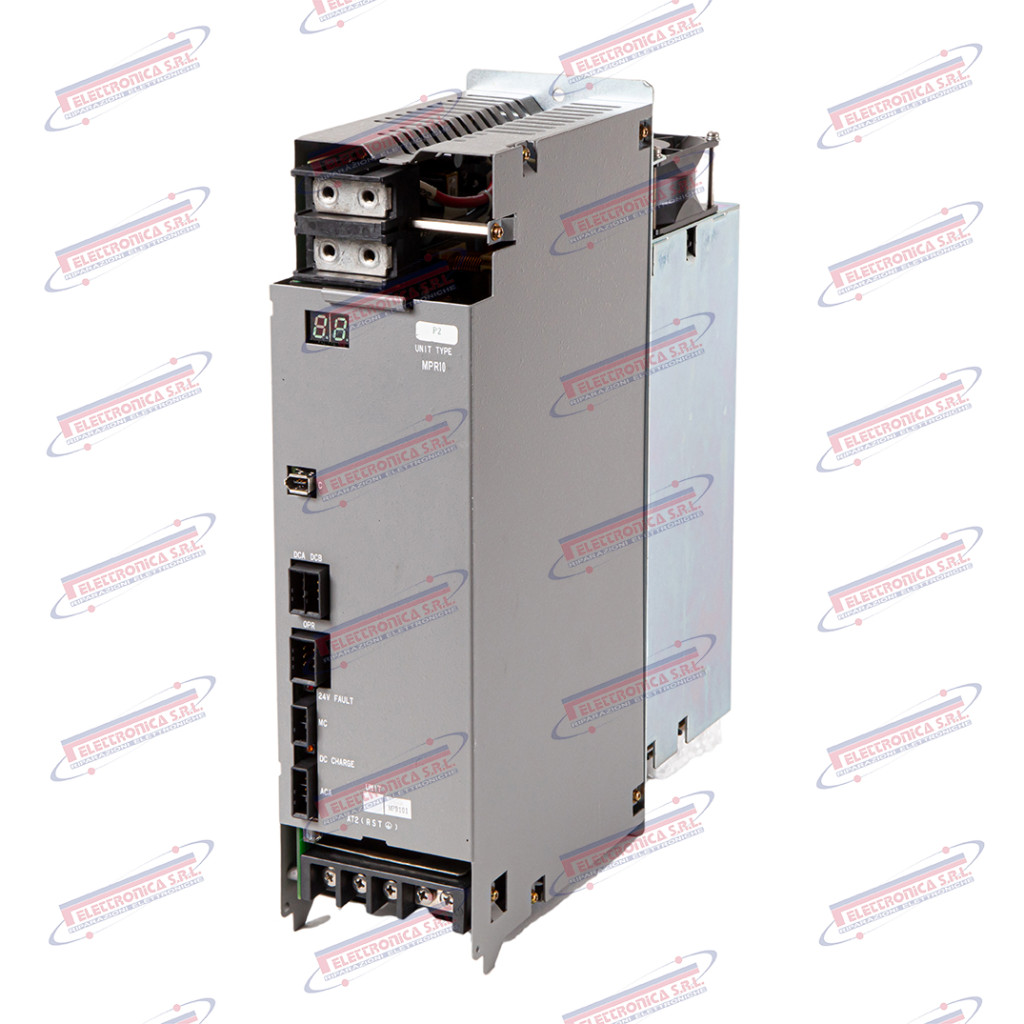
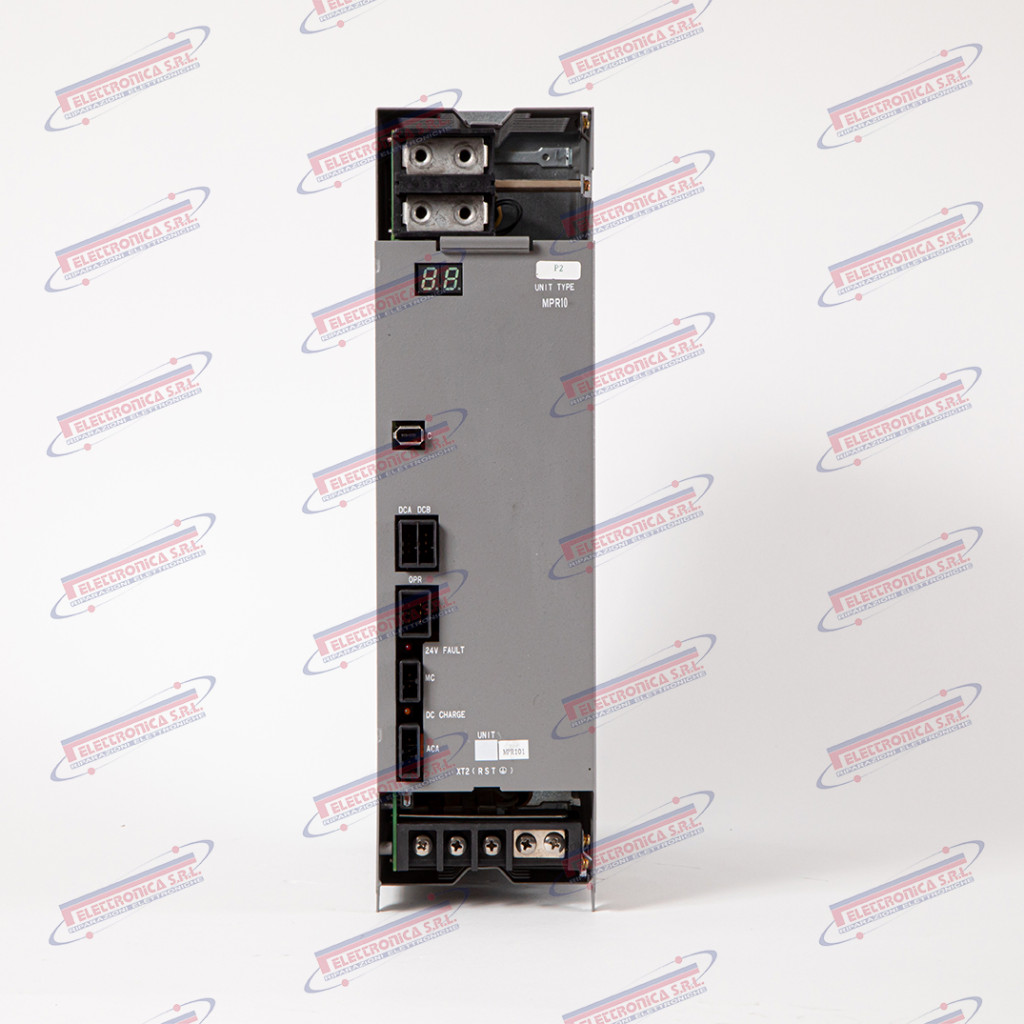
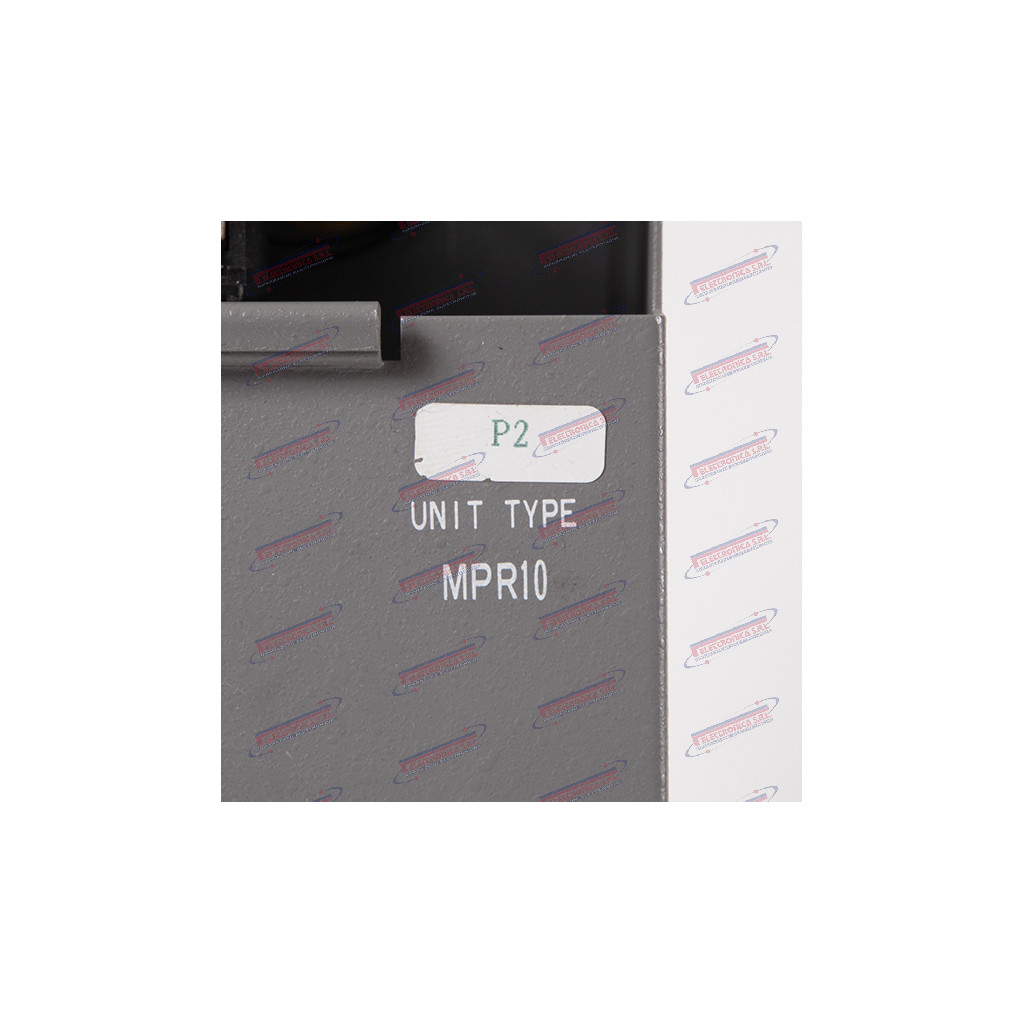
MPR10
Cat:
Power Supply
Brand:
OKUMA
CNC Power Supply Module – OKUMA MPR10
The MPR10 is a CNC control power supply module (“CNC Power Supply Module”) manufactured by OKUMA, used in the electrical cabinets of CNC machine tools equipped with proprietary OSP (Open System Platform) control systems. The module converts and regulates the supply voltages required by the control boards, axis and spindle drives, and other electronic subsystems of the CNC. The part number is MPR10.
The power supply module is a fundamental element of the CNC system: it converts mains voltage into regulated, filtered DC voltages distributed to all control boards and electronic subsystems. Without regulated power the control system cannot start up and the machine is completely inoperative; a failure of this module typically manifests as a total loss of communication between the control and drives, or as non-clearable power alarms.
OKUMA Corporation is a Japanese manufacturer founded in 1898 in Nagoya, specialising in CNC machine tools (machining centres, lathes, grinding machines) and its own proprietary OSP (Open System Platform) control systems. The high degree of integration between machine and control makes OKUMA electronic components non-interchangeable with those of other manufacturers; products of this generation are legacy / discontinued and available only as used, surplus or through specialist repair.
Main Technical Specifications
| Type | CNC power supply module (Power Supply Module) |
| Part number | MPR10 |
| Brand | OKUMA Corporation |
| Known application | OKUMA CNC machine tools with OSP control (machining centres, lathes) |
| Function | Conversion and regulation of supply voltages for CNC control boards and drives |
| Input voltage | 200–230 V AC, three-phase / single-phase (typical) |
| Output voltages | +5 V, ±15 V, +24 V DC (typical) |
| Output current | ~5–15 A per rail |
| Interfaces | Internal connectors on OKUMA CNC cabinet bus; mains terminal strip |
| Weight | ~2–5 kg |
| Dimensions | ~200–350 mm |
| Production status | Legacy / discontinued — used/surplus/repair only |
SKU:
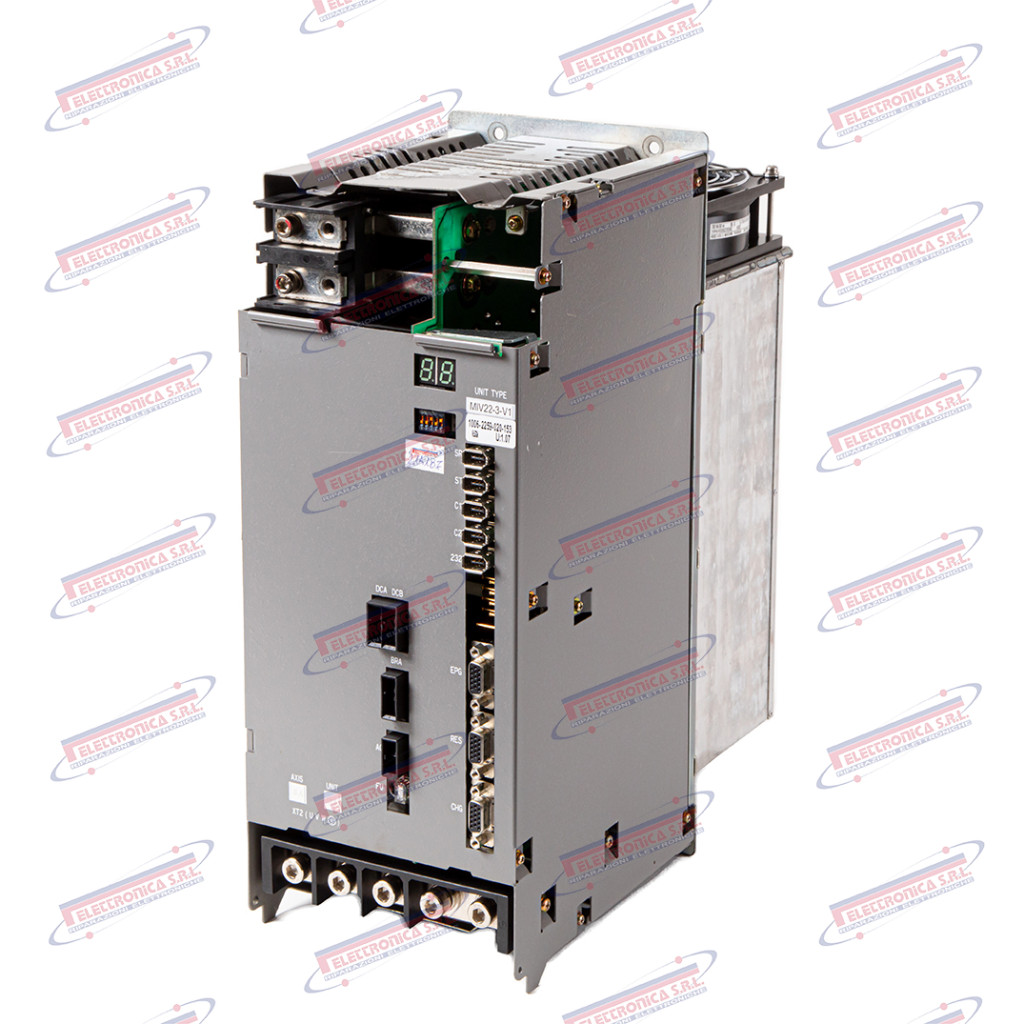
MIV22-3-V1
Cat:
Servo Drive
Brand:
OKUMA
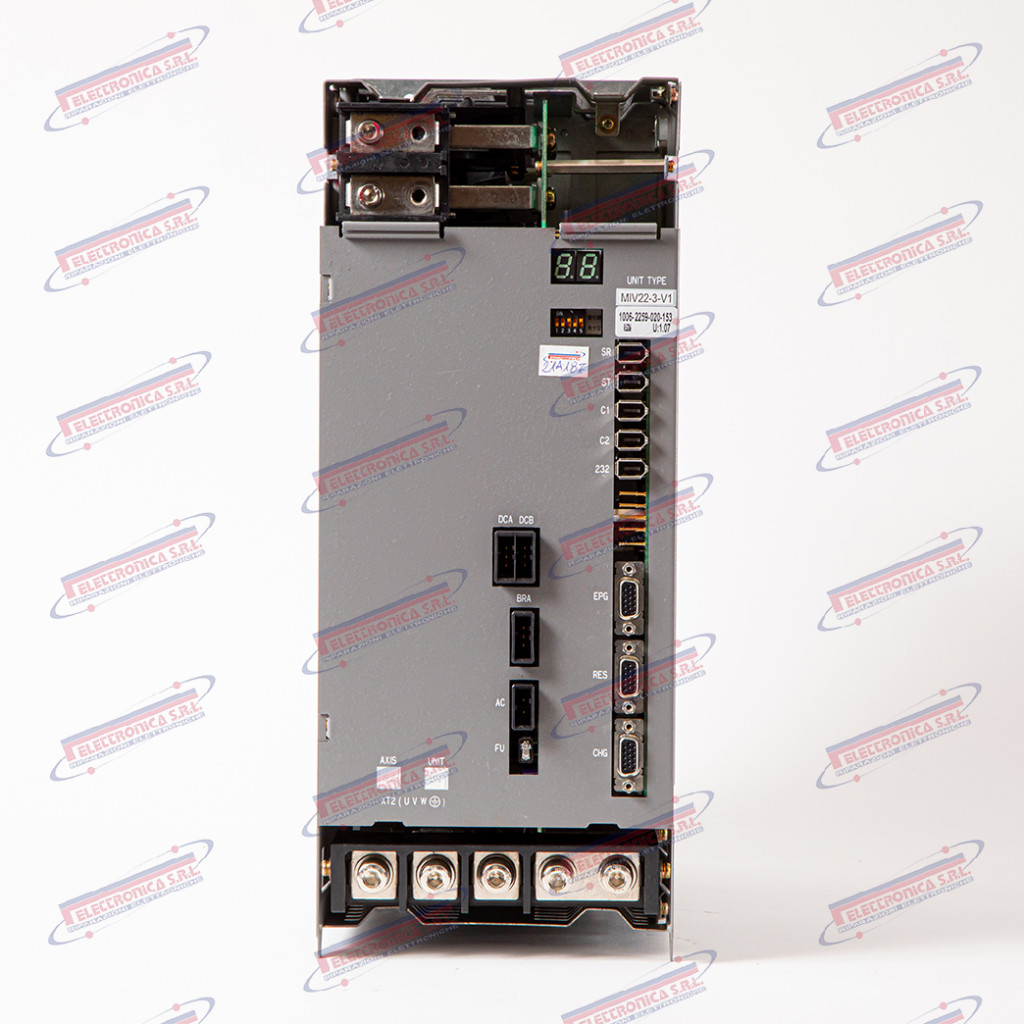
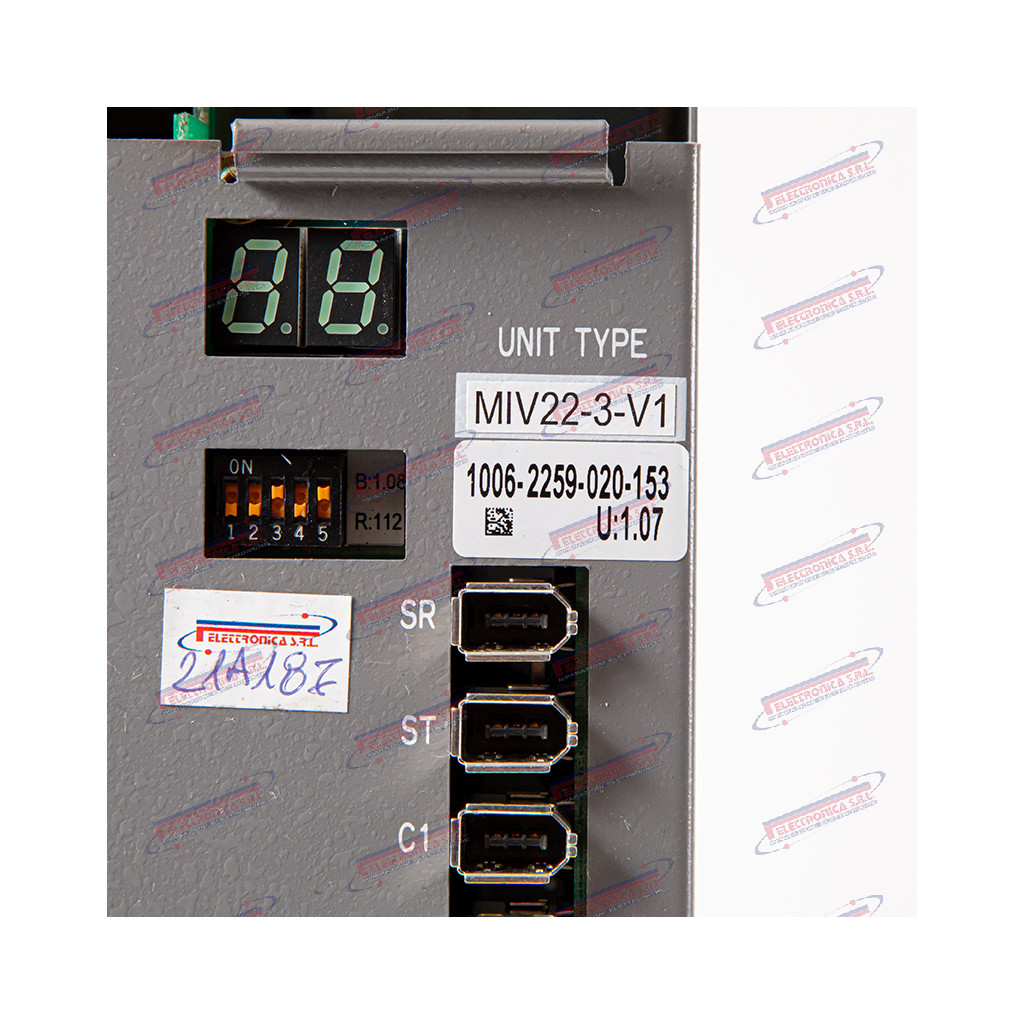
Spindle Drive Inverter – OKUMA MIV22-3-V1
The MIV22-3-V1 is a spindle drive inverter (“Motor InVerter / Spindle Drive”) manufactured by OKUMA, documented as a power and control module for the AC spindle motor in OKUMA CNC machining centres and lathes equipped with the proprietary OSP (Open System Platform) control system. The unit manages frequency and voltage conversion to the spindle motor, receiving speed references from the CNC via the OKUMA proprietary bus. Identified by part number MIV22-3-V1 (internal stock code MIV223V1); the prefix MIV stands for “Motor InVerter” in OKUMA nomenclature.
The spindle drive is the electronic converter that transforms the AC mains supply into variable voltage and frequency for the spindle motor, enabling continuous speed regulation as commanded by the CNC program. It is a critical component of the OKUMA drive architecture: failure renders the spindle completely inoperative, causing immediate machine downtime and preventing any machining operation from being carried out.
OKUMA Corporation is a Japanese manufacturer founded in 1898 and a world leader in CNC machine tools and proprietary OSP (Open System Platform) control systems. OKUMA designs and manufactures both machines and controls in-house, ensuring full integration between mechanics and electronics. Components in the MIV series are legacy / discontinued: available exclusively as original spare parts from remaining stock or through specialist repair and spare-part channels.
Main Technical Specifications
| Type | Spindle drive inverter (Motor InVerter – Spindle Drive) |
| Part number | MIV22-3-V1 (MIV223V1) |
| Brand | OKUMA Corporation |
| Known application | OKUMA CNC machining centres and lathes with OSP control system |
| Function | AC spindle motor speed and torque control via frequency modulation (inverter) |
| Supply input | 3~ AC 200–230 V / 380–460 V, 50/60 Hz (typical MIV series) |
| Output | Variable three-phase voltage and frequency to OKUMA AC spindle motor |
| Interfaces / bus | OKUMA OSP proprietary bus; edge connectors and internal terminal strips |
| Protections | Over-temperature, over-current, DC bus over-voltage (typical MIV series) |
| Weight | ~3–8 kg |
| Dimensions | ~200–400 mm |
| Production status | Legacy / discontinued — used/surplus/repair only |
SKU:
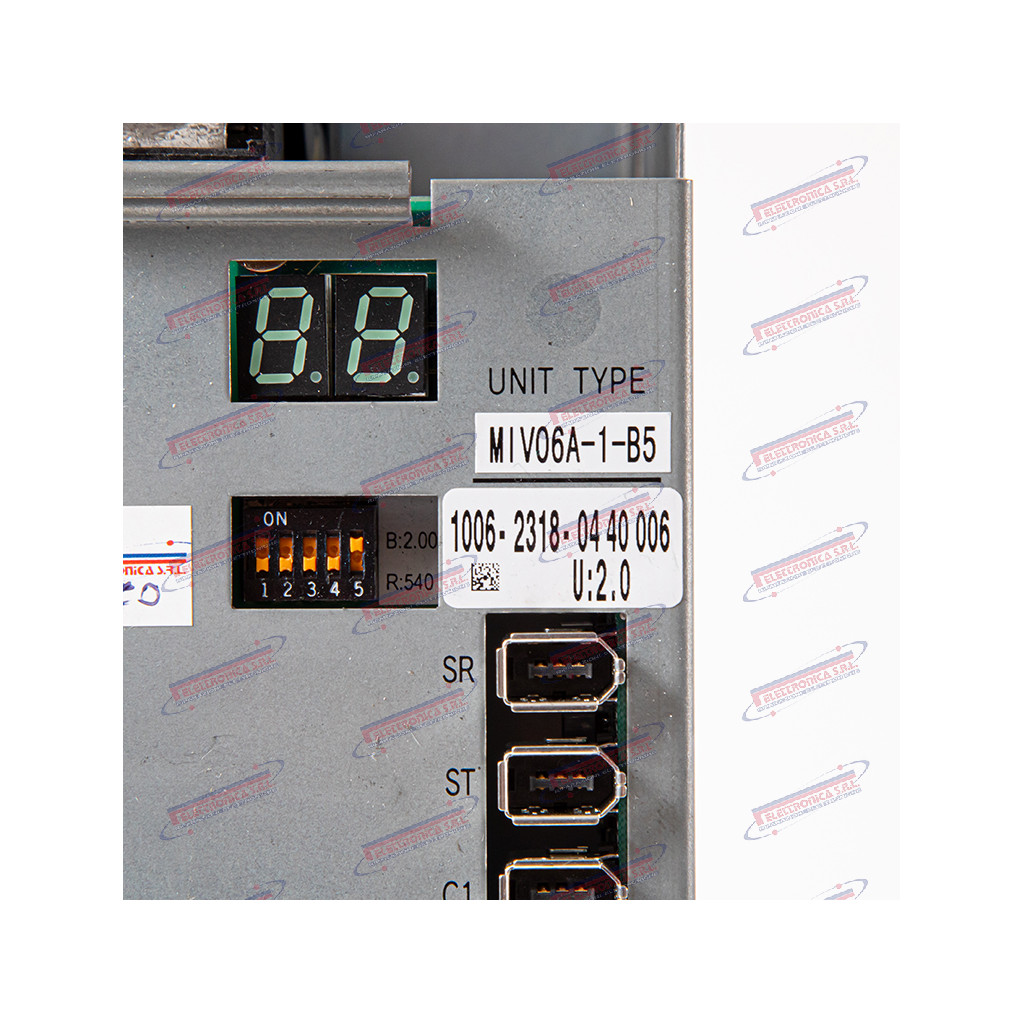
MIV06A-1-B5
Cat:
Servo Drive
Brand:
OKUMA
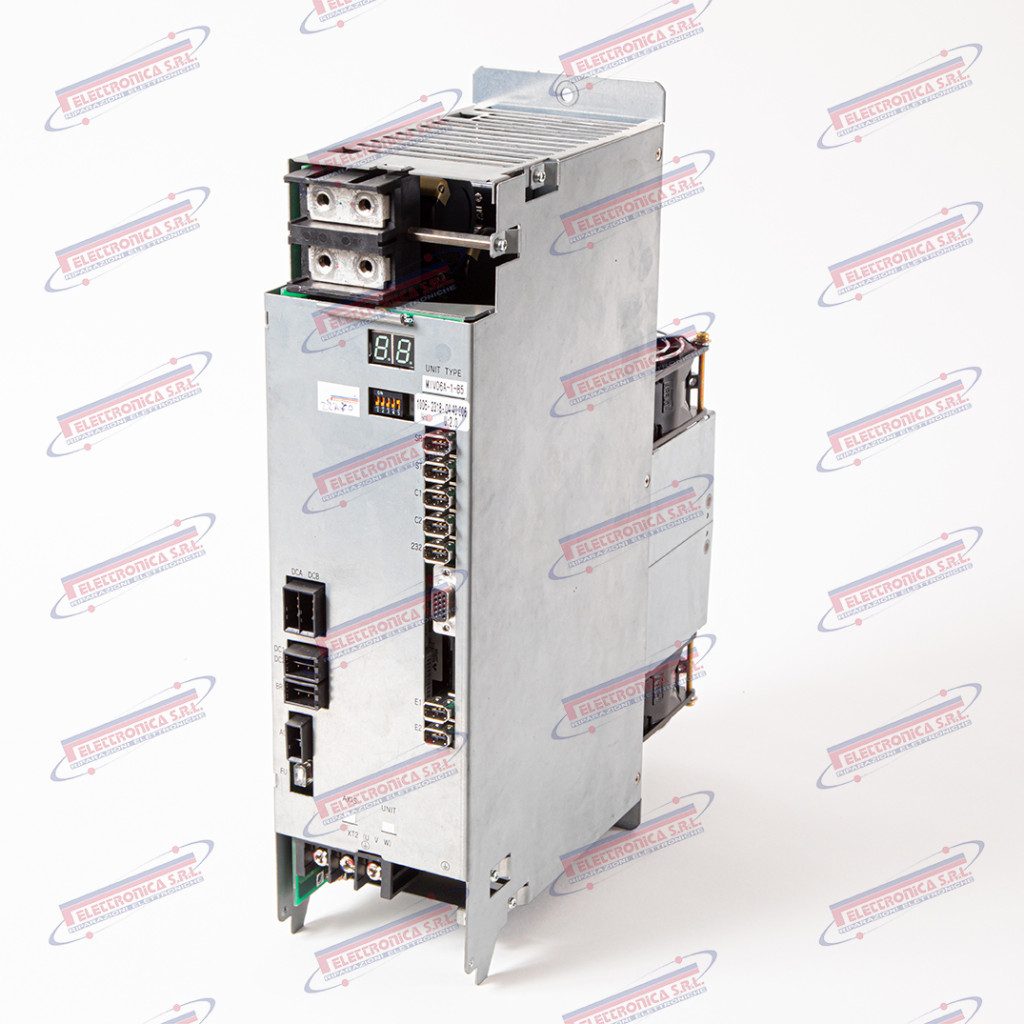
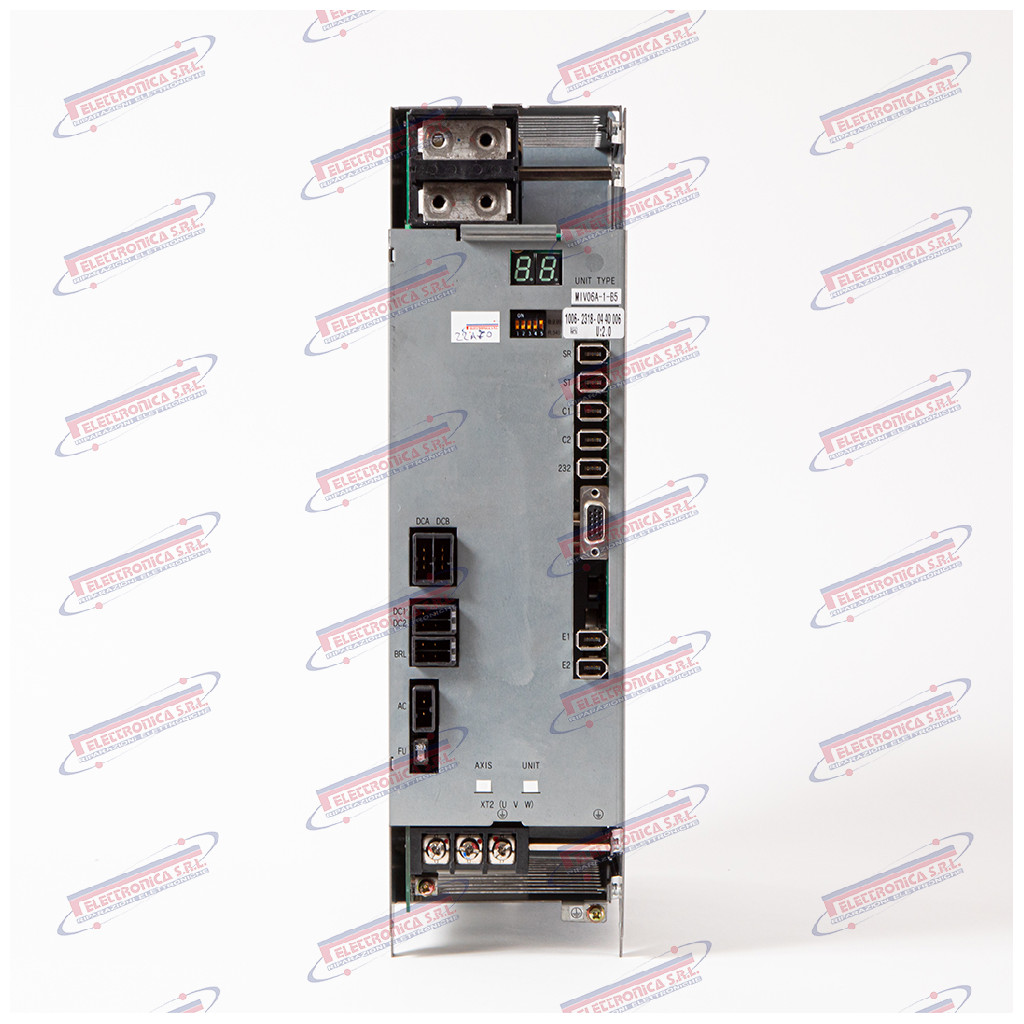
Axis Servo Drive – OKUMA MIV06A-1-B5
The MIV06A-1-B5 is an axis servo drive amplifier (“Axis Servo Drive Amplifier”) manufactured by OKUMA Corporation, a component of the axis control system in OKUMA CNC machining centres and lathes equipped with OSP (Open System Platform) control. The manufacturer part number is MIV06A-1-B5 (internal reference: MIV06A1B5). The module belongs to the MIV family of OKUMA servo drives and handles the current and velocity control loops for AC brushless servo motors. The designation “06” indicates the nominal current rating (~6 A continuous); “A1B5” identifies the circuit variant and I/O configuration.
The MIV06A-1-B5 servo drive is the module that converts position and velocity commands from the OKUMA CNC (OSP controller) into three-phase current for the axis servo motor: it closes the current loop in real time and ensures the dynamic response required to follow the machining profile with the demanded precision. If it fails, the controlled axis becomes unavailable, the machine raises an alarm and production stops; on multi-axis machining centres, a single failed drive can halt the entire production cell.
OKUMA Corporation is a Japanese manufacturer founded in 1898, one of the world leaders in CNC machine tools (lathes, machining centres, grinding machines) and proprietary control systems (OSP series). Unlike most builders, OKUMA designs and manufactures in-house the machine, the CNC controller, the motors, and the drives, ensuring a fully integrated and optimised system. Products in the MIV series are considered legacy / discontinued in their older versions, but spare parts and repairs are still supported through specialist service networks.
Main Technical Specifications
| Type | Axis servo drive amplifier (AC brushless) |
| Part number | MIV06A-1-B5 (MIV06A1B5) |
| Brand | OKUMA Corporation |
| Known application | OKUMA CNC machining centres and lathes with OSP control (e.g. OSP-U100M, OSP-P200, OSP-P300) |
| Function | AC servo motor axis drive – current and velocity loop closure |
| Nominal current | ~6 A (continuous); higher peak depending on variant |
| DC bus voltage | Supplied by OKUMA power supply module (typical 280–320 V DC bus) |
| Interfaces | Proprietary OKUMA connectors for encoder/resolver feedback + OSP serial bus |
| Mounting | OKUMA drive rack / cabinet (DIN rail or dedicated rack) |
| Weight | ~1.5–3.0 kg |
| Dimensions | ~150–250 mm H × 60–100 mm W |
| Production status | Legacy / discontinued — available as used, NOS or through specialist repair |
SKU:
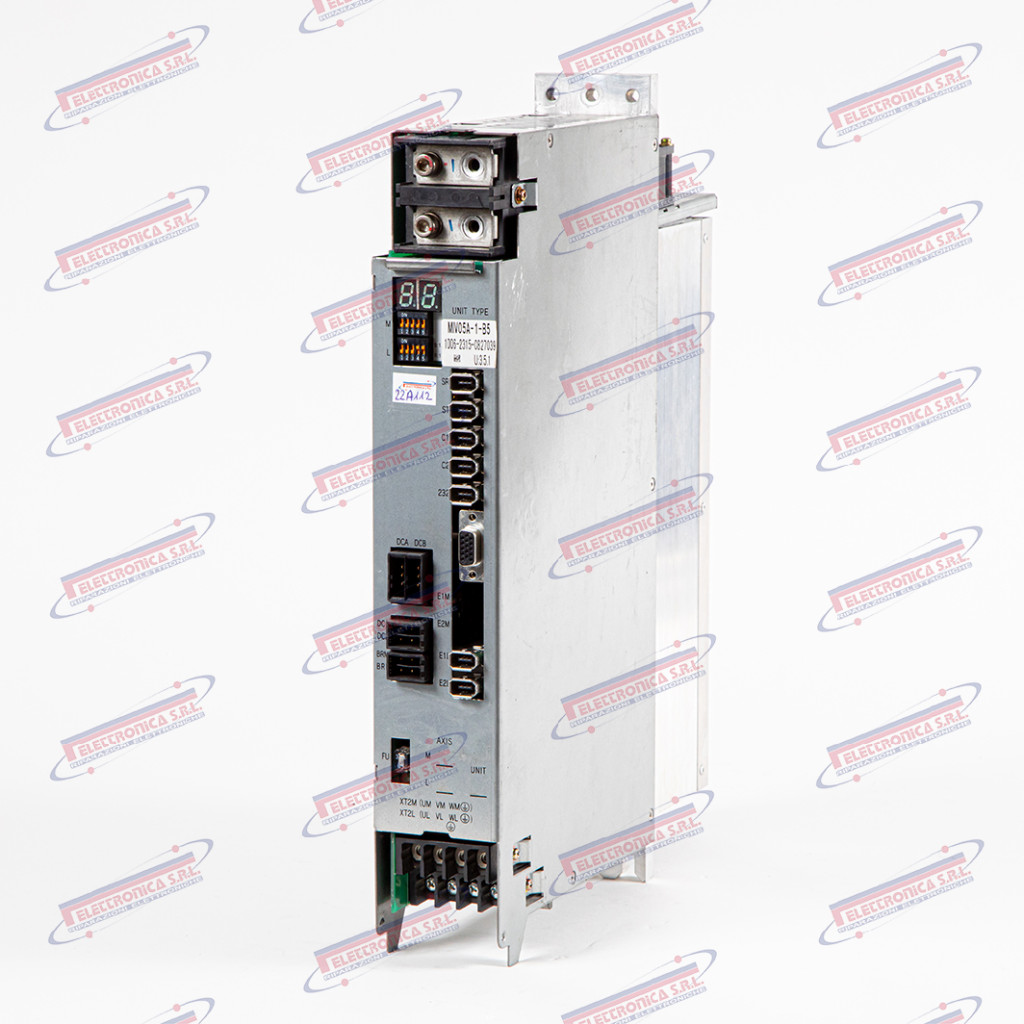
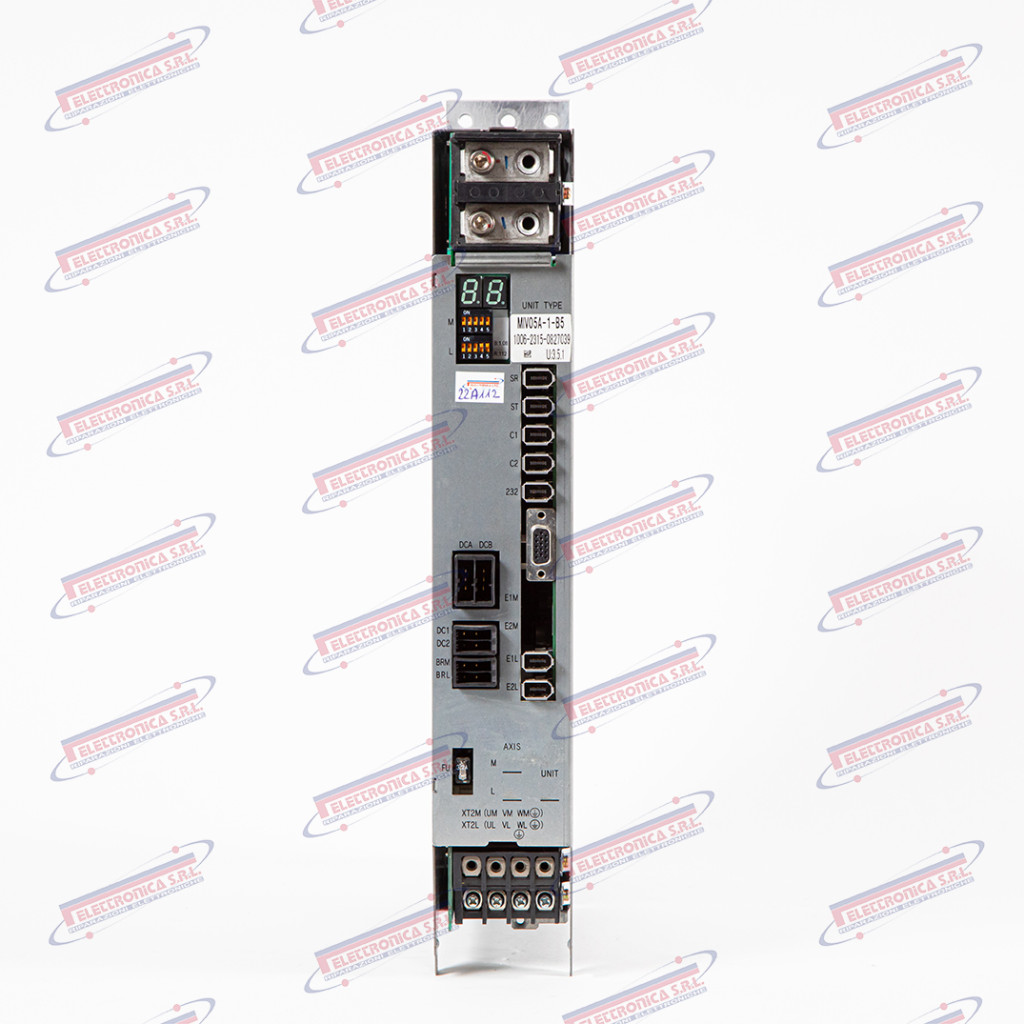
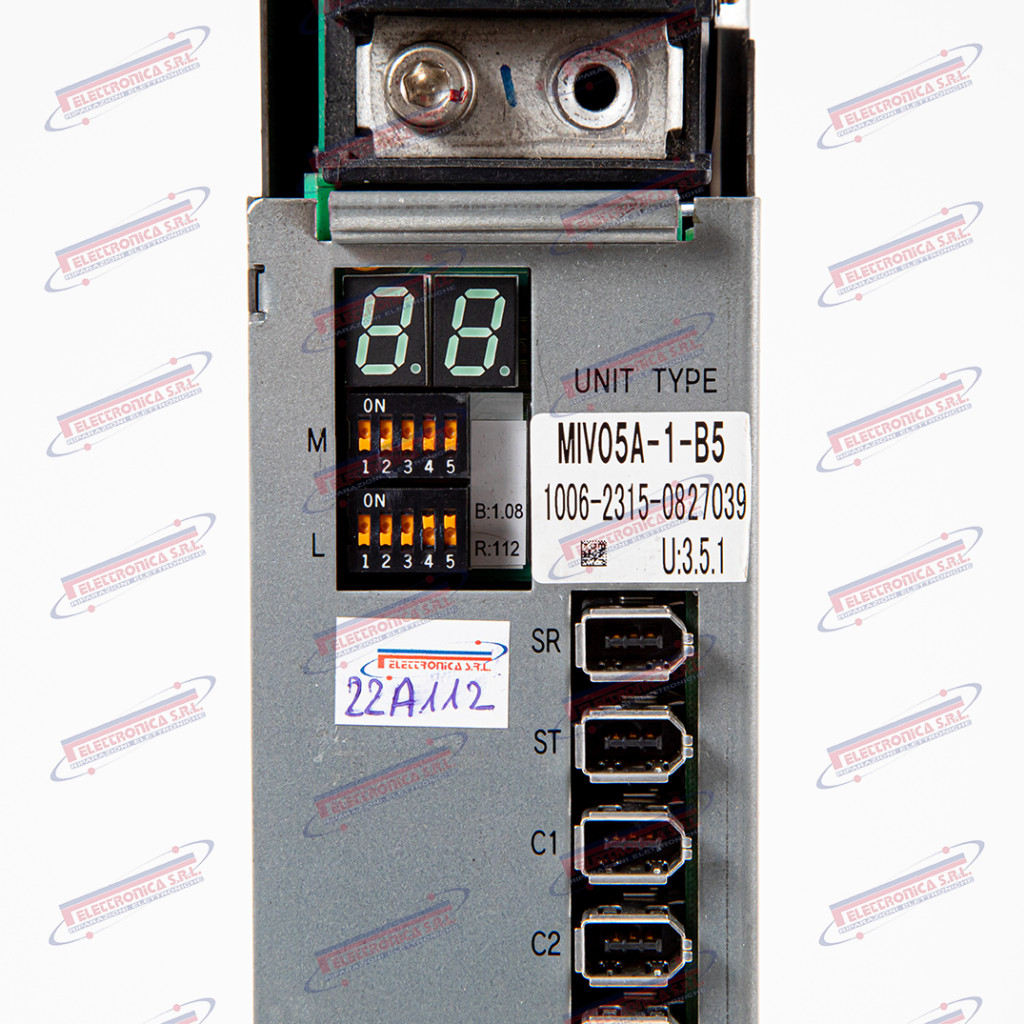
MIV05A-1-B5
Cat:
Servo Drive
Brand:
OKUMA
Axis Servo Drive – OKUMA MIV05A-1-B5
The MIV05A-1-B5 is an AC axis servo drive (“Axis Servo Drive” / “Motor Inverter”) manufactured by OKUMA Corporation, a core component of the OSP (Open System Platform) CNC control system. The drive manages the current and speed regulation loops of the AC servo motor on the machine axis, receiving position commands from the CNC via OKUMA’s proprietary bus and returning position and speed feedback. The commercial part number is MIV05A-1-B5 (internal reference: MIV05A1B5); the “MIV” designation identifies the Motor Inverter family within the OKUMA range.
The axis servo drive is the power and regulation module that converts CNC position and speed commands into current delivered to the AC axis motor: it closes the current and speed feedback loops, ensuring precise positioning and dynamic response during machining. A failure in this component makes the corresponding axis uncontrollable: the machine halts with an alarm and production cannot resume until the drive is replaced or repaired.
OKUMA Corporation is a Japanese manufacturer founded in 1898, one of the world’s leading producers of CNC machine tools; it operates a vertically integrated model, designing in-house both the machines and the OSP controls, drives and motors. Products in the MIV series belong to earlier generations of OSP controls and are considered legacy / discontinued: sourcing is exclusively through used/surplus channels or specialist repair services.
Main Technical Specifications
| Type | AC axis servo drive – Motor Inverter |
| Part number | MIV05A-1-B5 (MIV05A1B5) |
| Brand | OKUMA Corporation |
| Known application | OKUMA CNC machining centres and lathes with OSP control (OSP5000 / OSP7000 series) |
| Function | Axis servo motor current and speed regulation (X, Y, Z or auxiliary axes) |
| Supply voltage | 200–230 V AC three-phase |
| Rated current | ~5 A rated |
| Communication bus | OKUMA / OSP proprietary bus |
| Interfaces / connectors | OKUMA proprietary multi-pin connectors |
| Weight | ~1.5–3.0 kg |
| Dimensions | ~240×80×170 mm |
| Production status | Legacy / discontinued — used / surplus / repair only |
SKU:
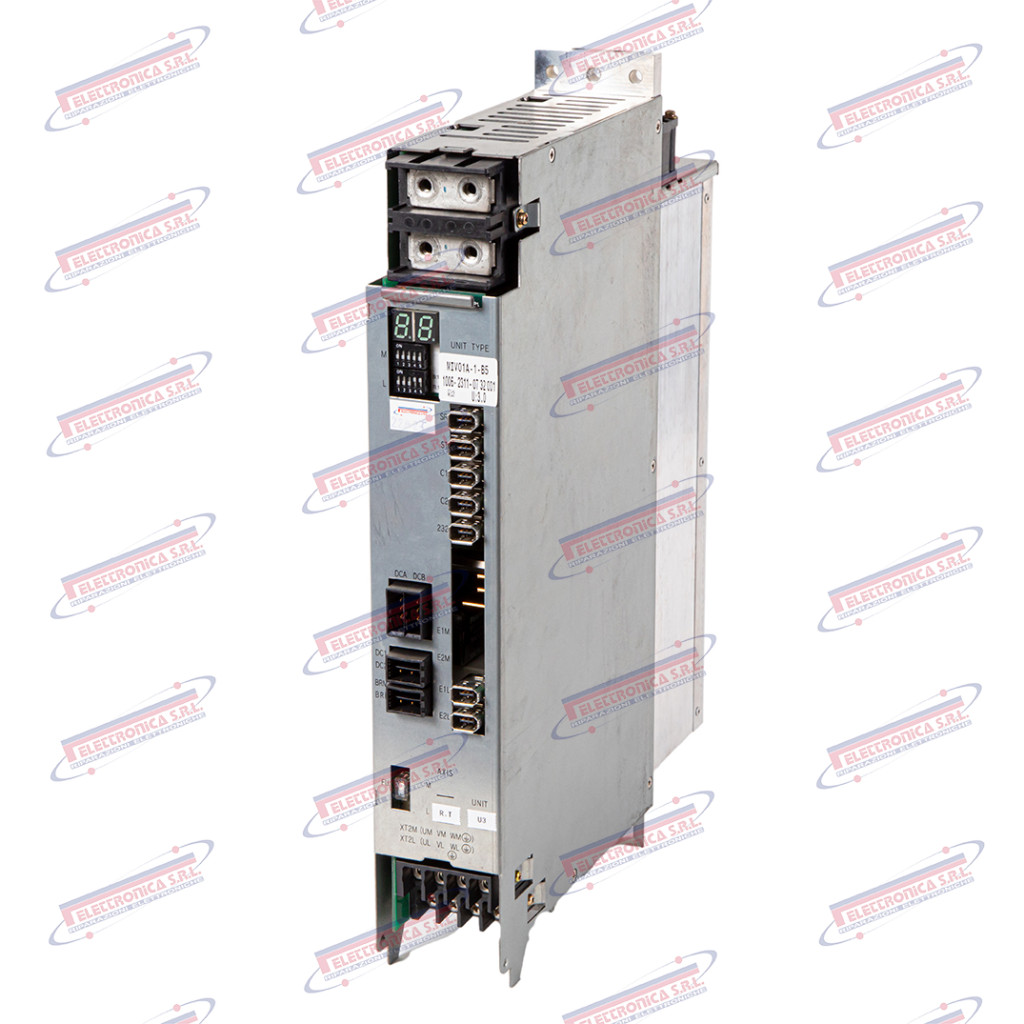
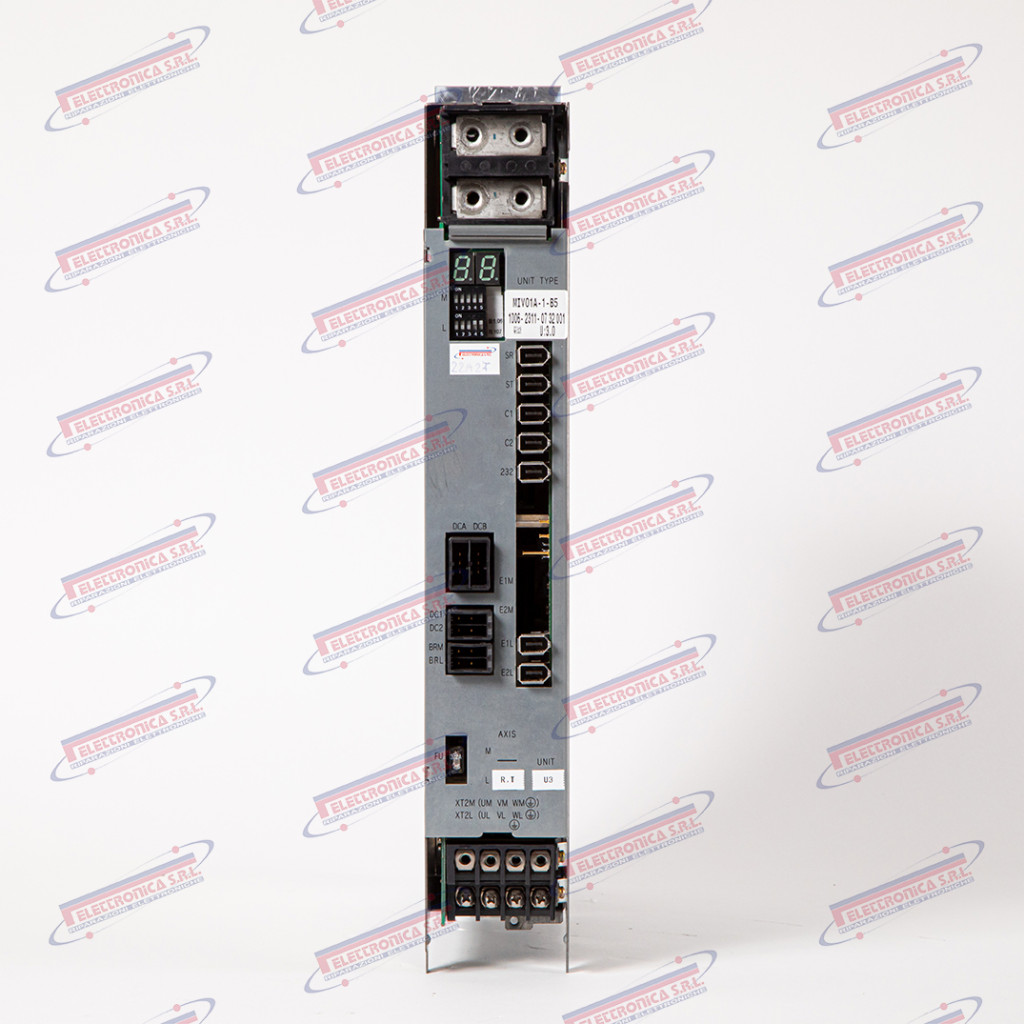
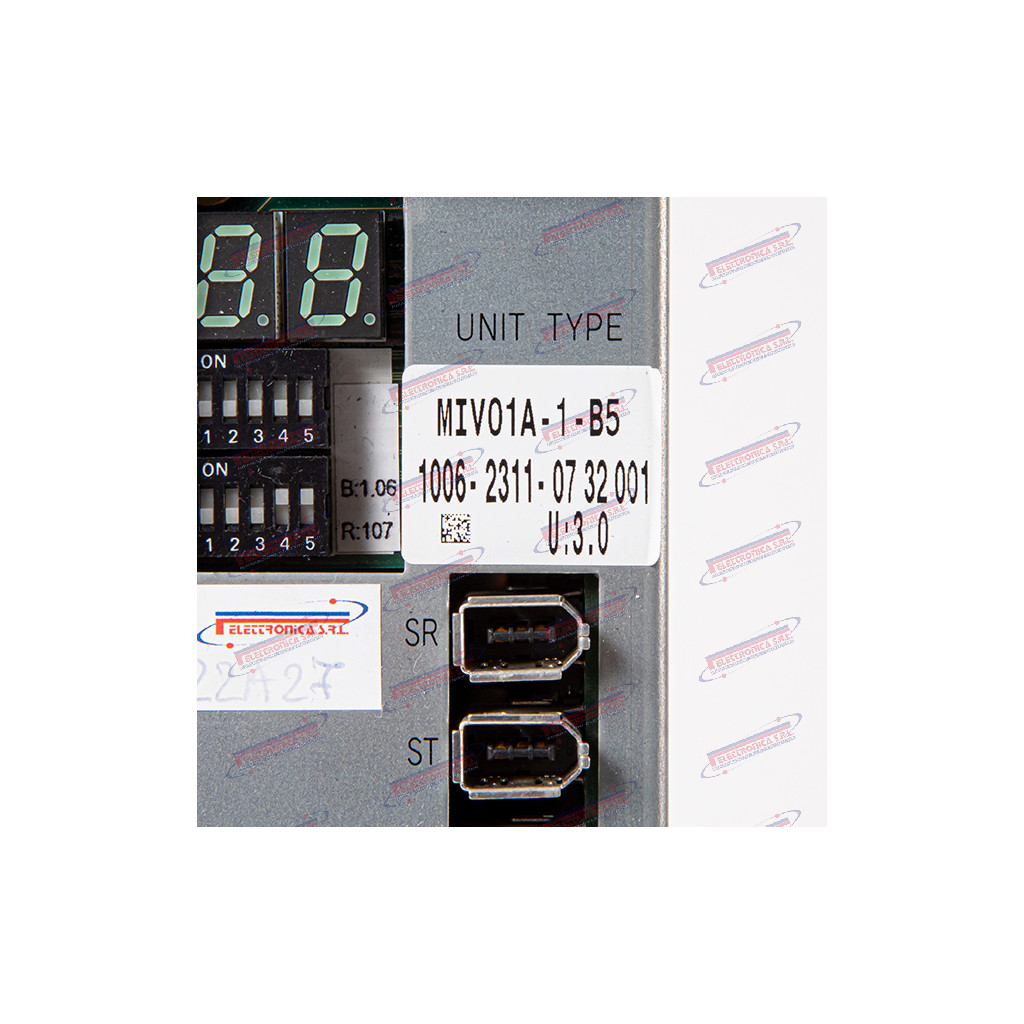
MIV01A-1-B5
Cat:
Servo Drive
Brand:
OKUMA
Axis Servo Drive – OKUMA MIV01A-1-B5
The MIV01A-1-B5 is an axis servo drive module (“Motor Interface V”) manufactured by OKUMA Corporation, belonging to the proprietary MIV servo drive series. It is documented as a power and control unit for axis servo motors in OKUMA CNC machining centres and lathes equipped with the OSP (Open System Platform) control system. The module closes the position, velocity, and current loops, interfacing with the CNC unit via OKUMA’s proprietary bus. The suffix B5 identifies the hardware/firmware revision; the designation 01A indicates the power class (small-axis drive).
The servo drive is the component that translates position and velocity commands generated by the CNC into power currents for the axis servo motor: it simultaneously manages the position loop, the velocity loop, and the current loop, ensuring dimensional accuracy and dynamic response during machining. A servo drive failure renders the axis completely inoperative, triggers an axis alarm on the machine, and halts all machining operations until the module is replaced or repaired.
OKUMA Corporation is a Japanese manufacturer founded in 1898 in Nagoya, one of the few companies in the world to design CNC machine tools, numerical controls (OSP), and servo drives entirely in-house, ensuring full hardware/software integration. The modules in the MIV family belong to older generations of the OSP system and are legacy / discontinued: available only as used, surplus, or through specialist repair services.
Main Technical Specifications
| Type | Axis servo drive module (Motor Interface V – MIV) |
| Part number | MIV01A-1-B5 (MIV01A1B5) |
| Brand | OKUMA Corporation |
| Known application | OKUMA CNC machining centres and lathes with OSP (Open System Platform) control |
| Function | Axis servo motor drive – position, velocity, and current loop regulation |
| DC bus supply | ~270–300 V DC (typical OKUMA system) |
| Output rated current | ~1–5 A |
| Feedback | Encoder / resolver from axis servo motor |
| Interfaces | Proprietary OKUMA OSP bus, encoder/resolver connectors, power terminals |
| Revision / version | B5 variant (hardware/firmware revision) |
| Weight | ~1.5–3.5 kg |
| Dimensions | ~200–400 mm × 80–180 mm |
| Production status | Legacy / discontinued — used/surplus/repair only |
SKU:
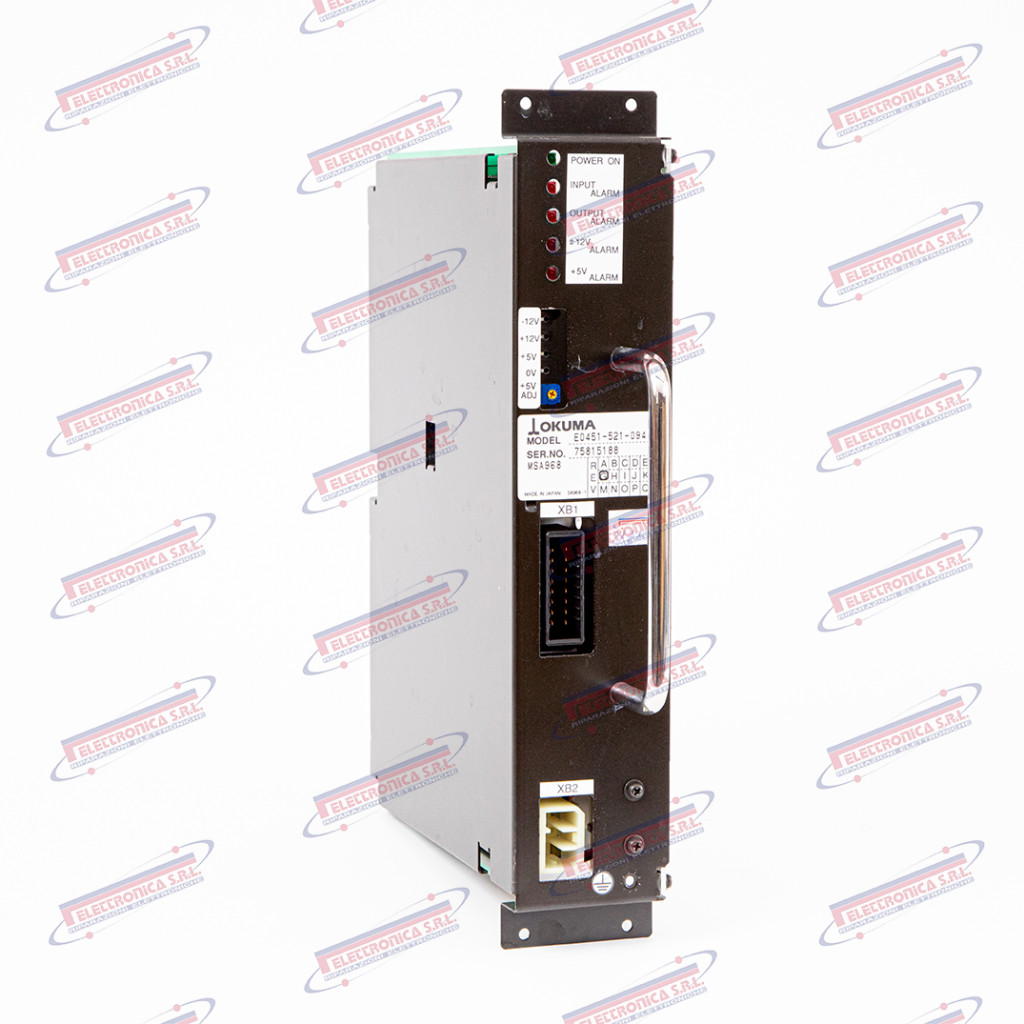
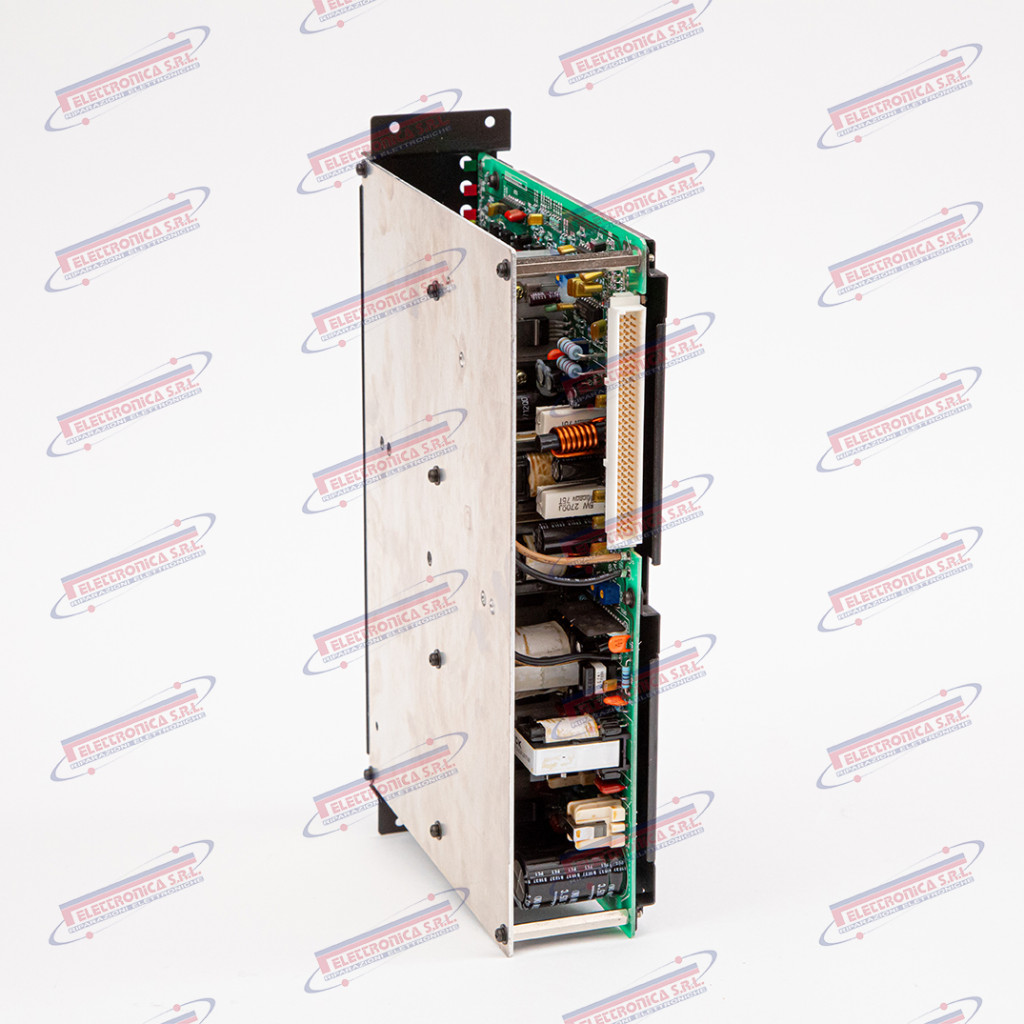
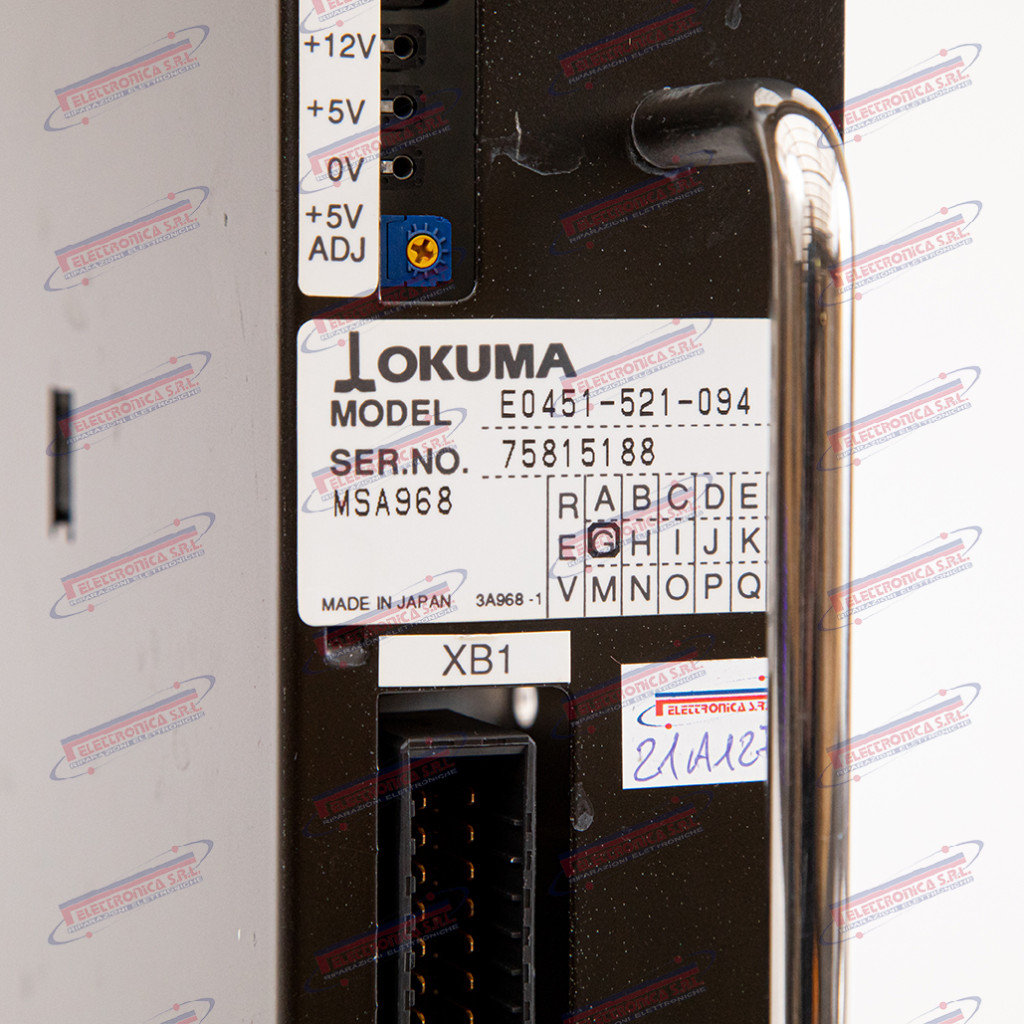
E0451-521-094
Cat:
Power Supply
Brand:
OKUMA
CNC Power Supply Unit – OKUMA E0451-521-094
The E0451-521-094 is a switching power supply for CNC control systems (“CNC Control Power Supply Unit”) manufactured by OKUMA Corporation, designed to supply the electronic boards of the OKUMA OSP (Open System Platform) CNC controller. The unit converts mains voltage into stabilised DC voltages (+5 V, ±12 V / ±15 V, +24 V DC typical) required by the logic boards, I/O modules and axis drives of the control system. The part number E0451-521-094 belongs to the E04 series of OKUMA electronic spare parts, used on machines equipped with OSP-5000, OSP-7000 and later generation controllers.
The power supply is at the heart of the CNC control’s power distribution: without stable, noise-free voltages, the CPU boards, axis drives and I/O modules cannot operate correctly. A power supply failure causes immediate machine shutdown, undervoltage alarms, random controller resets or corrupted memory data — prompt replacement is essential to restore production and prevent secondary damage to the powered boards.
OKUMA Corporation is a Japanese machine tool manufacturer founded in 1898 in Nagoya; it is one of the few manufacturers worldwide to design both machine tools (machining centres, lathes, grinders) and the proprietary CNC controller (OSP – Open System Platform series) entirely in-house. Spare parts in the E04xx series refer to machines of the OSP-5000/7000 generation and later; older components are legacy / discontinued and available only as used, surplus or through specialist repair.
Main Technical Specifications
| Type | CNC switching power supply (CNC Control Power Supply Unit) |
| Part number | E0451-521-094 (E0451521094) |
| Brand | OKUMA Corporation |
| Known application | OKUMA OSP CNC controller (OSP-5000, OSP-7000 and later); OKUMA machining centres, lathes and grinders |
| Function | Conversion and distribution of stabilised DC voltages to CNC control boards |
| Input voltage | 100–240 V AC single-phase or three-phase |
| Main output voltages | +5 V, ±12 V / ±15 V, +24 V DC |
| Rated power | ~100–300 W |
| Interfaces / connectors | Dedicated OKUMA connectors (rack/backplane or edge connectors to control boards) |
| Weight | ~1.0–3.0 kg |
| Dimensions | ~150–300 mm |
| Production status | Legacy / discontinued — used/surplus/repair only |
SKU:
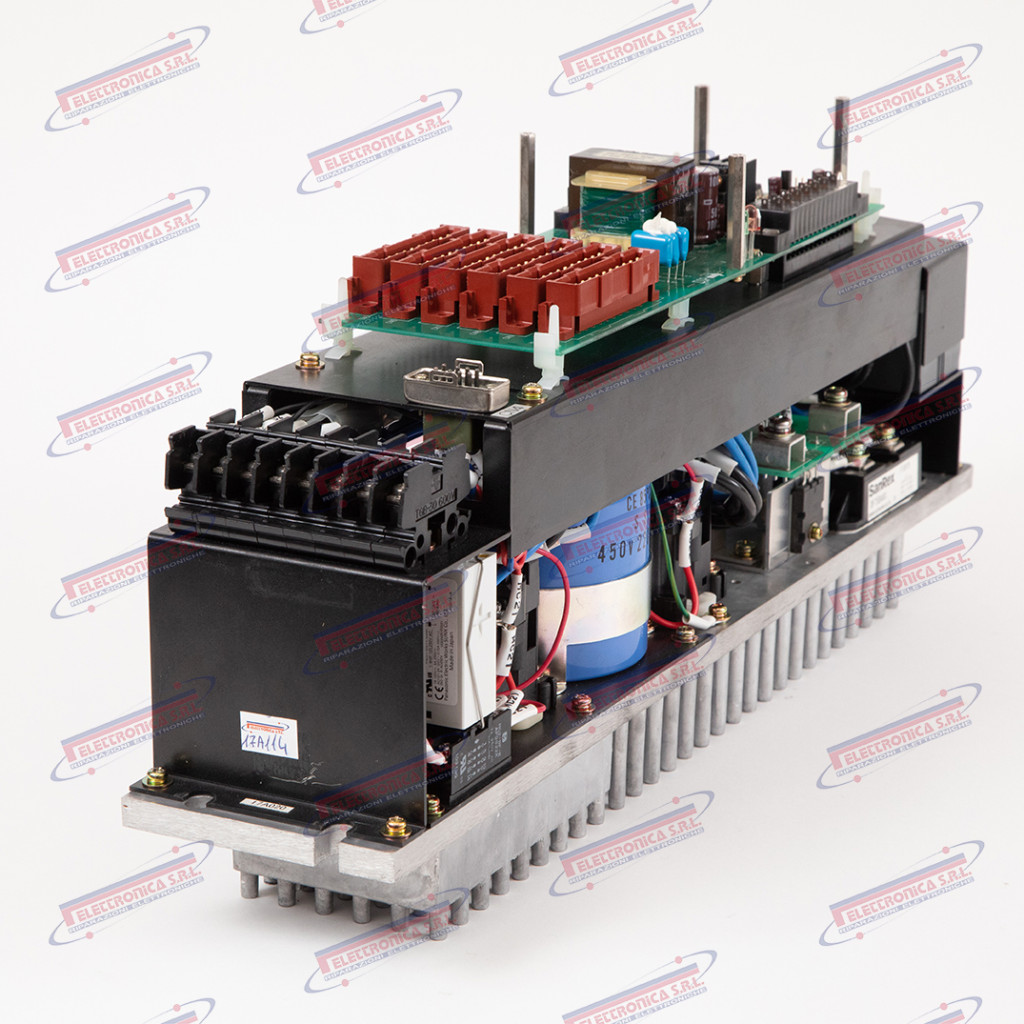
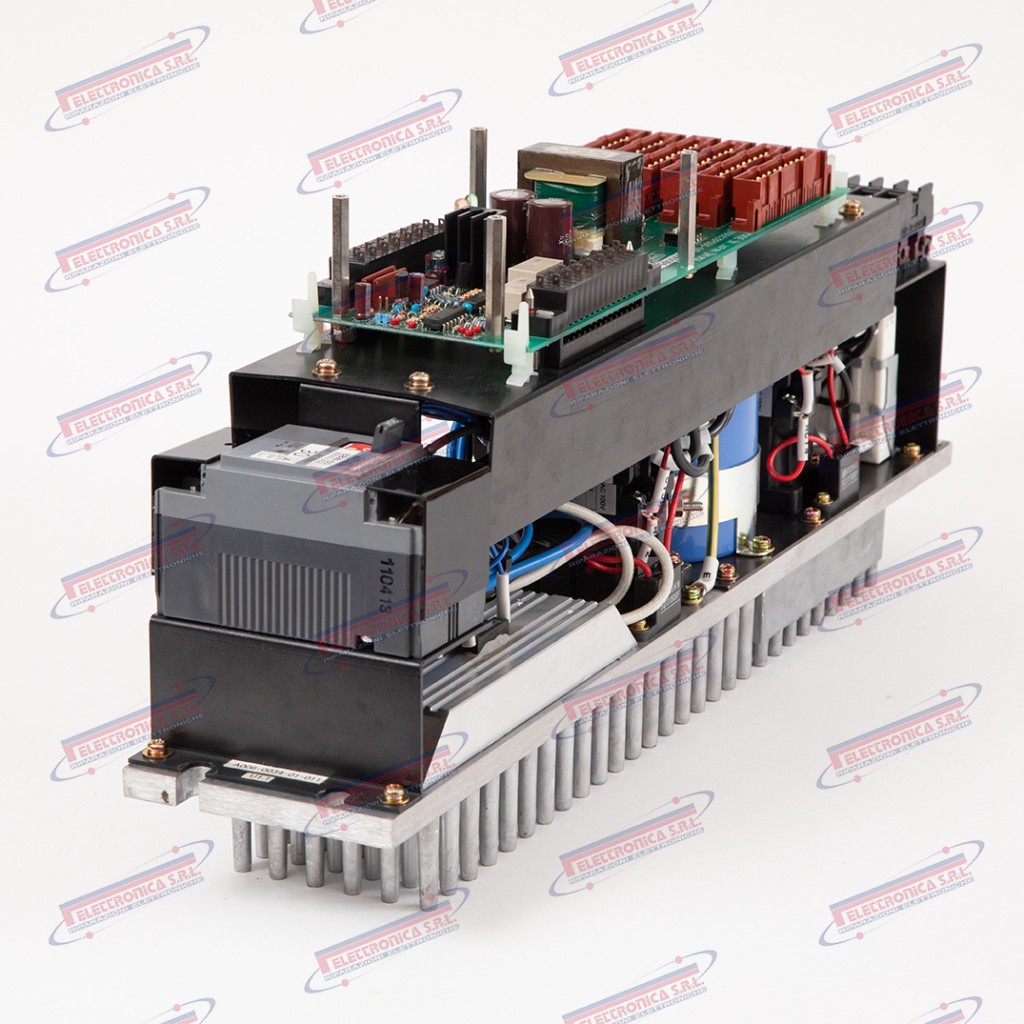
DC-S1A
Cat:
Power Supply
Brand:
OKUMA
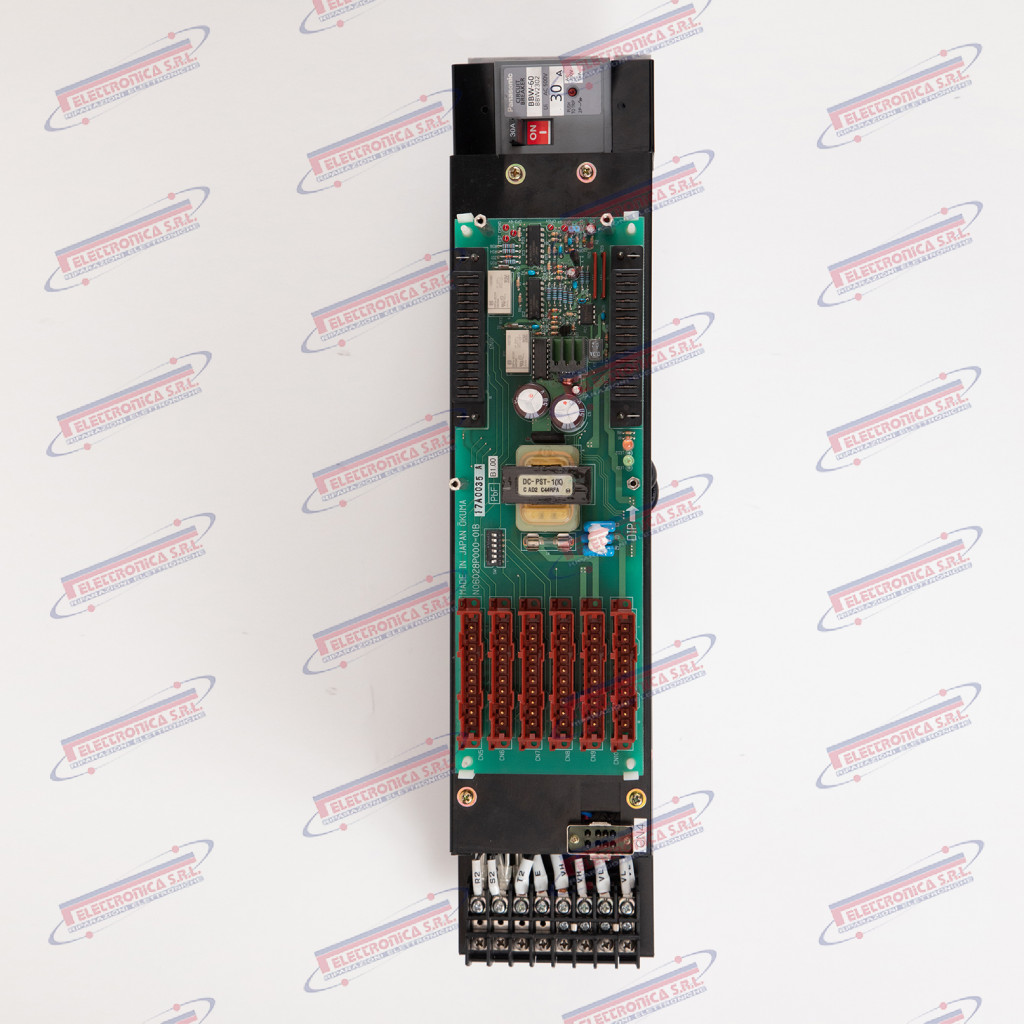
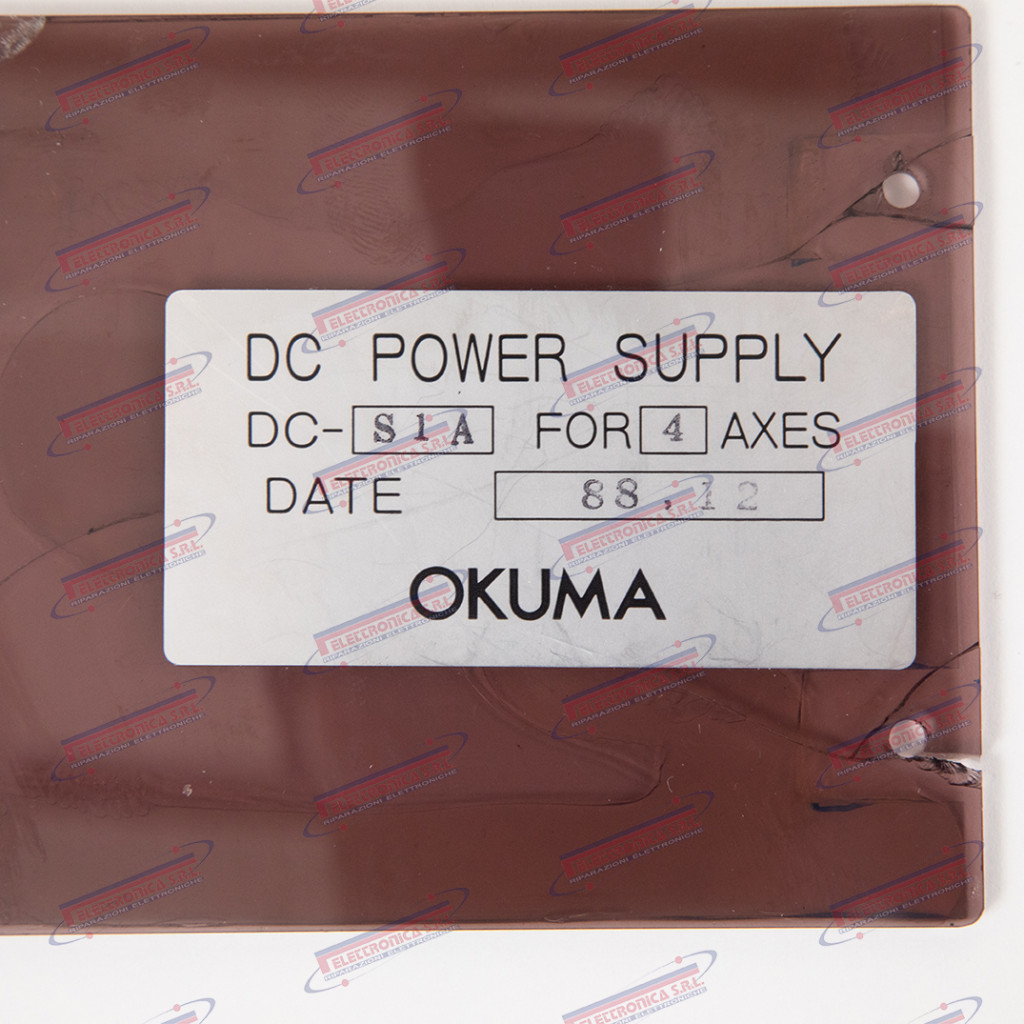
DC Power Supply Unit – OKUMA DC-S1A
The DC-S1A is a DC power supply unit (“DC Power Supply Unit”) manufactured by OKUMA, designed to supply regulated DC voltages to the electronic boards of OSP (Open System Platform) CNC control systems. The unit converts the AC mains supply into multiple stabilised DC rails required for the operation of CNC logic circuits, axis drives and interface peripherals. Documented on OKUMA machining centres and lathes fitted with OSP controllers of earlier generations; constructive variants may exist depending on the revision of the control system.
The DC power supply is the core of the CNC electrical infrastructure: without stable, filtered DC voltages no control board can operate. A failure of this unit causes the immediate shutdown of the entire control logic, halting the machine and making any machining cycle impossible. The quality of the output voltages directly affects the reliability of the whole system: even minor fluctuations or drops can corrupt parameters, damage downstream boards or generate intermittent alarms that are difficult to diagnose.
OKUMA Corporation (??????) is a Japanese CNC machine tool manufacturer founded in 1898 in Oguchi, Aichi Prefecture. It is one of the very few manufacturers in the world that designs and builds both its machine tools and its own CNC controllers (OSP – Open System Platform) entirely in-house, ensuring full hardware and software integration. Components of the DCS family belong to earlier controller generations that are now legacy / discontinued: available exclusively as used, surplus or through specialist repair.
Main Technical Specifications
| Type | DC power supply unit (DC Power Supply Unit) |
| Part number | DC-S1A (DCS1A) |
| Brand | OKUMA |
| Known application | OKUMA CNC machining centres and lathes with OSP controller (earlier generations) |
| Function | Generation and distribution of regulated DC voltages for CNC control boards, drives and peripherals |
| Input voltage | ~200–240 V AC, 50/60 Hz |
| Output voltages | ±5 V, ±12 V, ±15 V, +24 V DC |
| Protections | Overcurrent, overvoltage, short-circuit on each rail (typical) |
| Interfaces / connectors | Dedicated multi-pin connectors for OSP backplane and boards |
| Weight | ~1.5–4 kg |
| Dimensions | ~150–350 mm |
| Production status | Legacy / discontinued — used/surplus/repair only |
SKU:
DCPS-2
Cat:
Power Supply
Brand:
OKUMA
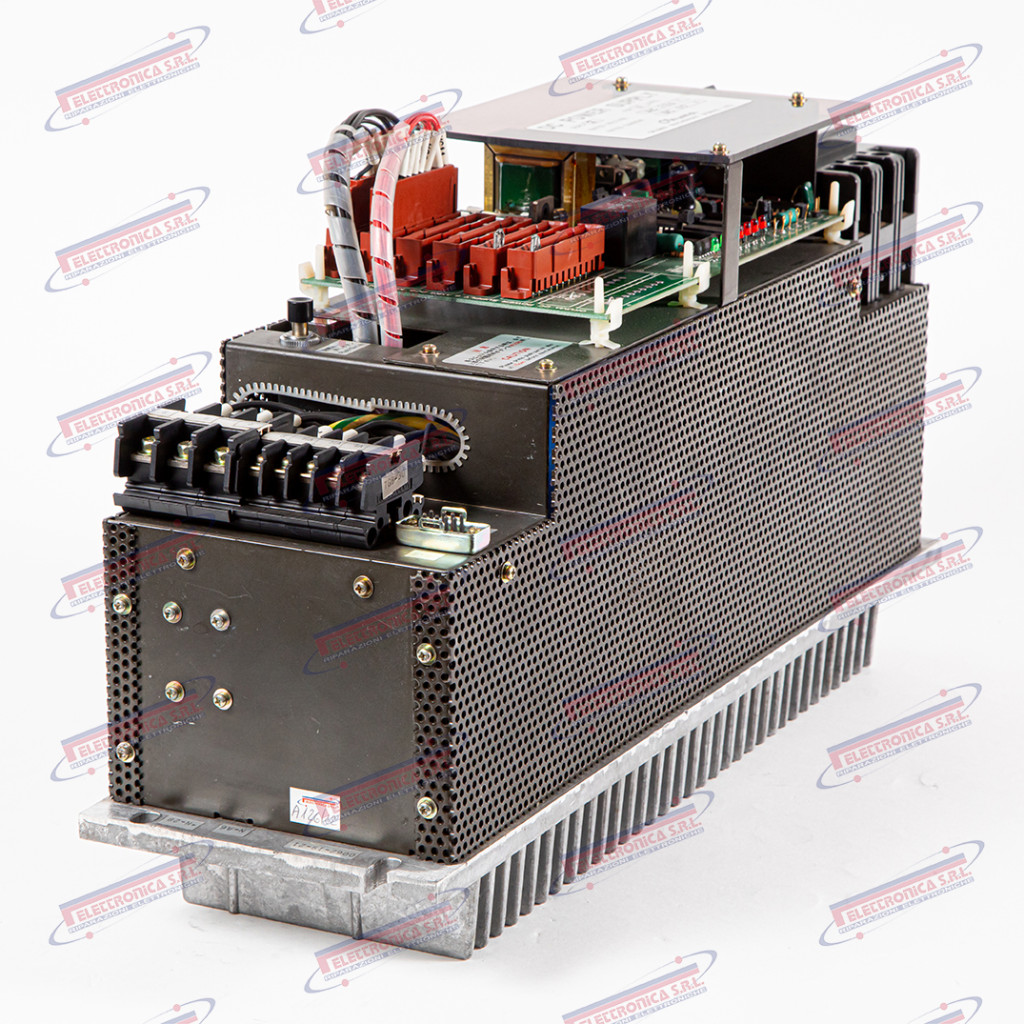
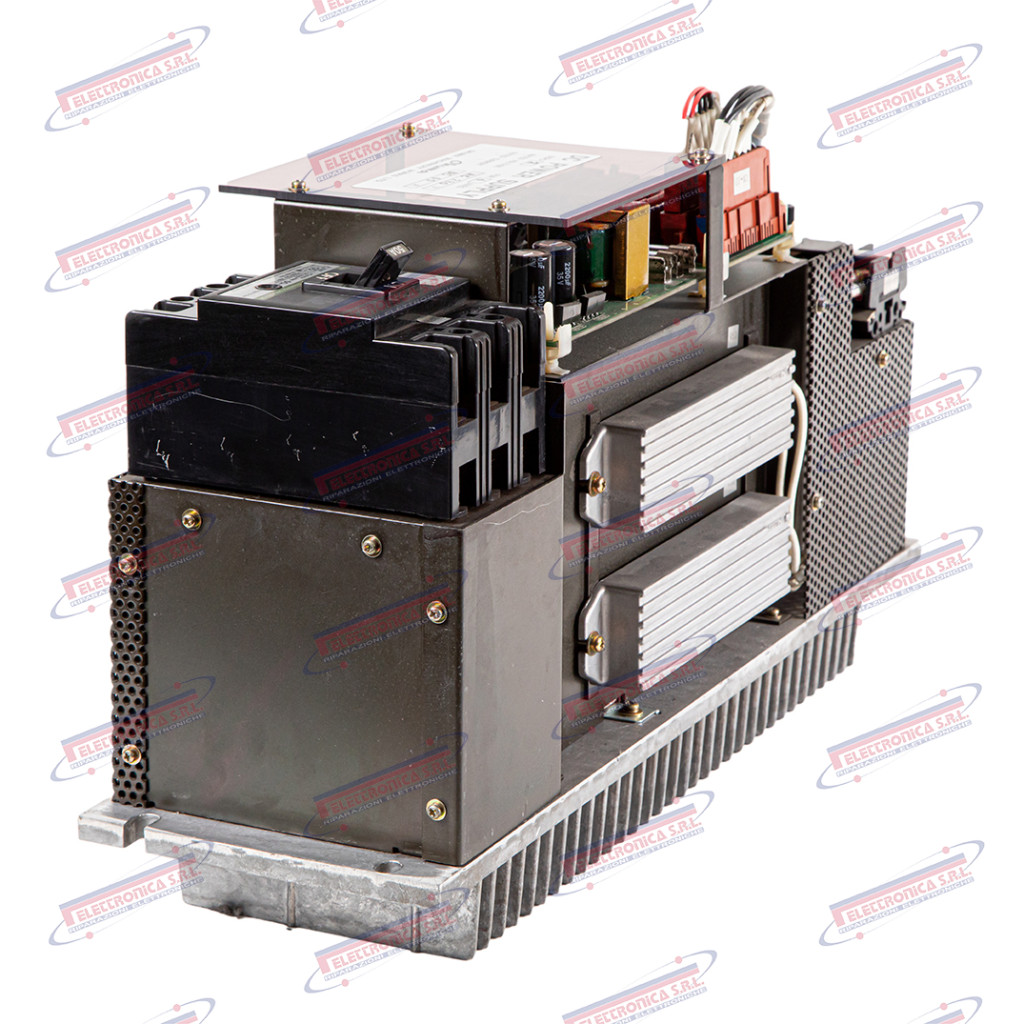
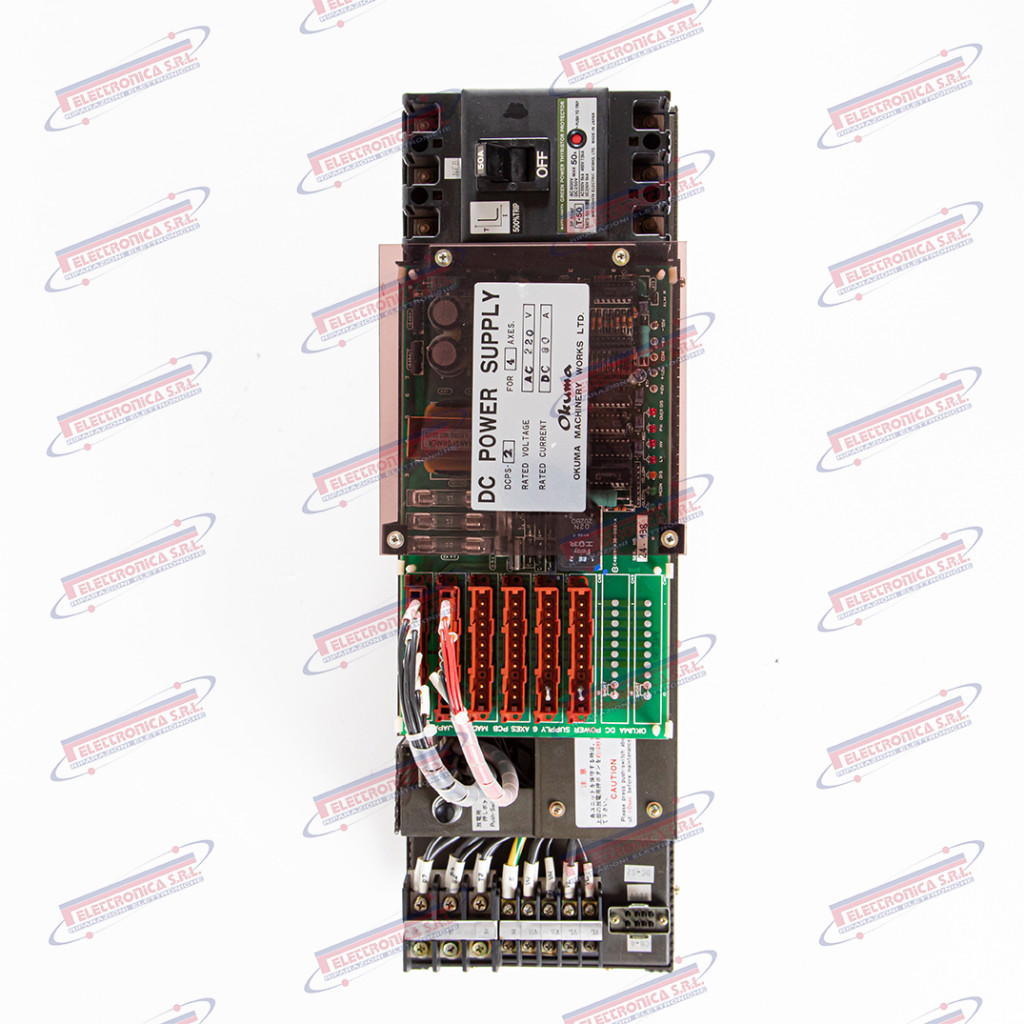
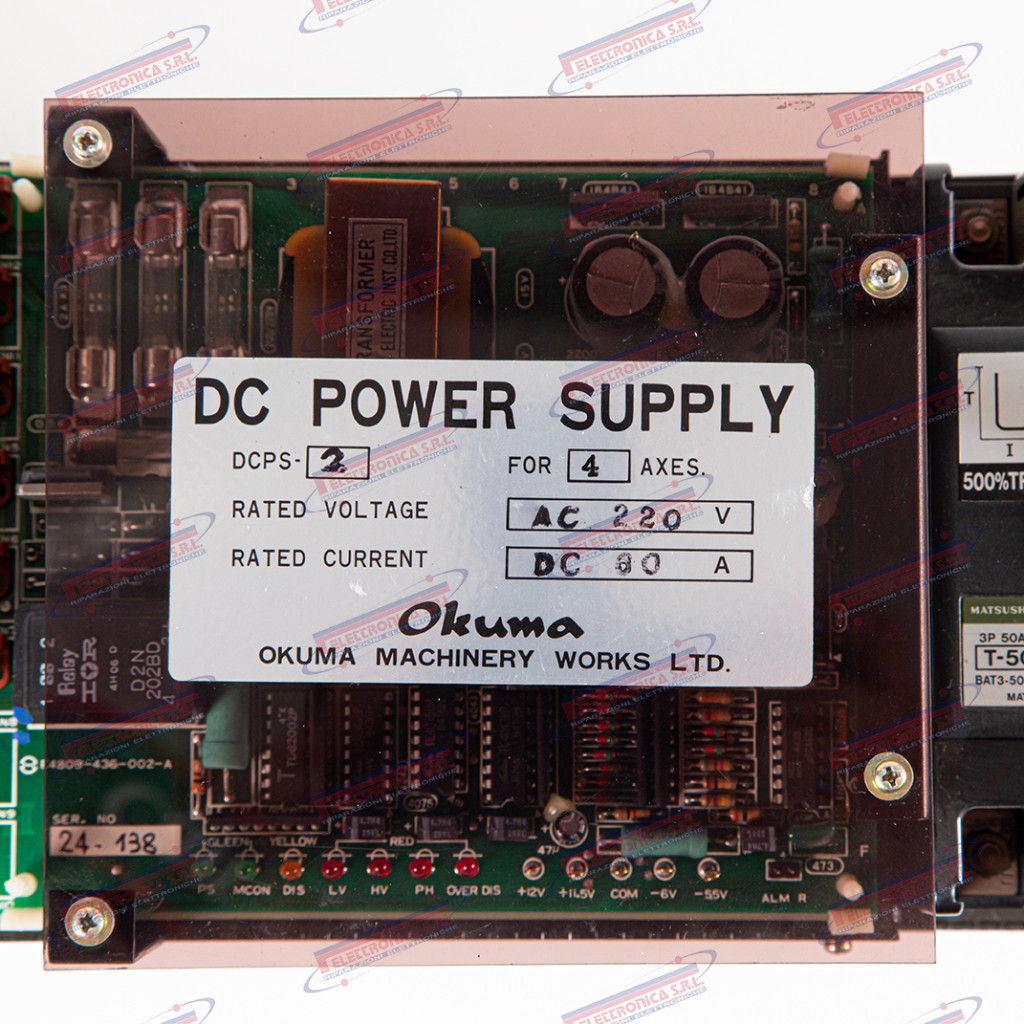
DC Power Supply for CNC Control – OKUMA DCPS-2
The DCPS-2 is a DC power supply module (“DC Power Supply”) manufactured by OKUMA, the Japanese CNC machine tool builder. The module is documented as a component of OKUMA’s OSP series (Open System Platform) CNC controls, where it supplies the regulated DC voltages required by the control system’s electronic boards: CPU boards, I/O modules, communication interfaces, and drive logic stages. The alternative part number is listed exclusively in the specifications table.
The DCPS-2 power supply is responsible for converting and regulating the supply voltages for all the electronic components of the CNC control. A failure of this module typically results in a complete machine shutdown, with the control unable to start and widespread alarm conditions across all axes; it is therefore a critical component for the operational availability of the machine tool.
OKUMA Corporation is one of the world’s leading CNC machine tool manufacturers, headquartered in Oguchi, Aichi (Japan), founded in 1898. It is renowned for developing entirely in-house its OSP (Open System Platform) controls, which equip its lathes, vertical and horizontal machining centres, and grinding machines. Components of the DCPS series belong to older control generations and are to be considered legacy / discontinued: availability is limited to the used, surplus, and specialist repair market.
Main Technical Specifications
| Type | DC power supply module for CNC control (DC Power Supply) |
| Part number | DCPS-2 (DCPS2) |
| Brand | OKUMA |
| Known application | OKUMA OSP series CNC controls (lathes, vertical/horizontal machining centres, grinding machines) |
| Function | Regulated DC supply for CPU boards, I/O modules and CNC control drive logic |
| Input voltage | 100–240 V AC, 50/60 Hz |
| Output voltages | +5 V, ±12 V, +24 V DC |
| Total power | ~100–250 W |
| Interfaces / connectors | Edge connectors / terminal strip; DIN rail or panel mounting |
| Protections | Overcurrent, overvoltage and short-circuit protection (typical for industrial power supplies) |
| Weight | ~1.0–3.0 kg |
| Dimensions | ~200–350 mm |
| Production status | Legacy / discontinued — used/surplus/repair only |
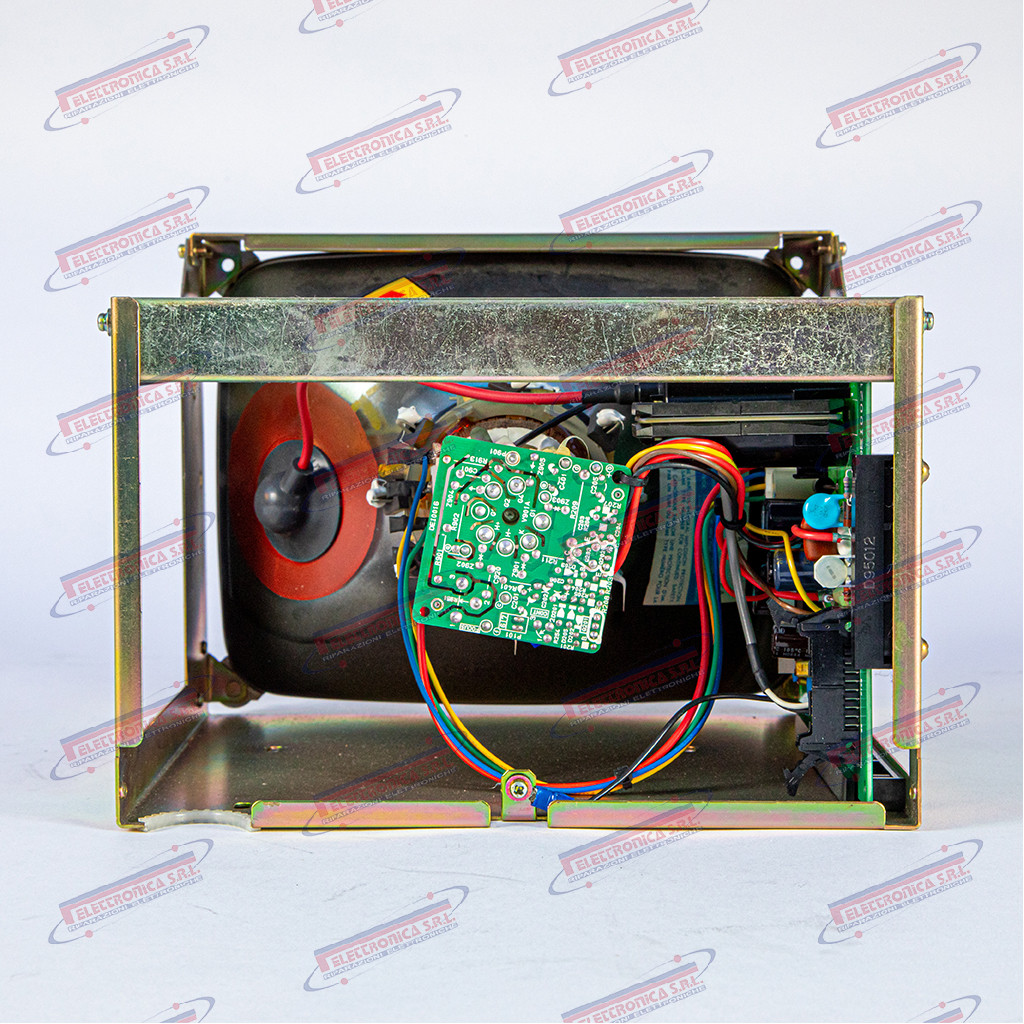
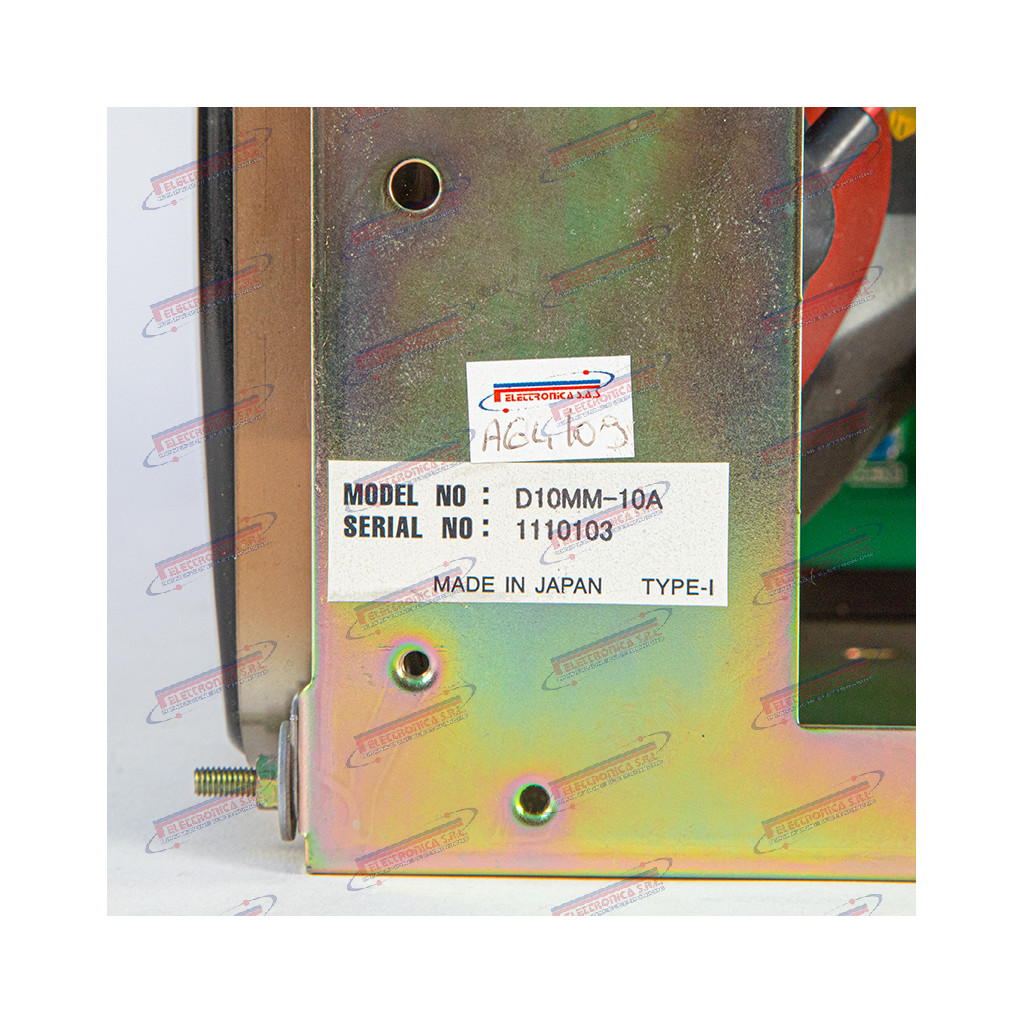
SKU:
D10MM-10A
Cat:
Monitor
Brand:
OKUMA
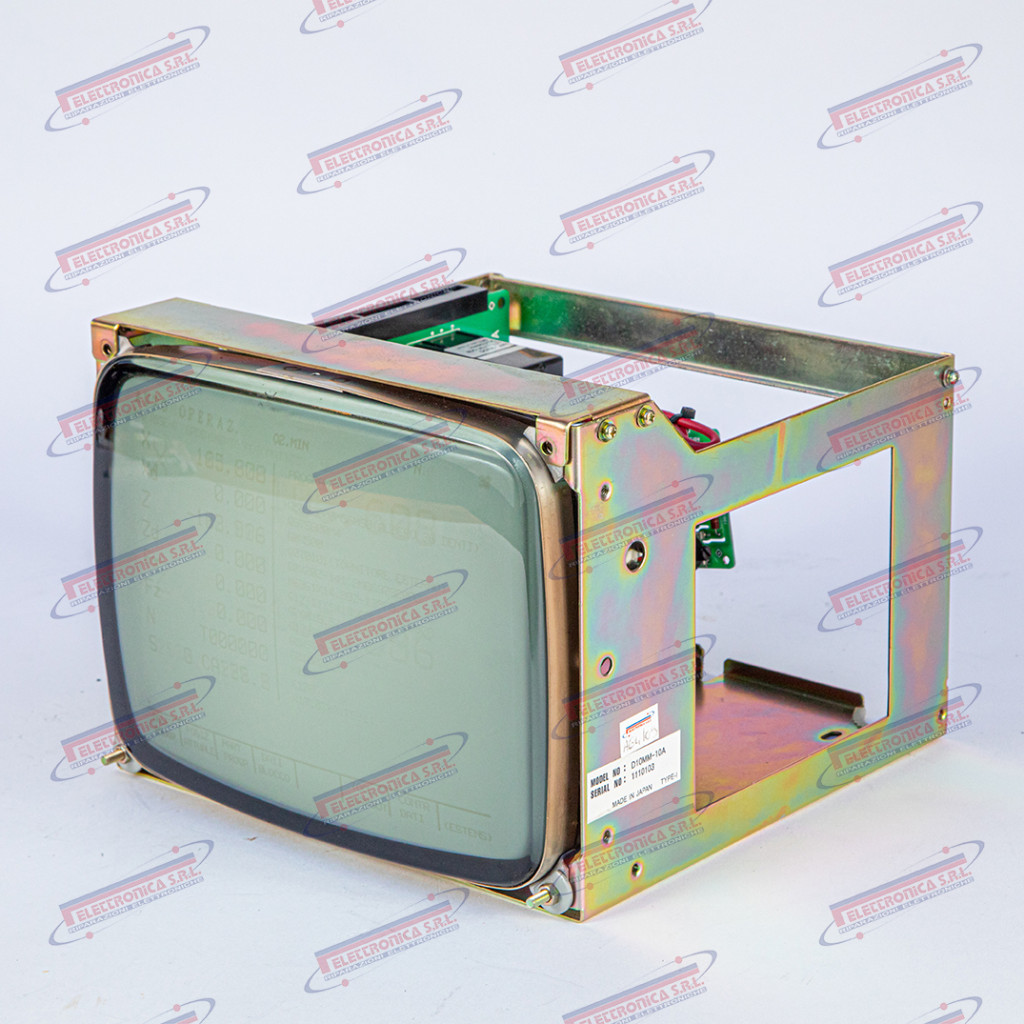
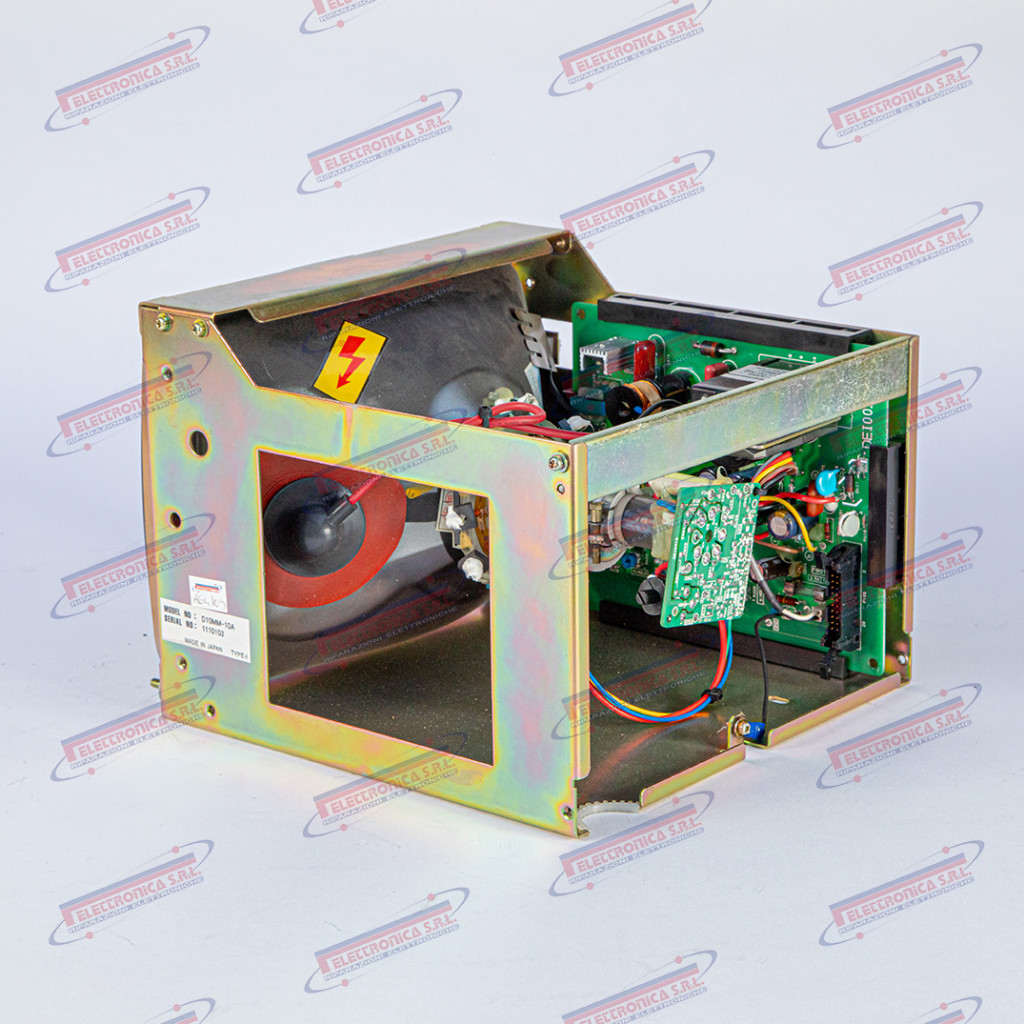
10″ Monochrome Monitor – OKUMA D10MM-10A
The D10MM-10A is a 10″ industrial monochrome CRT display unit (“10-inch Monochrome CRT Display Unit”) manufactured by OKUMA, documented as the operator display for the OSP 500 (Open System Platform 500) CNC control. The unit renders the operator interface, part programs, alarm messages and machine axis coordinates on a monochrome phosphor cathode-ray tube. It is fitted on OKUMA CNC lathes and machining centres equipped with the OSP 500 control; hardware revisions may differ in connector type or internal display controller firmware version.
The monitor is the primary visual interface between the operator and the OSP 500 CNC control: it displays part programs, machining parameters, alarms and real-time axis positions. A failed display makes machine supervision and command entry impossible, effectively halting production; on controls of this generation, replacement with an identical or compatible unit is typically the only practical solution, as proprietary-format industrial CRTs do not accept generic direct substitutes.
OKUMA Corporation is a Japanese CNC machine tool builder founded in 1898, headquartered in Oguchi, Aichi. A pioneer in the vertical integration of its own OSP (Open System Platform) controls, OKUMA remains fully independent and active with the current OSP-P300 generation. The OSP 500 control and all associated peripheral components — including this monitor — are legacy / discontinued: available only as used/surplus (NOS) or through specialist repair services.
Main Technical Specifications
| Type | 10″ industrial monochrome CRT display unit (Monochrome CRT Display Unit) |
| Part number | D10MM-10A (D10MM10A) |
| Brand | OKUMA |
| Known application | OKUMA OSP 500 CNC control (Open System Platform 500) – OKUMA CNC lathes and machining centres |
| Function | Operator interface display: part programs, CNC parameters, alarms and real-time axis coordinates |
| Display technology | Monochrome CRT, green or amber phosphor (typical for the production period) |
| Screen diagonal | 10″ (25.4 cm) |
| Resolution | ~640 × 480 pixels |
| Video signal | Monochrome composite or TTL video |
| Power supply | ~100–240 V AC, 50–60 Hz |
| Interfaces | OKUMA proprietary connector; possible BNC or D-Sub 9-pin |
| Weight | ~5–10 kg |
| Dimensions | ~300–420 mm per side |
| Production status | Legacy / discontinued — used/surplus/repair only |
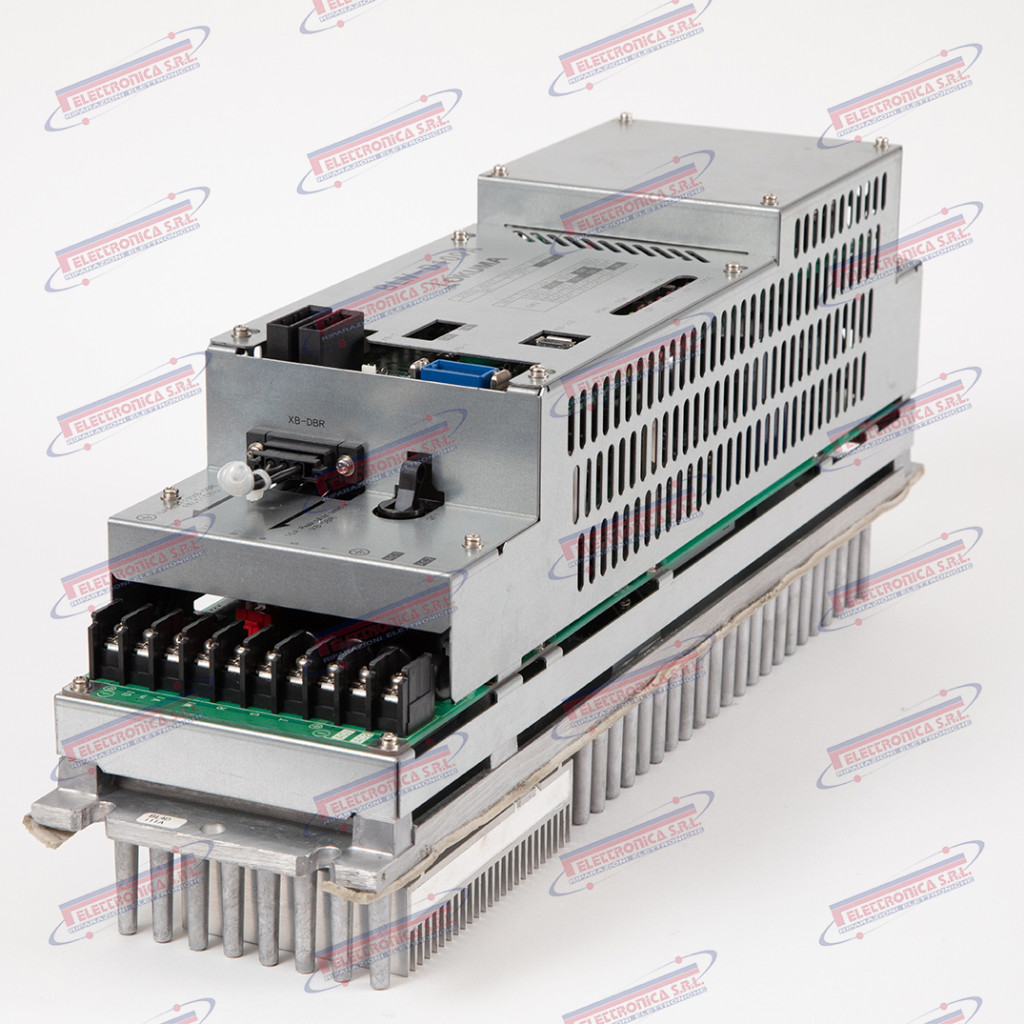
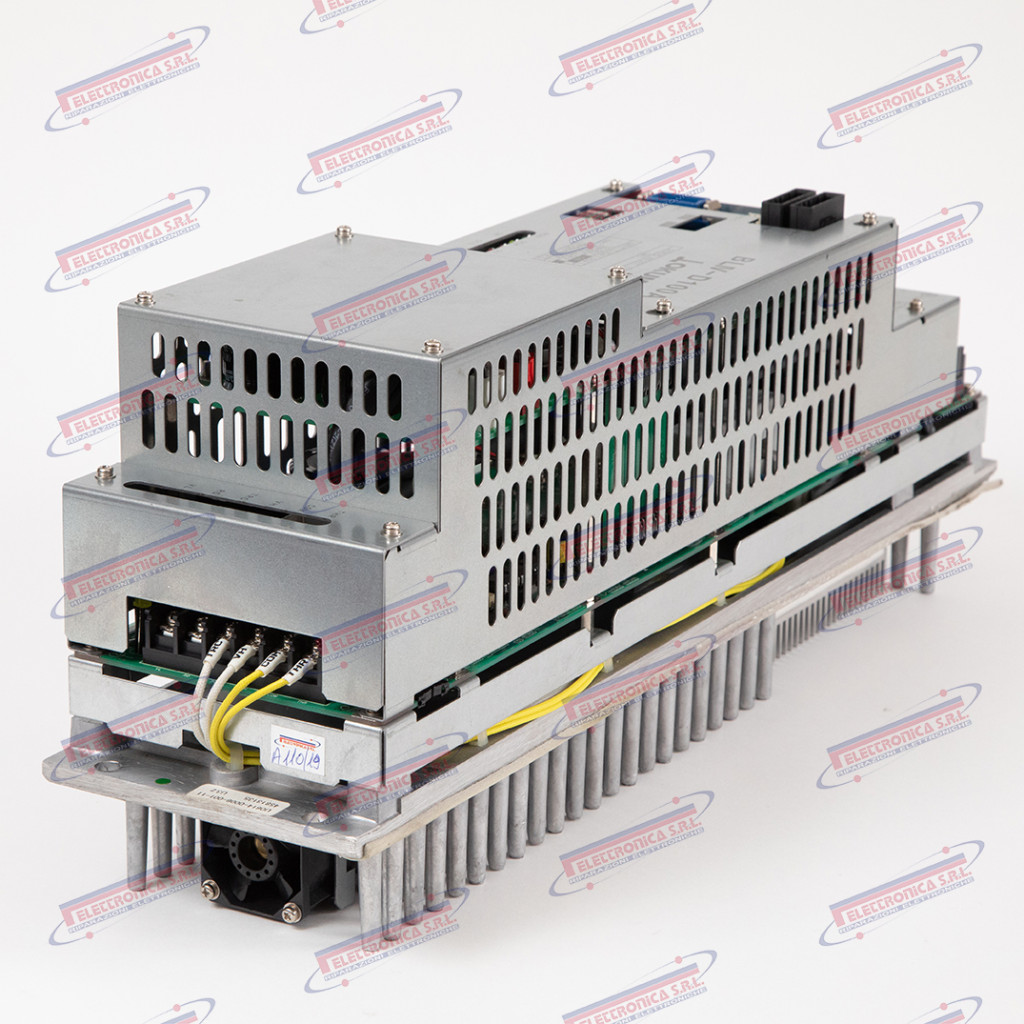
SKU:
BLIV-D100A
Cat:
Servo Drive
Brand:
OKUMA
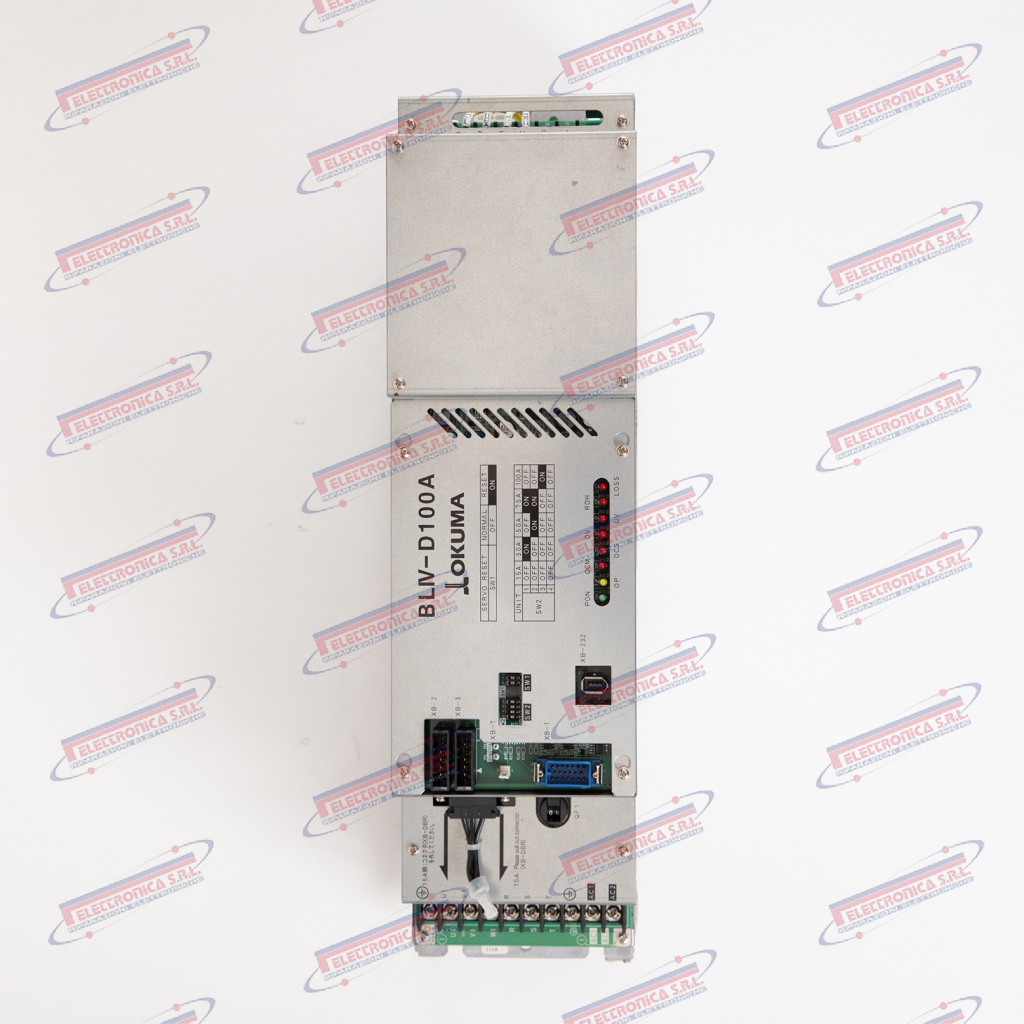
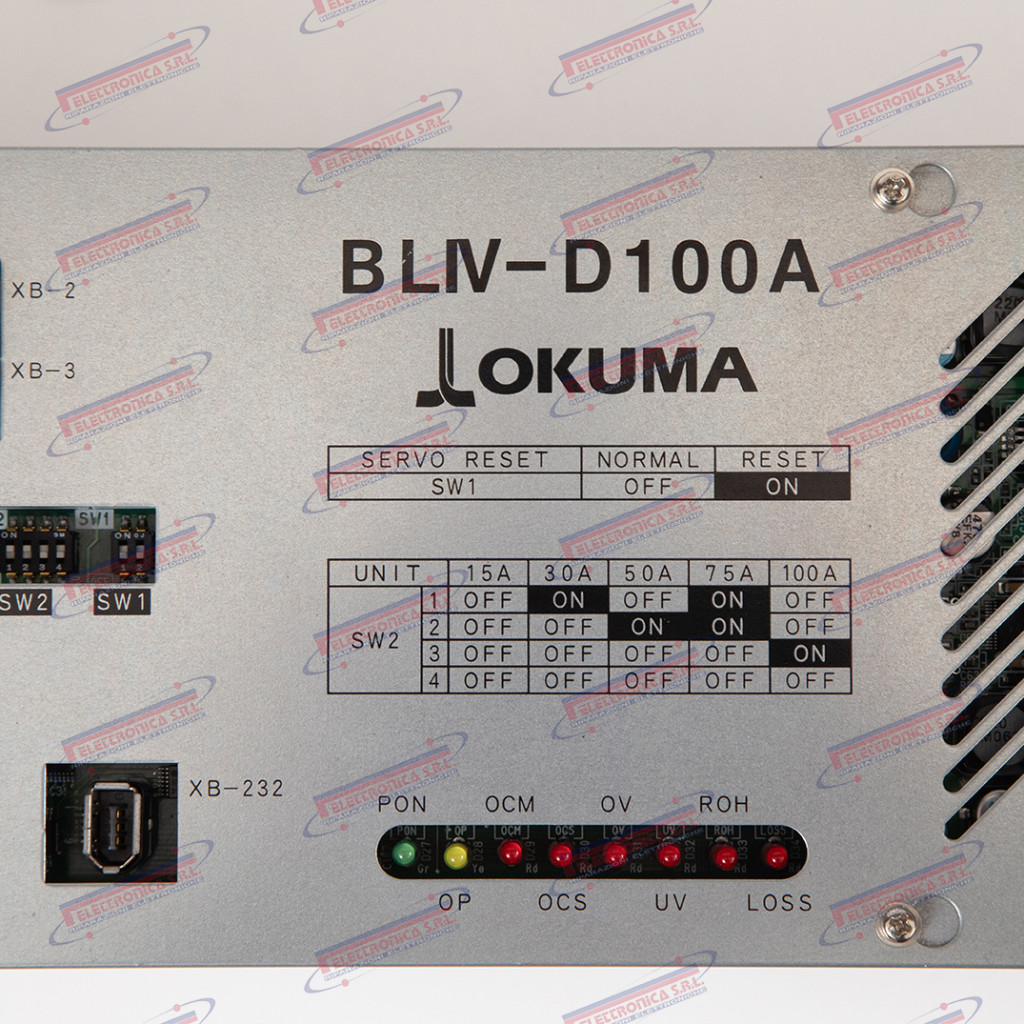
BL-IV Brushless Servo Drive – OKUMA BLIV-D100A
The BLIV-D100A is a brushless servo drive (“BL-IV Brushless Servo Drive”) manufactured by OKUMA Corporation, belonging to the BL-IV (Brushless Series IV) drive family. It is documented as a component of OKUMA CNC systems — machining centers, lathes and grinding machines — equipped with the proprietary OSP control system. The D100A suffix in the part number indicates a rated output current of 100 A, positioning this module as a high-torque drive for the main spindle or a primary axis. It manages the speed, current and torque regulation loops for OKUMA brushless servo motors and interfaces with the power section of the machine’s electrical cabinet.
The BL-IV drive is the power electronic unit that converts the digital torque and speed references from the OSP CNC controller into controlled currents for the brushless servo motor, maintaining position, speed and torque with the highest precision throughout each machining cycle. A failure in this drive results in complete loss of control over the associated axis or spindle: the machine halts on alarm and cannot resume production until the unit is repaired or replaced.
OKUMA Corporation, founded in 1898 in Nagoya, Japan, is one of the world’s leading manufacturers of CNC machine tools (lathes, machining centers, grinding machines) and is the only manufacturer in the world that designs and produces in-house the complete technology chain: machine, CNC control (OSP), drives and motors. Products in the BL-IV series are legacy / discontinued: available only as used, NOS surplus, or through specialist repair.
Main Technical Specifications
| Type | BL-IV brushless servo drive (BL-IV Brushless Servo Drive) |
| Part number | BLIV-D100A (BLIVD100A) |
| Brand | OKUMA Corporation |
| Known application | OKUMA CNC machining centers, lathes and grinding machines with OSP control |
| Function | Speed, current and torque regulation for brushless servo motor (main axis or spindle) |
| Rated output current | ~100 A (from D100A designation) |
| Supply voltage | DC bus ~300–600 V |
| Control signal | OSP proprietary digital serial interface / analogue reference |
| Feedback | Encoder / resolver from OKUMA brushless servo motor |
| Logic supply voltages | ±15 V and +5 V DC |
| Interfaces / connectors | OKUMA proprietary multi-pin connectors; power terminal block |
| Weight | ~3–8 kg |
| Dimensions | ~200–400 mm |
| Production status | Legacy / discontinued — used/NOS surplus/repair only |
SKU:
BLII-D75/50A
Cat:
Servo Drive
Brand:
OKUMA
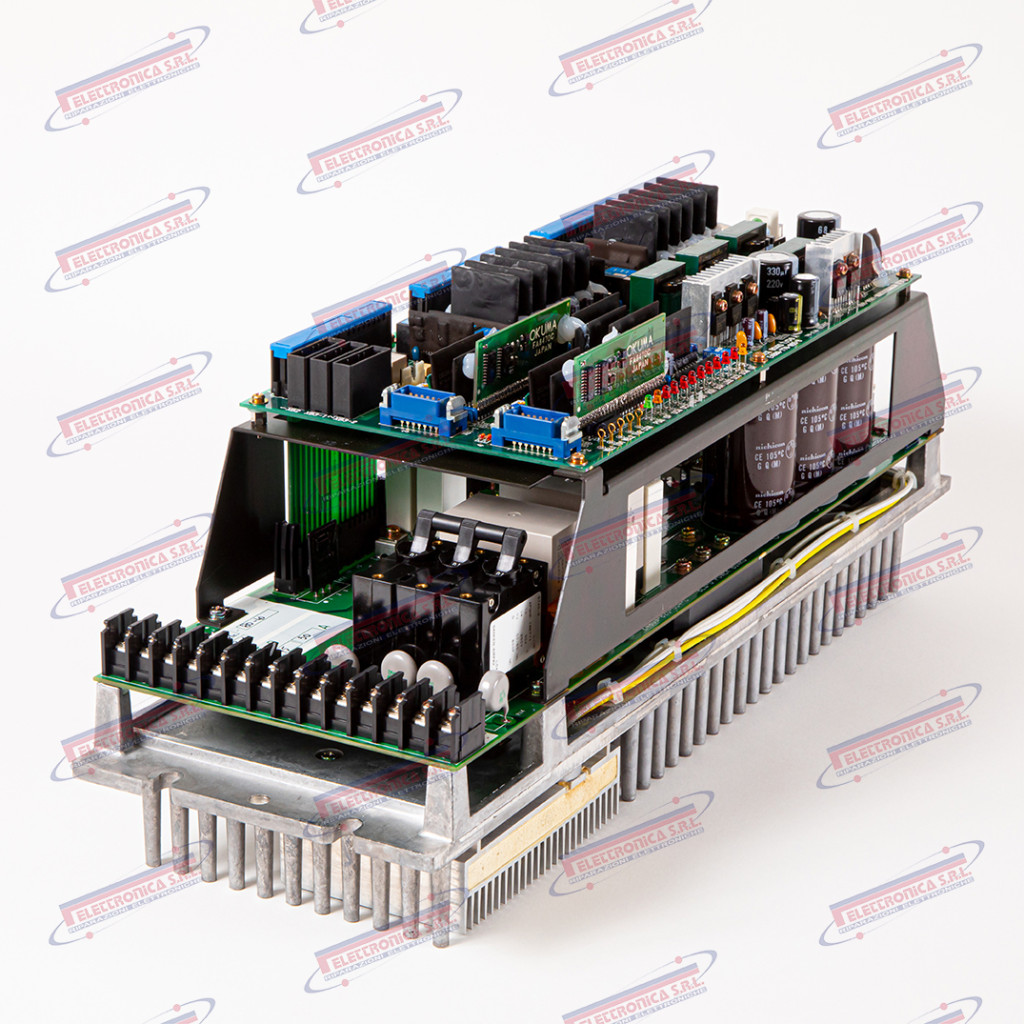
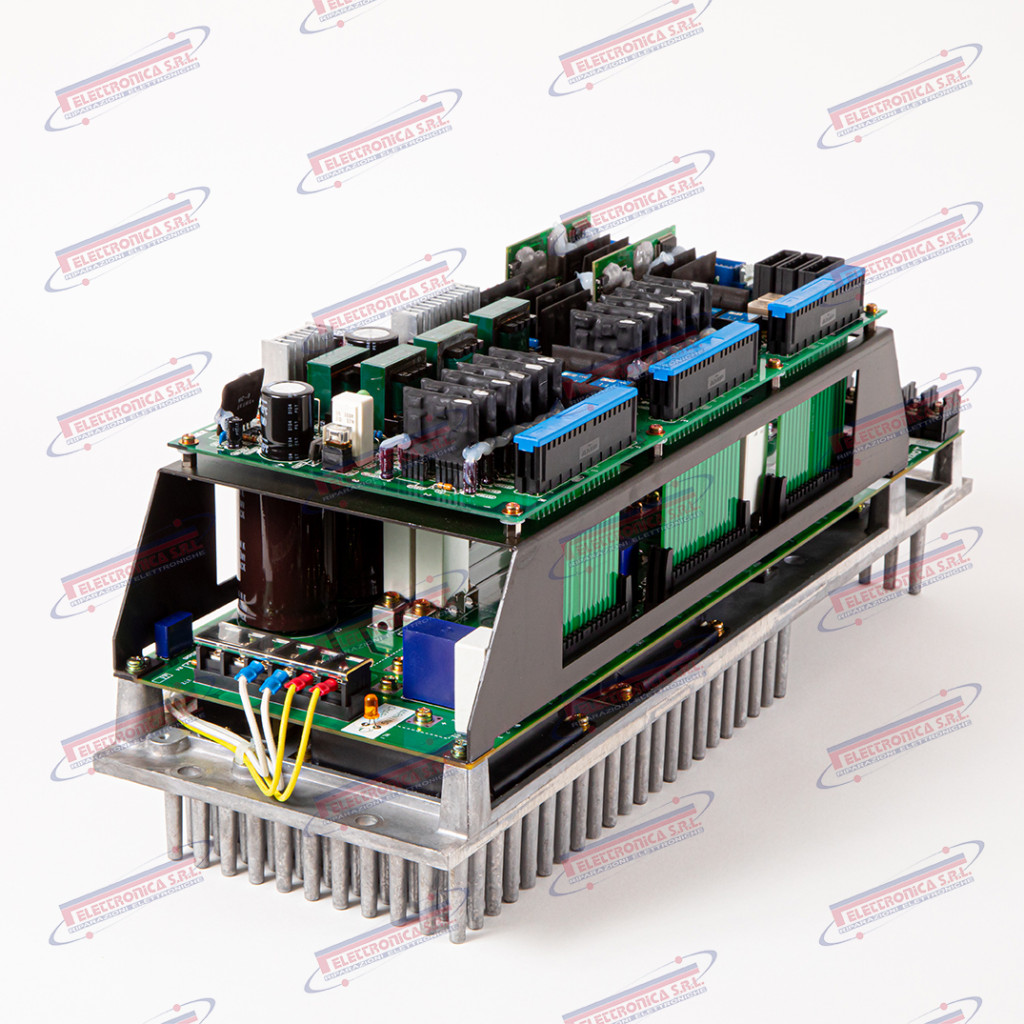
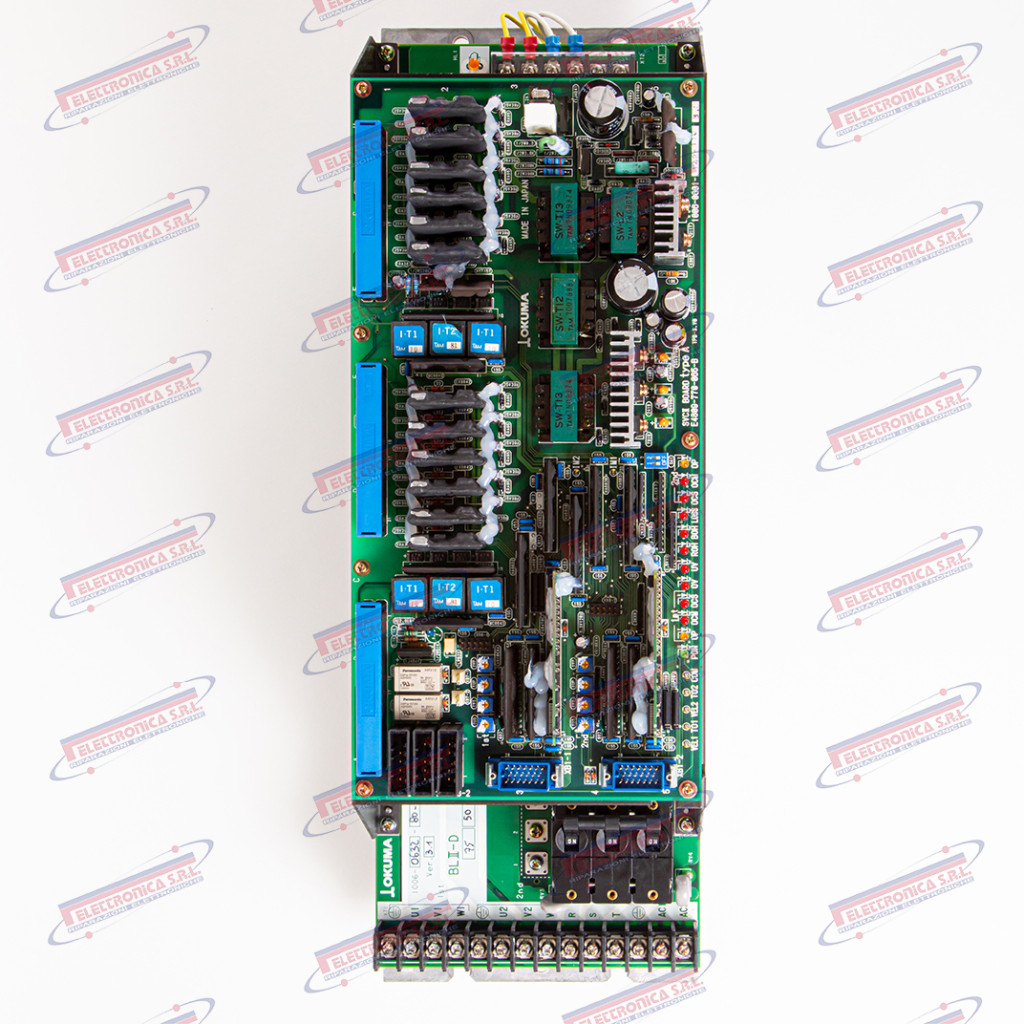
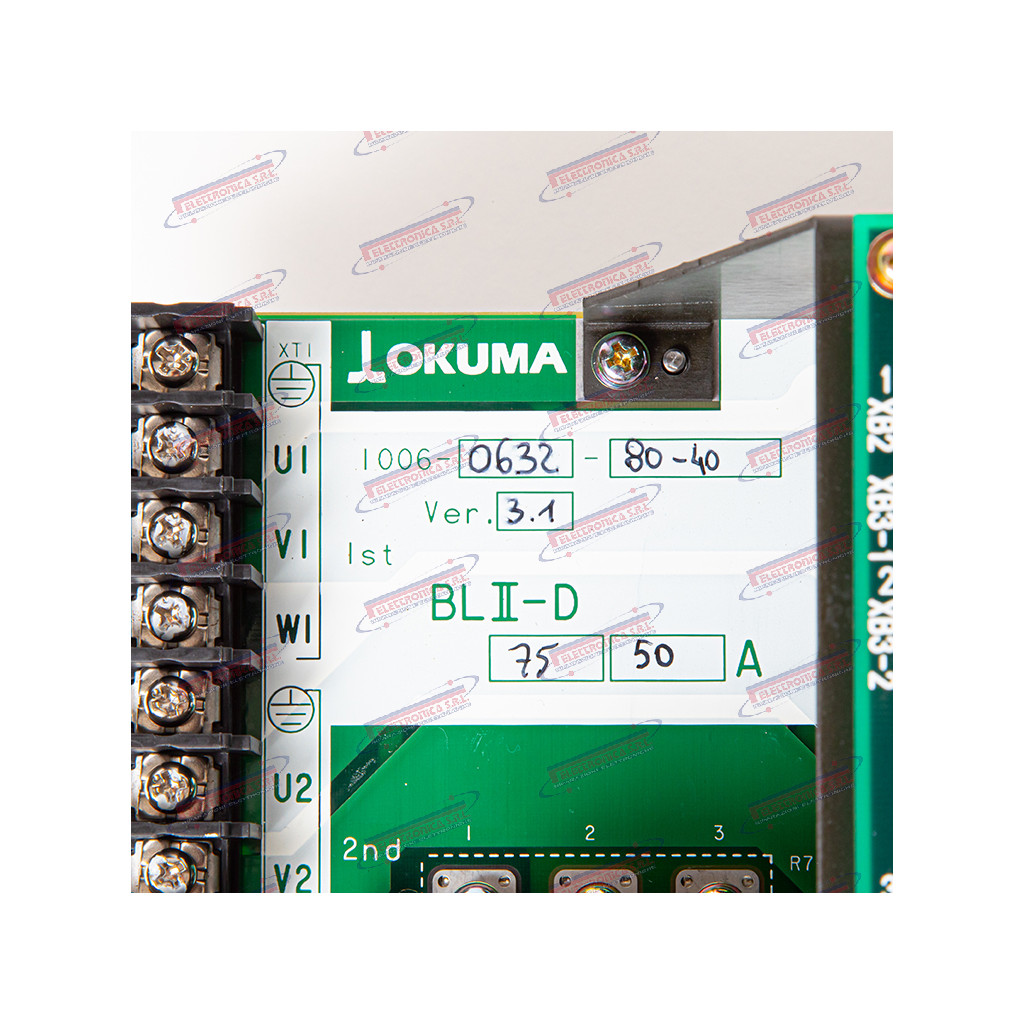
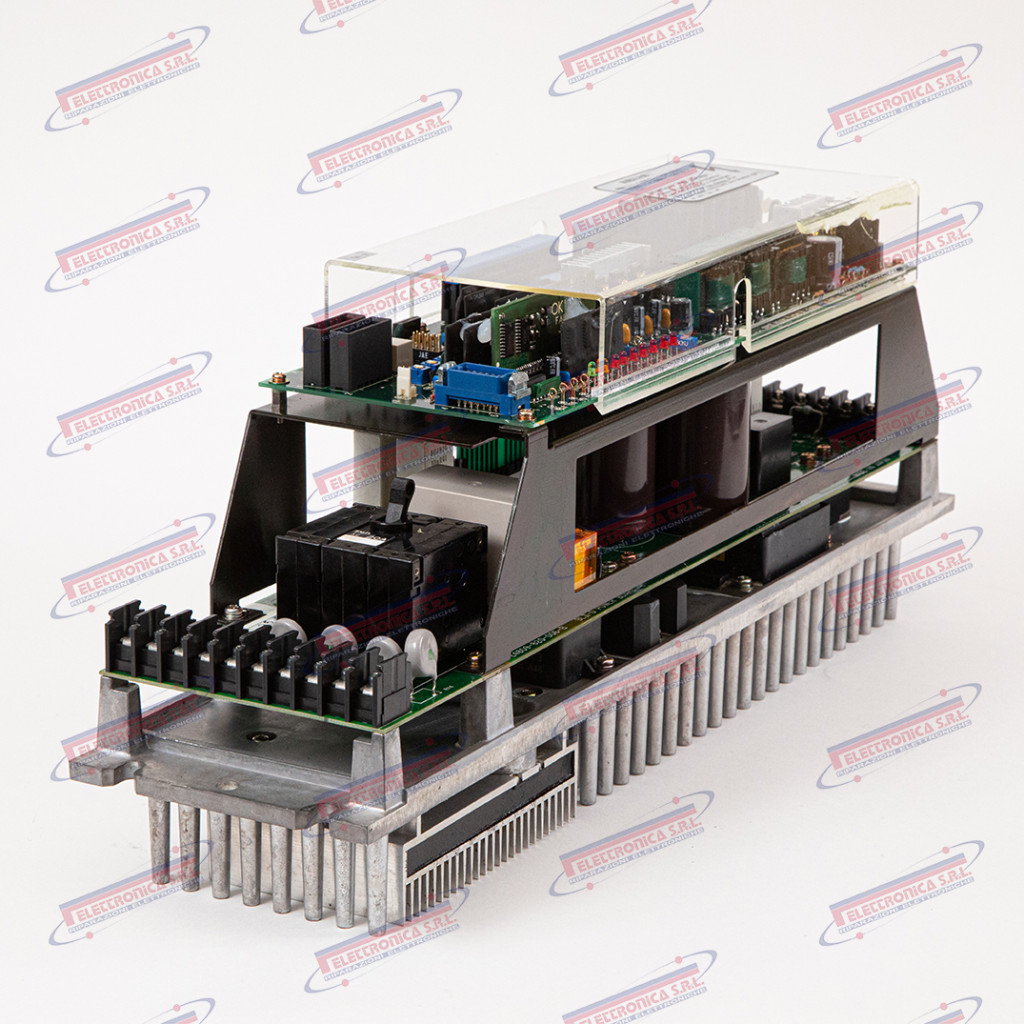
Brushless Servo Drive – OKUMA BLII-D75/50A
The BLII-D75/50A is a brushless servo drive amplifier (“Brushless Servo Drive Amplifier”) belonging to the BLII-D series, manufactured by OKUMA, a Japanese builder of CNC machine tools. The unit is designed to operate within the proprietary OKUMA OSP (Open System Platform) CNC system, controlling brushless servo motors on linear axes or spindles in OKUMA machining centres and CNC lathes. The part designation identifies the nominal current class of the amplifier (50 A continuous output); the module is installed on the internal DC bus inside the machine cabinet and manages the current and speed loops of the associated motor.
The servo drive is the element that converts the motion references issued by the CNC into controlled current for the brushless servo motor, ensuring precise positioning and stable cutting force throughout the machining cycle. A failure of this module causes total loss of control on the affected axis: the CNC detects the fault, halts the automatic cycle and triggers a drive alarm; the machine cannot resume production until the component is replaced or repaired.
OKUMA Corporation, founded in 1898 in Nagoya, Japan, is one of the world’s leading CNC machine tool builders, renowned for its full vertical integration of machine, motor, drive and proprietary OSP numerical control. The BLII-D drive series belongs to a well-established generation no longer actively marketed through original channels: availability is limited to the used/NOS surplus aftermarket and specialist repair services; this component is to be considered legacy / discontinued.
Main Technical Specifications
| Type | Brushless servo drive amplifier (Brushless Servo Drive Amplifier) |
| Part number | BLII-D75/50A (BLIID7550A) |
| Brand | OKUMA Corporation |
| Known application | OKUMA machining centres and CNC lathes with OSP (Open System Platform) control |
| Function | Current and speed control for brushless servo motor (linear axis or spindle) |
| Rated output current | 50 A (continuous) |
| DC bus voltage | ~300–560 V DC |
| Feedback | Dedicated encoder / resolver from OKUMA servo motor |
| Interfaces | Internal cabinet DC bus; dedicated encoder/resolver connectors, digital I/O for OSP system |
| Logic supply voltages | ±15 V and +5 V DC (typical) |
| Weight | ~2–5 kg |
| Dimensions | ~150×250×100 mm |
| Production status | Legacy / discontinued — used/surplus/repair only |
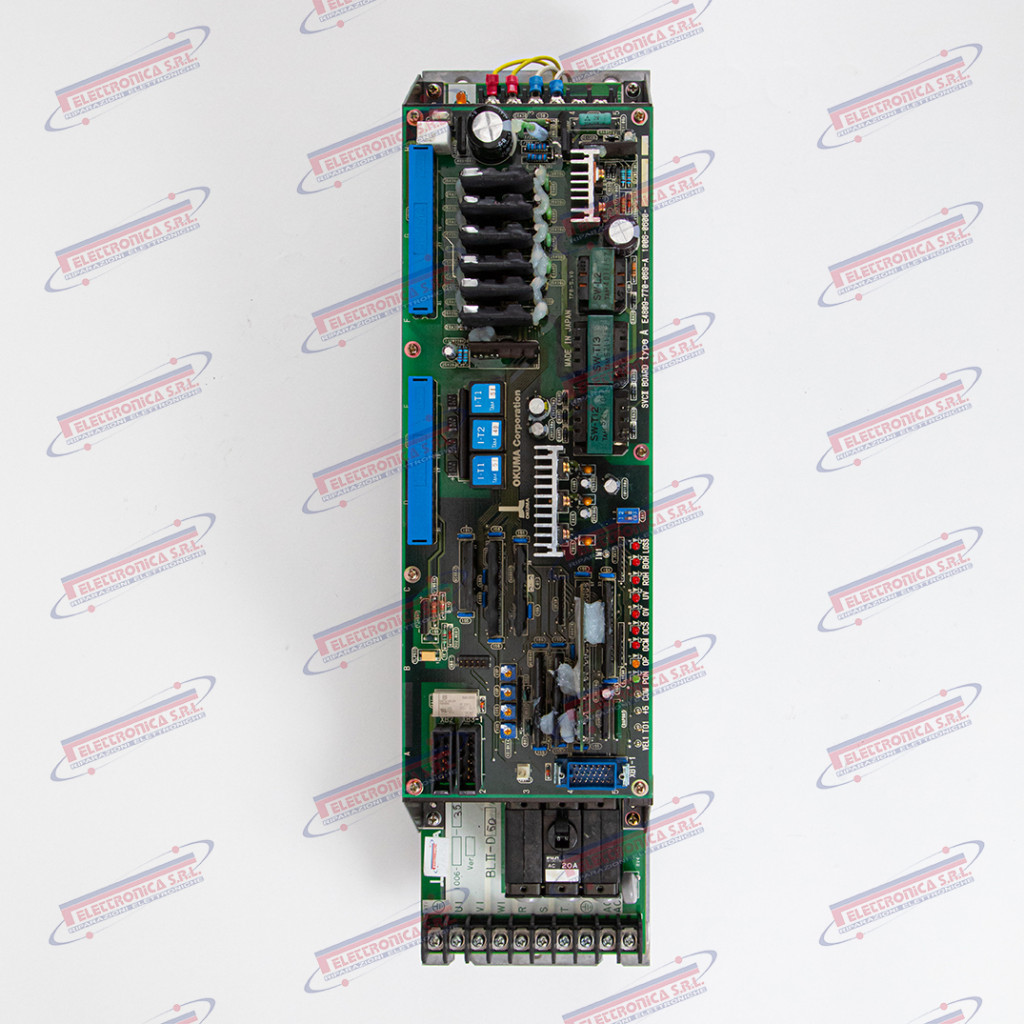
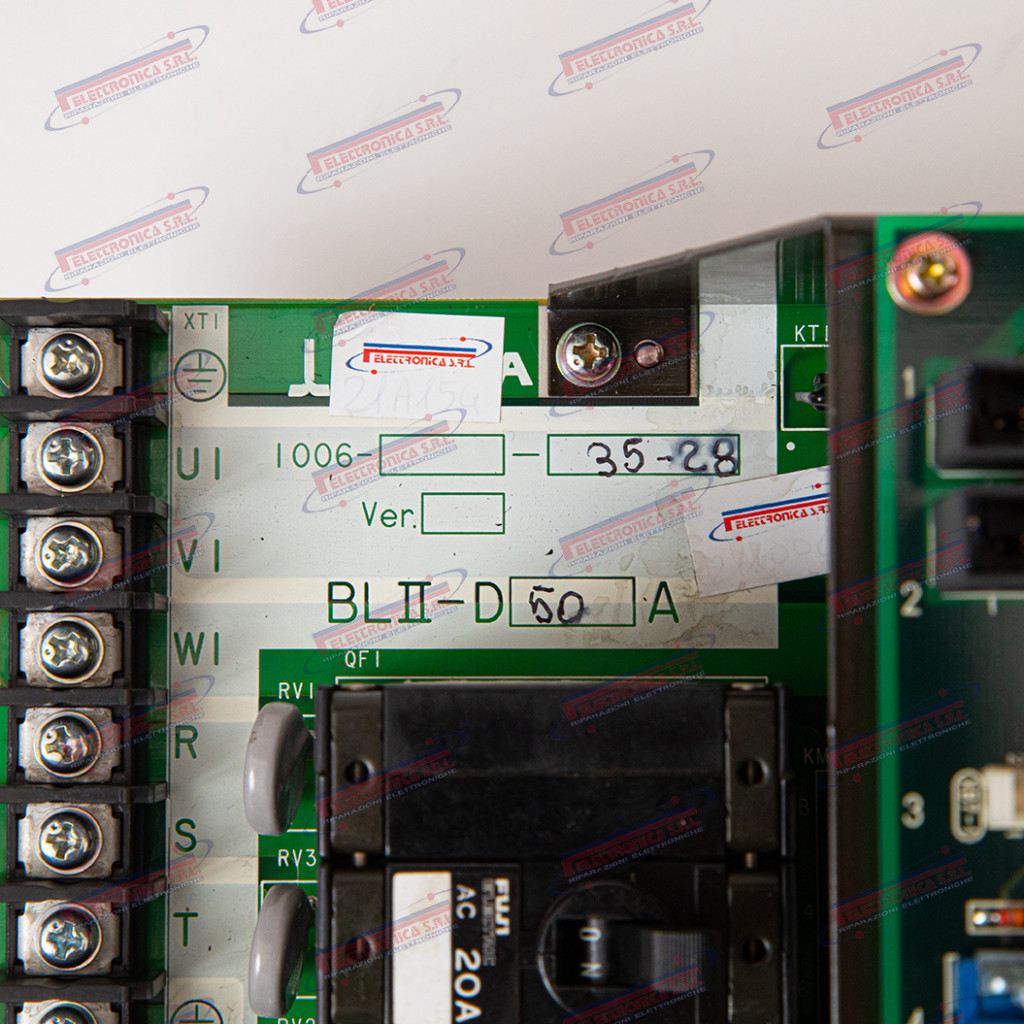
SKU:
BLII-D50A
Cat:
Servo Drive
Brand:
OKUMA
Brushless Servo Drive – OKUMA BLII-D50A
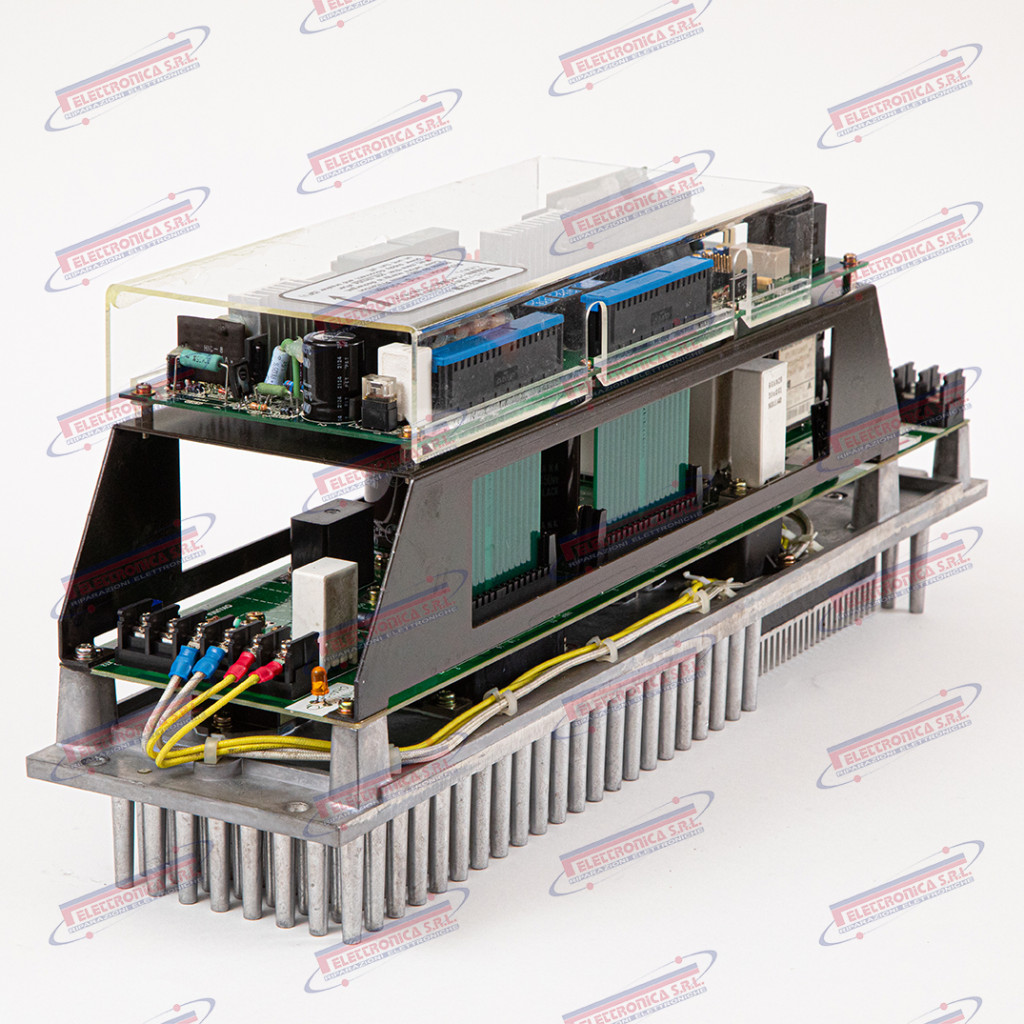
The BLII-D50A is a brushless servo drive amplifier (“Brushless Servo Drive Amplifier”) manufactured by OKUMA, part of the BL II (Brushless II) family designed for OKUMA CNC systems with OSP control. The D50A designation indicates a continuous output current class of 50 A, sized for controlling linear and/or rotary axis servo motors on OKUMA machining centres and turning centres. The unit interfaces the power stage with the CNC via OKUMA’s proprietary serial bus and acquires encoder feedback from the brushless axis motor.
The brushless servo drive is the power conversion and regulation unit that governs each machine axis motor: it receives position and speed references from the CNC, converts them into precise three-phase current for the brushless motor, and closes the position, speed, and current control loops. A drive failure renders the affected axis completely inoperable, triggers alarms that halt the entire machine, and prevents any machining until the unit is replaced or repaired.
OKUMA Corporation is one of Japan’s leading CNC machine tool manufacturers, founded in 1898 and listed on the Tokyo Stock Exchange (TSE). The company is renowned for its “One Source” philosophy: it independently designs and manufactures CNC controls (OSP series), motors, drives, and machine tools, ensuring full integration between all system components. Products in the BL II family are legacy / discontinued in the current catalogue: available mainly as used, surplus, or through specialist repair.
Main Technical Specifications
| Type | Brushless servo drive amplifier (Brushless Servo Drive Amplifier) |
| Part number | BLII-D50A (BLIID50A) |
| Brand | OKUMA Corporation |
| Known application | OKUMA CNC machining centres and turning centres with OSP control (e.g. MB, MU, LB, MA series) |
| Function | Position, speed, and current control of brushless axis servo motor |
| Rated output current | ~50 A continuous (from D50A designation) |
| Input voltage | 200–240 V AC three-phase, 50/60 Hz |
| CNC interface | OKUMA proprietary serial bus / board connectors and terminal strip |
| Feedback | Incremental / absolute encoder from OKUMA servo motor |
| Logic supply voltages | ±15 V and +5 V DC (typical, from centralised PSU) |
| Weight | ~3–7 kg |
| Dimensions | ~250–400 × 150–220 × 80–130 mm |
| Production status | Legacy / discontinued — used/surplus/repair only |
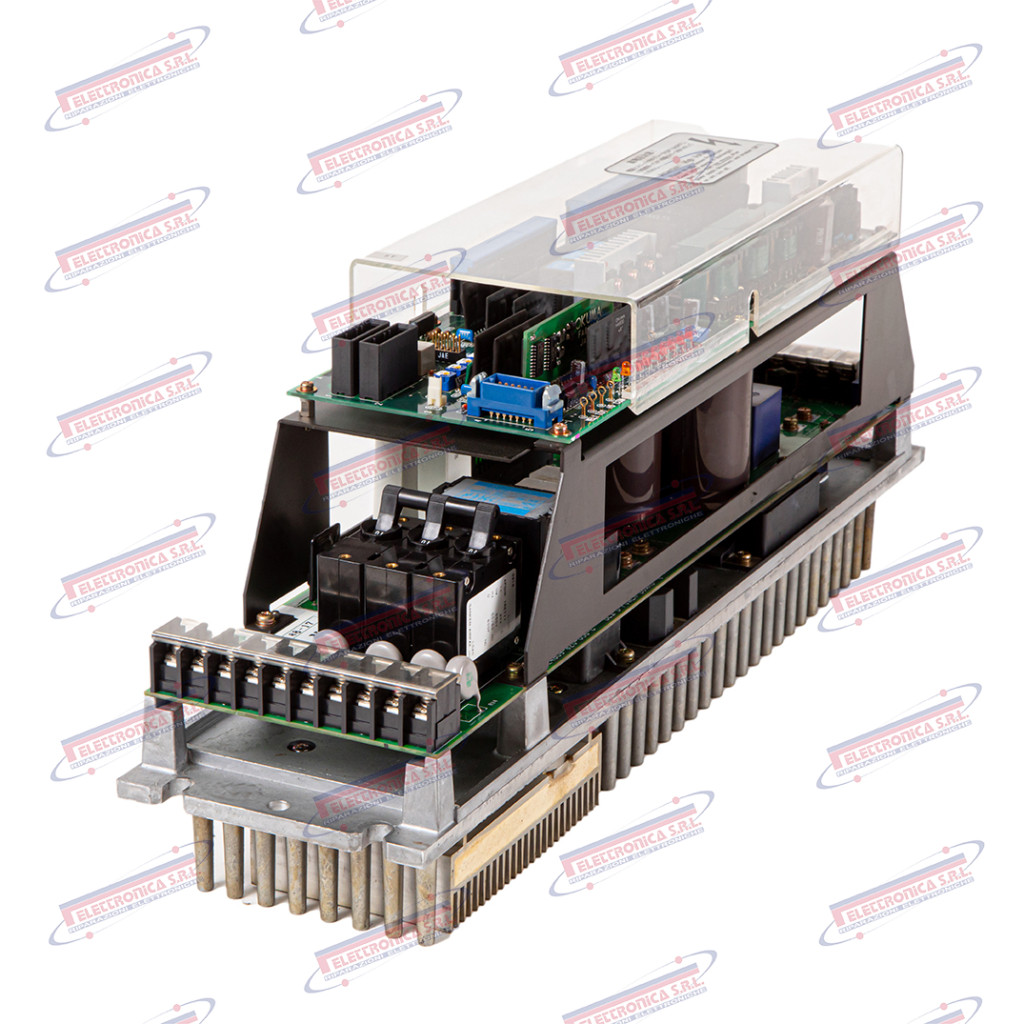
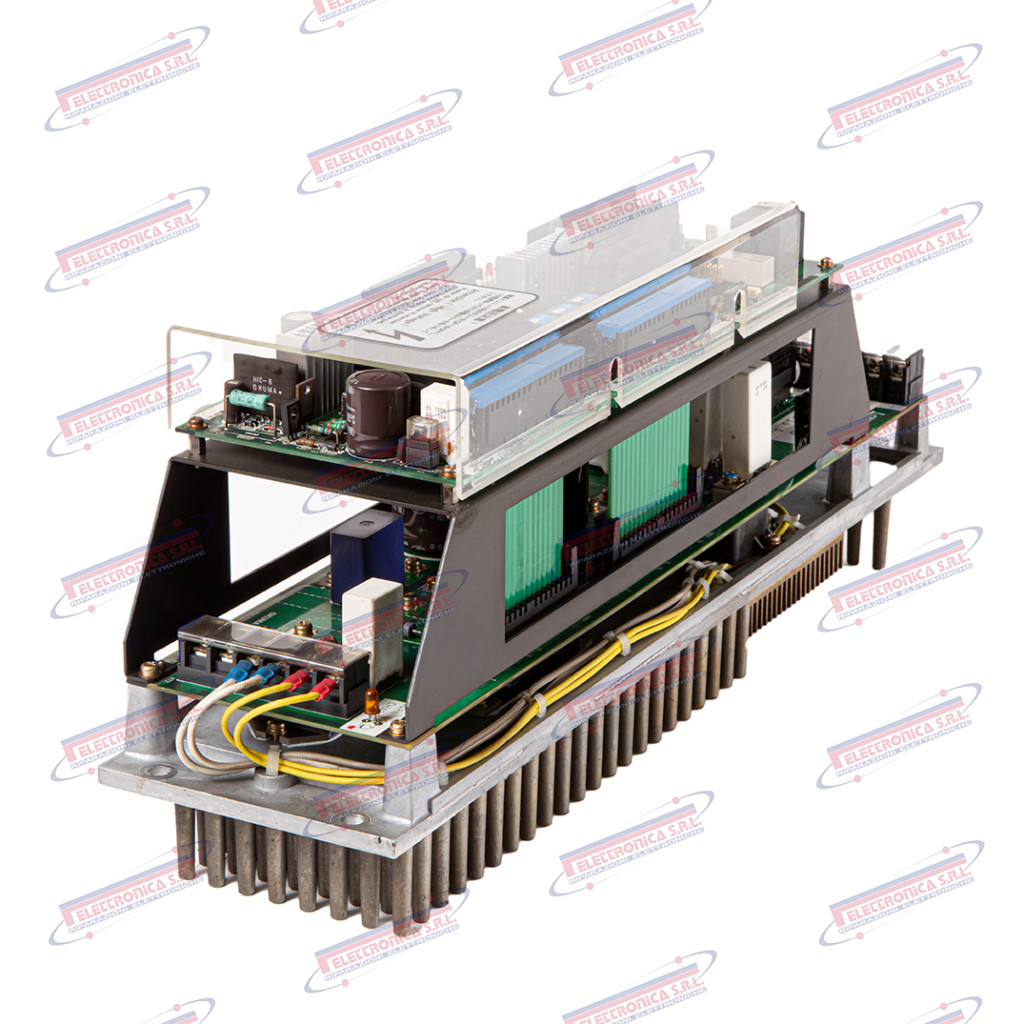
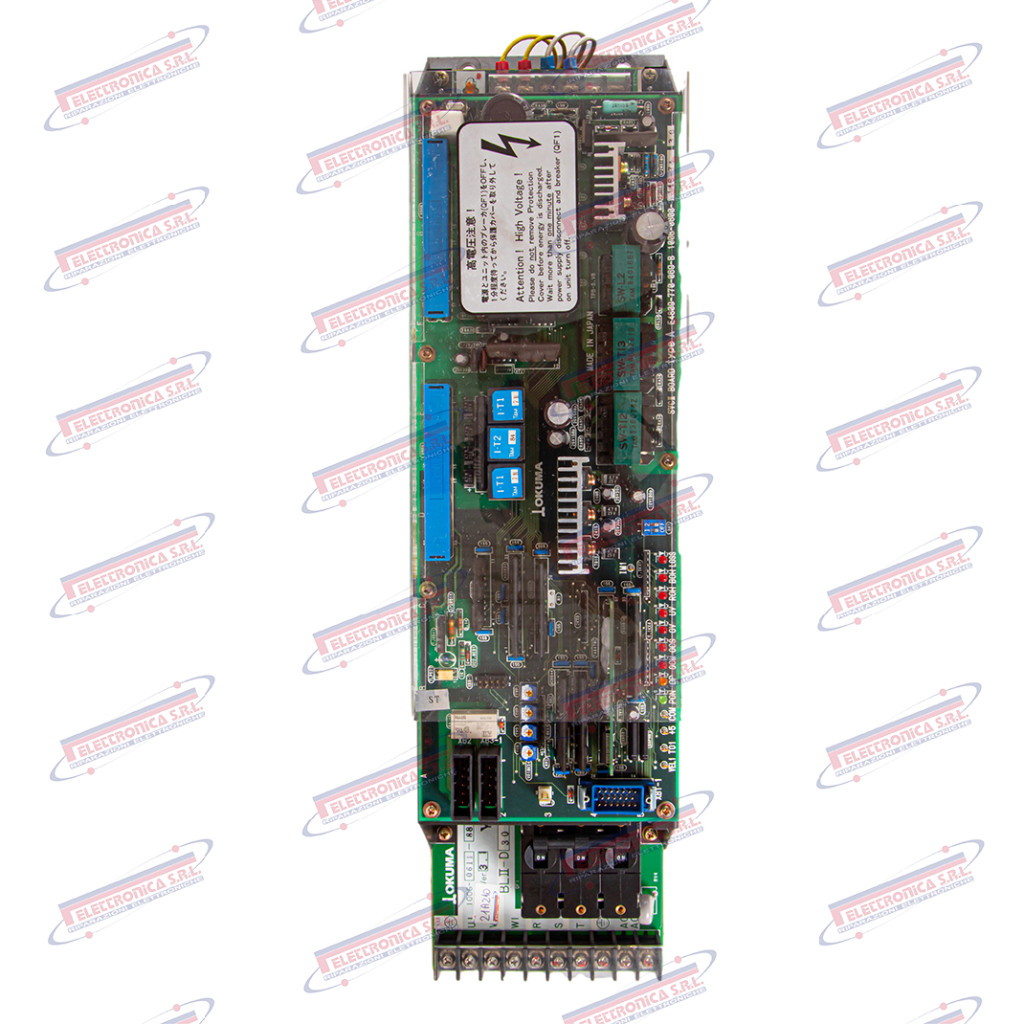
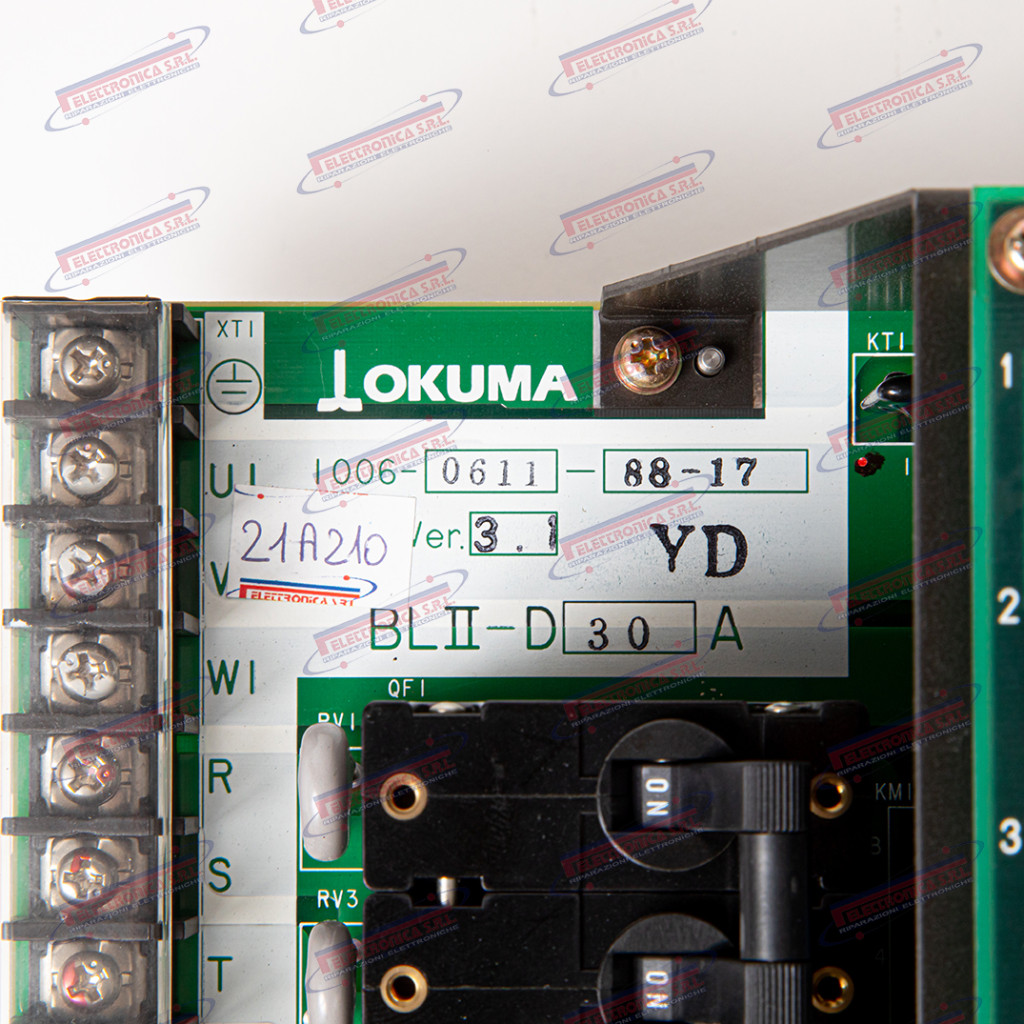
SKU:
BLII-D30A
Cat:
Servo Drive
Brand:
OKUMA
BLII Brushless Servo Drive – OKUMA BLII-D30A
The BLII-D30A is a brushless servo drive (“Brushless Servo Drive” / “Servo Amplifier”) manufactured by OKUMA Corporation, belonging to the BLII (Brushless II) series of drives for brushless servo motors. Documented as a component of OKUMA vertical and horizontal machining centres and CNC lathes equipped with the OSP (Open System Platform) numerical control, the BLII-D30A is a power and control unit delivering regulated current to the linear axis servo motors (or to the spindle, depending on configuration), with a peak current in the order of 30 A as derived from the part designation. The unit interfaces directly with the OSP control via a dedicated serial bus and manages the motor current and velocity closed loops.
The BLII servo drive is the core of the CNC axis power chain: it converts the position and speed commands issued by the OSP control into regulated current for the brushless servo motors, guaranteeing the kinematic accuracy of the machine tool. Without this component the controlled axis becomes inoperative, the CNC triggers an axis alarm and machining must be halted immediately, with the risk of collisions or dimensional rejects on the workpiece in progress.
OKUMA Corporation is a Japanese CNC machine tool manufacturer founded in 1898 in Nagoya, Japan, well known for its vertically integrated production philosophy: it designs and manufactures its own CNC controls (the OSP platform), servo drives, servo motors and machine tools in-house. The BLII-series drives belong to a generation of legacy / discontinued products: still widely installed on machines in service, but available exclusively as used units, surplus stock, or through specialist repair centres.
Main Technical Specifications
| Type | Brushless servo drive (Brushless Servo Drive / Servo Amplifier) |
| Part number | BLII-D30A (BLIID30A) |
| Brand | OKUMA Corporation |
| Known application | OKUMA CNC machining centres and lathes with OSP control (e.g. MB, MC, MU, LB, LU series) |
| Function | Drive and current/speed regulation for BLII brushless servo motors (linear axis or spindle) |
| Peak current | ~30 A |
| Power supply | 200–230 V AC three-phase, 50/60 Hz (typical OKUMA BLII series) |
| Feedback | Absolute / incremental encoder built into the OKUMA servo motor |
| Interfaces | OSP serial bus / dedicated OKUMA connectors; power and signal terminal strips |
| Weight | ~2.0–5.0 kg |
| Dimensions | ~150×250×200 mm |
| Production status | Legacy / discontinued — used/surplus/repair only |
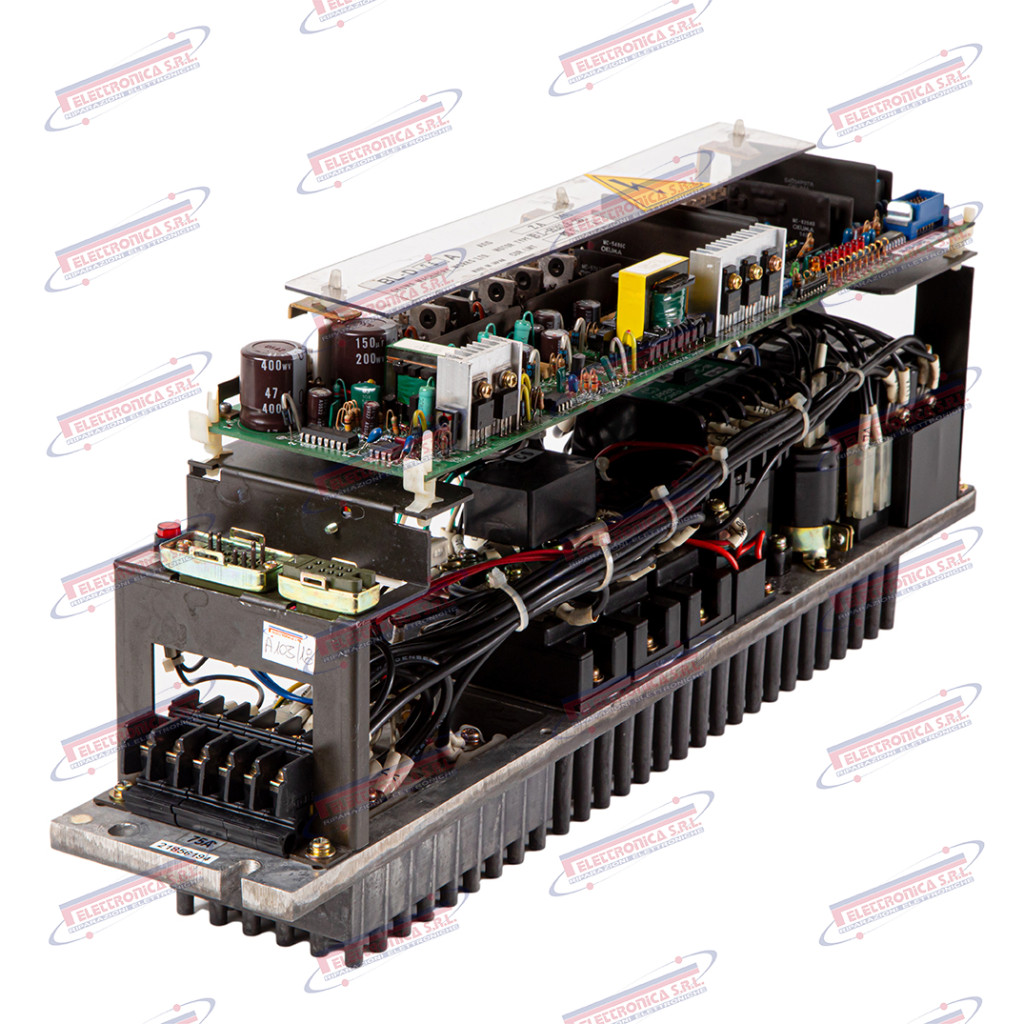
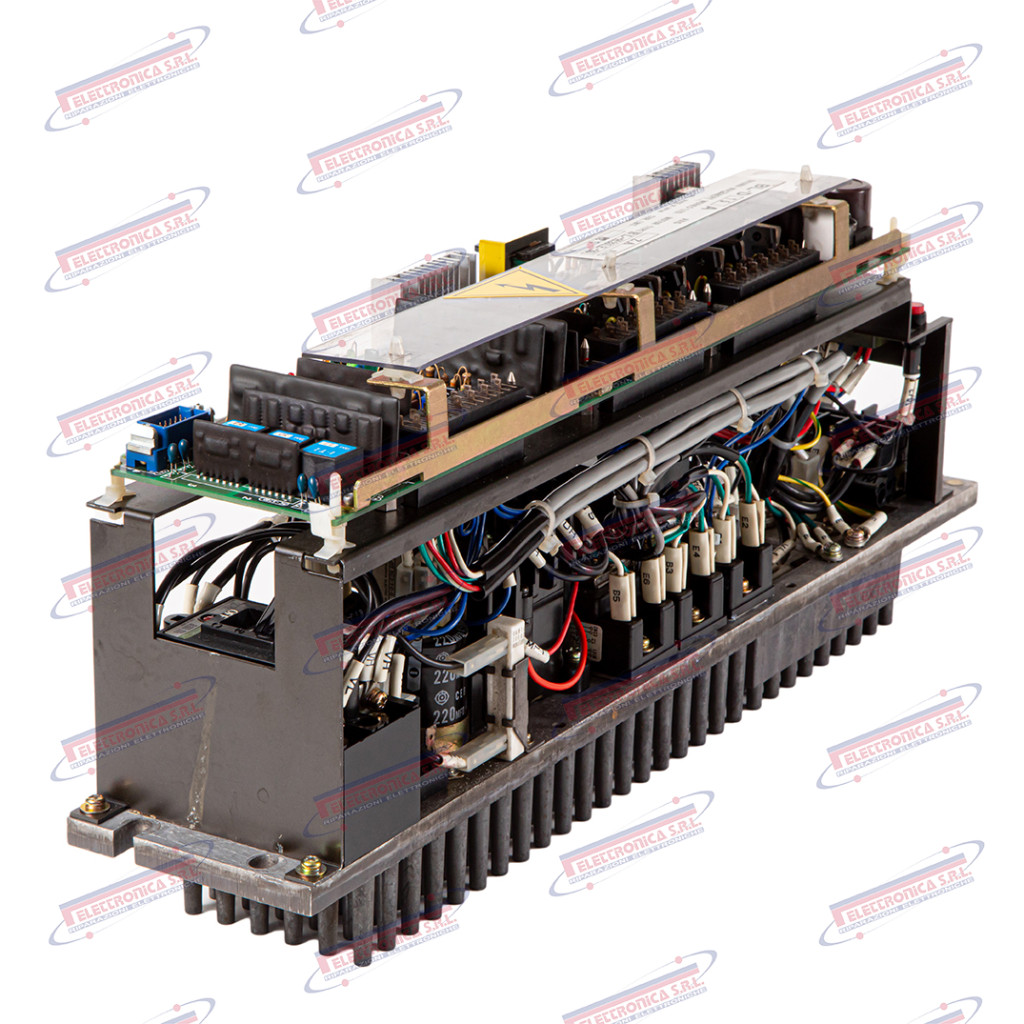
SKU:
BL-D75A
Cat:
Servo Drive
Brand:
OKUMA
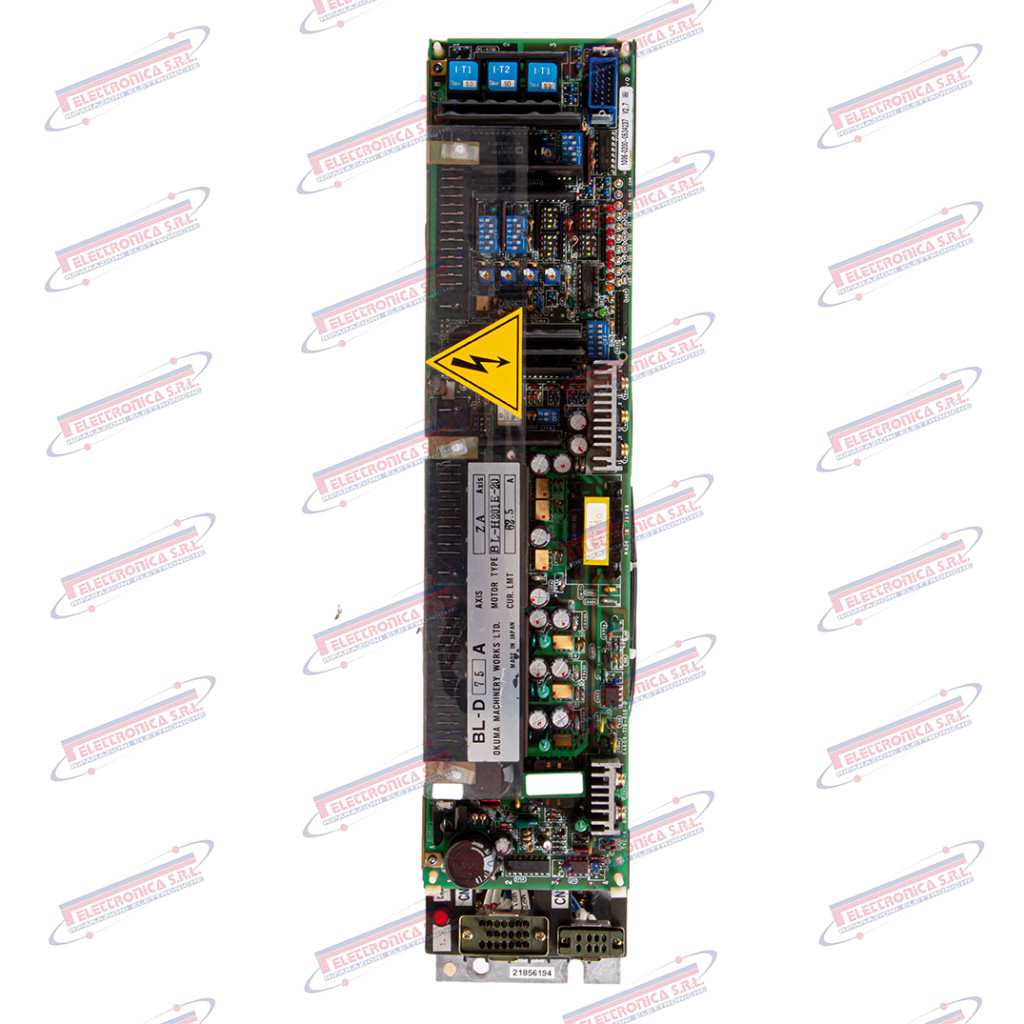
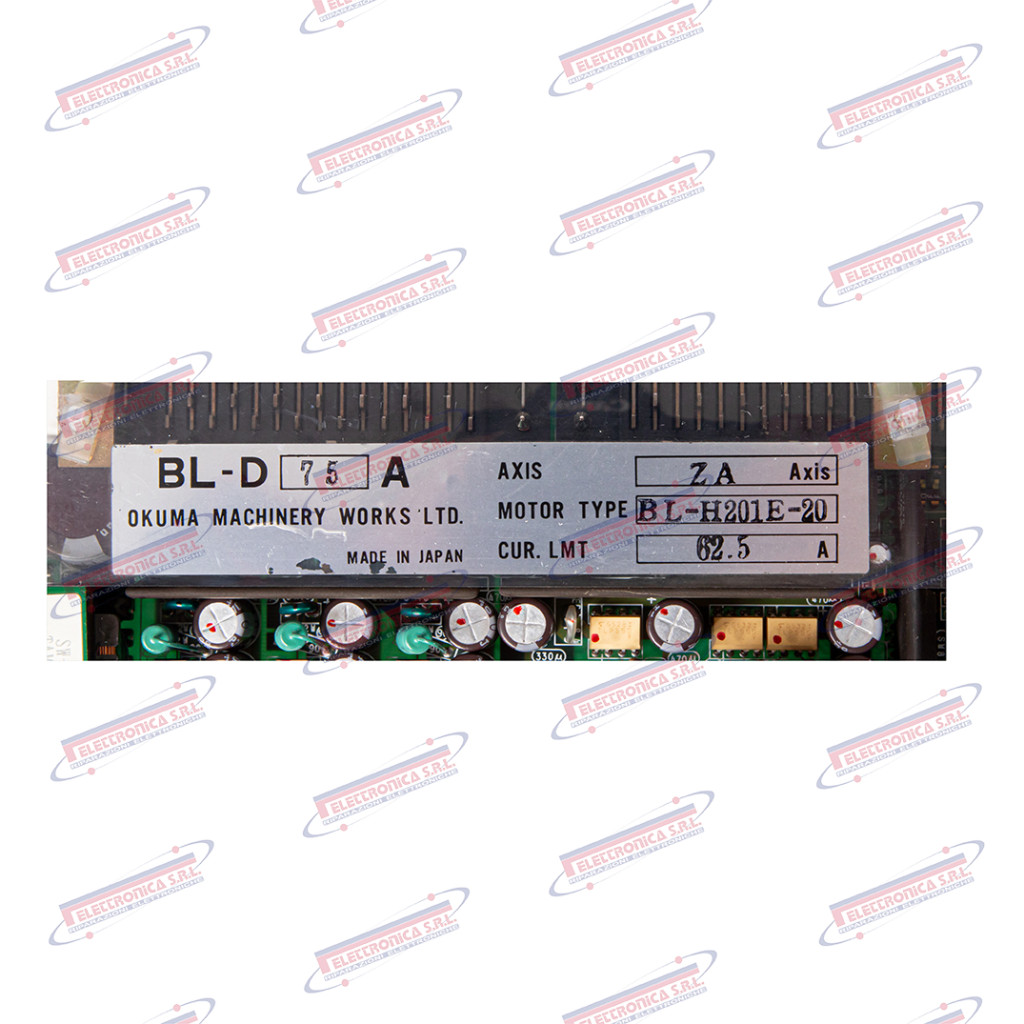
Brushless Servo Drive – OKUMA BL-D75A
The BL-D75A is a brushless servo drive amplifier (“Brushless Servo Drive Amplifier”) manufactured by OKUMA, designed to control CNC axis servo motors on machining centres, lathes and milling machines equipped with OKUMA’s OSP (OKUMA Servo Protocol) control systems. The module manages the current and speed regulation loops of the associated brushless servo motor, receiving position and speed references from the CNC and driving the motor via PWM modulation. The prefix BL-D identifies OKUMA’s “Brushless Drive” family; the suffix 75A designates the current rating or version of the module within the series.
The BL-D75A servo drive is the electronic module that translates CNC position and speed commands into drive currents for the brushless axis servo motor: it closes the current, speed and position control loops, ensuring the geometric accuracy and dynamic response required during machining. If the unit fails, the controlled axis is locked or in alarm, making any cutting operation impossible; the entire machine is down until the module is replaced or repaired.
OKUMA Corporation is a Japanese CNC machine tool manufacturer founded in 1898 in Nagoya, Japan, and one of the few companies in the world to develop both the machine tools and the CNC control systems (the OSP – OKUMA Servo Protocol series) entirely in-house. This vertical integration provides optimised firmware and advanced proprietary diagnostics, but makes the drive components machine-specific and non-interchangeable with hardware from other manufacturers. Modules in the BL-D series are legacy / discontinued: available only as used, surplus, or through specialist repair.
Main Technical Specifications
| Type | Brushless servo drive amplifier |
| Part number | BL-D75A (BLD75A) |
| Brand | OKUMA Corporation |
| Known application | OKUMA CNC machining centres, lathes and milling machines with OSP control (OSP5000, OSP5020, OSP7000, OSP-P200) |
| Function | Current, speed and position control for CNC axis brushless servo motor |
| Compatible motor type | OKUMA BL-series AC brushless servo motor |
| Modulation | PWM (Pulse Width Modulation) |
| Supply voltage | ~200–230 V AC three-phase |
| Feedback | Proprietary OKUMA absolute/incremental encoder on brushless servo motor |
| CNC interface | OKUMA proprietary serial bus (OSP) |
| Connectors | OKUMA proprietary multi-pin connectors and terminal strips |
| Weight | ~2–5 kg |
| Dimensions | ~200–350 × 150–250 mm |
| Production status | Legacy / discontinued — used/surplus/repair only |
SKU:
BL-D50A
Cat:
Servo Drive
Brand:
OKUMA
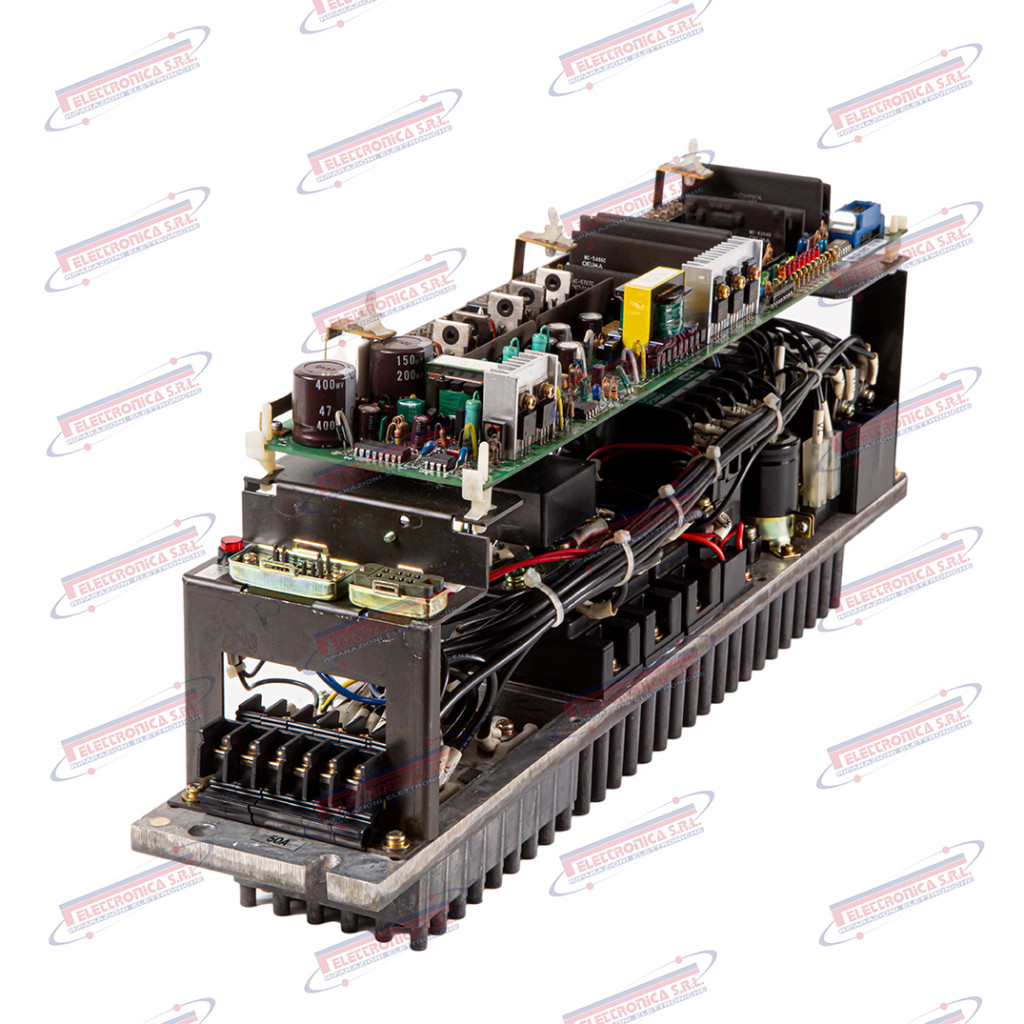
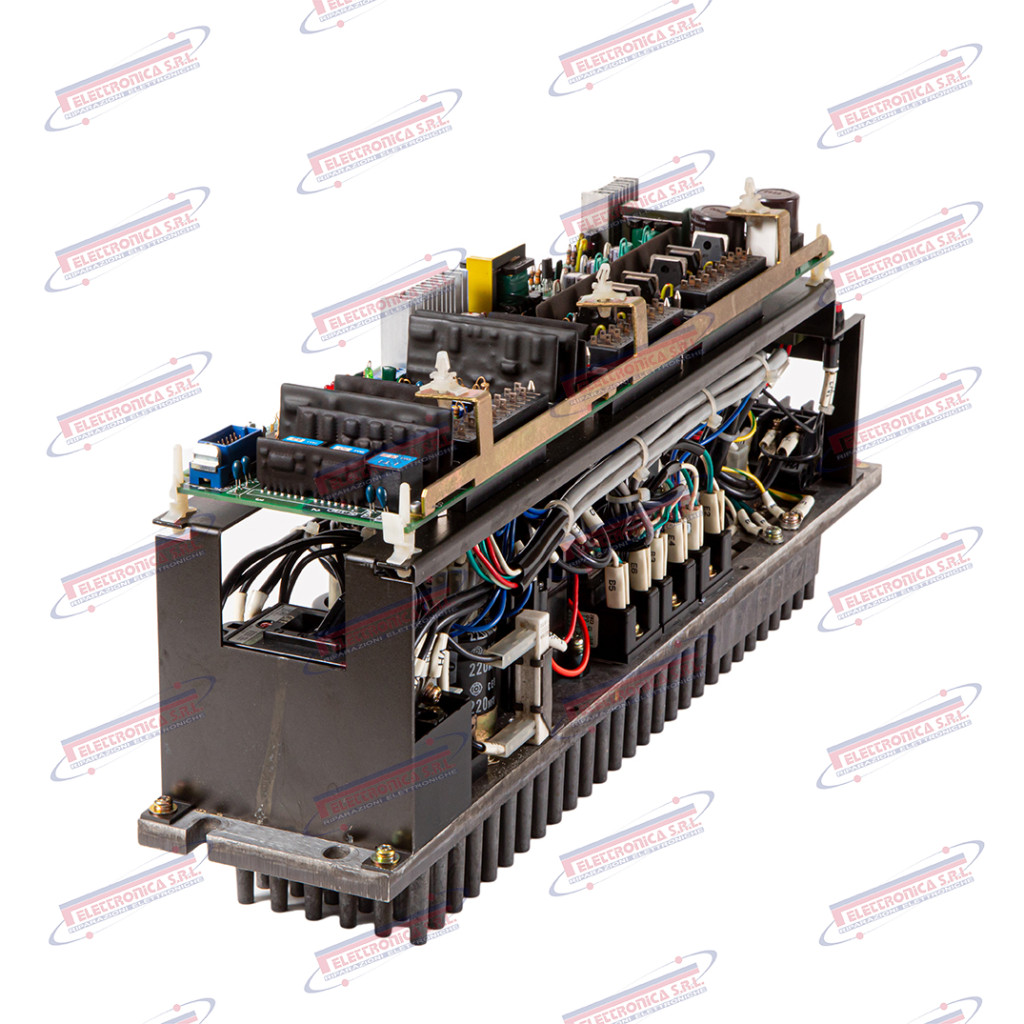
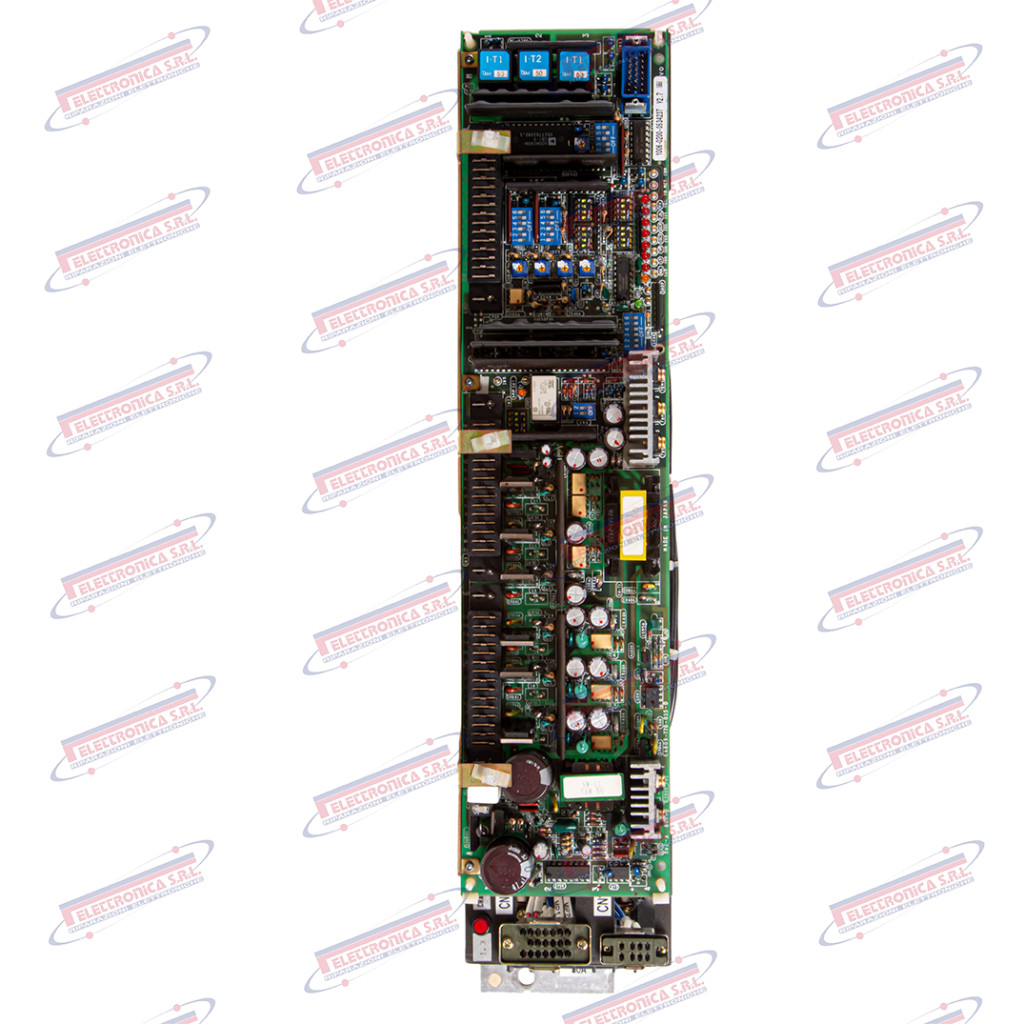
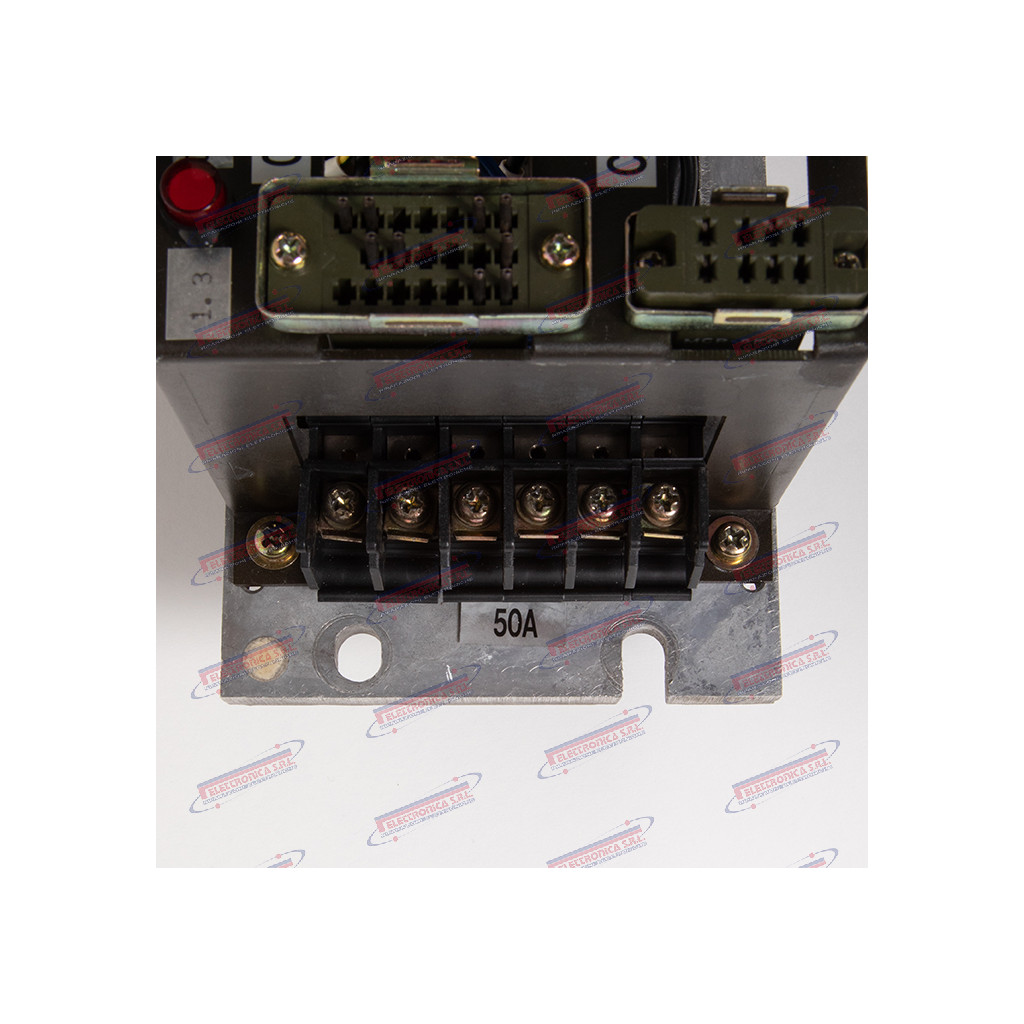
Brushless Servo Drive – OKUMA BL-D50A
The BL-D50A is a brushless AC servo drive (“Brushless Servo Drive”) manufactured by OKUMA, a key component of the axis control architecture in OKUMA CNC machining centres and turning centres. The designation “BL” indicates compatibility with brushless AC servo motors, “D” denotes the drive function, and “50A” identifies the rated output current of the unit. The module manages the current, speed and position control loops in tight integration with the proprietary OSP (Open System Platform) CNC controller by OKUMA. Multiple hardware revisions may exist; the unit interfaces with the controller via a proprietary OSP bus and with the motor via dedicated connectors and optical encoder cable.
The servo drive is the electronic power regulator that converts position and speed references from the CNC into control current for the brushless servo motor: it closes the current and speed loops in real time, guaranteeing torque and kinematic precision of the axis. A failure of the BL-D50A immediately stops the axis it serves, triggering a drive alarm and causing complete machine downtime with no possibility of resuming machining until the unit is replaced or repaired by a specialist.
OKUMA Corporation (??????) is a Japanese machine tool builder founded in 1898, headquartered in Oguchi, Aichi, Japan. It is one of the few manufacturers in the world to design and build both the CNC machine tools and the numerical control system (OSP) in-house, ensuring full hardware-software integration. Modules in the BLD series belong to a legacy generation of OKUMA drives: legacy / discontinued, available only as used parts, surplus stock, or through specialised repair services.
Main Technical Specifications
| Type | Brushless AC servo drive (Brushless Servo Drive) |
| Part number | BL-D50A (BLD50A) |
| Brand | OKUMA Corporation |
| Known application | OKUMA CNC machining centres and turning centres with OSP control (MA, MC, LB, CAPTAIN series and similar) |
| Function | Current, speed and position regulation for brushless AC servo axis |
| Rated output current | 50 A |
| Power supply voltage | 200–240 V AC three-phase, 50/60 Hz |
| Auxiliary logic supply | 24 V DC (typical) |
| Feedback | OKUMA proprietary optical encoder (dedicated connector on shielded cable) |
| Interfaces / connectors | Proprietary OSP bus to CNC; CN motor and encoder connectors; I/O terminal strip for enables and alarms |
| Weight | ~2–5 kg |
| Dimensions | ~150 × 100 × 250 mm |
| Production status | Legacy / discontinued — used/surplus/repair only |
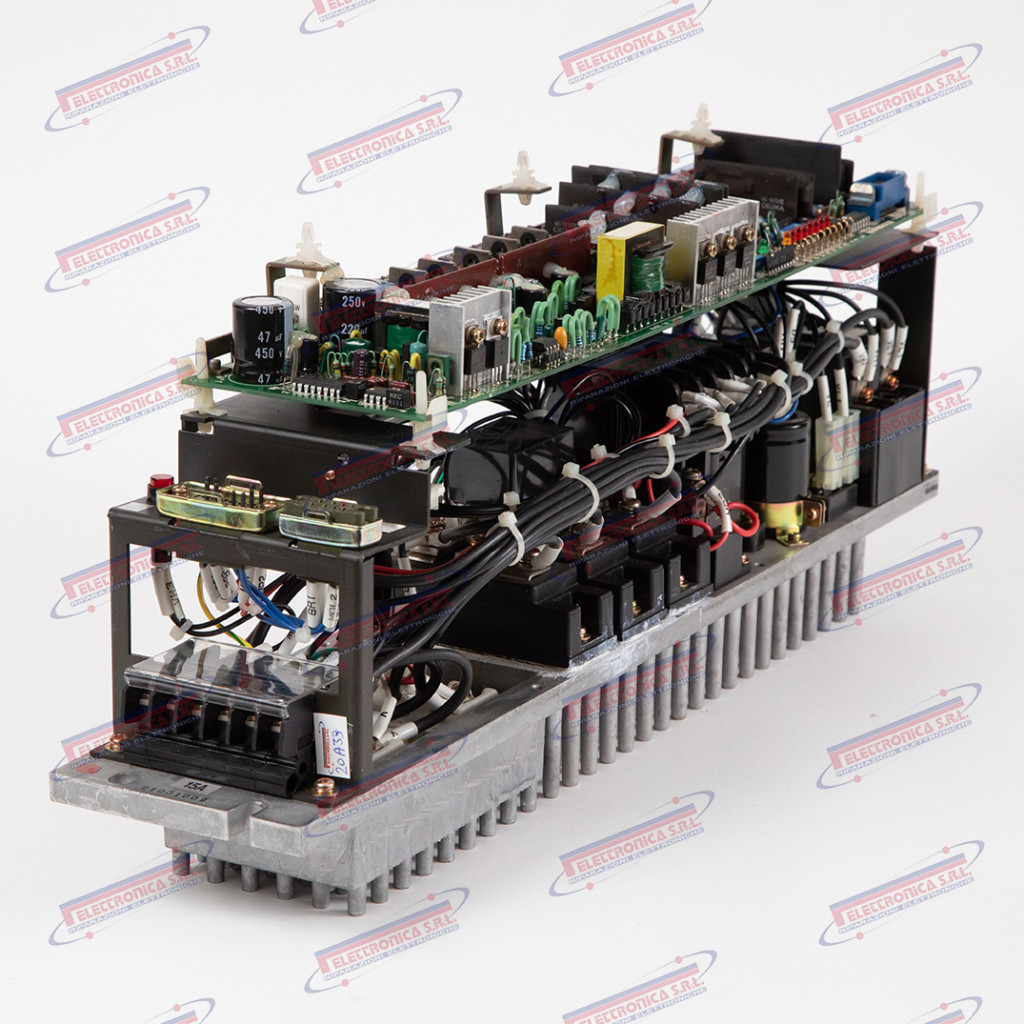
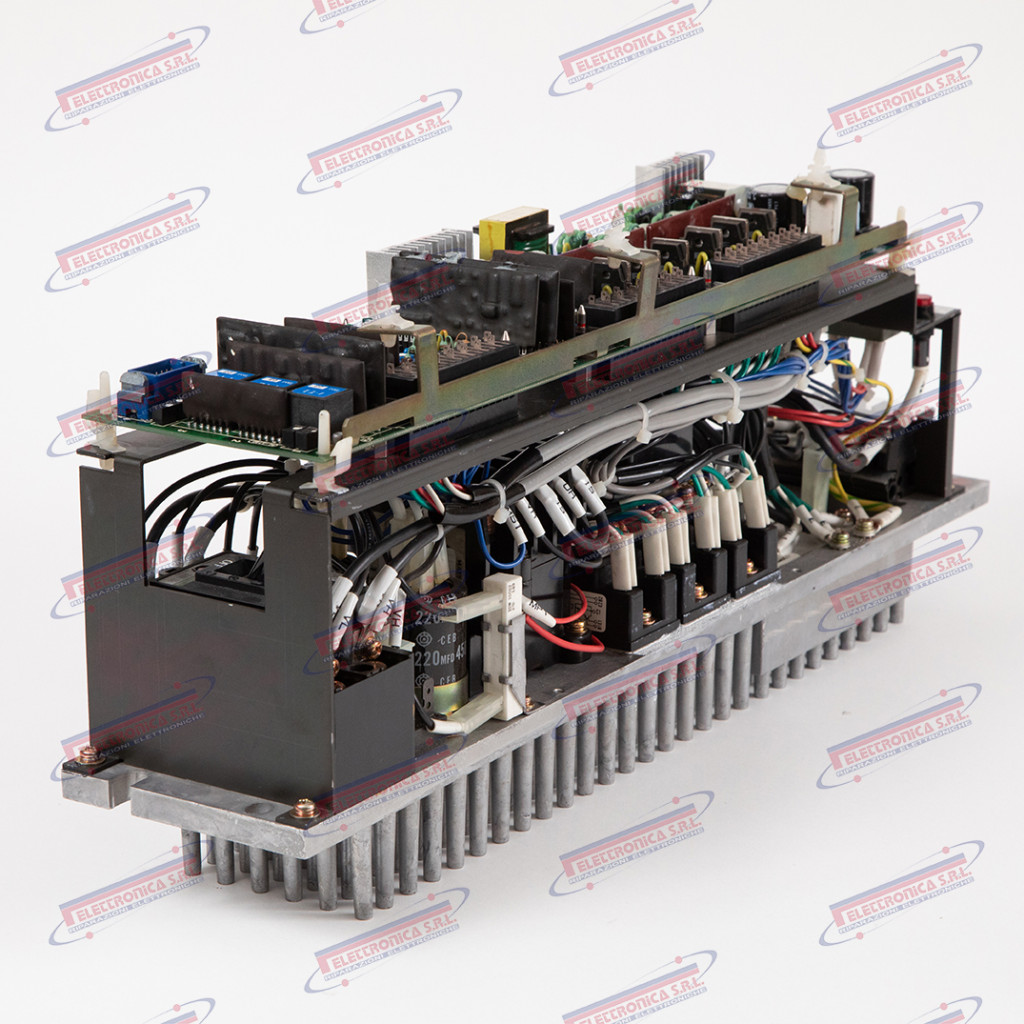
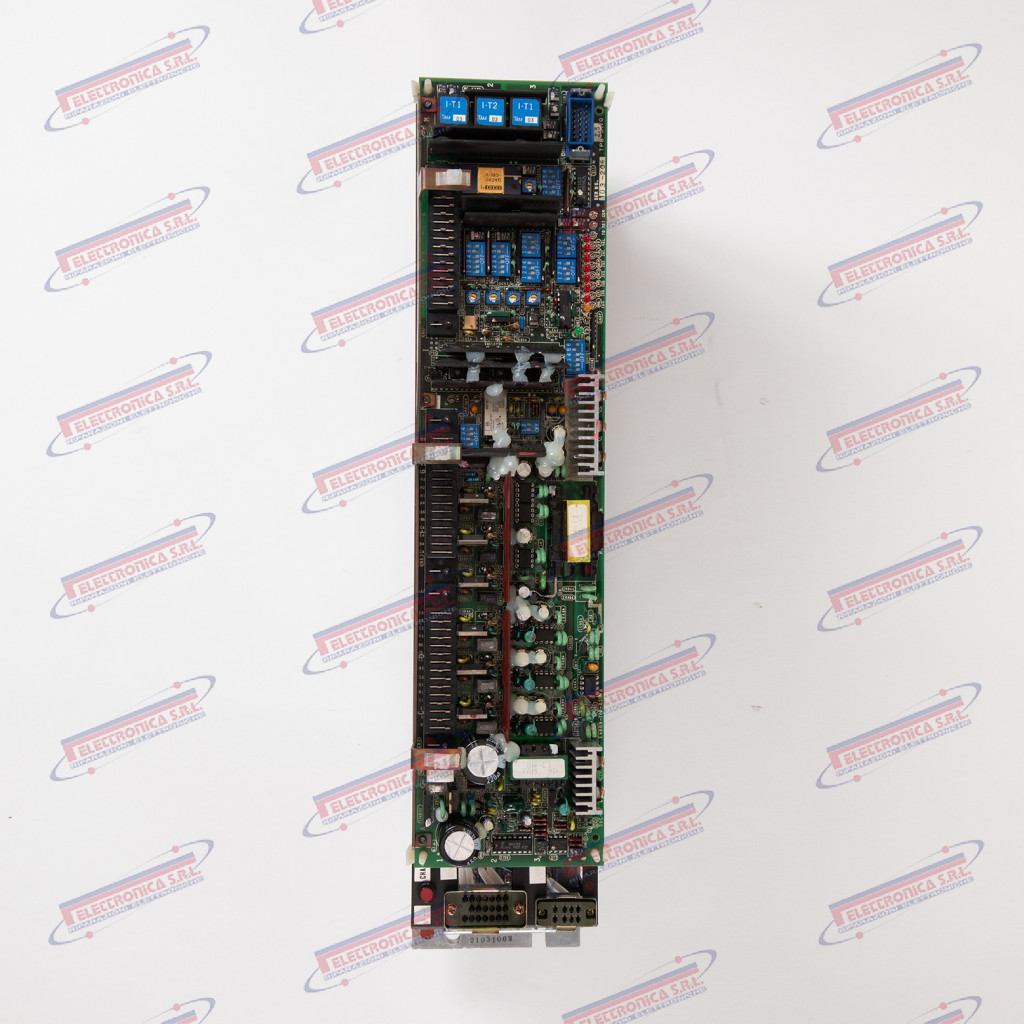
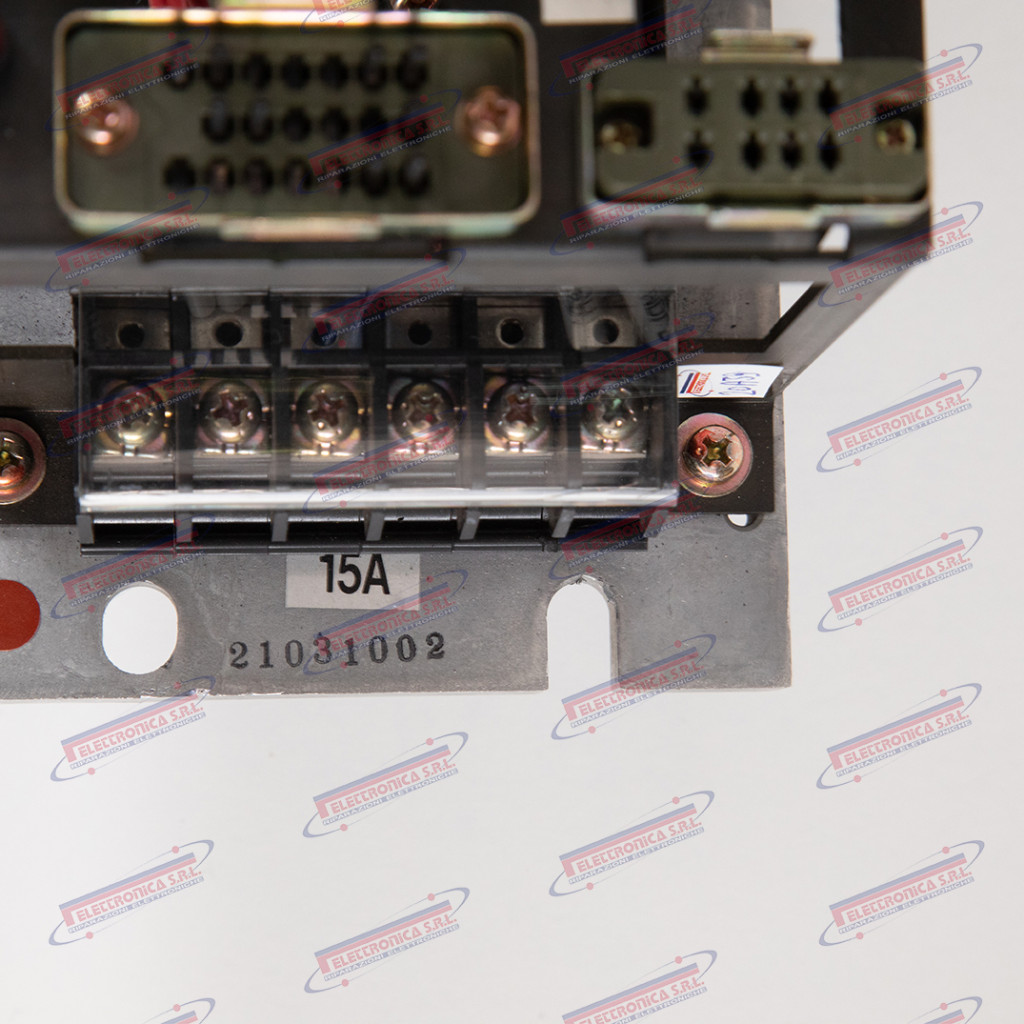
SKU:
BL-D15A
Cat:
Servo Drive
Brand:
OKUMA
Brushless Servo Drive for Axis Control – OKUMA BL-D15A
The BL-D15A is a brushless servo drive for axis control (“Brushless Servo Drive”) manufactured by OKUMA, a core component of the CNC axis drive system in OKUMA machine tools. The part number identifies a module from the BL-D (Brushless Drive) family rated at approximately 15 A continuous current, revision A. The module interfaces directly with OKUMA’s proprietary OSP (Open System Platform) CNC controller and with OKUMA brushless servo motors of the same brand. Documented on OKUMA vertical and horizontal machining centres and CNC lathes produced from the 1990s through the early 2000s.
The axis servo drive is the power and regulation module that converts position and speed commands from the CNC controller into current for driving the servo motor: it closes the real-time control loop on speed, torque and axis position. If this unit fails, the controlled axis becomes completely inoperative, bringing the machine to an immediate halt and making any automatic machining cycle impossible.
OKUMA is a Japanese CNC machine tool manufacturer founded in 1898, renowned for its vertically integrated production: it designs in-house the machines, numerical controllers (OSP series), servo motors and drives. The BL-D family drives are proprietary components, non-interchangeable with other manufacturers’ products; versions from the 1990s–2000s are legacy / discontinued and available only as used spare parts or through specialist repair centres.
Main Technical Specifications
| Type | Brushless servo drive for axis control (Brushless Servo Drive) |
| Part number | BL-D15A (BLD15A) |
| Brand | OKUMA Corporation (Japan) |
| Known application | OKUMA vertical/horizontal machining centres and CNC lathes with OSP controller (1990s–2000s) |
| Function | Position, speed and current regulation for brushless axis servo motor |
| Rated current | ~15 A (continuous, typical for this class) |
| Supply voltage | 200–230 V AC three-phase |
| Compatible motor | OKUMA BL series brushless servo motors |
| Interfaces / Connectors | OSP serial bus; encoder/resolver connectors; power terminal strip |
| Weight | ~2–5 kg |
| Dimensions | ~150–300 × 100–200 mm |
| Production status | Legacy / discontinued — used/surplus/repair only |
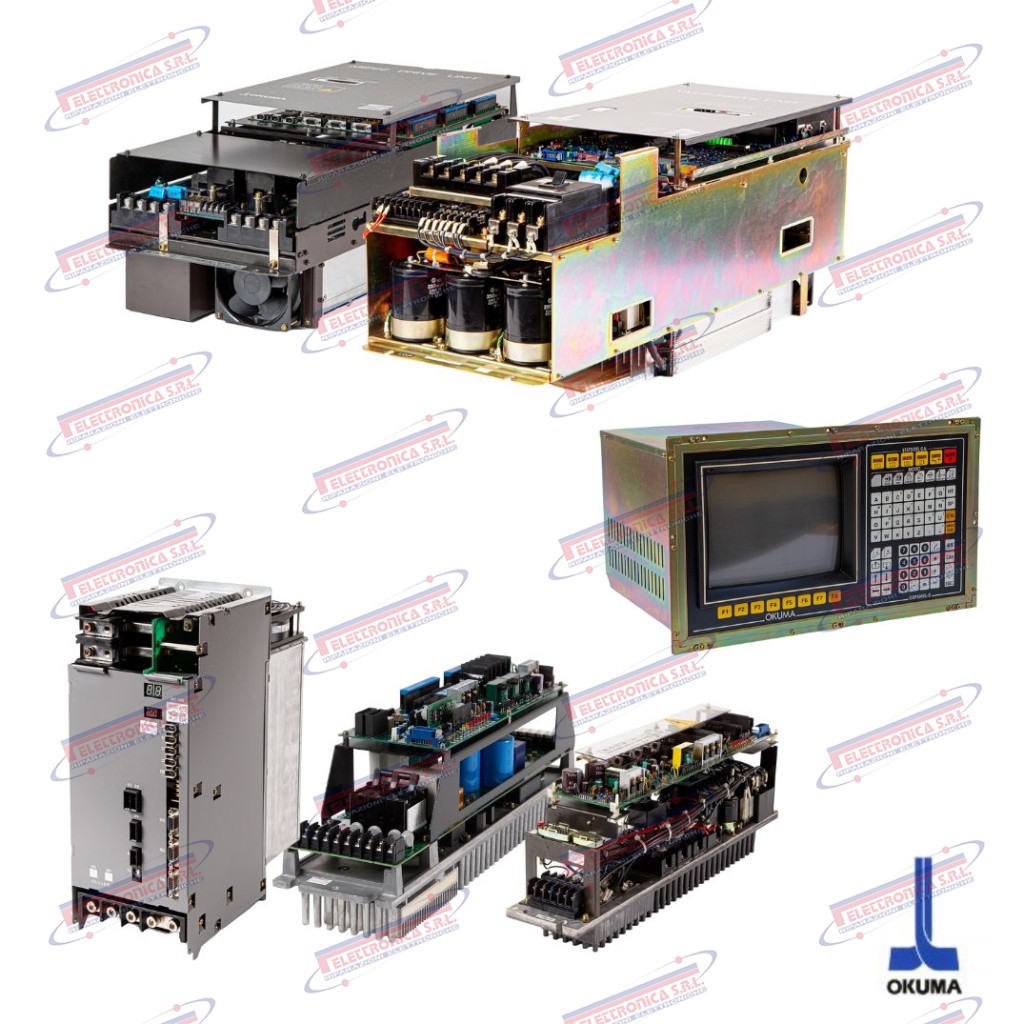
SKU:
BDU-15A
Cat:
Servo Drive
Brand:
OKUMA
AC Servo Drive – OKUMA BDU-15A
The BDU-15A is an AC servo drive unit (“AC Servo Drive Unit”) manufactured by OKUMA, belonging to the BDU (Brushless Drive Unit) series of integrated CNC axis drives. It is documented as a component of OKUMA CNC machining centres and turning centres equipped with the proprietary OSP (Open System Platform) control. The number 15 in the part number denotes the rated output current (15 A); the letter A identifies the construction variant. The unit manages the current and velocity loops of the servo axis motor, receiving position and velocity references from the CNC CPU via the proprietary OKUMA bus.
The BDU-15A is the electronic controller that converts trajectory commands from the CNC CPU into phase currents for the servo motor, closing the current and velocity loops in real time and ensuring rapid, precise axis positioning throughout machining cycles. If it fails, the controlled axis loses all movement capability: the machine triggers an alarm and stops immediately, making any productive operation impossible.
OKUMA Corporation is one of the world’s leading CNC machine tool manufacturers, founded in 1898 in Nagoya, Japan. It is the only manufacturer in the world that designs and produces machines, CNC controls (OSP), drives, and motors entirely in-house: a fully integrated, proprietary ecosystem. Components in the BDU series are legacy / discontinued: available only as used, surplus, or through specialist repair.
Main Technical Specifications
| Type | AC servo drive unit for CNC axis |
| Part number | BDU-15A (BDU15A) |
| Brand | OKUMA Corporation |
| Known application | OKUMA CNC machining centres and turning centres with OSP (Open System Platform) control |
| Function | Axis servo motor current and velocity regulation; current and velocity loop closure |
| Rated output current | 15 A |
| Supply voltage | 3-phase 200–230 V AC, 50/60 Hz |
| DC bus voltage | ~280–320 V DC |
| Feedback | Incremental encoder / resolver from servo axis motor |
| Interfaces / connectors | Proprietary OKUMA serial bus (OSP); multiple connectors for encoder, motor power and I/O |
| Built-in protections | Over-current, over-temperature, DC bus over-voltage, output short-circuit |
| Weight | ~1.5–3.5 kg |
| Dimensions | ~150–250 mm |
| Production status | Legacy / discontinued — used/surplus/repair only |
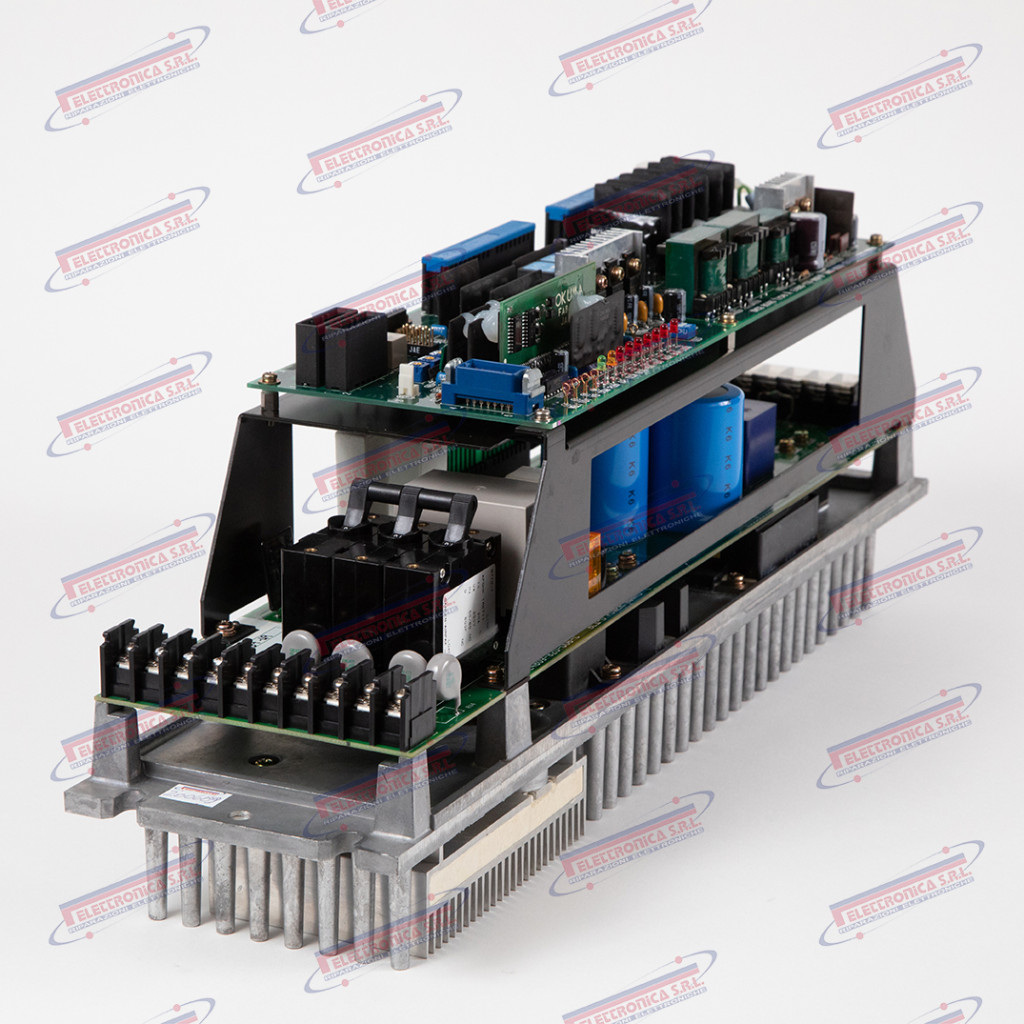
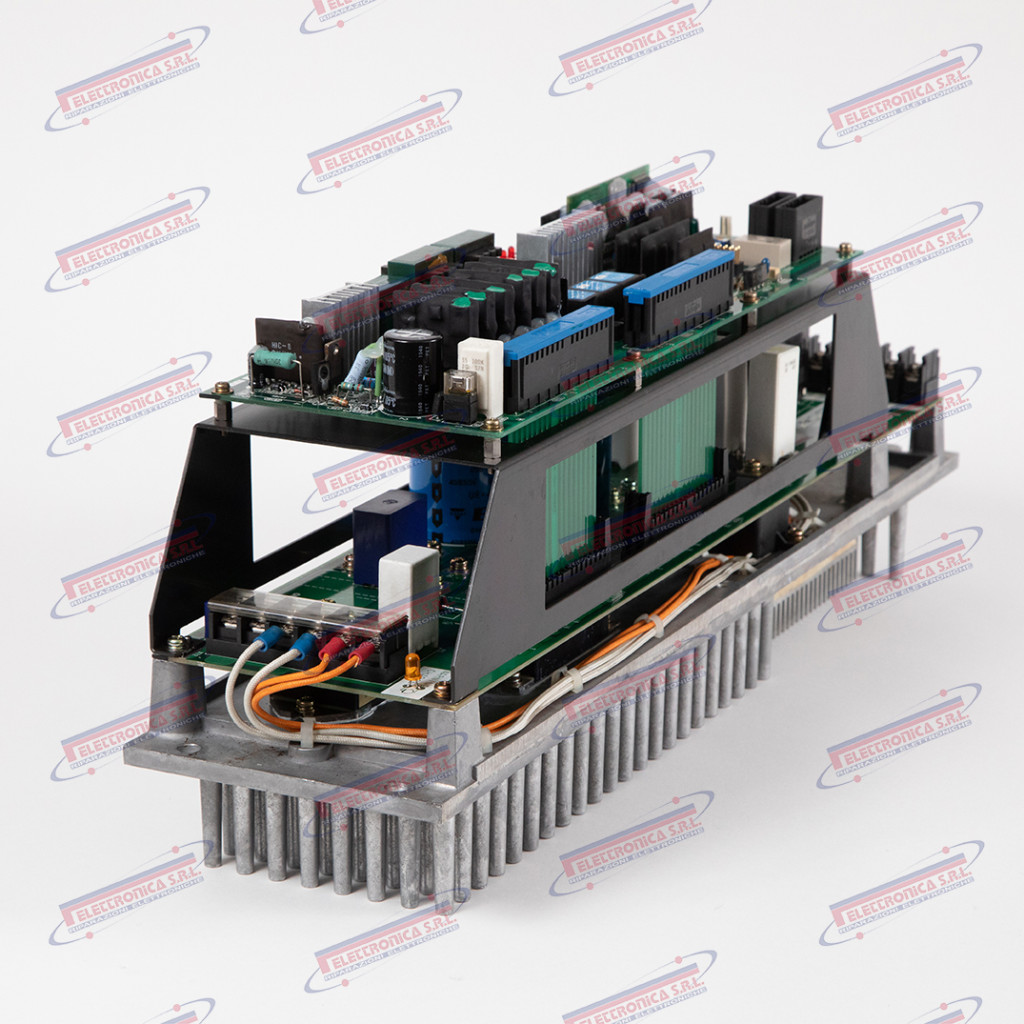
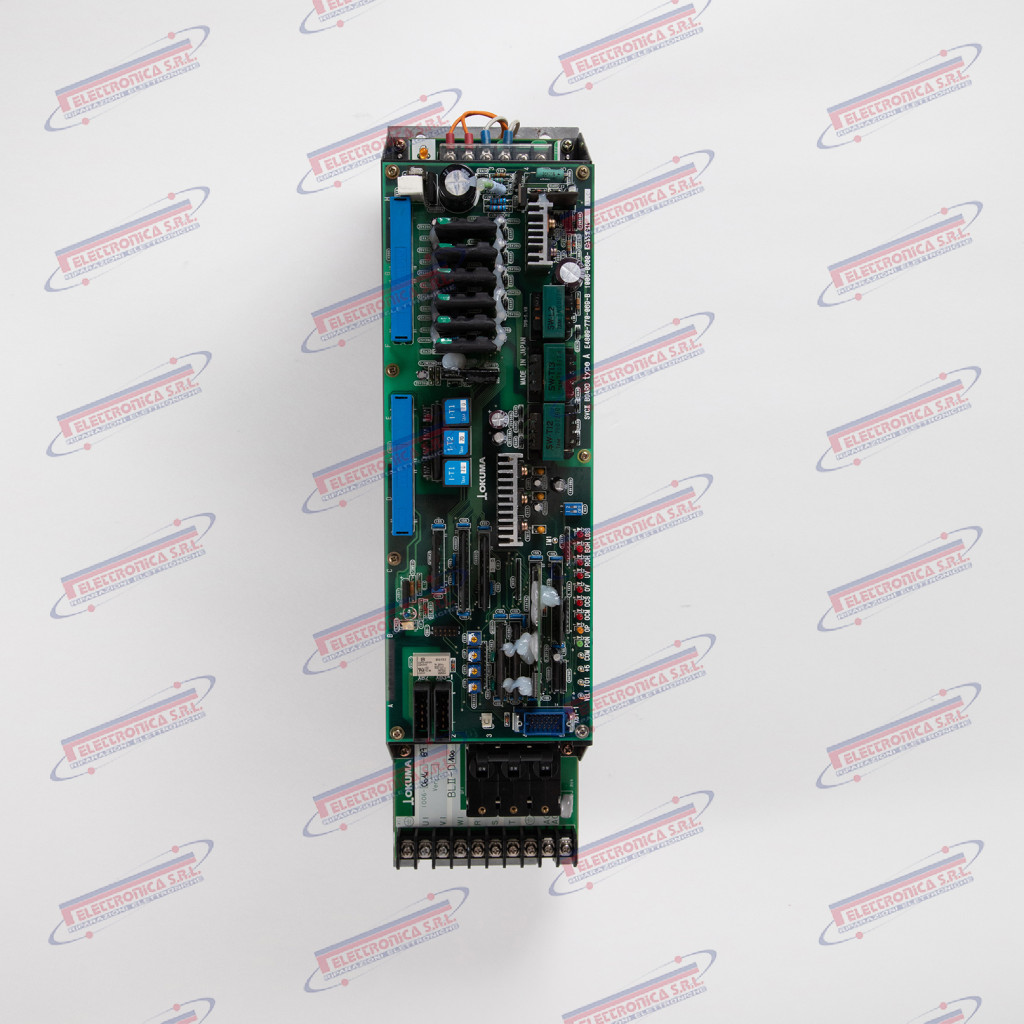
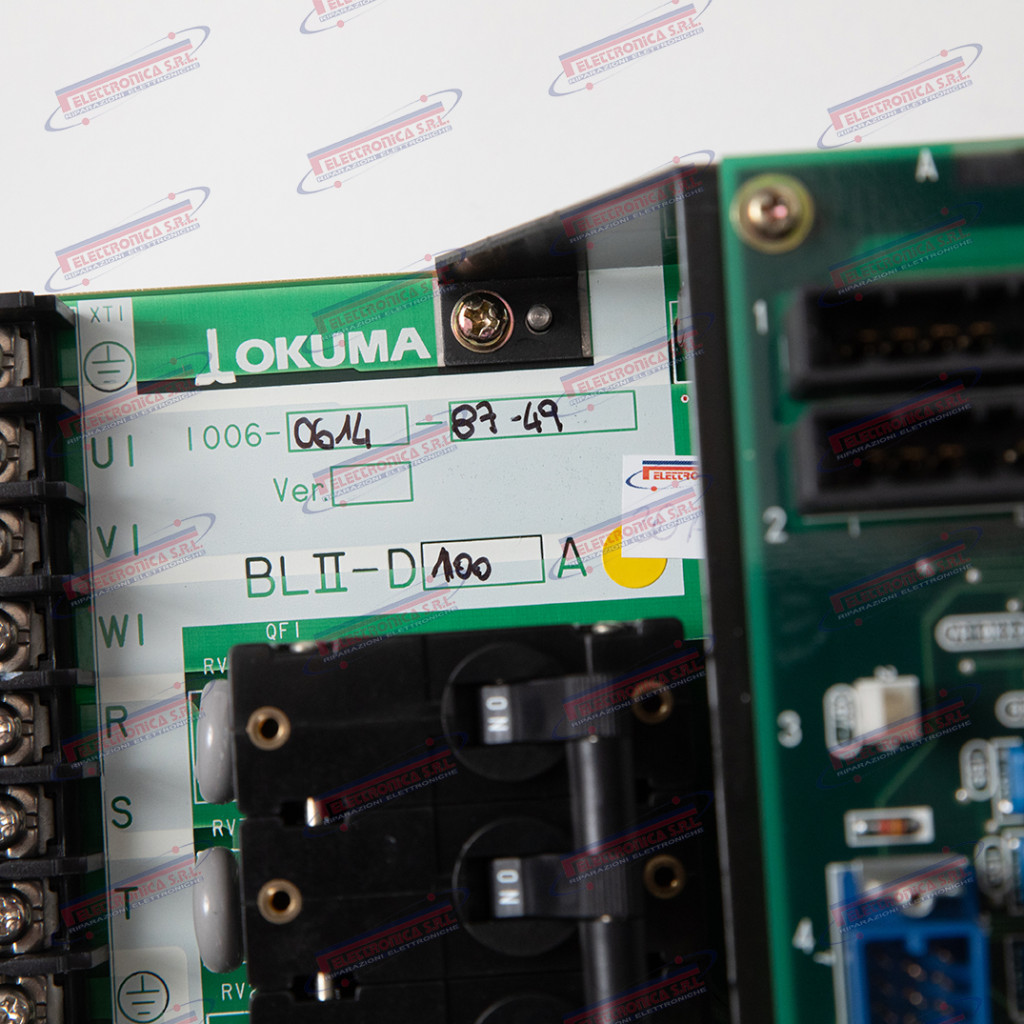
SKU:
BLII-D100A
Cat:
Servo Drive
Brand:
OKUMA
Servo Axis Drive Amplifier – OKUMA BLII-D100A
The BLII-D100A is a digital CNC axis servo drive amplifier (“Digital Axis Servo Drive Amplifier”) from the BL-II series, manufactured by OKUMA. The unit belongs to the second-generation brushless drive family developed by OKUMA for its proprietary OSP (Open System Platform) numerical control systems, and is documented on OKUMA CNC machining centres and lathes of the MA, MC, LB series and related models. It performs digital speed and torque regulation of the servo motor on the controlled axis, interfacing with the OSP proprietary bus and the motor encoder. The D100A suffix in the nomenclature identifies the current rating and variant within the series.
The axis servo drive amplifier is the electronic unit that converts CNC motion commands into power signals for the servo motor: it closes the speed and torque loop on each axis (X, Y, Z or rotary), enabling fast and geometrically precise positioning. Failure of the BLII-D100A renders the corresponding axis completely inoperative: the machine enters a safety fault state and cannot resume machining until the drive is replaced or repaired.
OKUMA is one of Japan’s leading CNC machine tool manufacturers, founded in 1898 in Nagoya. It designs and produces in-house both the machine tools and the CNC controllers (OSP series) as well as the motors and drives, ensuring full vertical system integration. Products in the BL-II series are legacy / discontinued in their original form: availability is limited to used parts, surplus stock, and specialist repair services.
Main Technical Specifications
| Type | Digital CNC axis servo drive amplifier (Digital Axis Servo Drive Amplifier) |
| Part number | BLII-D100A (BLIID100A) |
| Brand | OKUMA Corporation |
| Known application | OKUMA CNC machining centres and lathes, MA / MC / LB series (OSP control) |
| Function | Digital speed and torque regulation of CNC axis servo motor |
| Supply voltage | 200–240 V AC three-phase |
| Current rating | ~100 A peak / D100 classification |
| CNC interface | OKUMA OSP proprietary serial bus |
| Feedback | Incremental / absolute encoder from OKUMA servo motor |
| Connectors | Multiple OKUMA proprietary connectors (OSP bus, encoder, power) |
| Weight | ~2–5 kg |
| Dimensions | ~200–400 mm |
| Production status | Legacy / discontinued — used/surplus/repair only |
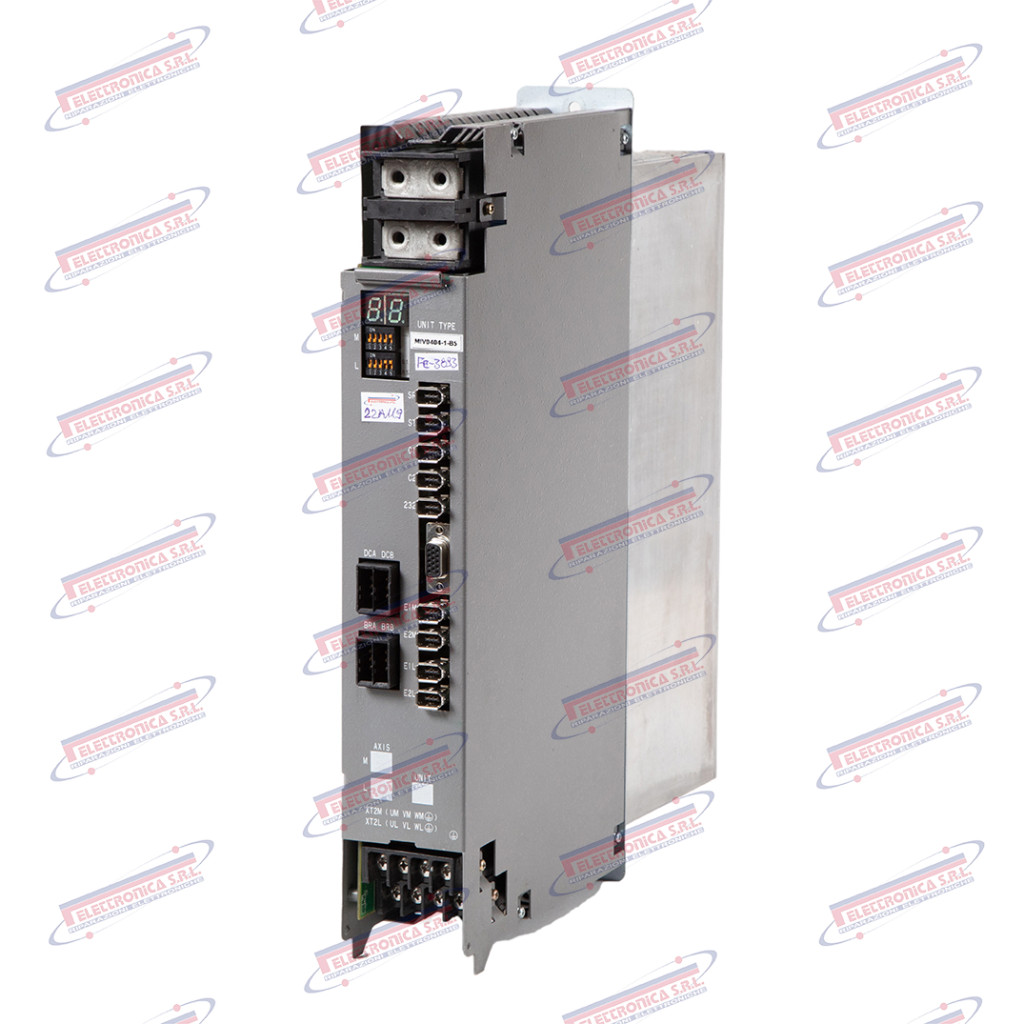
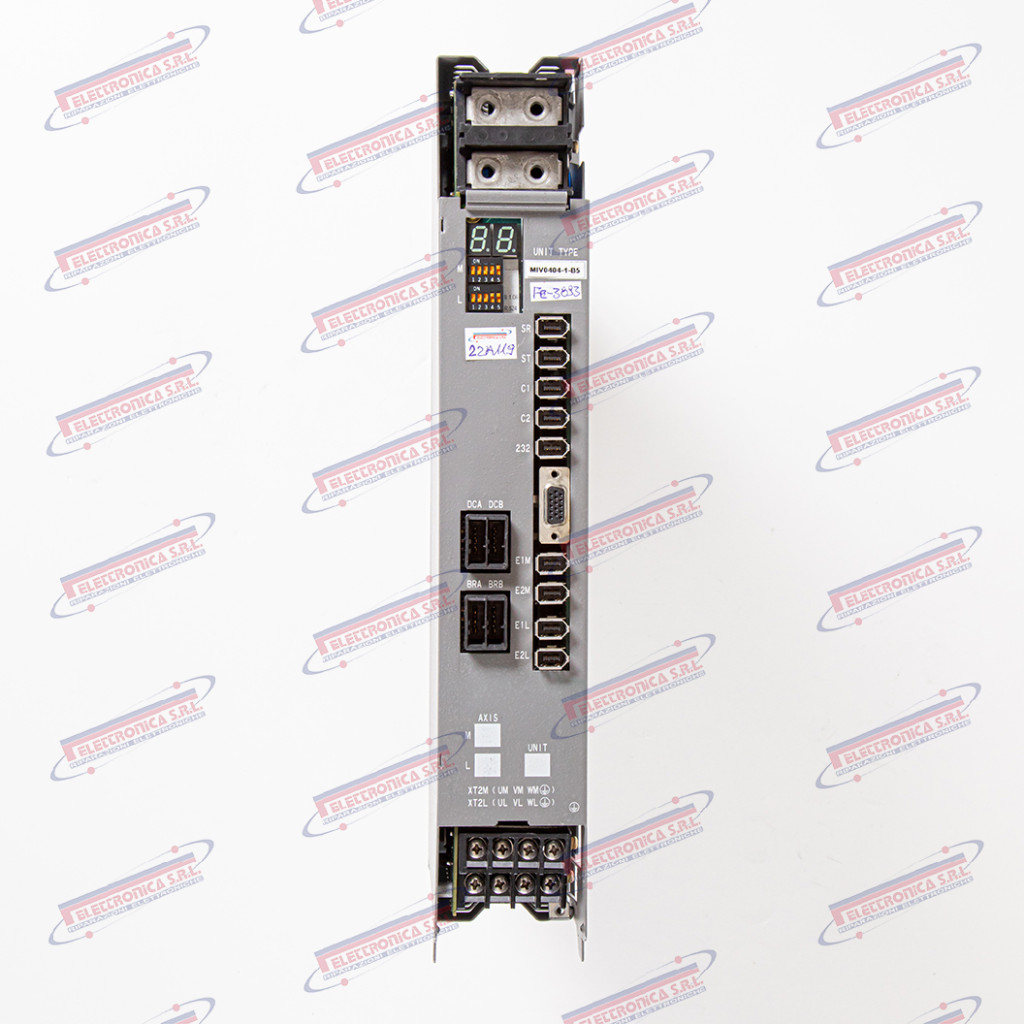
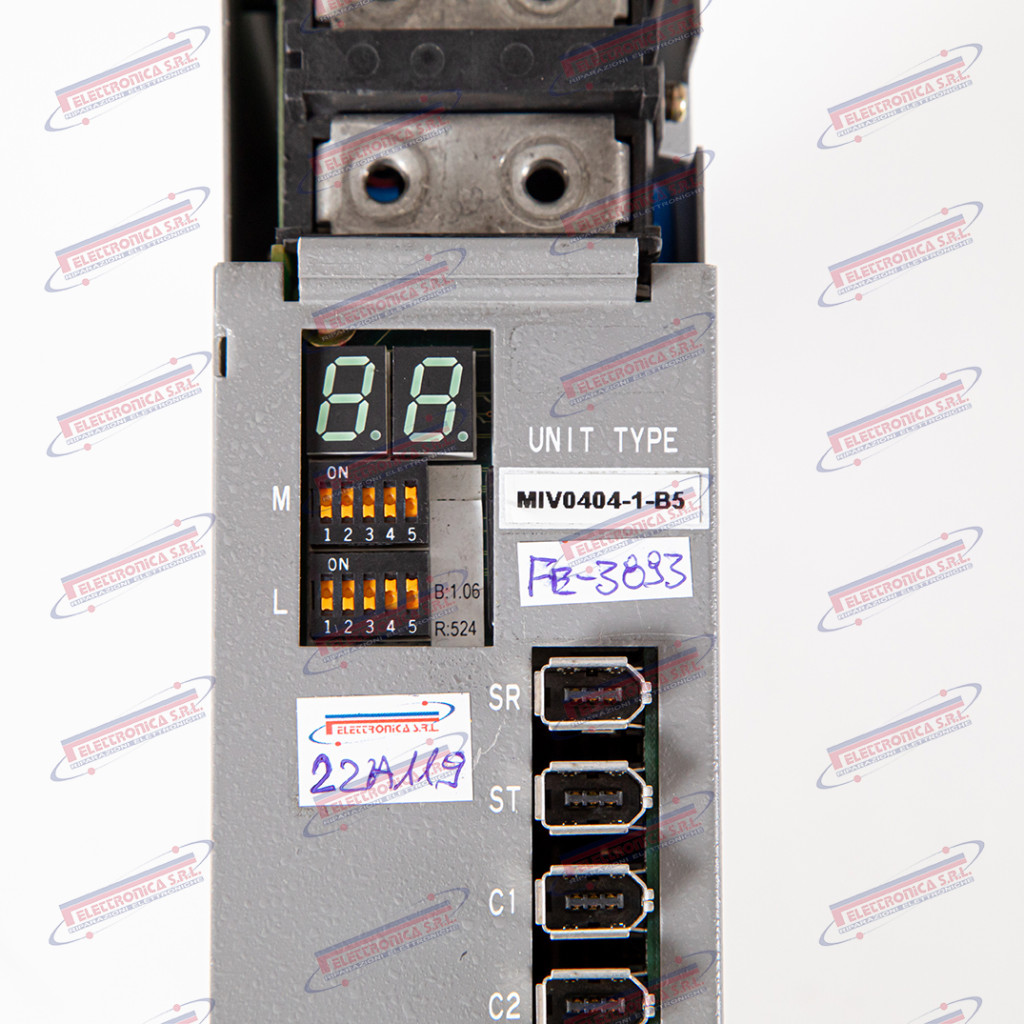
SKU:
MIV0404-1-B1
Cat:
Servo Drive
Brand:
OKUMA
Spindle Motor Inverter Drive – OKUMA MIV0404-1-B1
The MIV0404-1-B1 is a spindle motor inverter drive module (“Motor Inverter Unit”) manufactured by OKUMA, a component of the OKUMA OSP (Open System Platform) CNC control system. The module handles power conversion and spindle motor speed loop regulation, receiving digital references from the OSP control unit and generating PWM output to the motor. Available in hardware revision B1. Documented on OKUMA vertical and horizontal machining centres and CNC lathes equipped with the OSP platform.
The spindle motor inverter drive is the electronic power converter that translates the CNC speed reference into voltage and frequency at the spindle motor output: through PWM modulation it maintains the programmed speed even under varying cutting loads. A failure of this module renders the spindle completely uncontrollable, halting all machining operations and forcing an immediate machine stop.
OKUMA Corporation is a Japanese precision machine tool manufacturer headquartered in Nagoya, founded in 1898. OKUMA designs and produces both the machine tools and their own CNC systems (the OSP platform), ensuring complete vertical integration between control and drives. The MIV-series drive components are proprietary to the OKUMA system and are not interchangeable with drives from other manufacturers. This product is legacy / discontinued: available only as used, surplus or through specialist repair.
Main Technical Specifications
| Type | Spindle motor inverter drive module (Motor Inverter Unit) |
| Part number | MIV0404-1-B1 (MIV04041B1) |
| Brand | OKUMA Corporation |
| Known application | OKUMA CNC machining centres and lathes with OSP control (Open System Platform) |
| Function | Power conversion and spindle motor speed regulation via PWM modulation |
| Control interface | Proprietary OKUMA OSP digital bus |
| Supply voltage | ~200–230 V AC three-phase |
| Output current class | ~4 A nominal |
| Revision | B1 |
| Interfaces / connectors | Edge connectors and terminal strip; connection to OSP bus and power stage |
| Weight | ~0.5–2.0 kg |
| Dimensions | ~150–300 mm |
| Production status | Legacy / discontinued — used / surplus / repair only |